Madhubani Art

Madhubani Art

Madhubani painting - also known as Mithila art - comes from the Mithila region of Bihar, where women have been painting the walls, floors, and ritual spaces of their homes for thousands of years. The tradition traces its origins to the time of the Ramayana, when King Janak is said to have commissioned artists to paint the story of his daughter Sita's wedding. Madhubani is instantly recognisable: geometric patterns, double outlines, dense cross-hatching, and the absence of empty space - every inch of the surface filled with fish, flowers, birds, the sun and moon, and mythological figures rendered in bold natural pigments.

At EthniiChic, we bring this tradition into hand-painted decor objects - wall art, plates, and pieces that carry Madhubani's extraordinary visual density and narrative power into the modern home. Each piece is hand-painted by our studio artists with genuine understanding of the motifs and their meaning. For the collector, the culturally curious buyer, or anyone who wants their walls to carry the weight of a 3,000-year-old art tradition - start here.

Skip to results list
35 items
Column grid
Column grid

Filter

Popular Searches :

Read More

Madhubani Art — Mithila's Storytelling Line Painting, from Legend to Lasting Décor

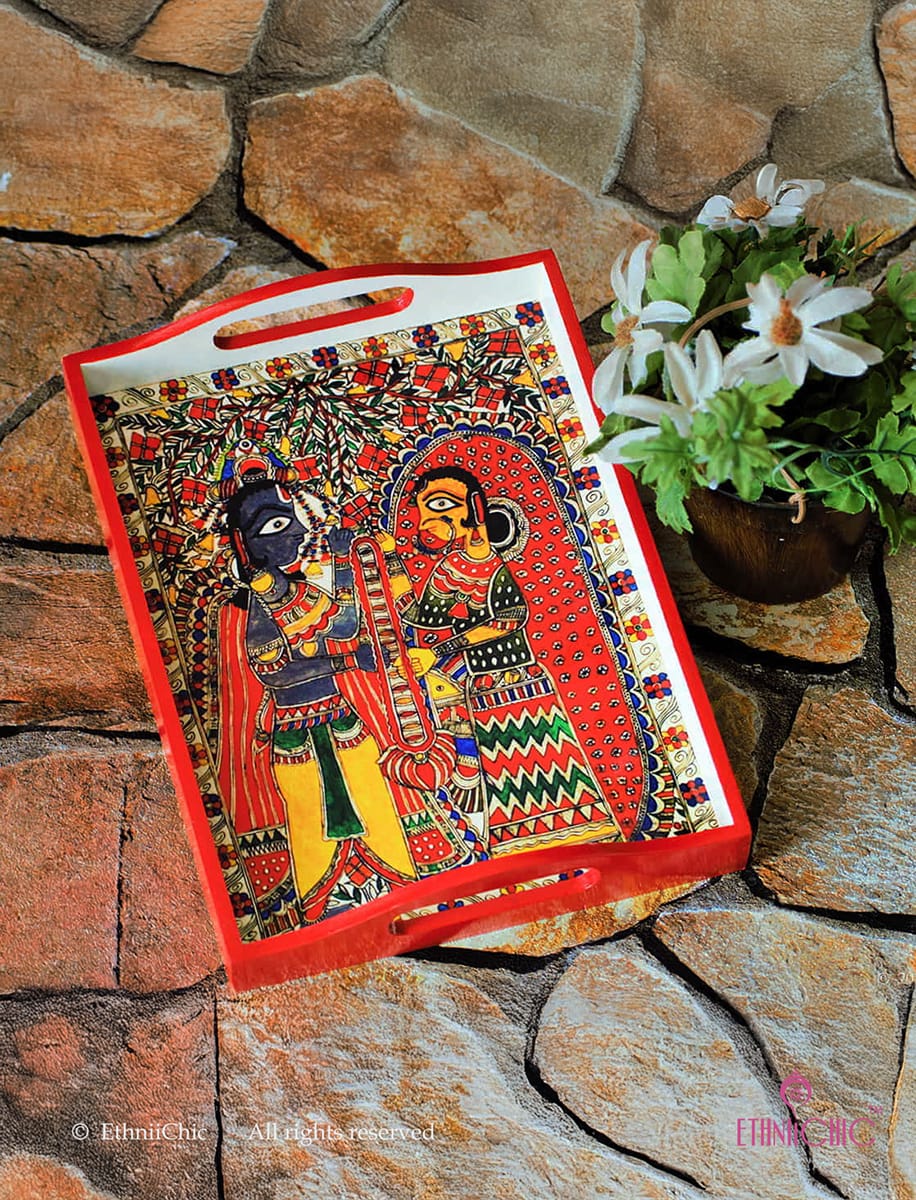
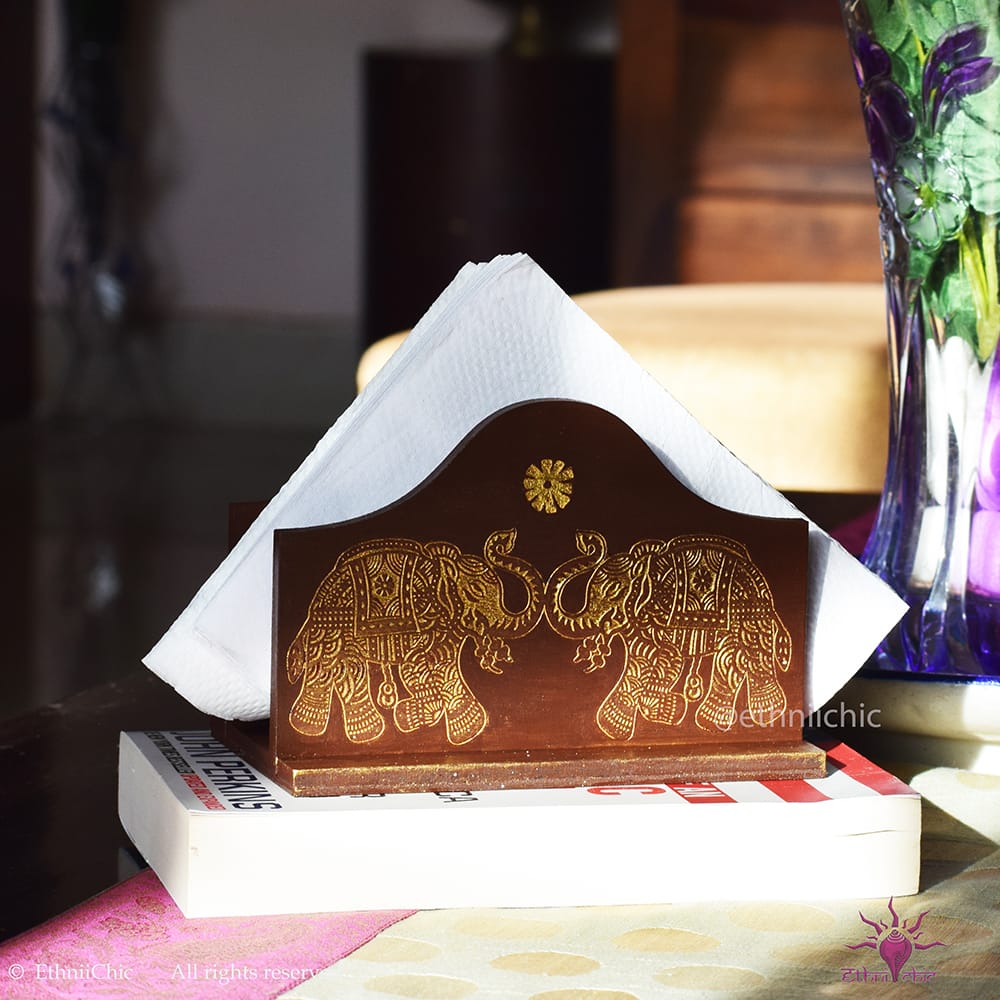
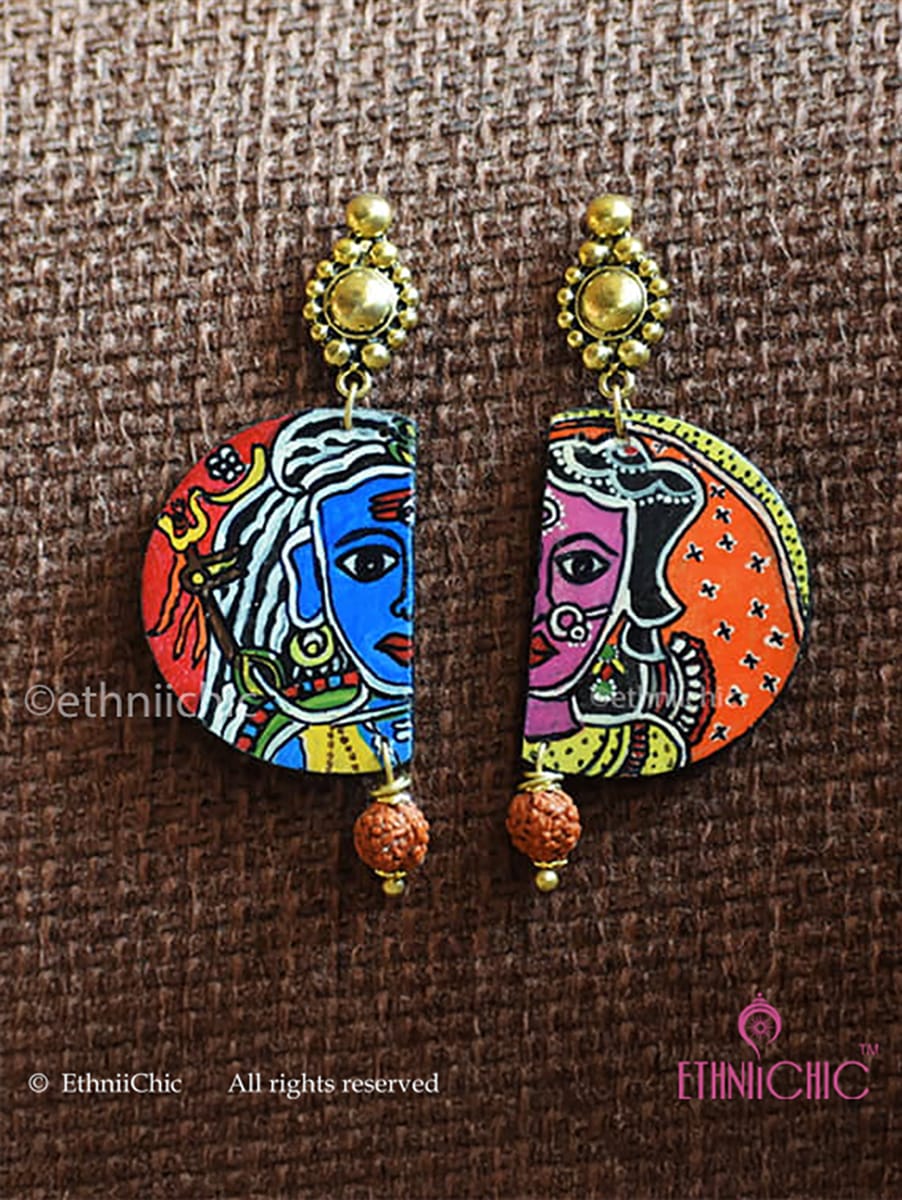
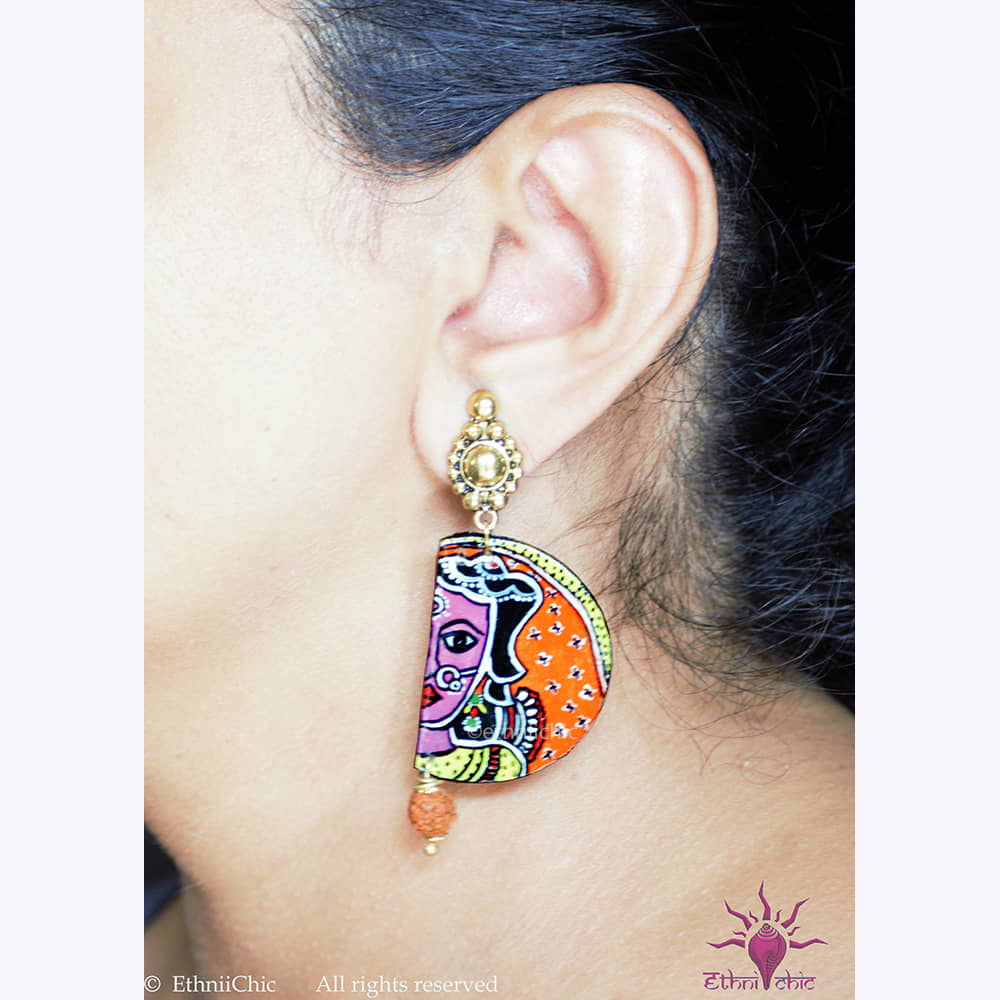
Madhubani, also called Mithila art, is one of India's oldest and most instantly recognisable folk painting traditions — dense, gapless line work filled with fish, peacocks, the sun, and figures from Hindu mythology, translated here into jewellery, wall décor, trays, tissue holders, a name board, and table clocks. The tradition is tied to a specific legend: when Sita married Lord Rama, her father King Janak of Mithila is said to have commissioned artists to paint the wedding celebrations — the origin story local tradition still credits for the style's birth, even though its documented history runs alongside that legend rather than confirming it outright.

The single most distinctive rule of Madhubani composition is that no space is left empty. Where a lot of decorative art leaves breathing room around a central motif, genuine Madhubani fills every gap — with smaller fish, flowers, birds, or geometric patterning — because in its original wall-painting form, an unfilled background read as an unfinished painting, not a stylistic choice.

Five Named Styles Within One Tradition

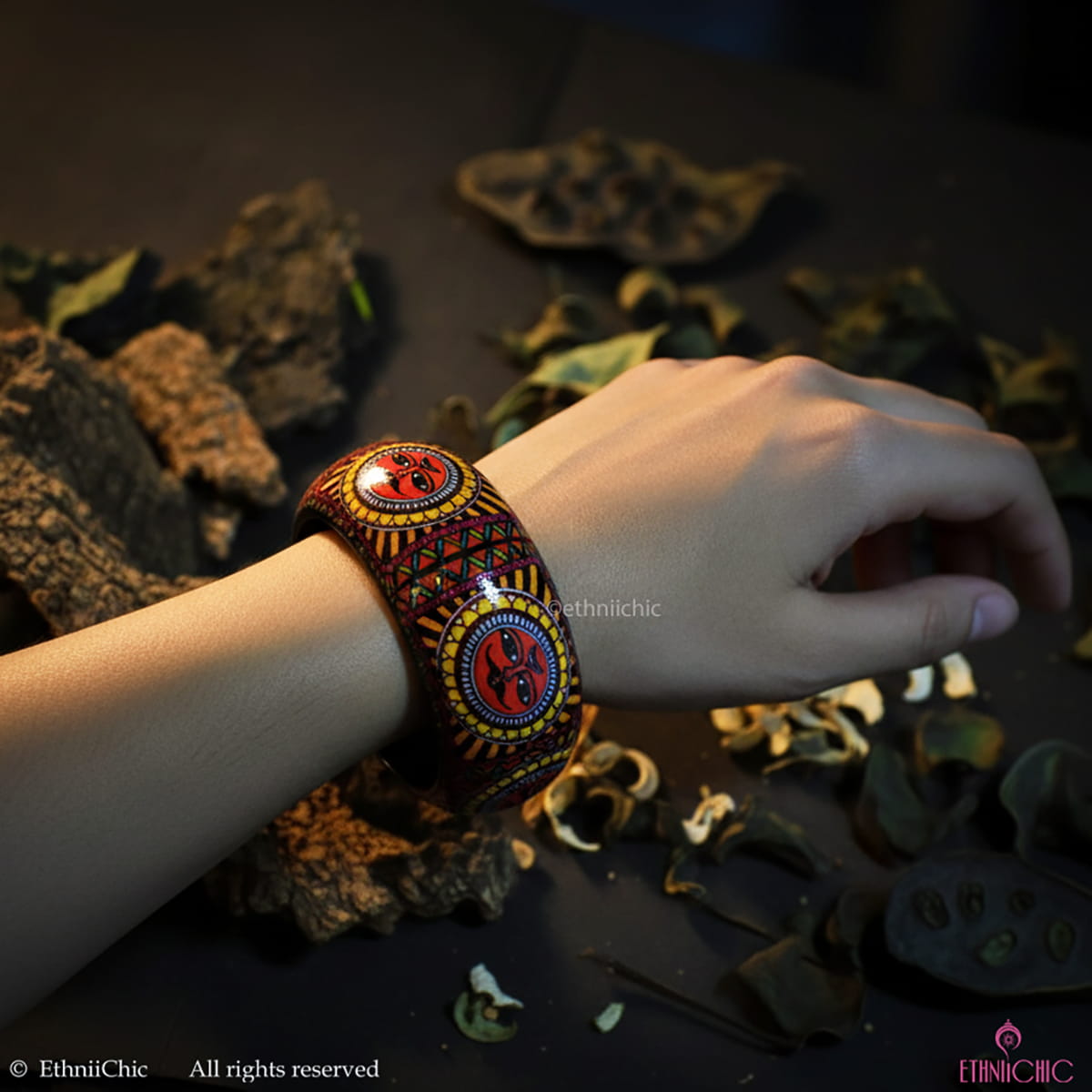
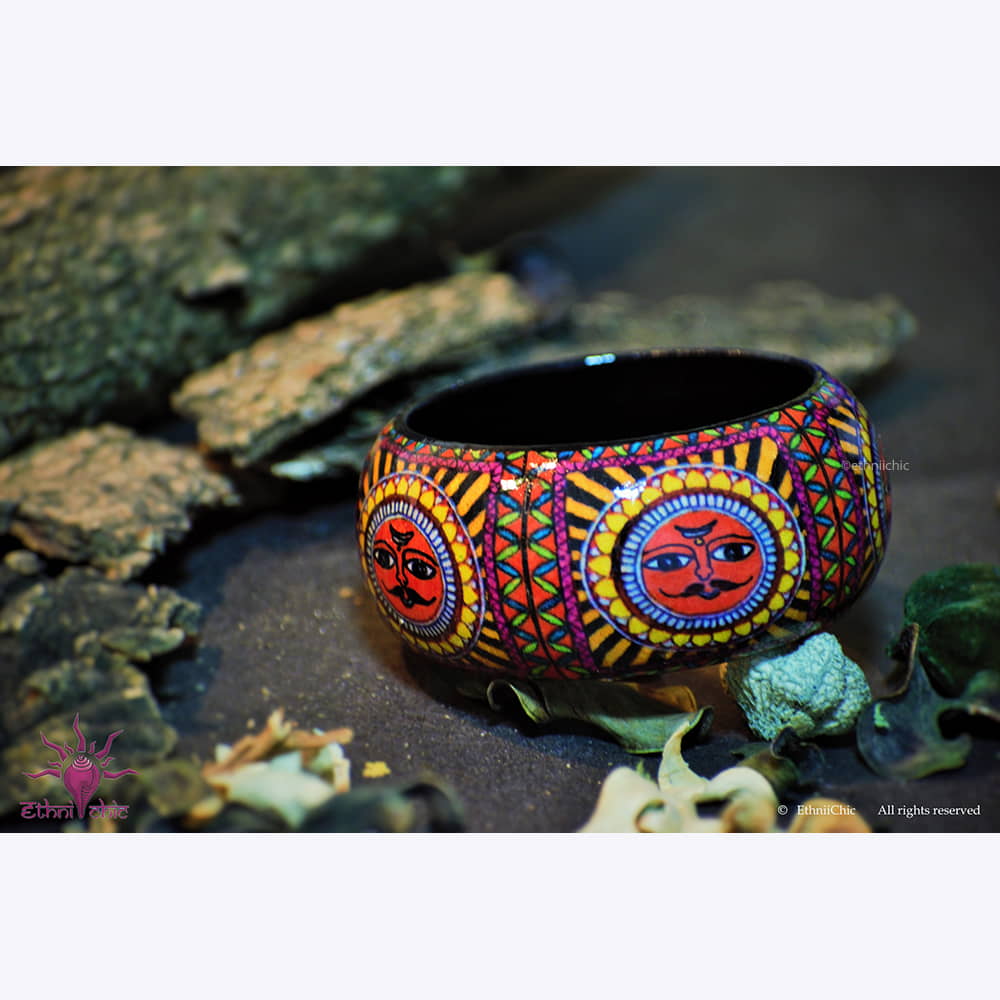
Madhubani isn't a single fixed technique — it's actually five recognised sub-styles, each with its own character: Bharni (bold, filled colour work), Kachni (fine line work with minimal colour fill), Tantrik (religious and symbolic imagery), Godna (tattoo-inspired patterning), and Kohbar — circular compositions of stylised faces in red and black line work, traditionally painted on the walls of a wedding chamber. Knowing this matters for anyone shopping the collection with an eye for authenticity: the fine linework pieces and the bold colour-block pieces you'll see across this range aren't inconsistent execution, they're two different named traditions within the same craft.
Colour From the Earth, Not the Bottle

Traditional Madhubani pigments are entirely natural: vermilion powder ground with mustard seeds for red, cow dung mixed with lampblack for a deep greenish black, rice paste for white, Pevdi for lemon yellow, turmeric for yellow ochre, indigo for blue, and palash flower for orange — all bound with gum arabic or goat's milk rather than synthetic medium. EthniiChic's studio artists paint in that same colour and linework tradition, carried onto jewellery, wood, and metal-accented pieces rather than plastered mud walls.
Shop Jewellery → · Shop Trays →

What the Motifs Mean

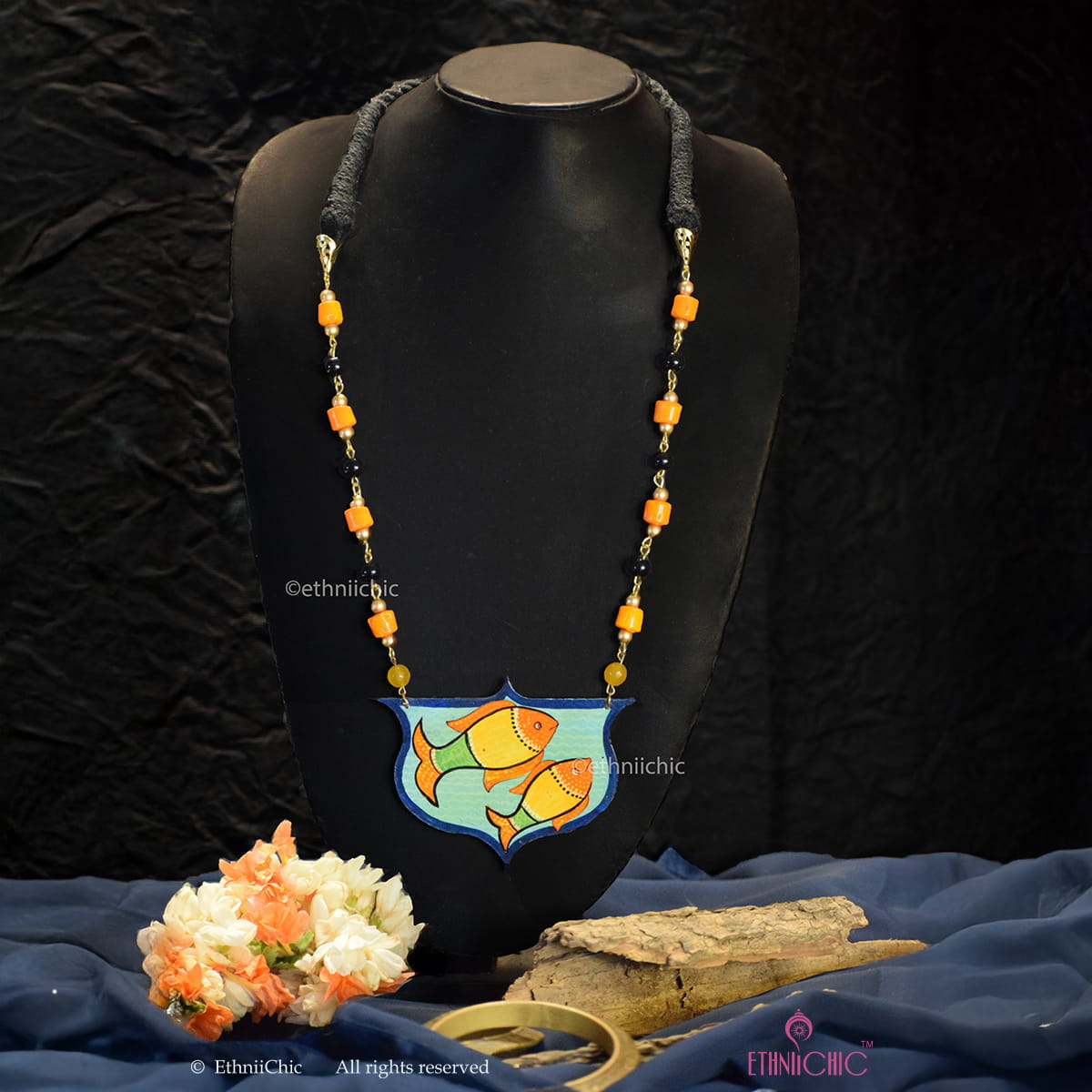
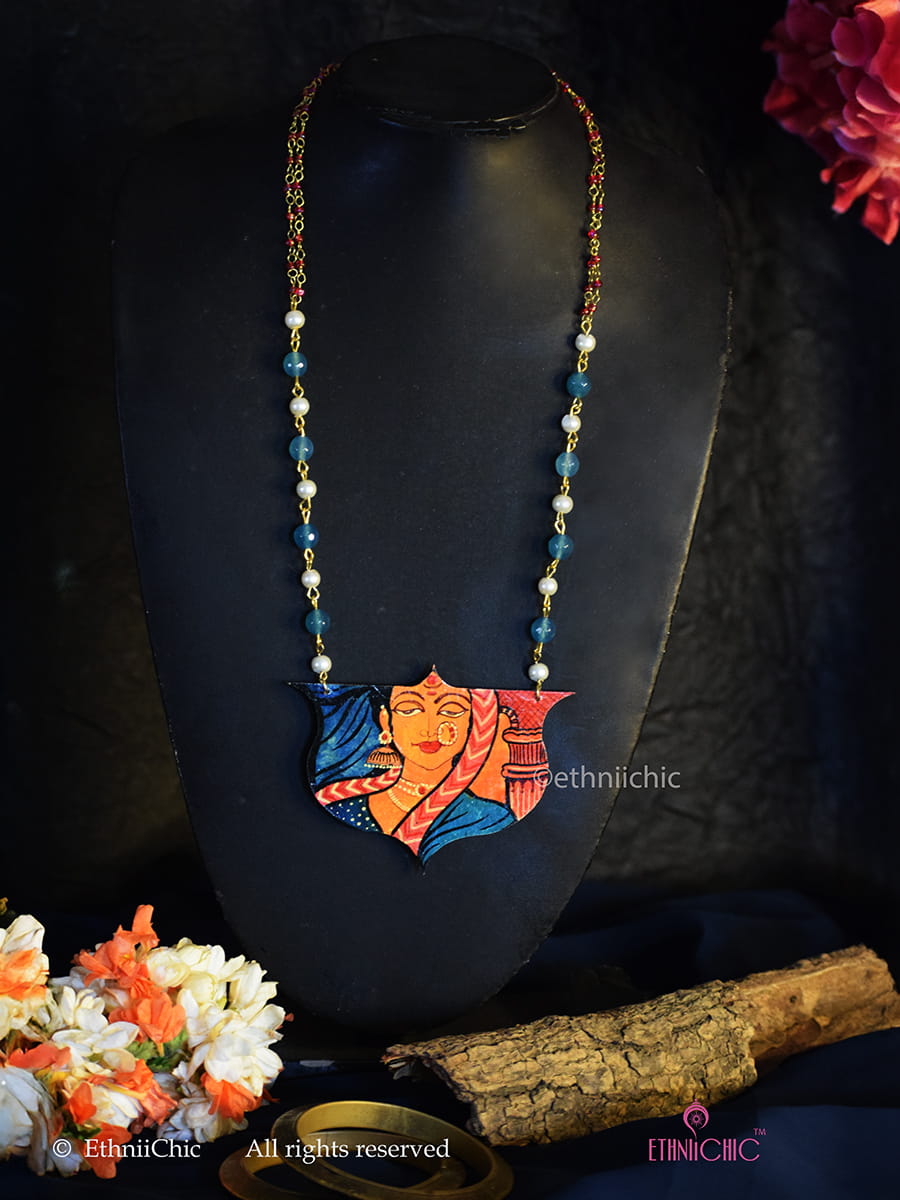
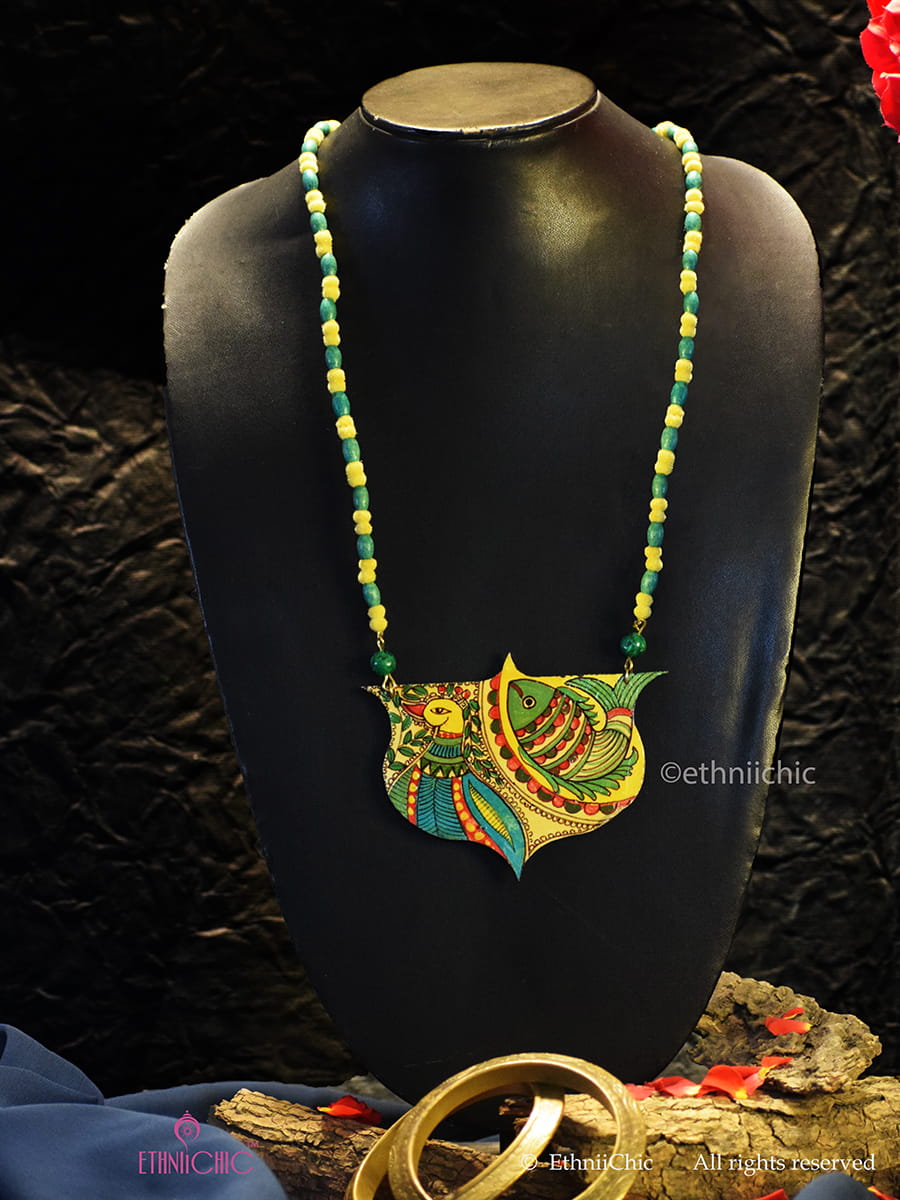
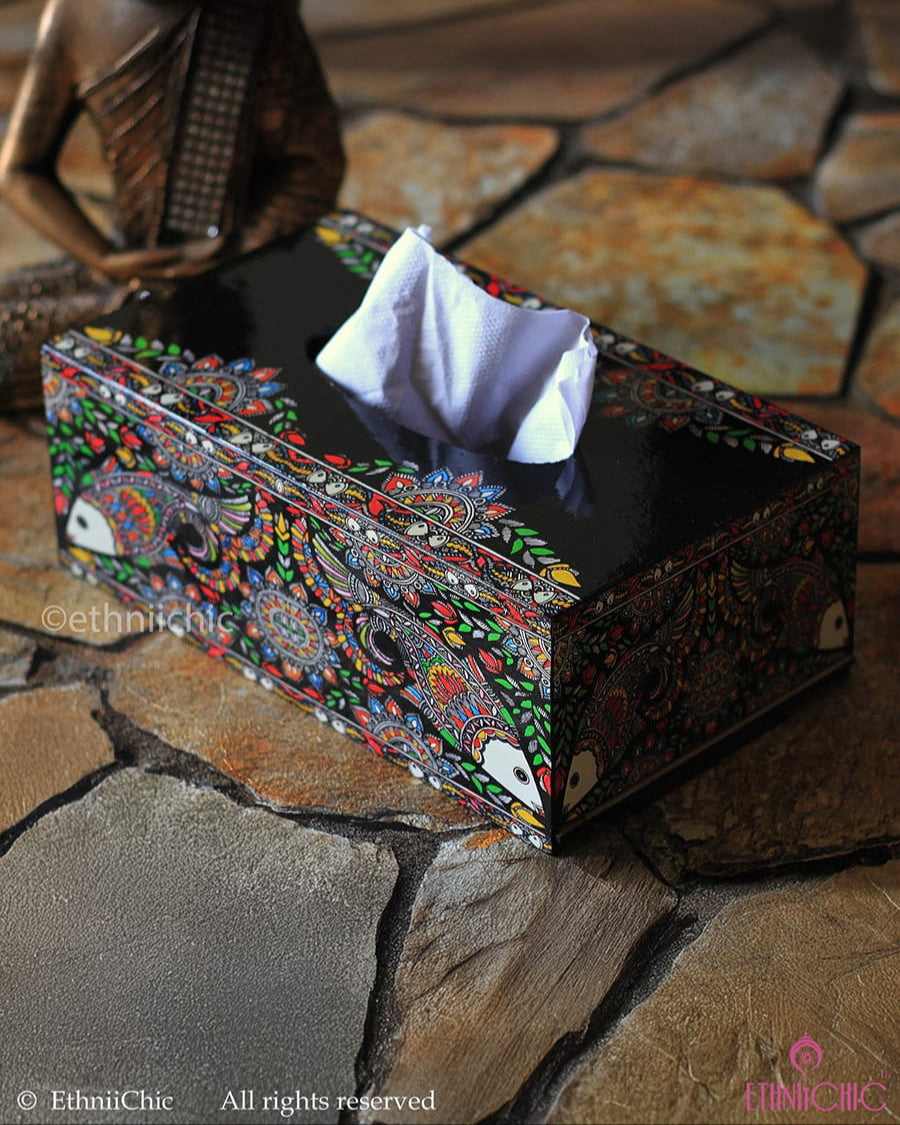
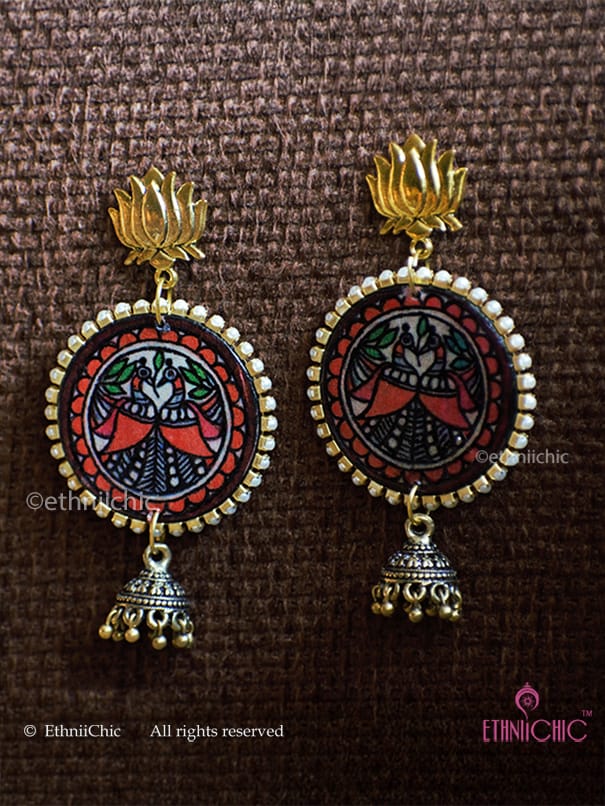
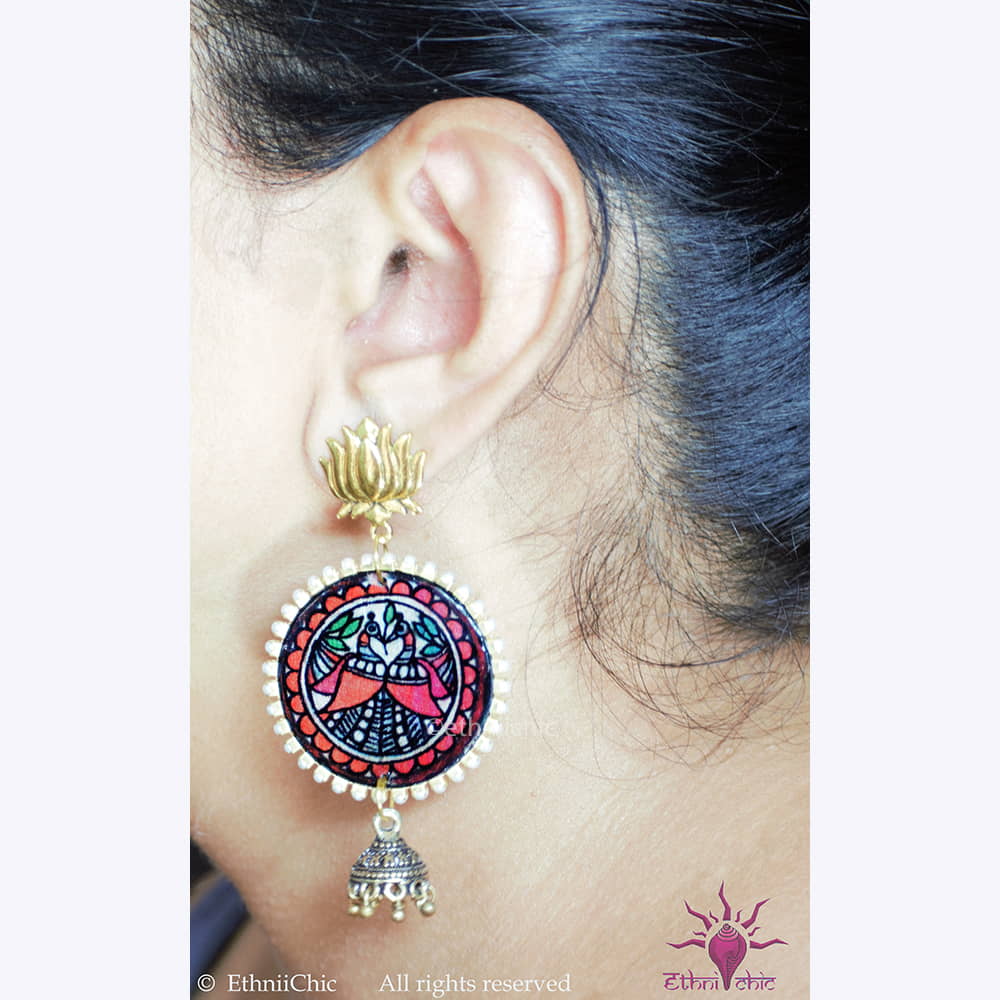
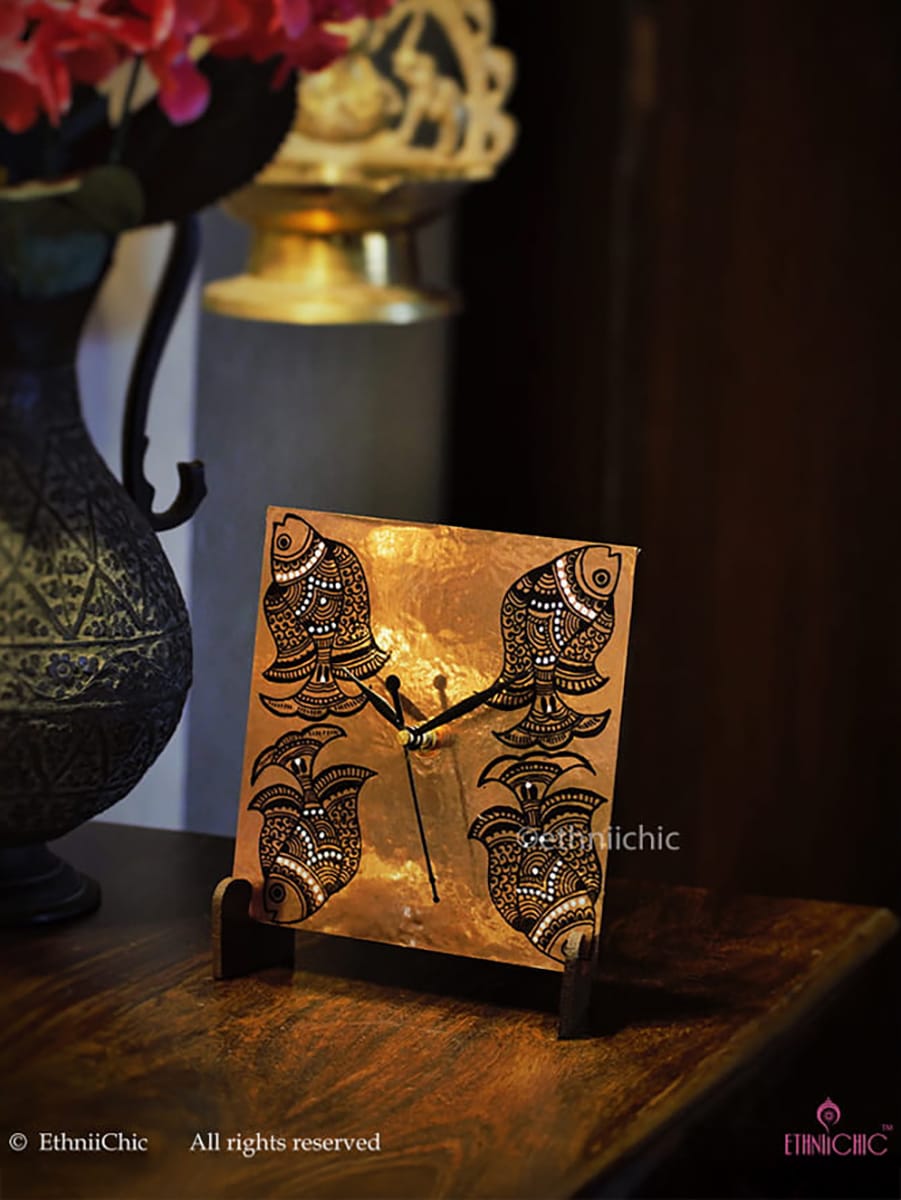
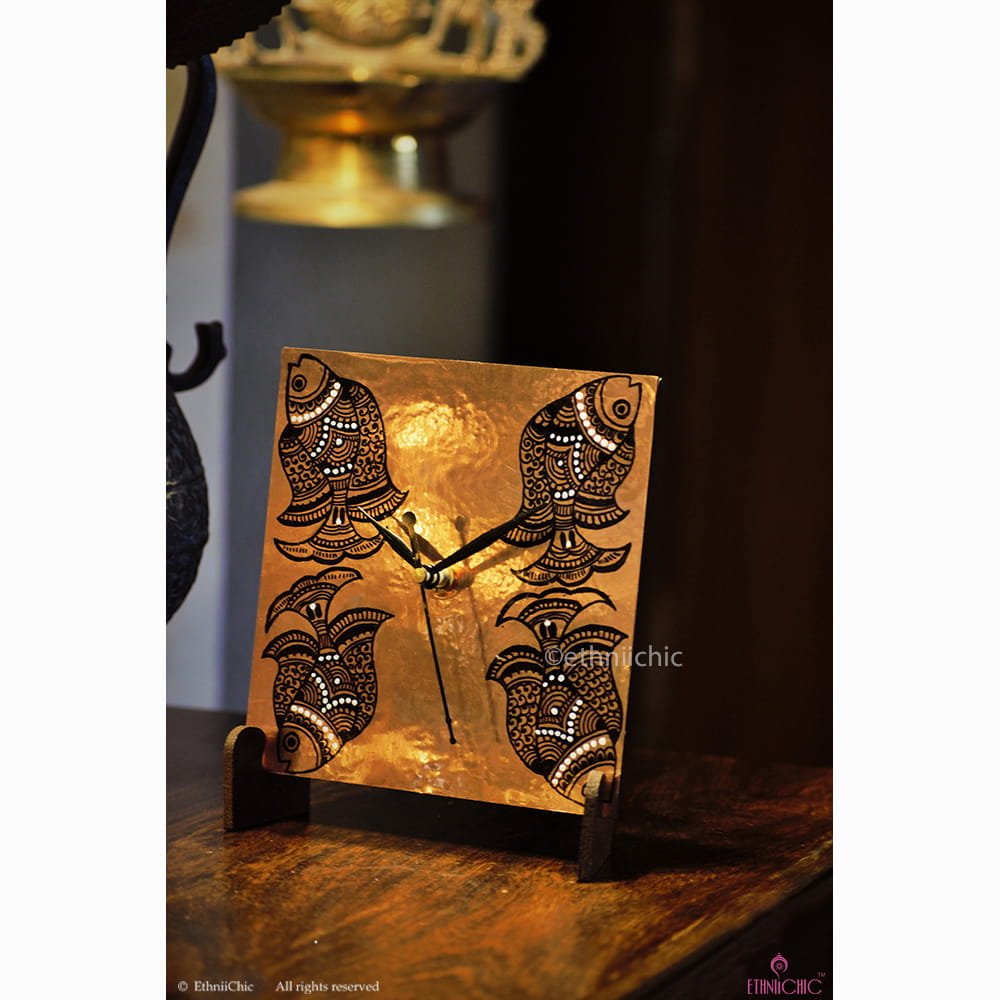
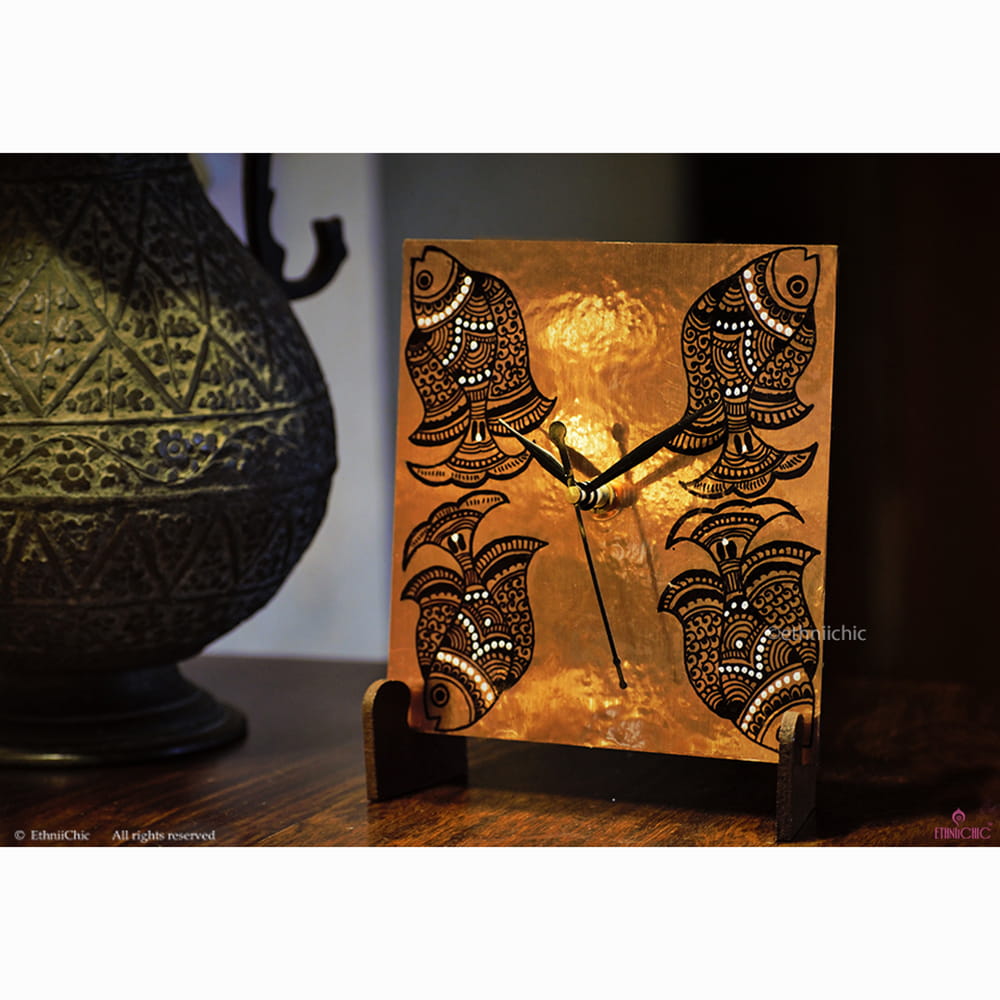
Fish recur constantly across this collection — in pendants, trays, and tissue boxes — as a symbol of fertility and good fortune. Peacocks stand for beauty and grace, the sun for life and auspiciousness, and the lotus for purity, while direct mythological figures like Ram and Sita, and the composite deity form Ardhanarishwar, appear across specific pieces rather than as generic ornamentation. Every motif in a genuine Madhubani piece is chosen for what it represents, not picked at random for visual balance.
Shop Earrings → · Shop Tissue Holders →

Choosing Where to Start

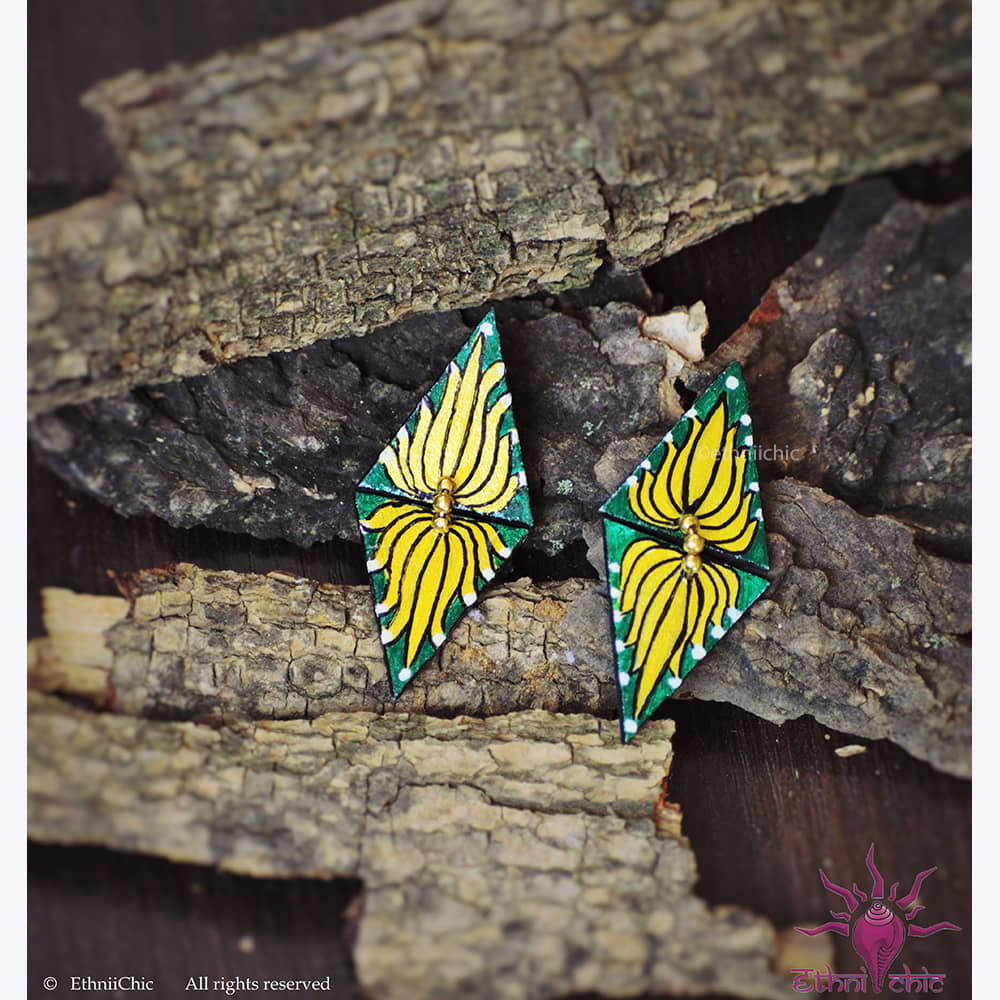
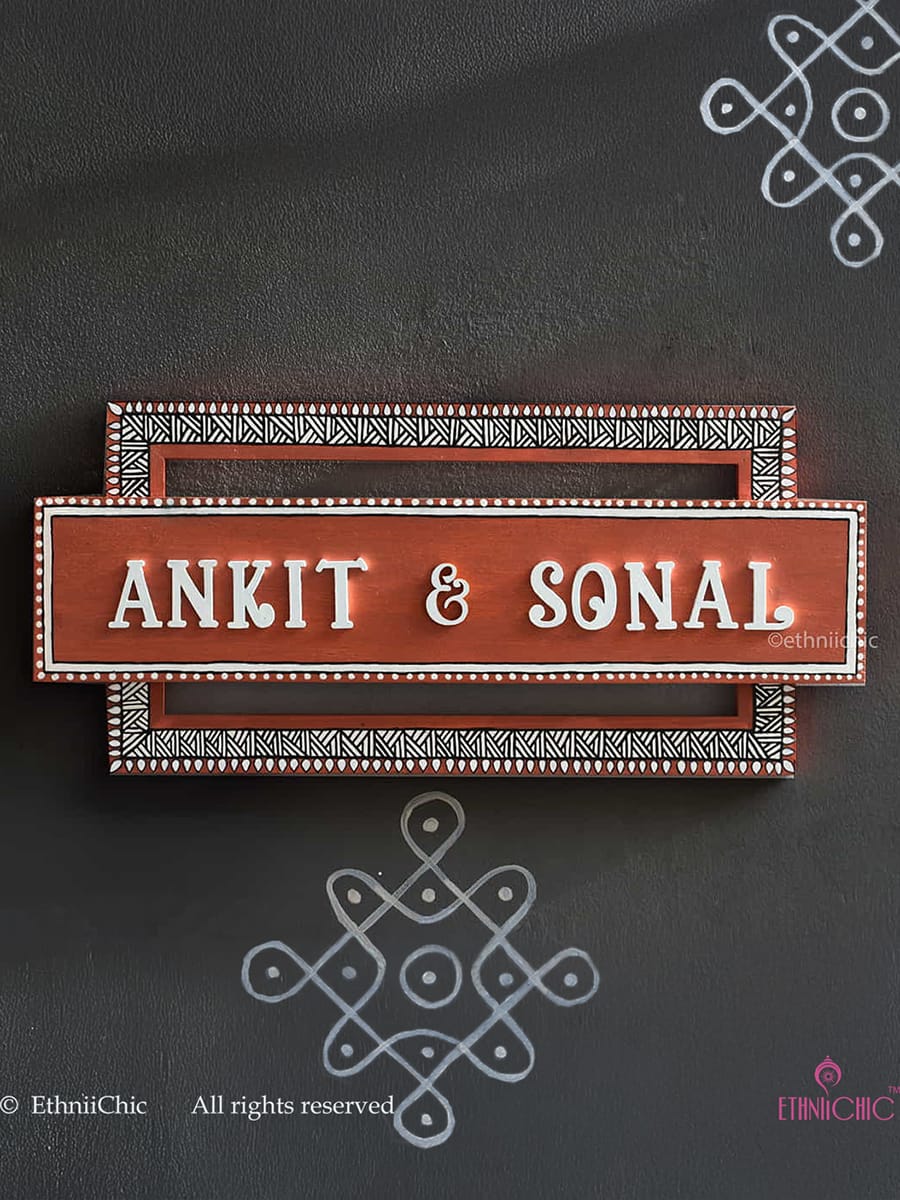
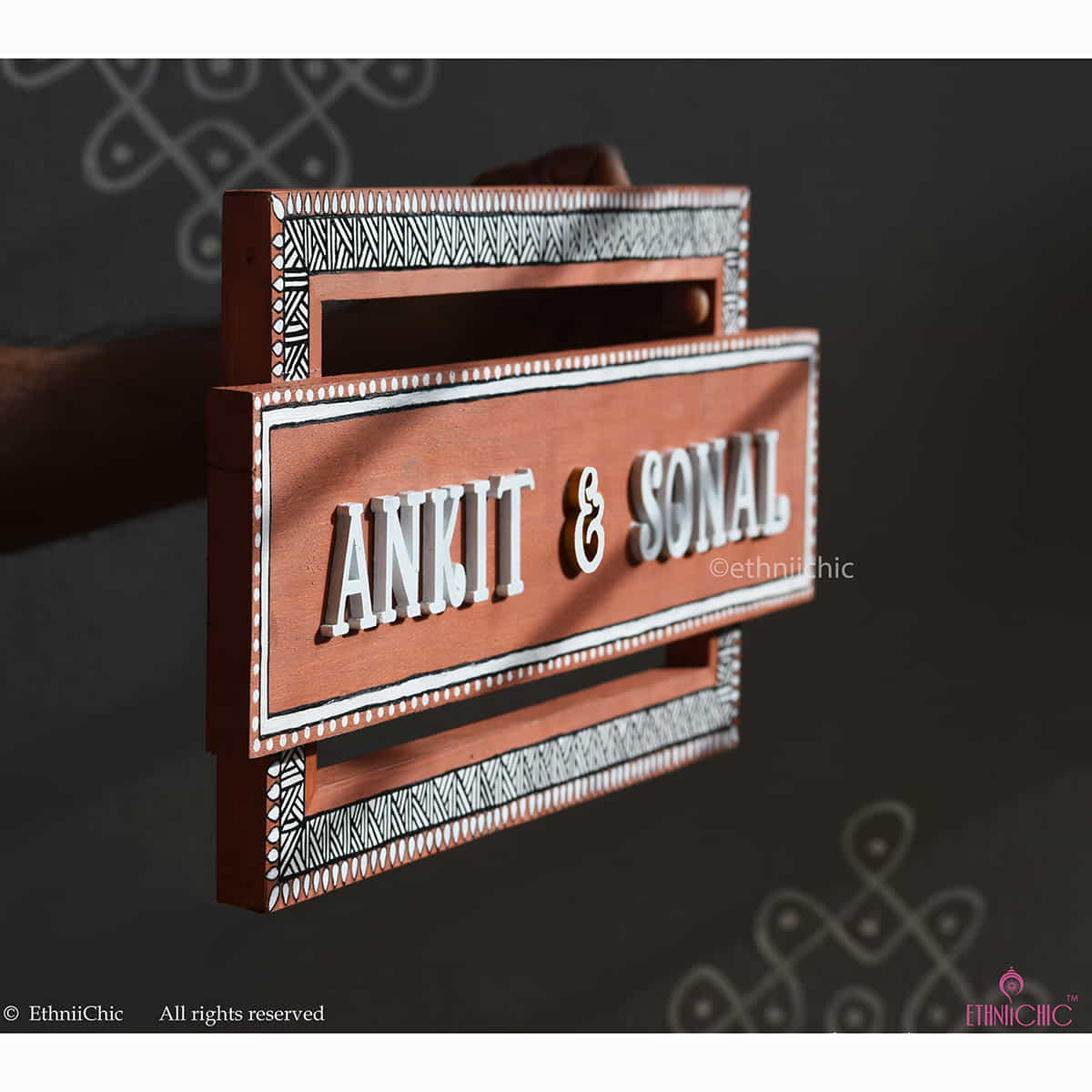
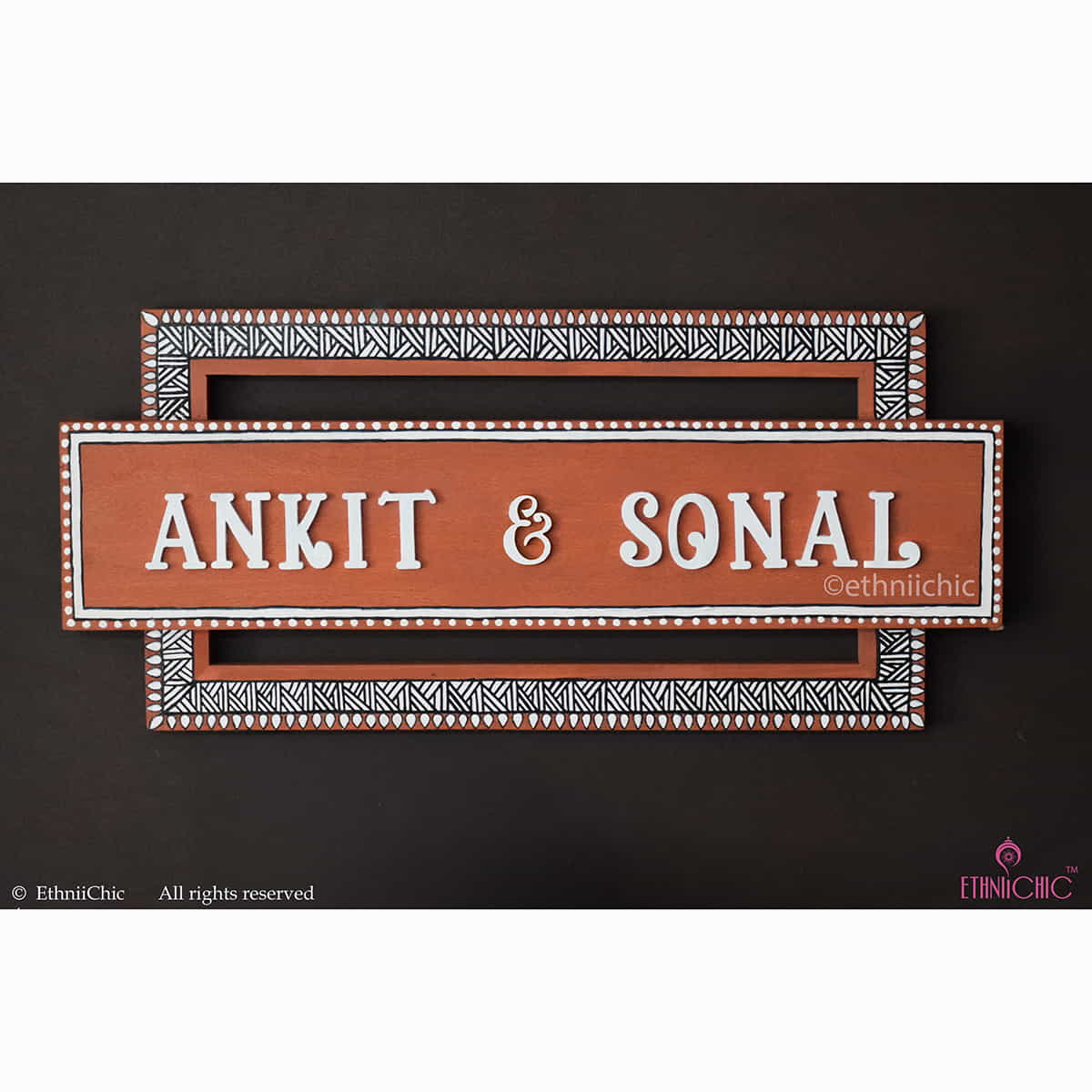
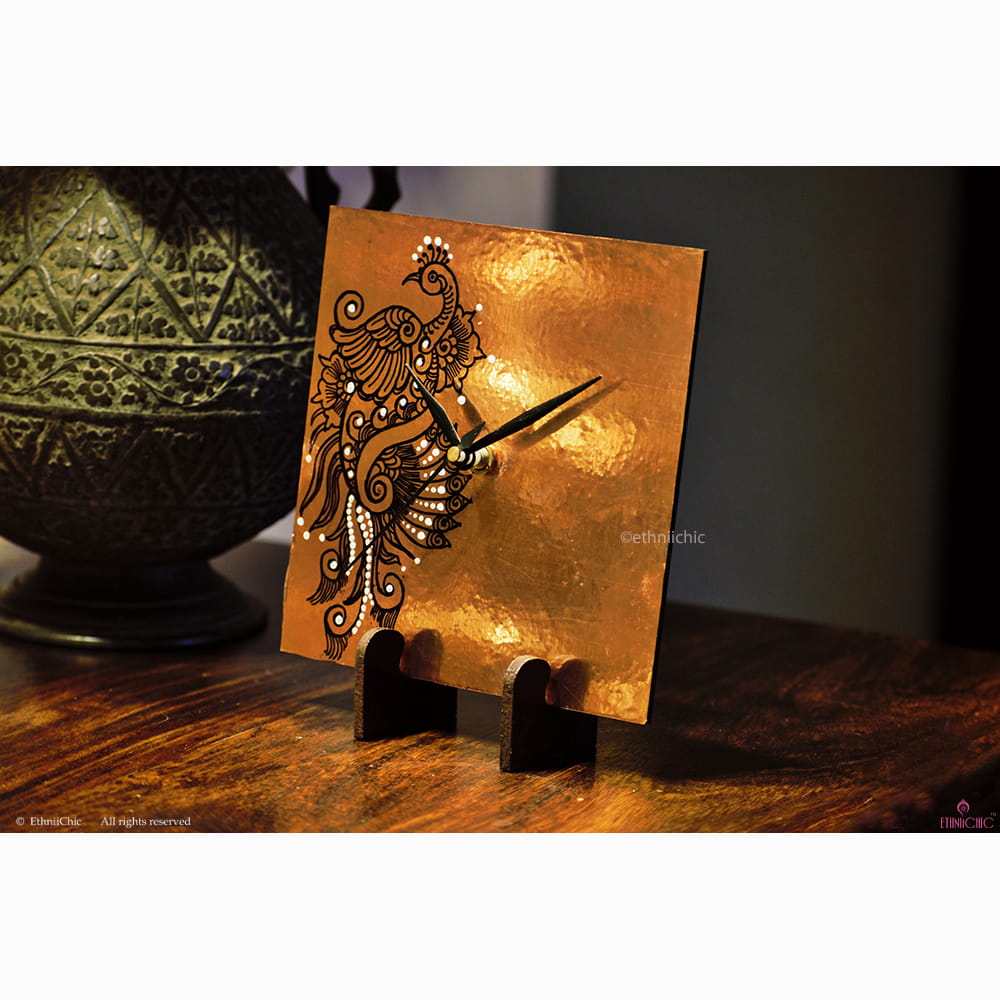
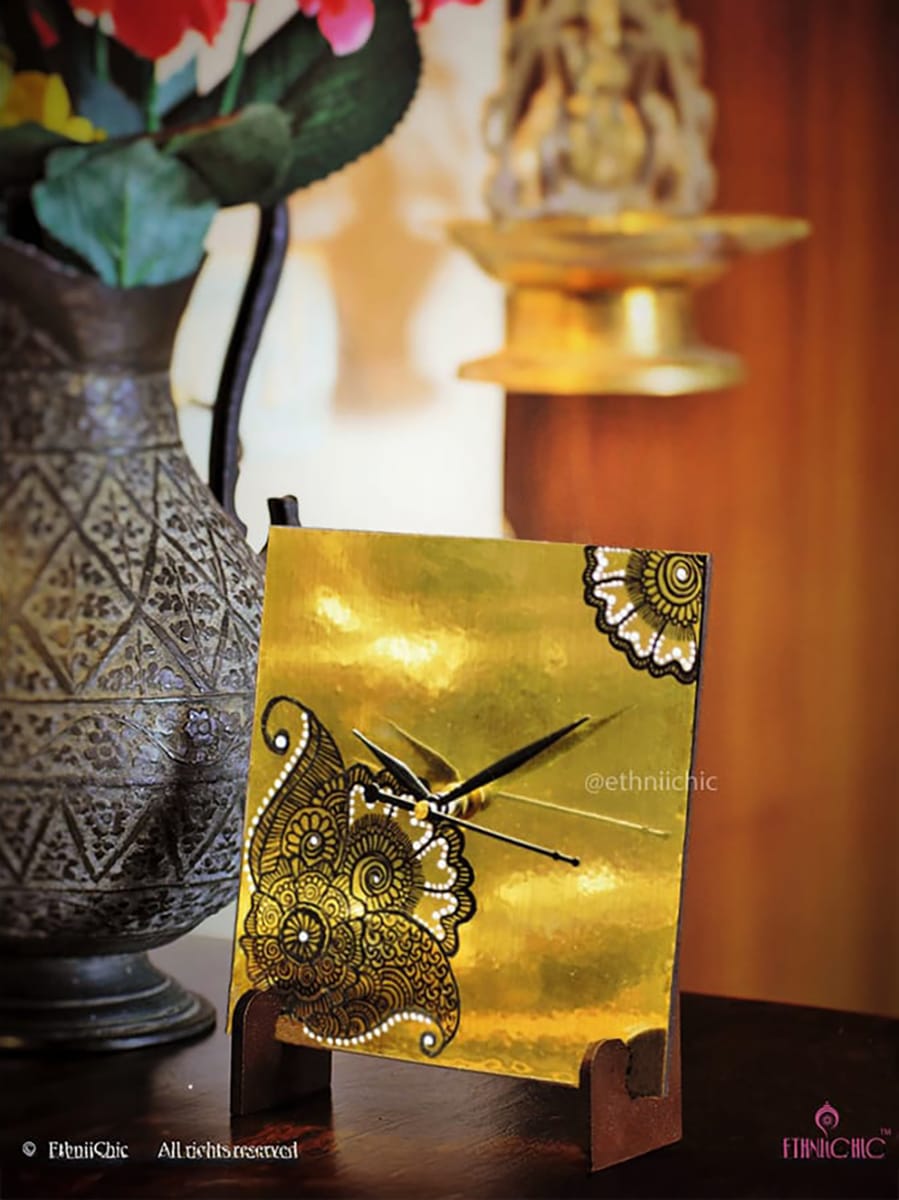
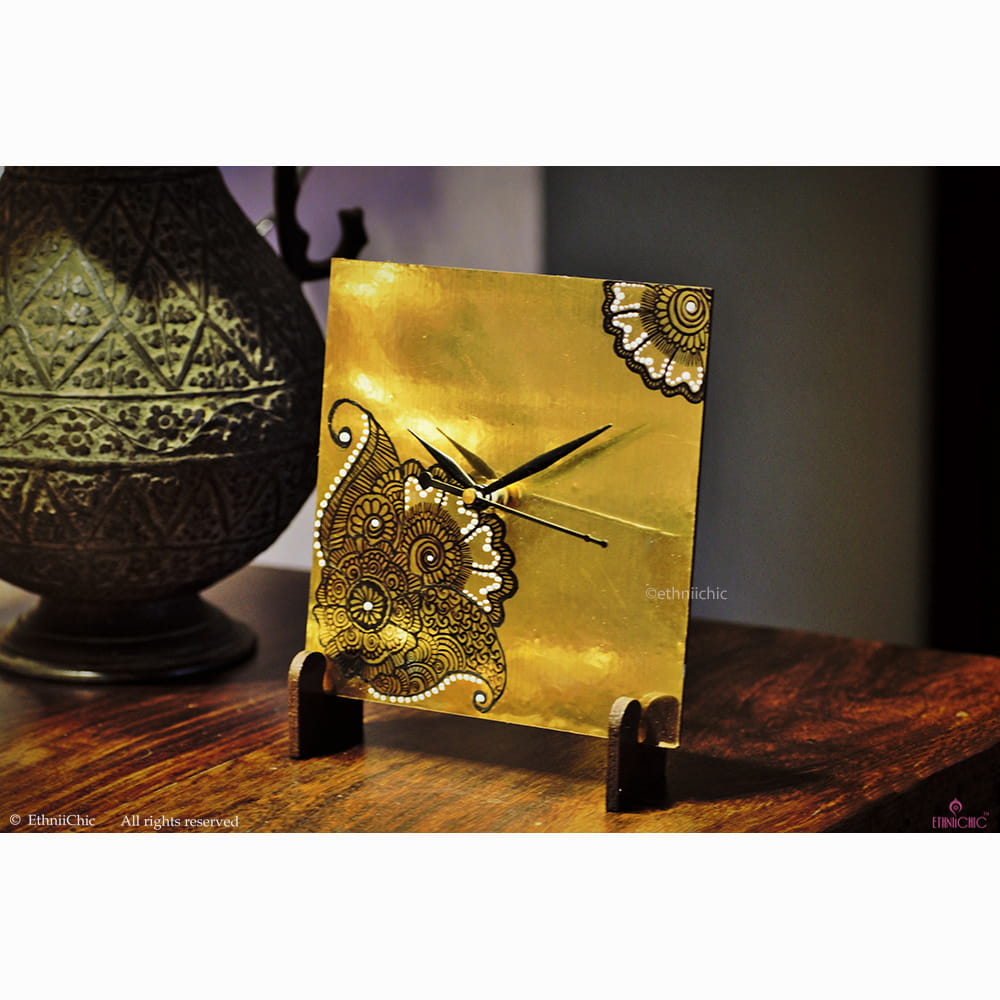
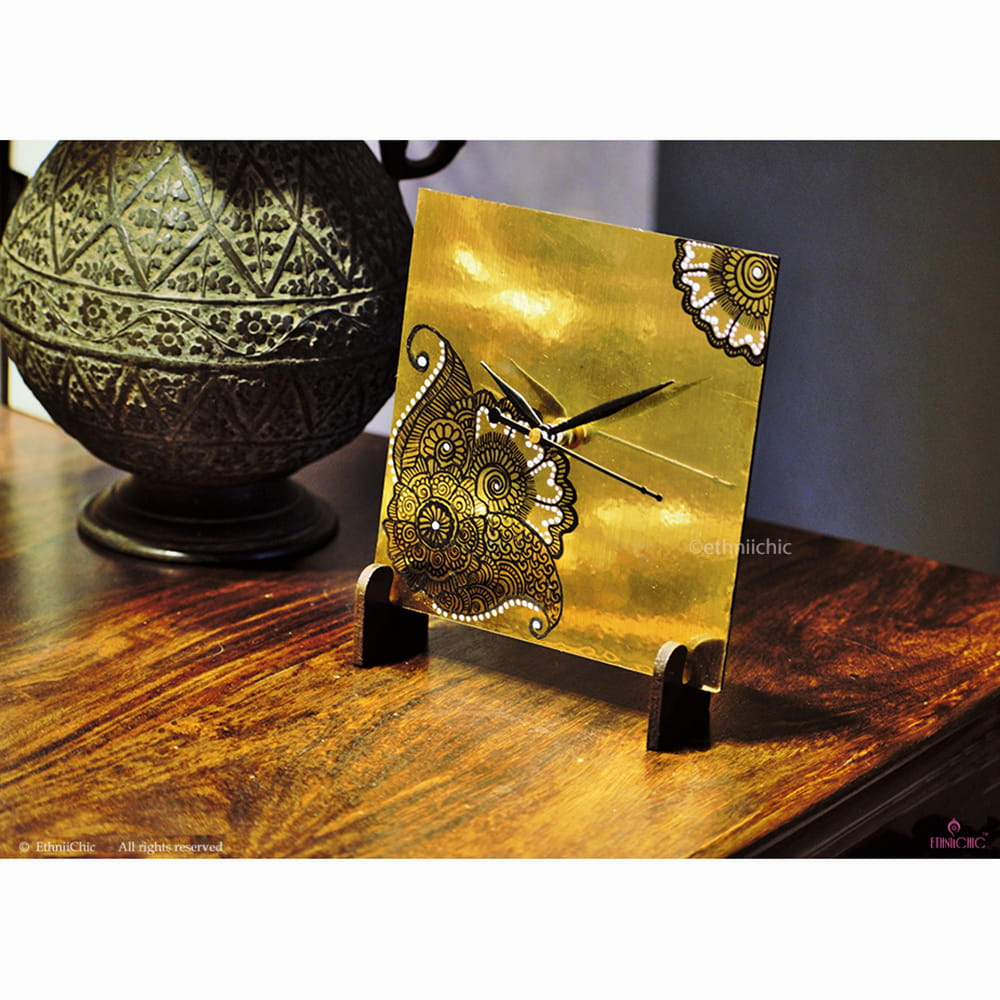
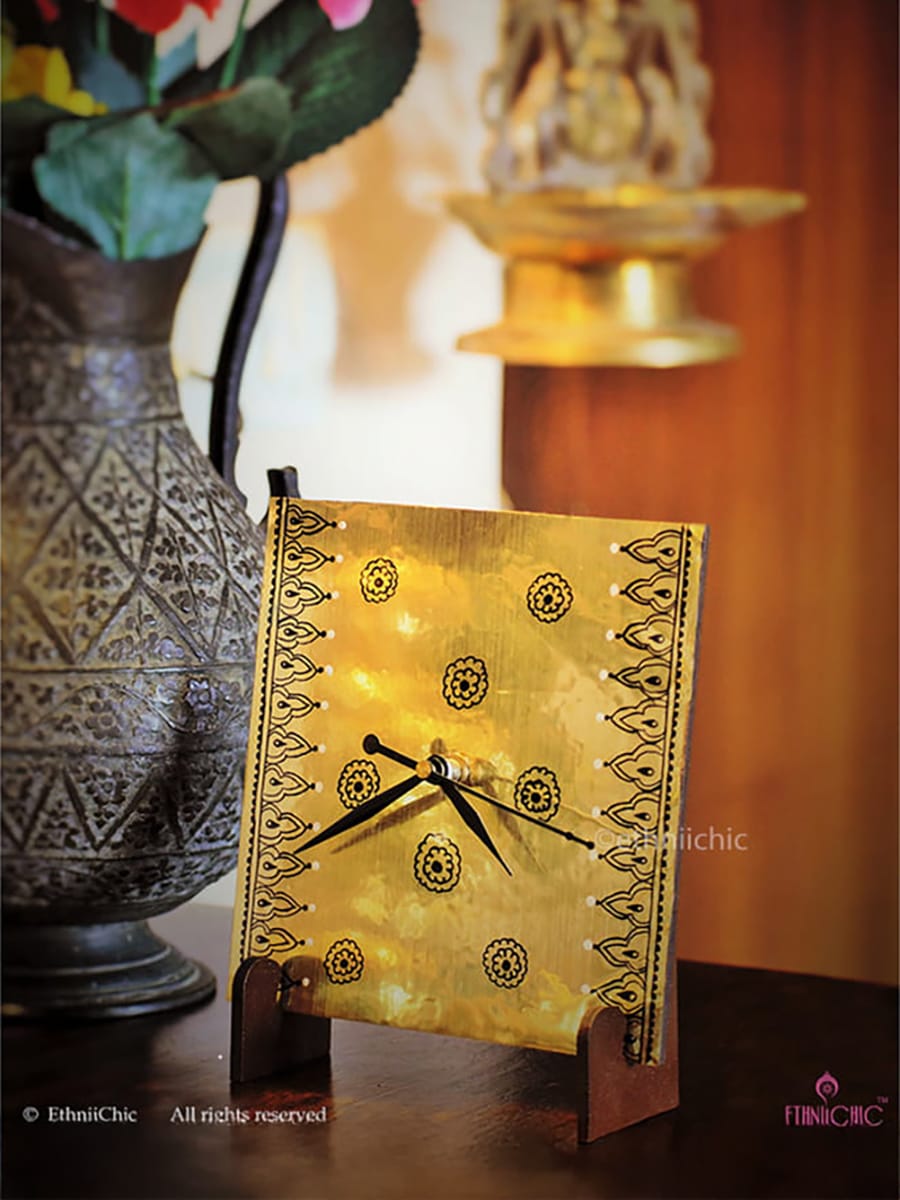
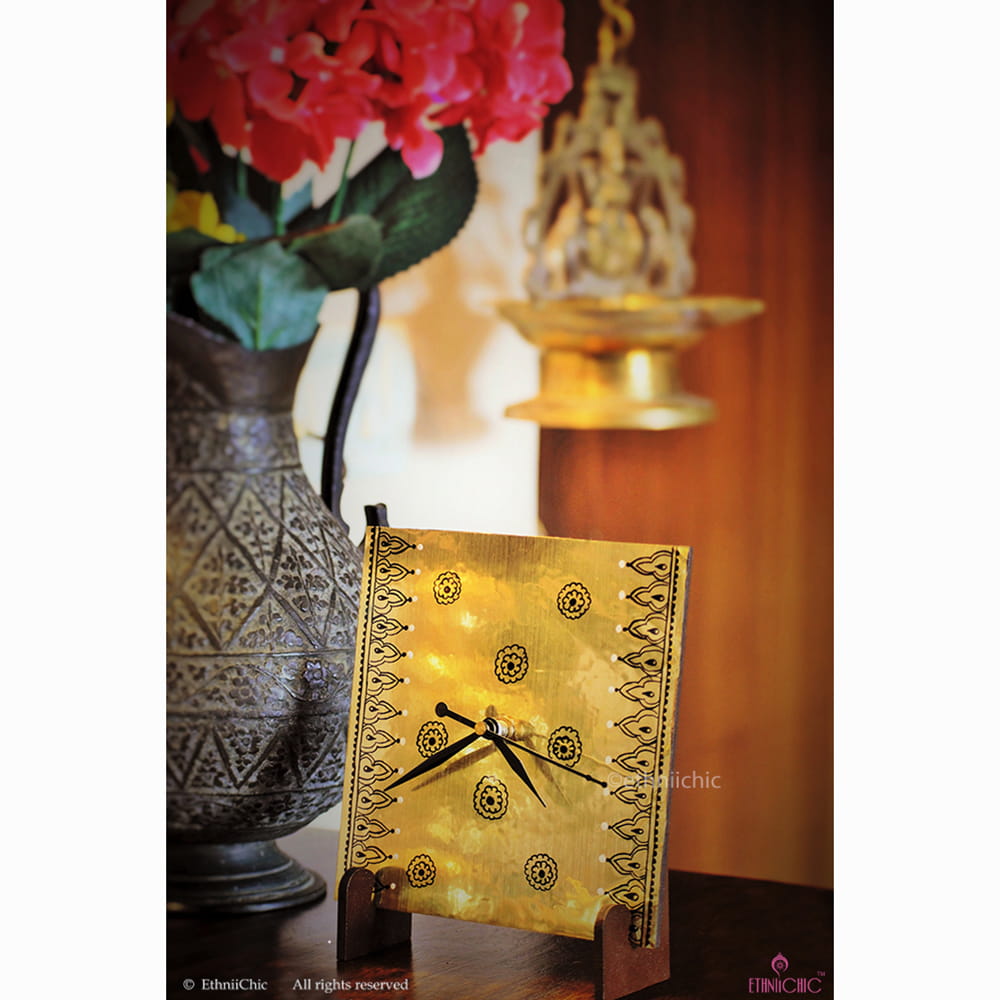
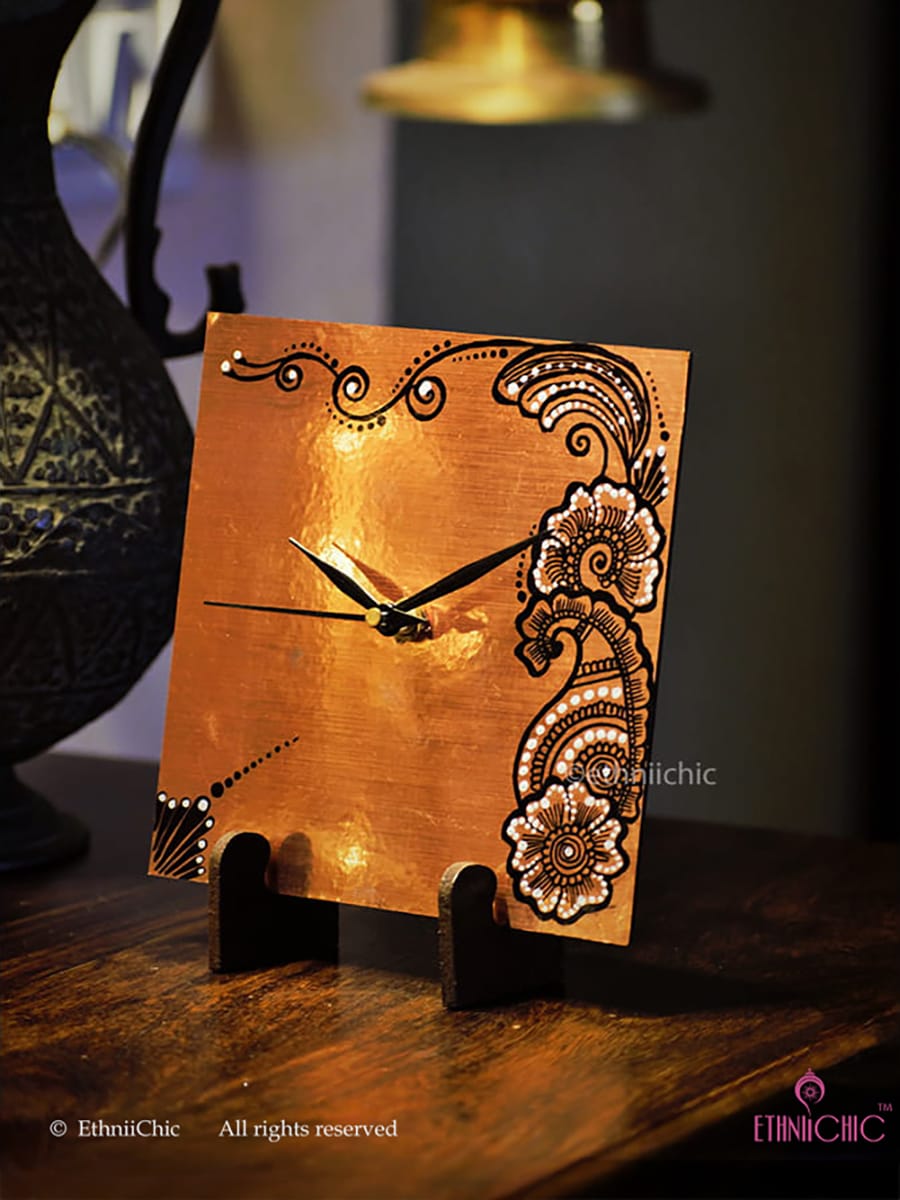
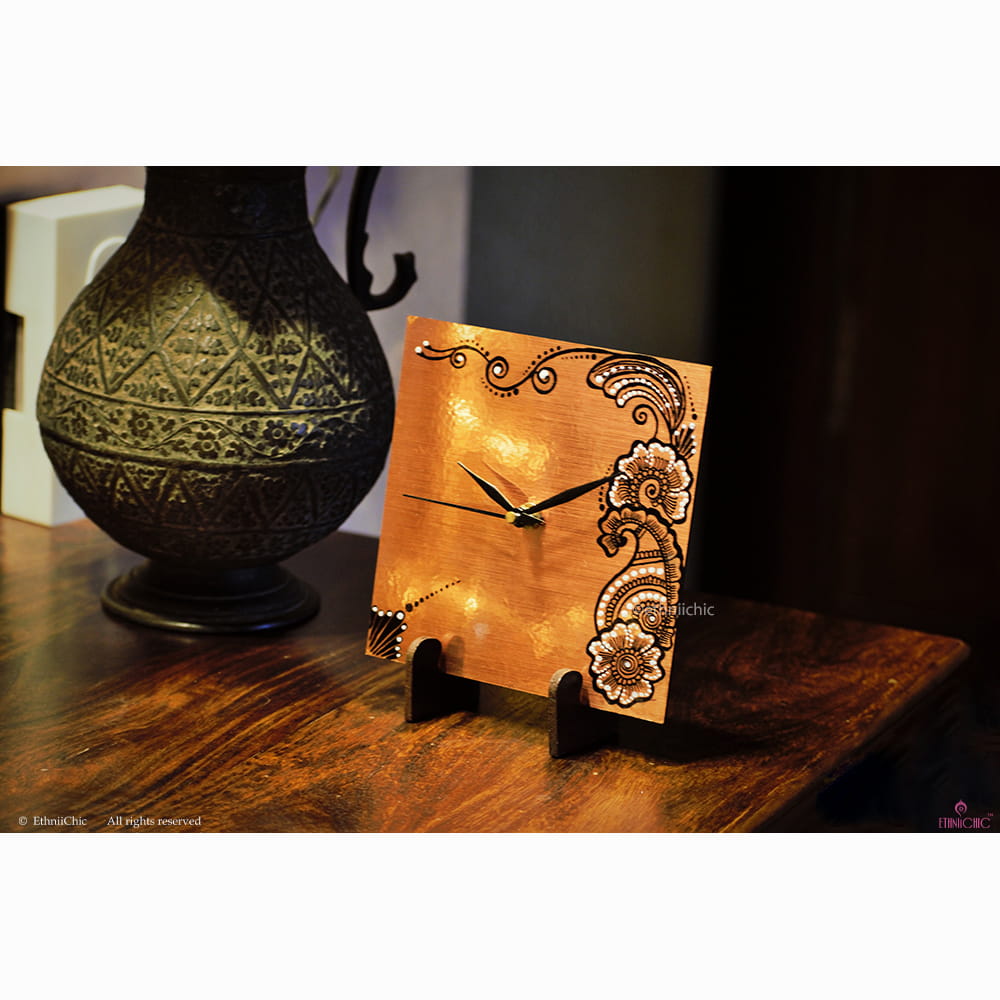
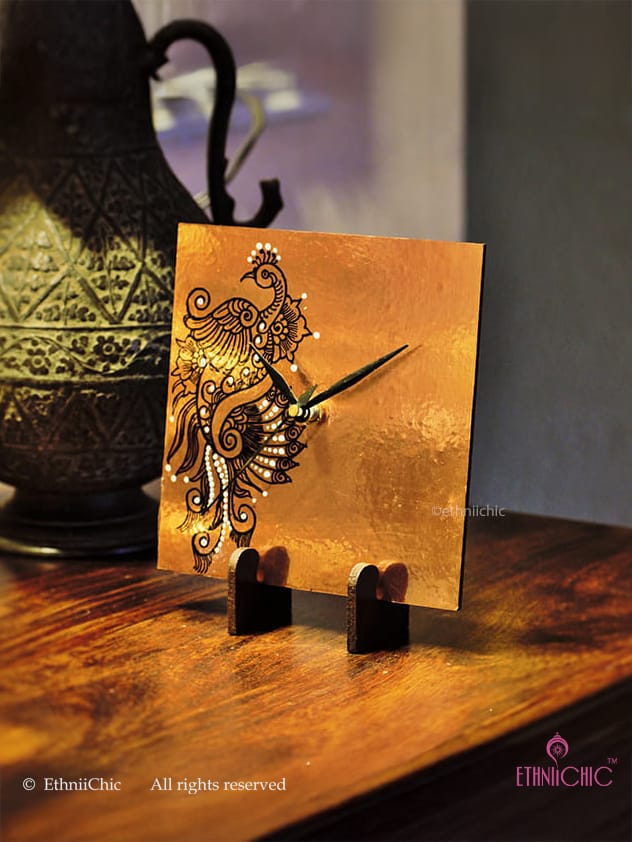
If you want to wear the tradition, the pendant necklaces and earrings — fish, peacock, lotus, and Ardhanarishwar designs — carry Madhubani's fine linework at its most detailed. If you want it in daily use, the trays, tissue boxes, and coasters bring the motif into rooms you're in every day. And if you want one statement piece, the Madhubani name board or a copper-and-wood table clock makes a genuinely distinctive entryway or console piece.

Madhubani as a Gift

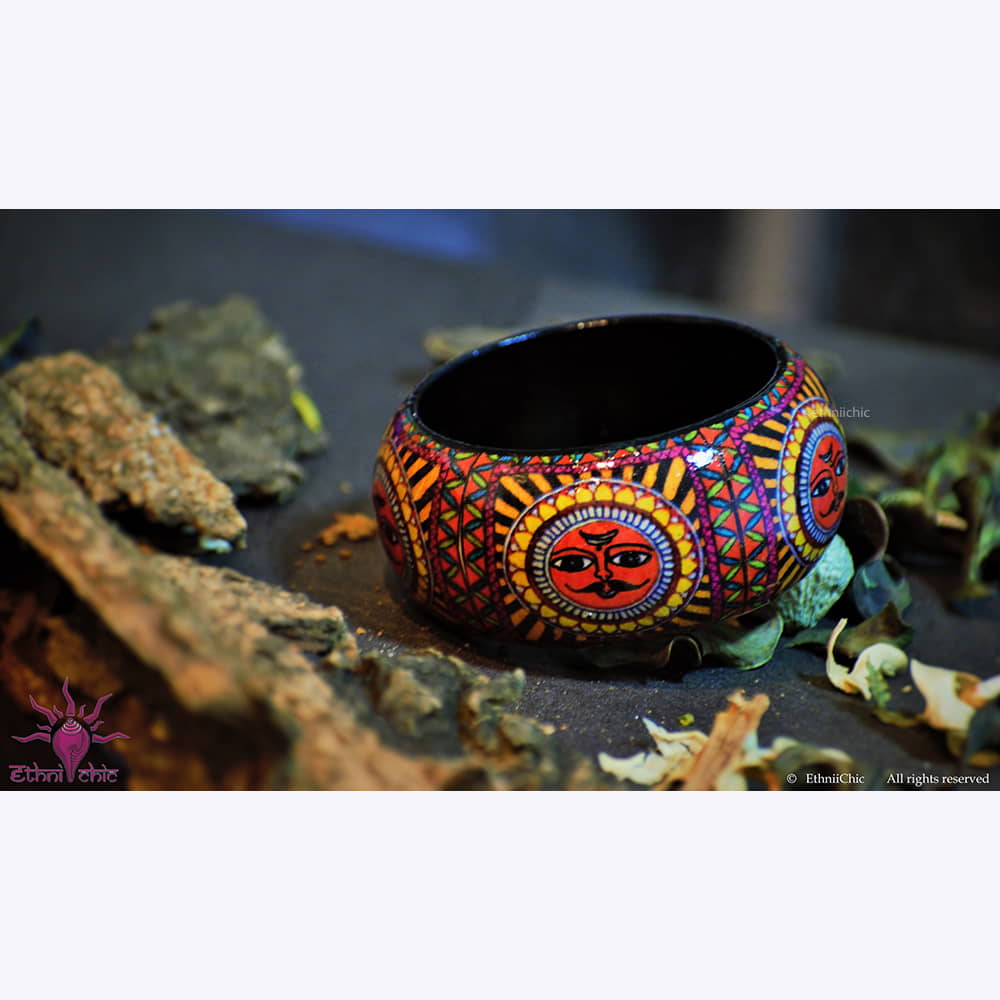
Because Madhubani is one of the most widely recognised Indian folk art styles internationally, it's a strong choice for gifting someone outside India who wants to be able to identify what they're looking at without an explanation — the density and colour read as unmistakably Indian folk art on sight. The price range here runs from ₹450 for a sun-motif bangle to ₹2,900 for the name board, which covers most gifting budgets in one collection. Every collection ships internationally; write to contactus@ethniichic.com before ordering to confirm rates and delivery timelines for your country.

Frequently Asked Questions (FAQs)

1. What is Madhubani art?
A folk painting tradition from the Mithila region of Bihar (and neighbouring Nepal), known for dense, gapless compositions built from fine line work and natural pigments. It's also called Mithila art.

2. Where does the name and tradition of Madhubani art come from?
Local legend credits its origin to King Janak of Mithila, who is said to have commissioned artists to paint scenes from his daughter Sita's wedding to Lord Rama — a story tradition still associates with the craft's birth.

3. Are there different styles within Madhubani art?
Yes — five recognised styles: Bharni (bold filled colour), Kachni (fine line work), Tantrik (symbolic and religious imagery), Godna (tattoo-inspired patterning), and Kohbar (circular face motifs traditionally painted in wedding chambers).

4. What materials and colours are traditionally used?
Entirely natural pigments — vermilion with mustard seed for red, cow dung and lampblack for black, rice paste for white, turmeric for yellow, indigo for blue, and palash flower for orange — bound with gum arabic or goat's milk.
5. Does Madhubani art have GI (Geographical Indication) status?
Yes, Madhubani painting holds GI recognition tying the craft to Bihar as its place of origin.

6. What do the common motifs mean?
Fish typically represent fertility and good fortune, peacocks stand for beauty and grace, the sun for auspiciousness, and the lotus for purity — several appear directly across EthniiChic's Madhubani jewellery and home pieces.

7. What kinds of products are in this collection?
Jewellery (pendant necklaces, earrings, studs, bangles), wall décor and mirrors, tissue holders and boxes, trays, a name board, and table clocks — Madhubani's linework applied across wearable and home formats.
8. What's the price range across this collection?
From ₹450 for a sun-motif bangle to ₹2,900 for the Madhubani name board.

9. Do you ship Madhubani pieces internationally for NRI buyers?
Yes, across the full collection. Write to contactus@ethniichic.com before ordering to confirm shipping rates and delivery timelines for your country.

10. Can I order a custom or bulk Madhubani piece?
Yes. Custom motifs and bulk or corporate gifting orders can be arranged through Commission Artwork or Contact Us.