Hand-Painted Indian Earrings | Folk Art Jewellery Inspired by India's Living Traditions
EthniiChic's handcrafted earrings collection brings together five living Indian folk and classical art traditions — Kerala mural, Theyyam, Kathakali, Madhubani, Pichwai, and Tholu Bommalatha — hand-painted onto lightweight engineered wood with German silver embellishments. Every pair in this 52-piece collection is individually painted by hand, which means no two are identical.
From compact studs priced at ₹599 to statement tiered jhumkas and danglers, the range spans daily office wear to festive dressing, devotional gifting, and NRI homecoming pieces. The only thing these earrings have in common is that none of them could have been made by a machine.
Five Art Traditions. One Earring Collection.
What sets this collection apart from every other 'ethnic earring' you'll find online is specificity. These aren't vaguely 'Indian-inspired' designs. Each earring belongs to a named, living art tradition with a geography, a community, and centuries of history behind it. Here's what's in the collection:
Kerala Mural Art Earrings
The largest grouping in the collection. Kerala mural art originates from the temple walls of South India, where devotional paintings depicted deities, celestial figures, and natural motifs in a characteristically bold palette of reds, yellows, and greens. The technique is recognised for its controlled linework, rounded shading, and serene figural style.
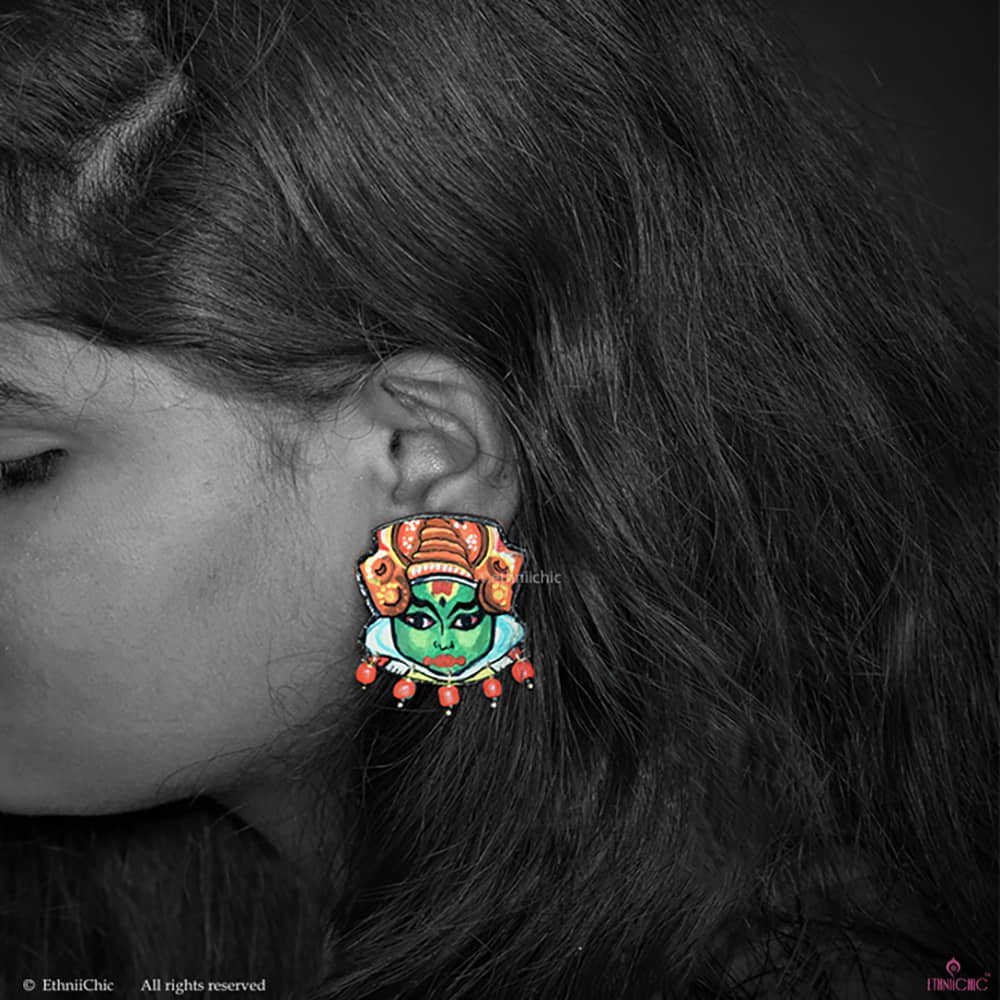
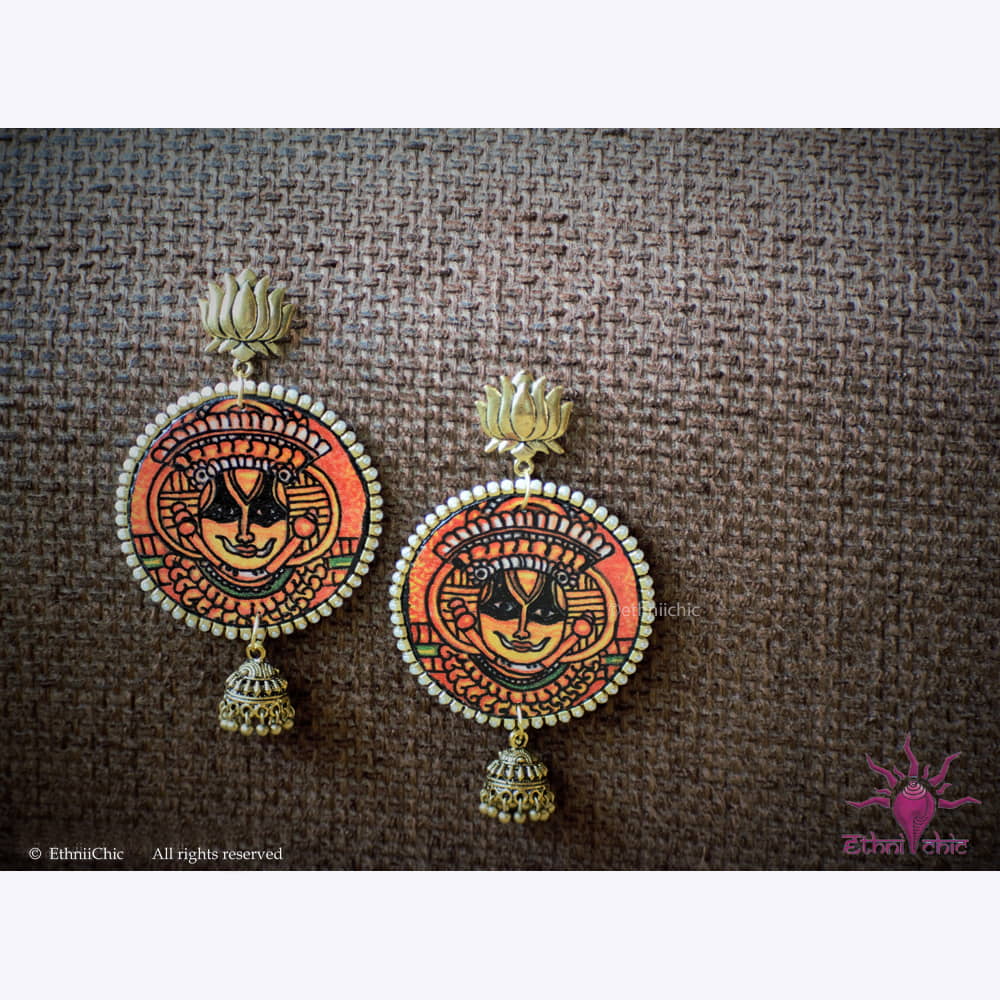
In the earrings collection, Kerala mural motifs include the iconic mural face (the serene, wide-eyed feminine figure found across Kerala's temples), peacock, lotus, floral, Apsara (celestial dancer), Ganesha, Krishna, Vishnu, and Kathakali — the classical dance-drama form whose elaborate face paint shares visual roots with mural painting. Available as studs, drops, and danglers; in colourways ranging from the traditional reds and yellows to contemporary teal, pista green, blue, and brown.
Theyyam Art Earrings
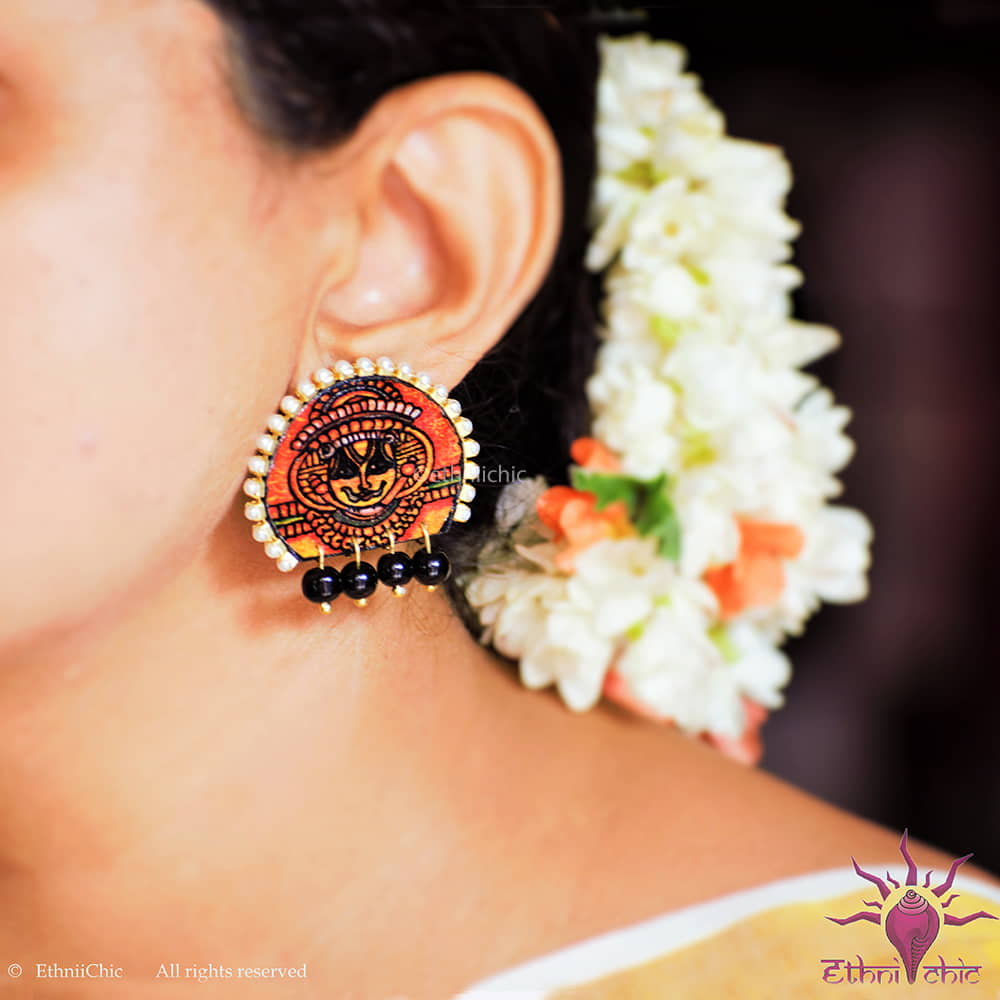
Theyyam is a ritual performance tradition from northern Kerala, where artists transform into deity figures through elaborate face paint, towering costumes, and frenzied dance during temple festivals. It is one of Kerala's most visually arresting folk art forms and one of its least commercially represented — which makes this earring series genuinely rare. The bold face-paint iconography is hand-painted in red, green, brown, and classic colourways onto compact wooden studs. Each stud is a miniature of what performers spend hours applying to their faces before a performance.
Madhubani (Mithila) Art Earrings
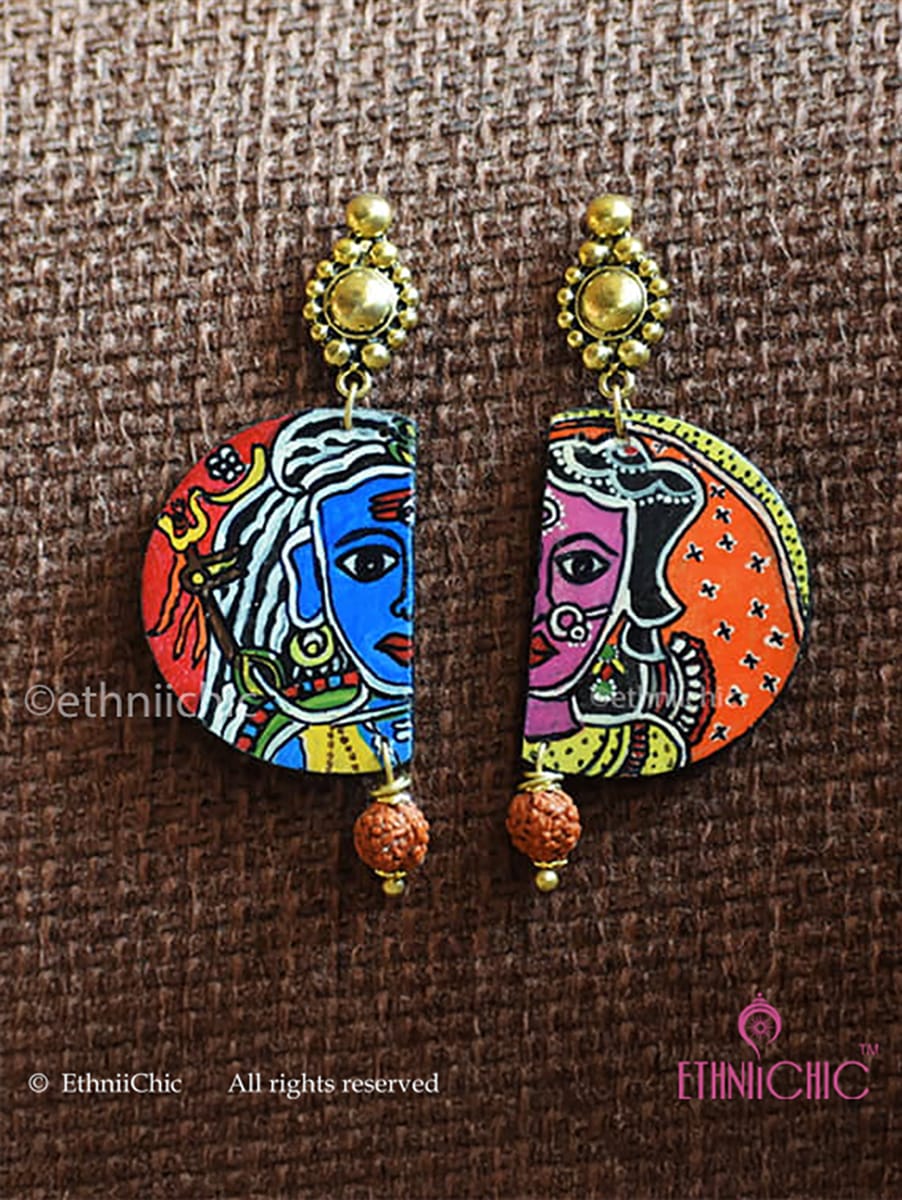
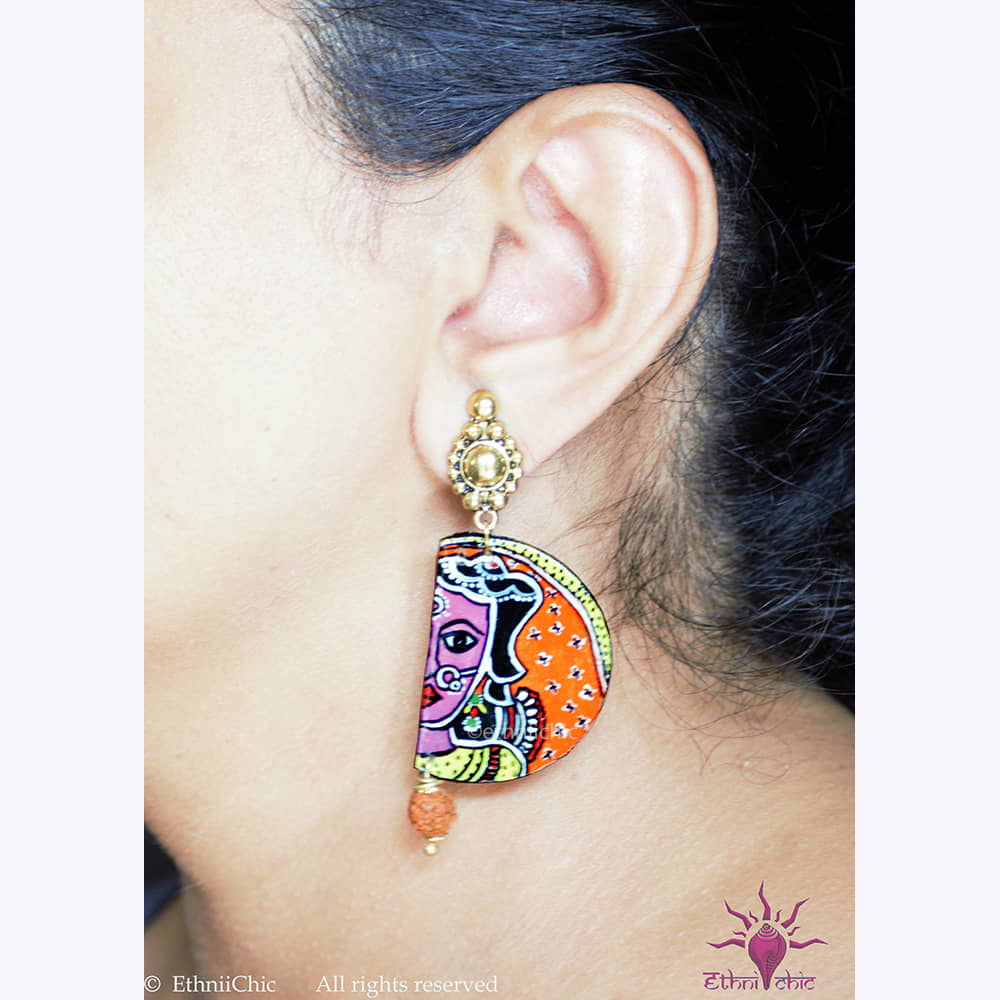
Madhubani art comes from the Mithila region of Bihar, where women have been painting the walls and floors of their homes for centuries using natural pigments and bold double-line outlines. The tradition is known for its vivid natural motifs — peacocks, fish, lotus — and its devotional subjects drawn from Hindu mythology. In this collection: peacock, lotus, Ardhanarishwar (the composite Shiva-Parvati form), and Trishul (Shiva's trident), all painted in Madhubani's distinctive outline style on engineered wood bases.
Pichwai Art Earrings
Pichwai is a devotional painting tradition from Rajasthan, originally created on large cloth panels hung behind the idol of Sreenathji — a child form of Krishna — at the Nathdwara temple. The tradition is known for intricate, layered detailing and rich colour. The Pichwai studs in this collection bring Sreenathji's sacred imagery into a compact, wearable form, making them one of the most distinctly devotional pieces in the entire earrings range.
Tholu Bommalatha Art Earrings
Tholu Bommalatha is a leather shadow-puppet tradition from Andhra Pradesh and Telangana, known for its bold, flat silhouettes and vivid translucent colour — visual qualities that were originally designed to cast dramatic shadows on performance screens. The earrings in this series carry that graphic quality onto wood, giving the peacock and fish motifs a distinctly flatter, more geometric look than the same motifs in the mural collection. A lesser-known tradition that deserves far more shelf space.
Earring Styles in This Collection
Studs
The most compact format in the collection. Studs sit close to the ear, measuring between 3–5 cm in total, and are suited to daily wear, office styling, and anyone who finds longer earrings too heavy or dressy for everyday use. Available across all five art traditions. Most studs in the collection are priced at ₹599.
Jhumkas
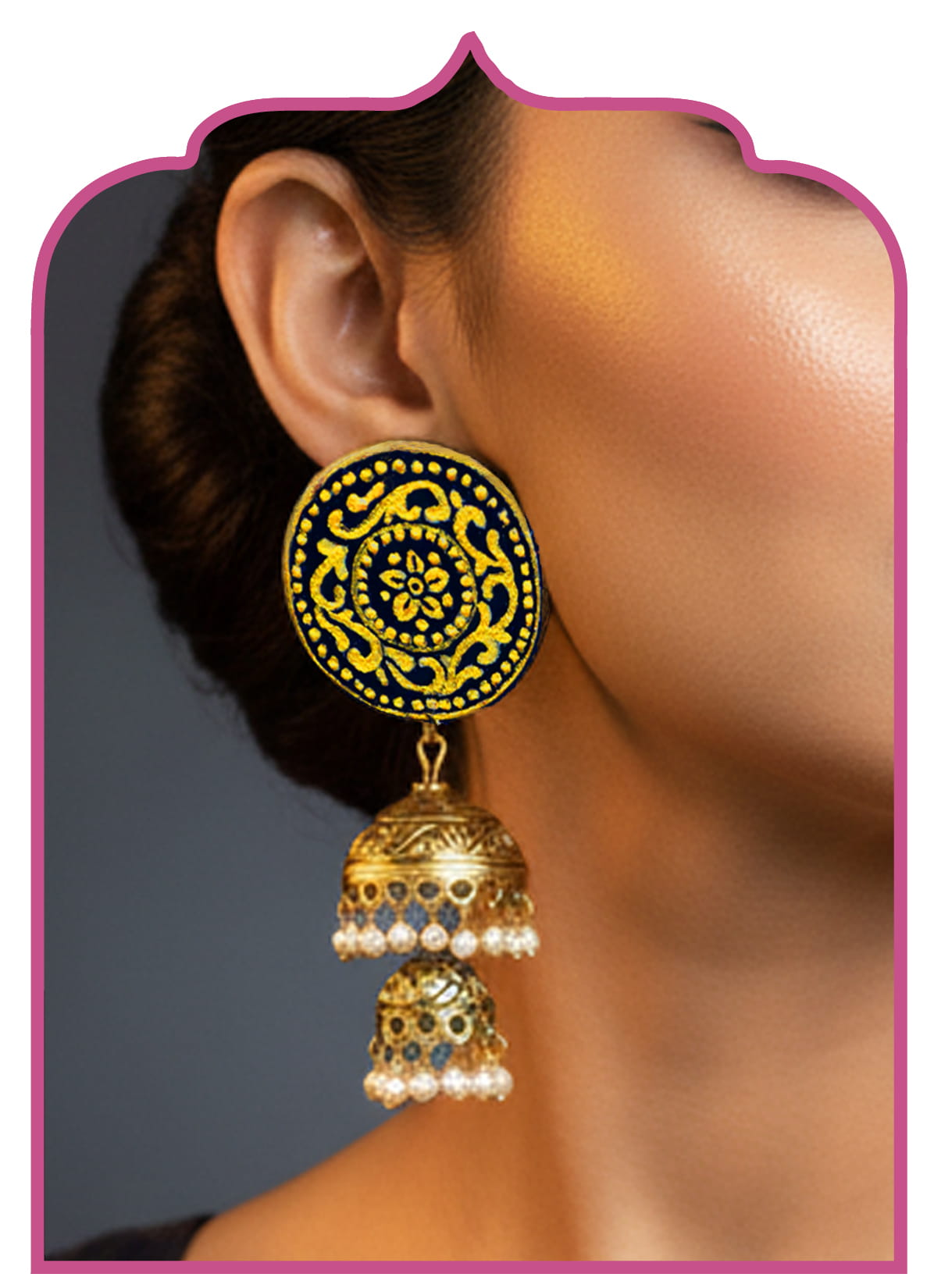
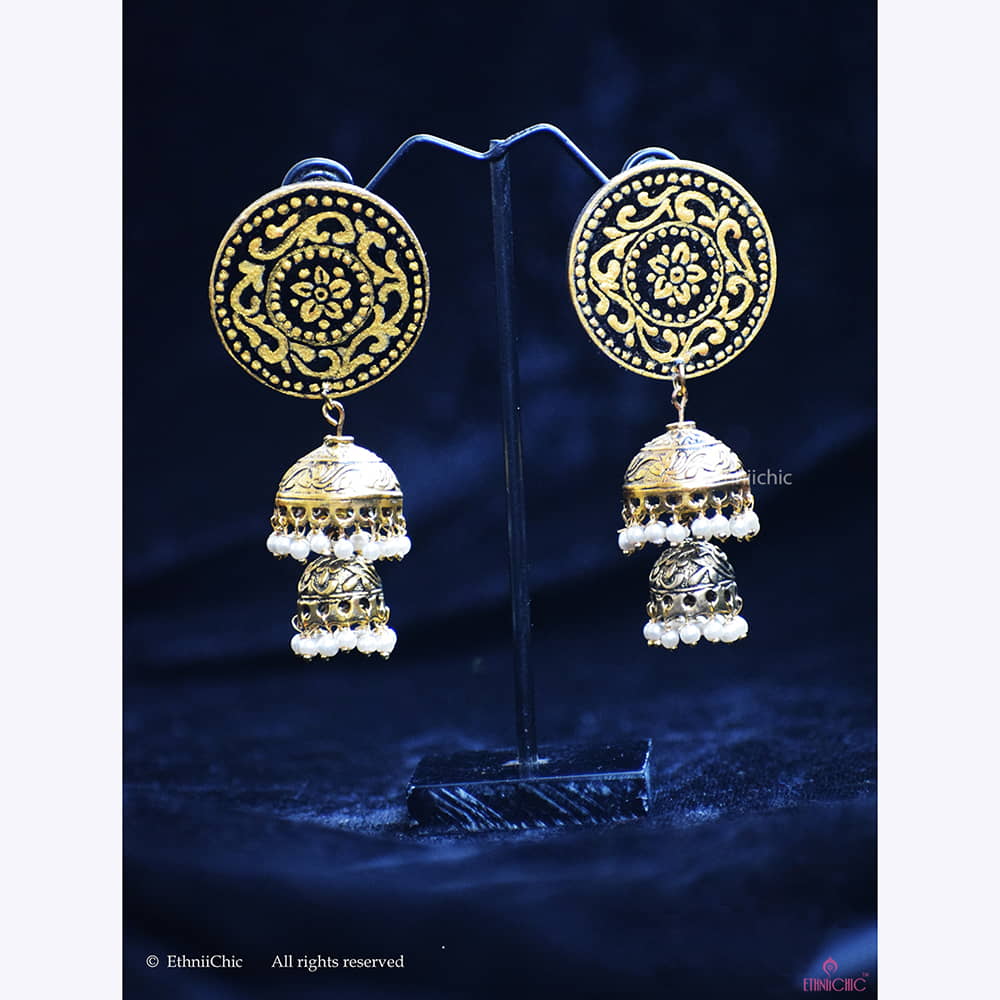
A traditional Indian silhouette: a dome-shaped bell earring with a slight swing. The collection includes both the standard single-disc jhumka and a tiered version that stacks two mandala-painted discs for extra length and movement. The wooden base keeps jhumkas lighter than their metal equivalents, making them comfortable for extended wear.
Danglers and Drop Earrings
Longer than studs, these give the motif more visual presence and work better for festive occasions, sarees, and statement dressing. Total lengths range from 6.5 cm (Trishul danglers) to 7.5 cm (floral mural earrings). The drop format is available for the mural face, peacock, Tholu Bommalatha fish, and floral motifs.
Which Motif Should You Choose?
Devotional motifs — for meaningful wear and gifting
Ganesha (remover of obstacles — particularly suited to housewarmings, new beginnings), Krishna and Vishnu (in Kerala mural style — devotional daily wear), Sreenathji / Pichwai (for Krishna devotees), Theyyam (deity figures of northern Kerala's ritual traditions), Ardhanarishwar (Shiva-Parvati composite — meaningful for those drawn to Hindu philosophy), Trishul (for Shiva devotees), and Nandi (Shiva's bull, a symbol of strength and loyalty).
Nature motifs — for versatile, non-devotional styling
Peacock (available across Kerala mural, Madhubani, and Tholu Bommalatha — three distinct visual treatments of the same motif), Lotus (in Kerala mural blue, pink, and classic; in Madhubani green), and Floral (Kerala mural border-art patterns in red and yellow — the most versatile, non-deity option in the collection for buyers who want the art-form aesthetic without religious iconography).
Geometric and performative motifs
Mandala (pan-Indian geometric symbol — available as a stud, standard jhumka, and tiered jhumka), Kathakali face (the classical dance-drama of Kerala), and Theyyam face (ritual performance art of northern Kerala). The performing-arts earrings are among the most visually arresting pieces in the collection and a genuinely uncommon category in Indian folk jewellery.
The Right Gift for the Right Occasion
Hand-painted Indian earrings travel better than most ethnic jewellery choices. They're lightweight, don't tarnish, and arrive carrying the kind of cultural story that makes premium gifting feel personal rather than expensive. Below are the combinations that work best:
• Housewarming or new beginning: Ganesha earrings (Kerala mural) — devotional, auspicious, and available in both stud and drop format
• Festival gifting (Diwali, Navratri, Pongal): the brighter Kerala mural colourways — yellow floral, red floral, yellow mural face, Apsara yellow — all pair naturally with festive ethnic wear
• For someone who values cultural depth over trend: the Theyyam or Tholu Bommalatha series — folk traditions that carry real histories and are almost impossible to find in mainstream jewellery
• NRI gifting or homecoming: anything from the Kerala mural face or Madhubani series — wearable pieces of home that don't require explanation to someone who grew up around the art forms
• For a classical arts enthusiast: Kathakali studs or Theyyam face earrings — specific enough to signal that the giver knows what they're buying
• Bulk or corporate gifting: the ₹599 stud range, in mixed art forms and motifs, makes a distinctive set that scales without feeling generic
All EthniiChic earrings ship across India and internationally. For bulk orders, corporate gifting with custom packaging, or mixed-motif gift sets, contact us via WhatsApp or the contact page before ordering.
Material and Care
Every earring in this collection is hand-painted on an engineered wood base with German silver jewellery embellishments. Engineered wood gives a uniform, lightweight base that takes hand-painted pigment cleanly and holds up to daily wear better than raw wood, while the German silver hardware adds strength and a clean finish at the hook or stud post.
Because every piece is hand-painted rather than printed or enamelled, the artwork is not sealed under a hard lacquer. Handle accordingly:
• Wipe with a soft, dry cloth only — never wet-wipe
• Keep away from water, sweat, and humidity wherever possible
• Avoid contact with perfume, hairspray, and chemical products
• Store each pair separately, ideally in the pouch or box they arrive in, away from direct sunlight
• The hand-painted surface means minor variation between pairs is normal — this is a sign of authentic handwork, not a defect