Kalamkari Art

Kalamkari Art

Kalamkari - which literally translates as "pen work" - is one of India's oldest textile and painting traditions, originating in the temple towns of Srikalahasti and Machilipatnam in Andhra Pradesh. For centuries, Kalamkari artists used bamboo pens and natural dyes to paint epic narratives from the Ramayana and Mahabharata onto cloth - intricate, flowing compositions with characteristic motifs: peacocks, lotuses, floral borders, and the distinctive curved forms of mythological figures.

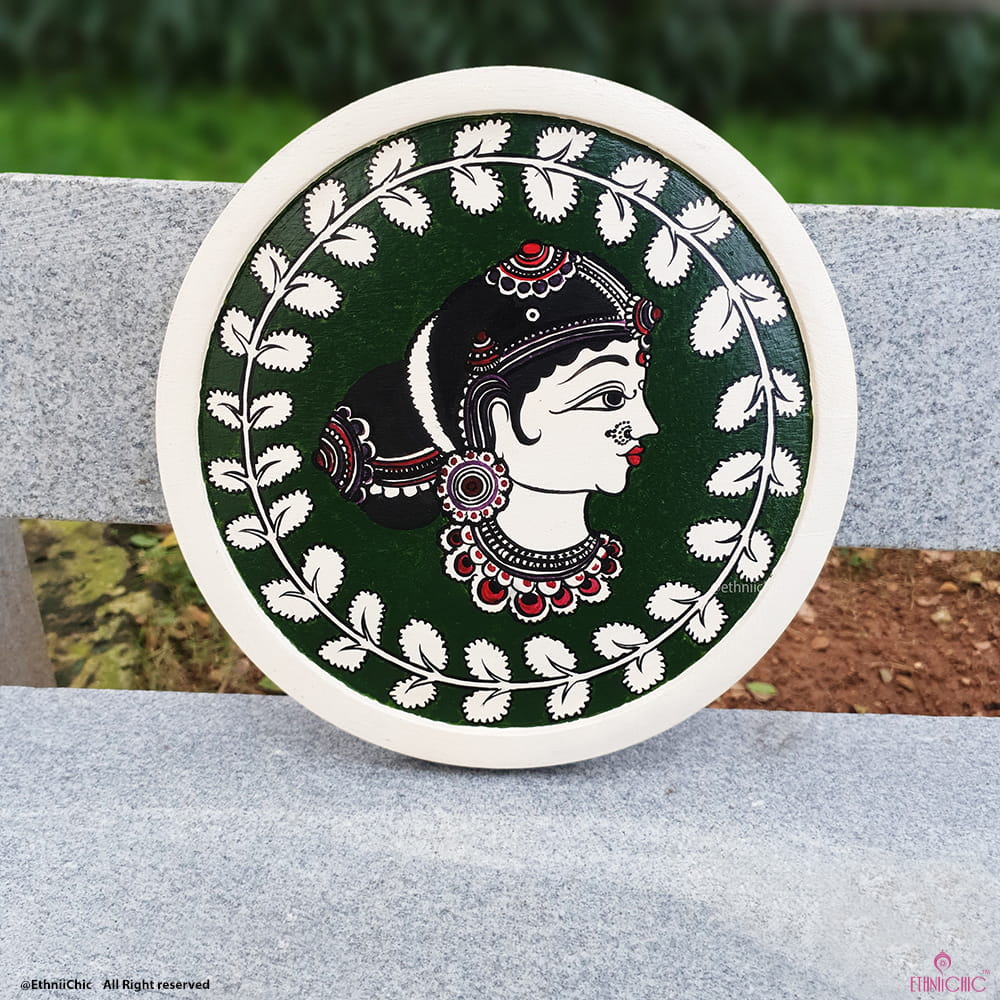
At EthniiChic, we translate this deeply rooted tradition into hand-painted decor objects - wall art, plates, and pieces that carry the visual grammar of Kalamkari into spaces that value cultural depth over trend-driven decoration.

Each piece is hand-painted by our studio artists, drawing from both the Srikalahasti (freehand pen technique) and Machilipatnam (block-print influenced) styles. If you have South Indian roots, an appreciation for traditional Indian art, or simply a home that deserves something of genuine cultural substance - this collection is for you.

Skip to results list
19 items
Column grid
Column grid

Filter

Popular Searches :

Read More

Kalamkari — Andhra Pradesh's Pen-Painted and Block-Printed Textile Art

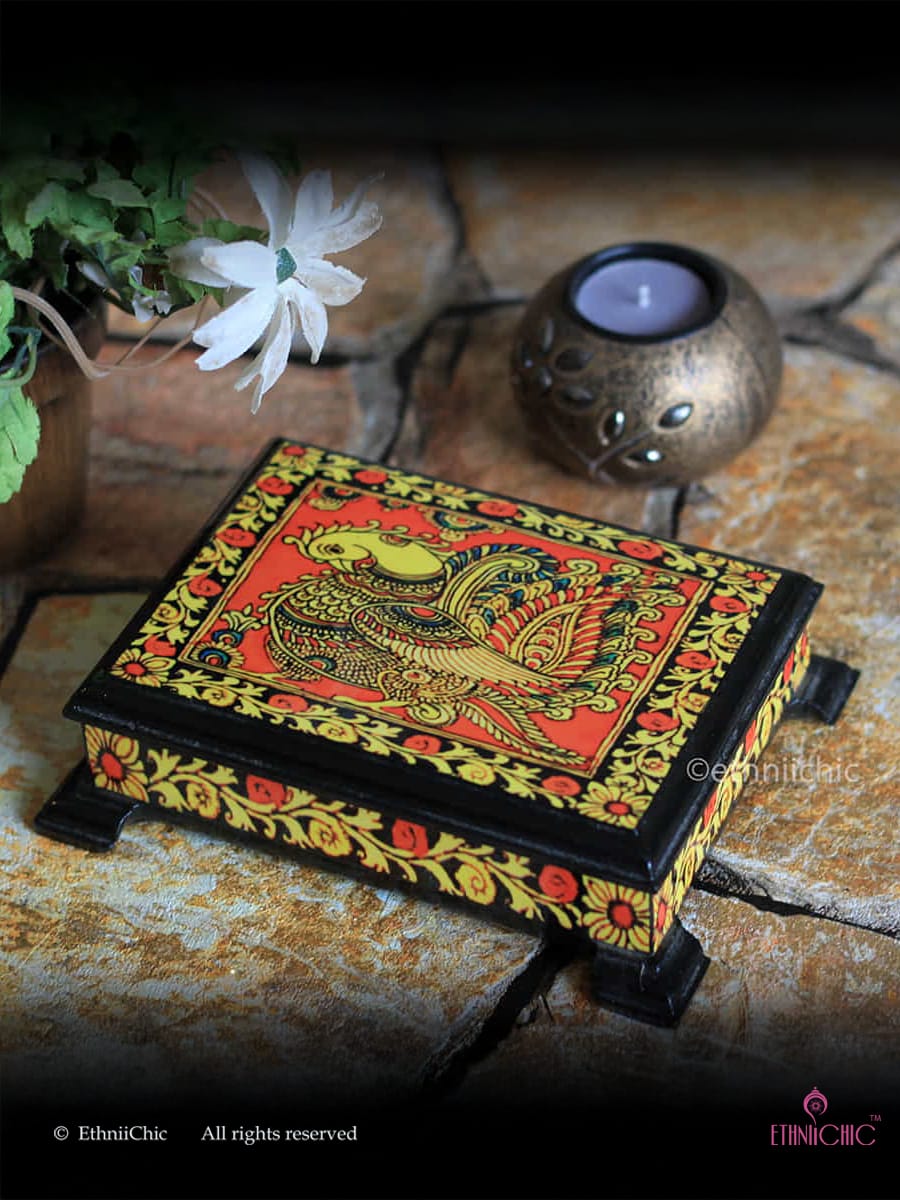
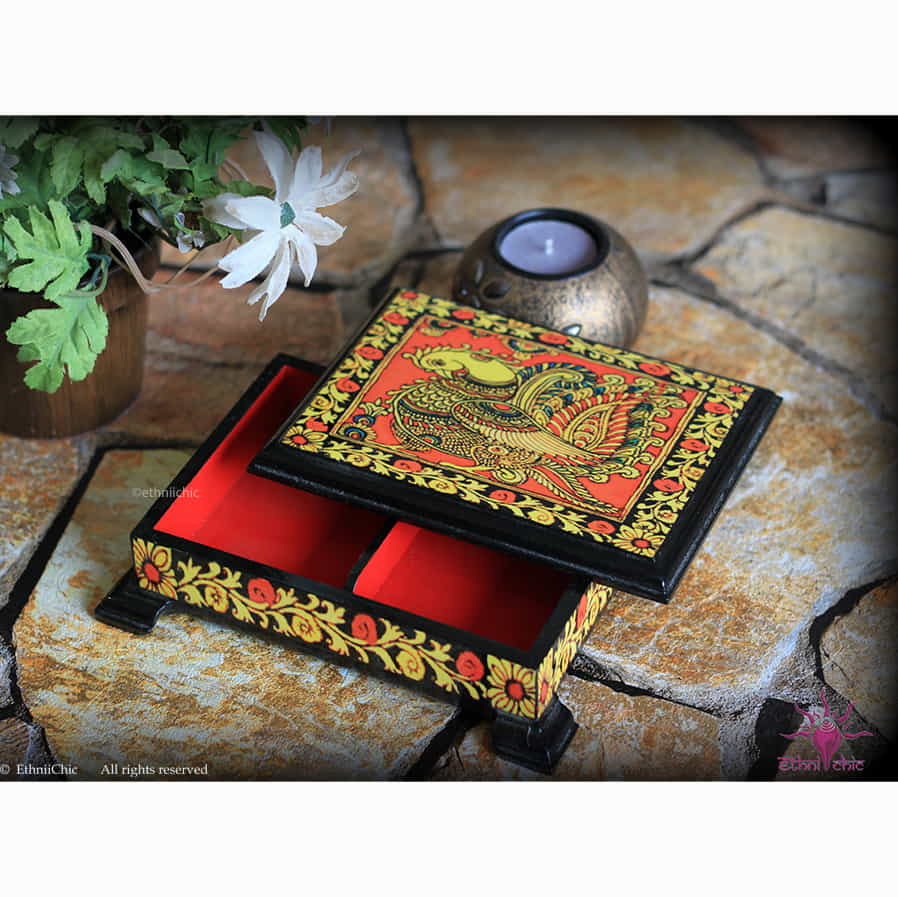
Kalamkari means "pen work" — from the Persian kalam (pen) and kari (work) — and it's one of India's oldest surviving textile art traditions, originating in the temple towns of Srikalahasti and Machilipatnam in Andhra Pradesh. For centuries, Kalamkari artists have used a bamboo or date-palm pen and entirely natural dyes to paint epic narrative scenes and dense floral motifs onto cloth. EthniiChic's Kalamkari collection carries that same pen-drawn linework and peacock, floral, and devotional-face motif work onto wooden trays, boxes, coasters, tissue holders, wall plates, and jewellery.
What makes genuine Kalamkari distinct from decorative "folk-style" printing is how much process sits behind the finished image. The cloth itself is prepared before a single line is drawn — steeped in astringents and buffalo milk, then sun-dried. Myrobalan does double duty in that preparation: it fixes the dye permanently to the fabric, and neutralises the smell left by the milk treatment. Outlines are drawn in mordant, and the cloth is then dyed in a bath — traditionally alizarin for the reds — with every colour sourced from roots, leaves, and mineral salts of iron, tin, copper, and alum rather than a synthetic dye bottle.

Two Styles, One Tradition

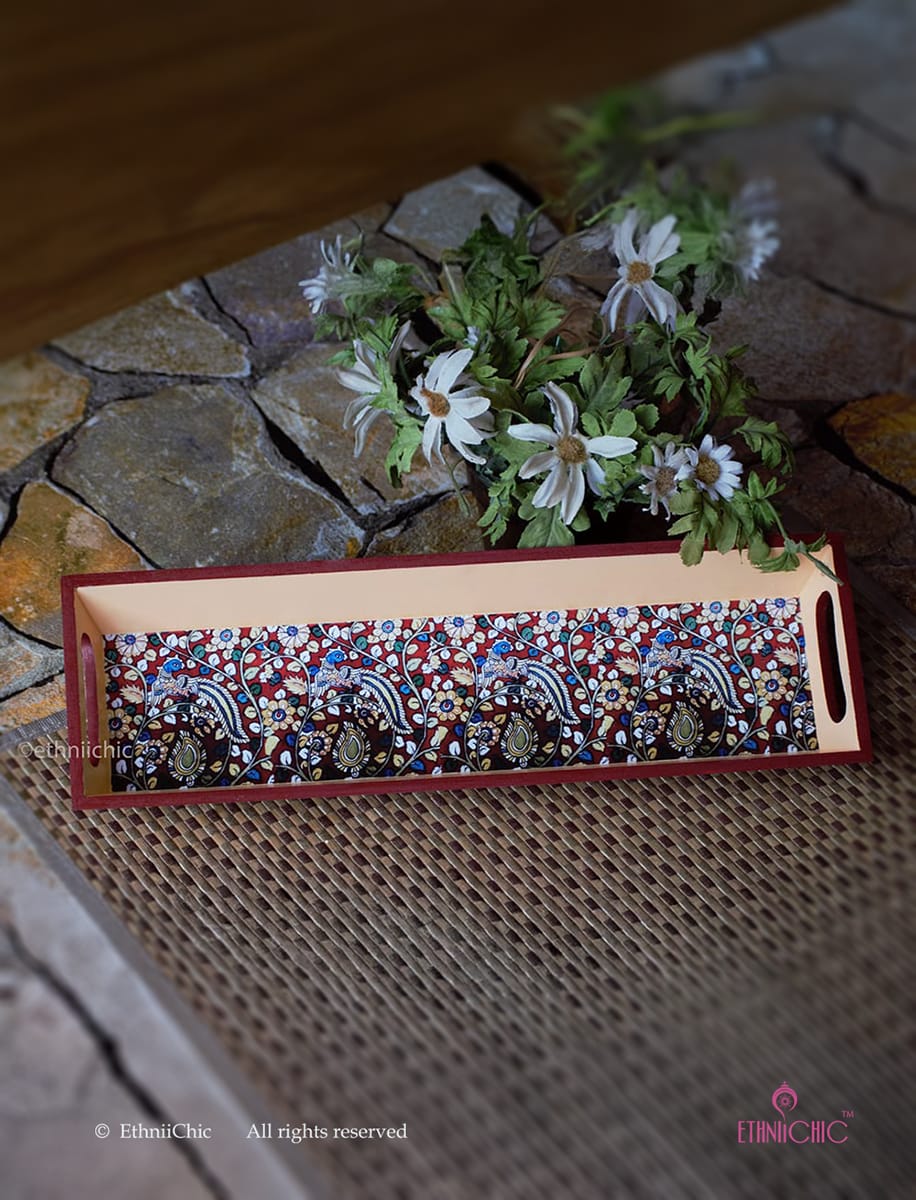
Kalamkari isn't one fixed technique — it holds two separately GI-recognised styles. Srikalahasti is entirely hand-worked: a pen used freehand for both drawing and colour-filling, historically centred on temple art and depicting deities and scenes from the Ramayana and Mahabharata (GI-tagged in April 2005). Machilipatnam, also called Pedana, is block-printed rather than hand-drawn, carrying visibly Persian-influenced motifs — interlacing leaf-and-flower patterns, the cartwheel, layered lotus forms, and birds like parrots and peacocks (GI-tagged in April 2008). Both styles show up across this collection: the devotional face and deity pieces lean toward Srikalahasti's narrative tradition, while the dense peacock and floral repeat patterns on the coasters and trays echo Machilipatnam's block-print motif language.
Shop Trays → · Shop Coasters →

The Peacock, and What Else Recurs

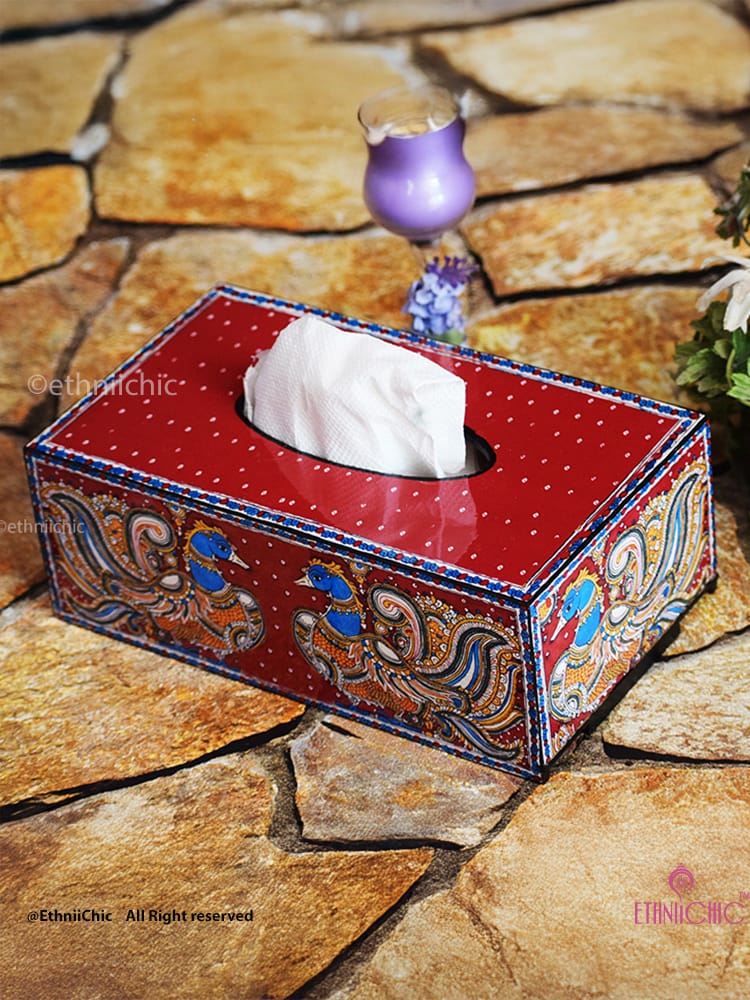
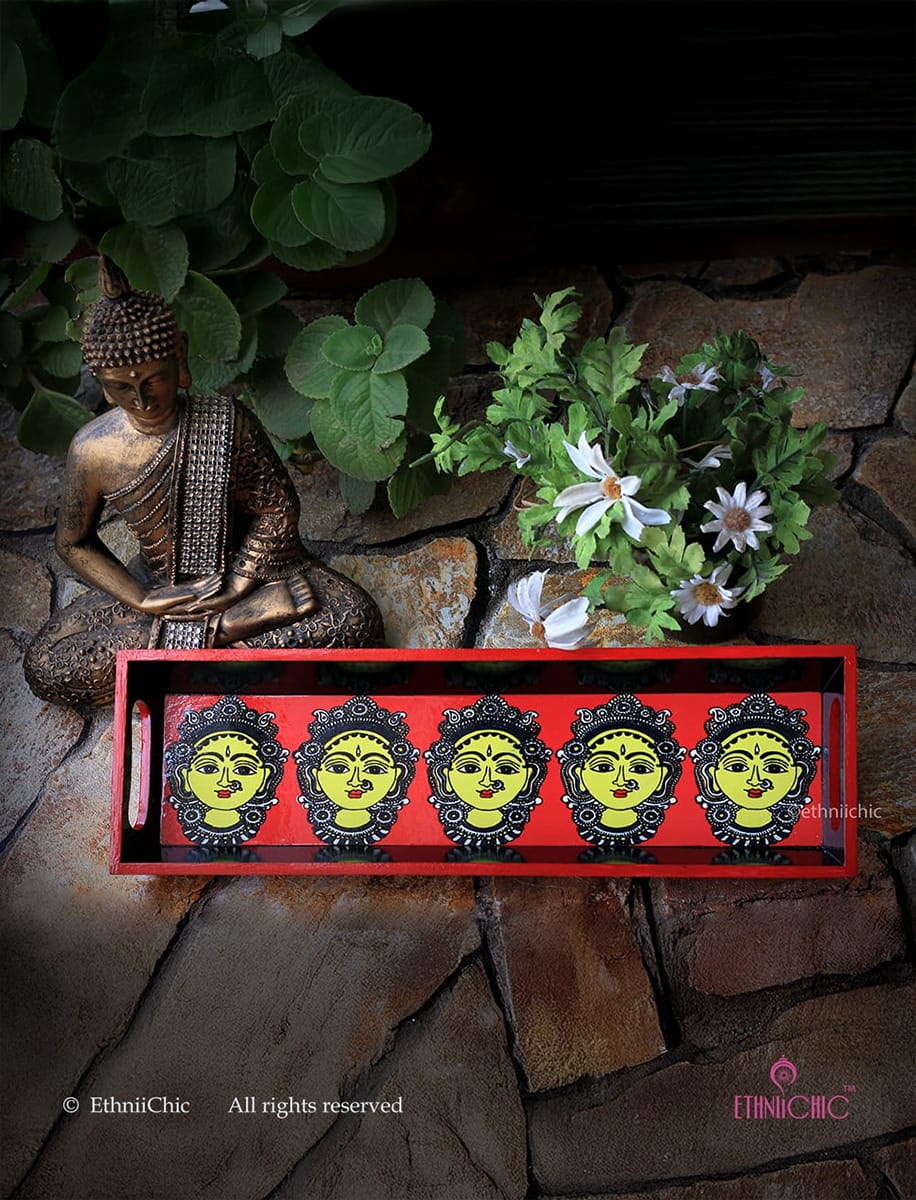
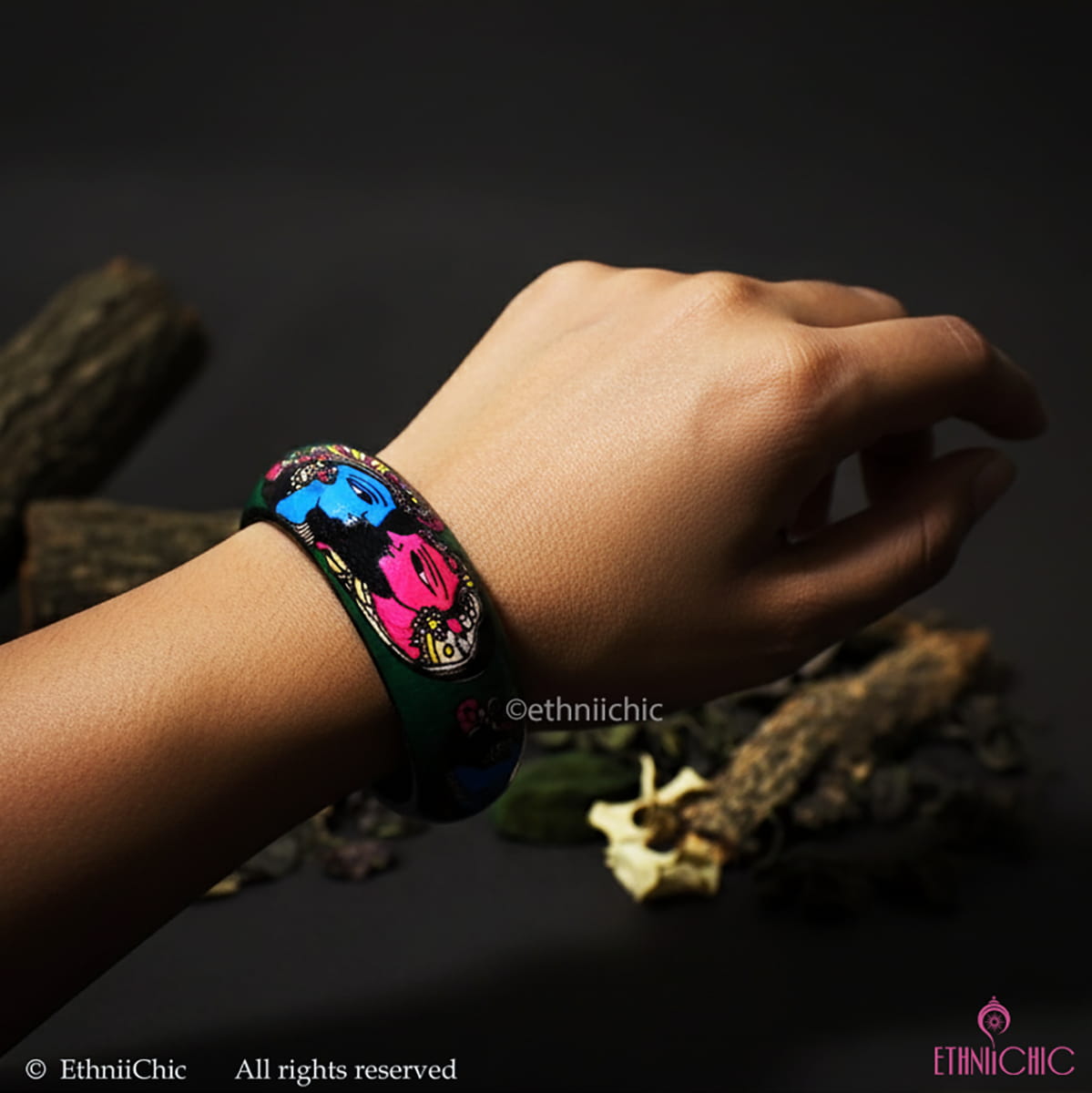
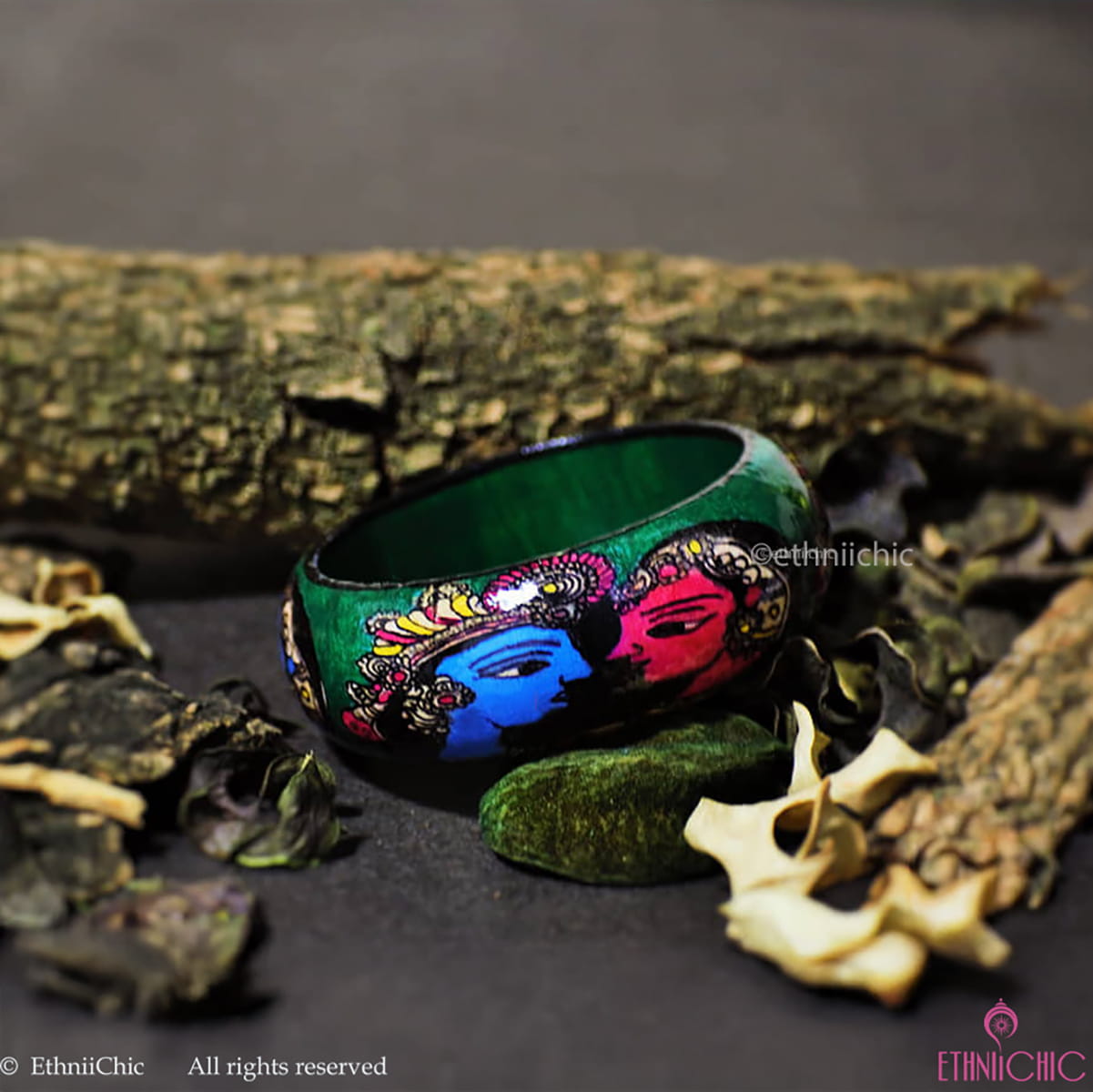
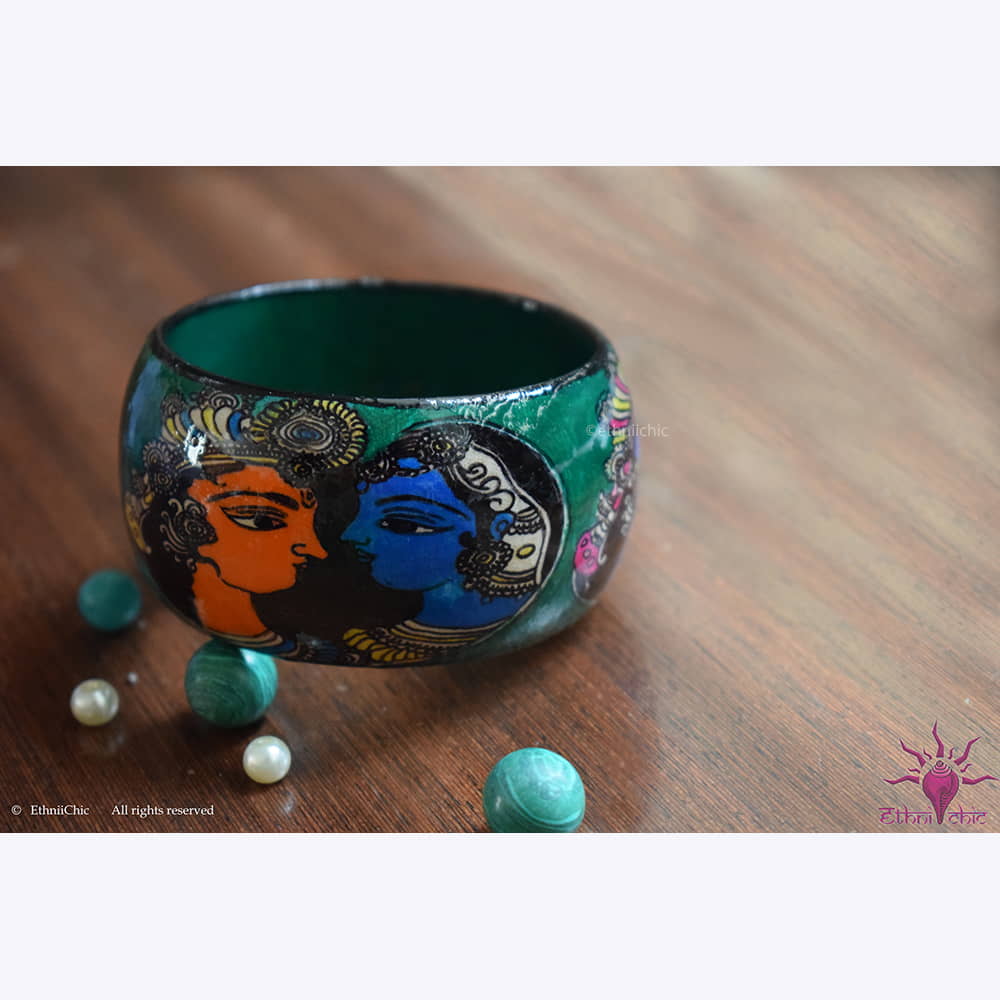
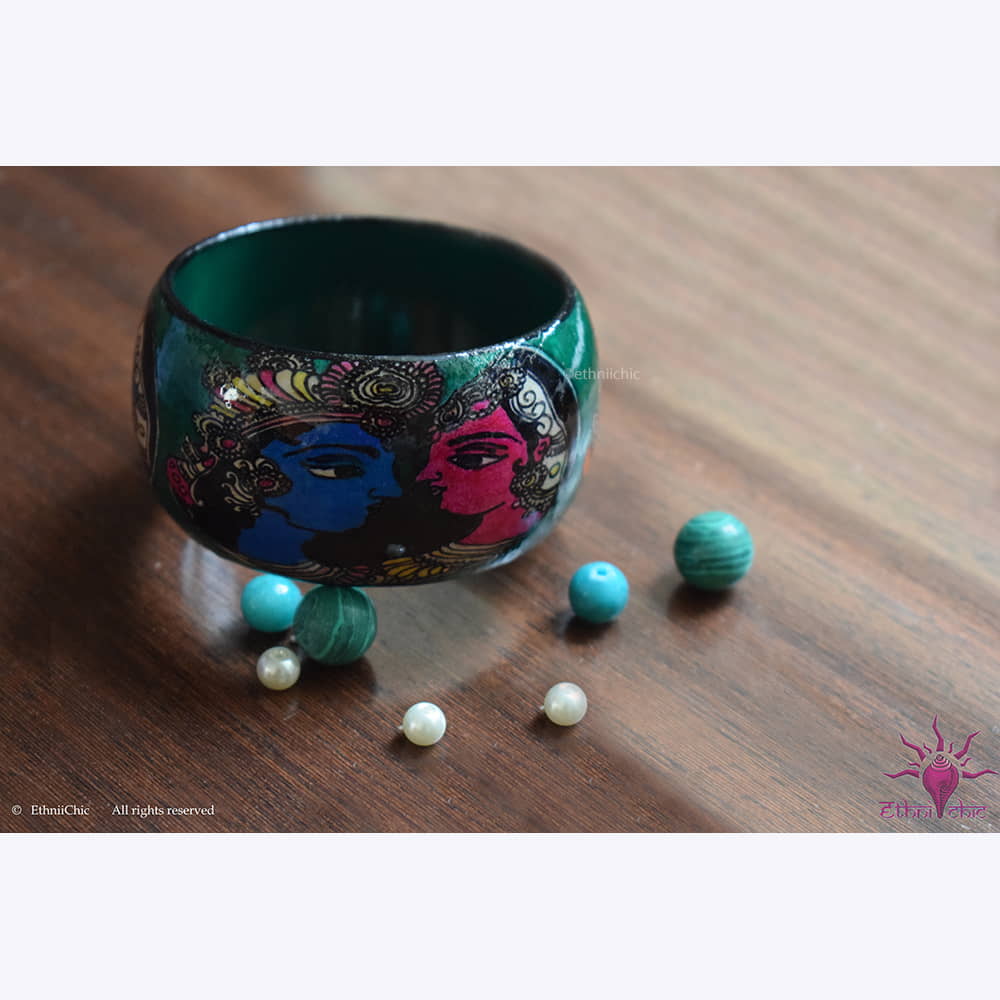
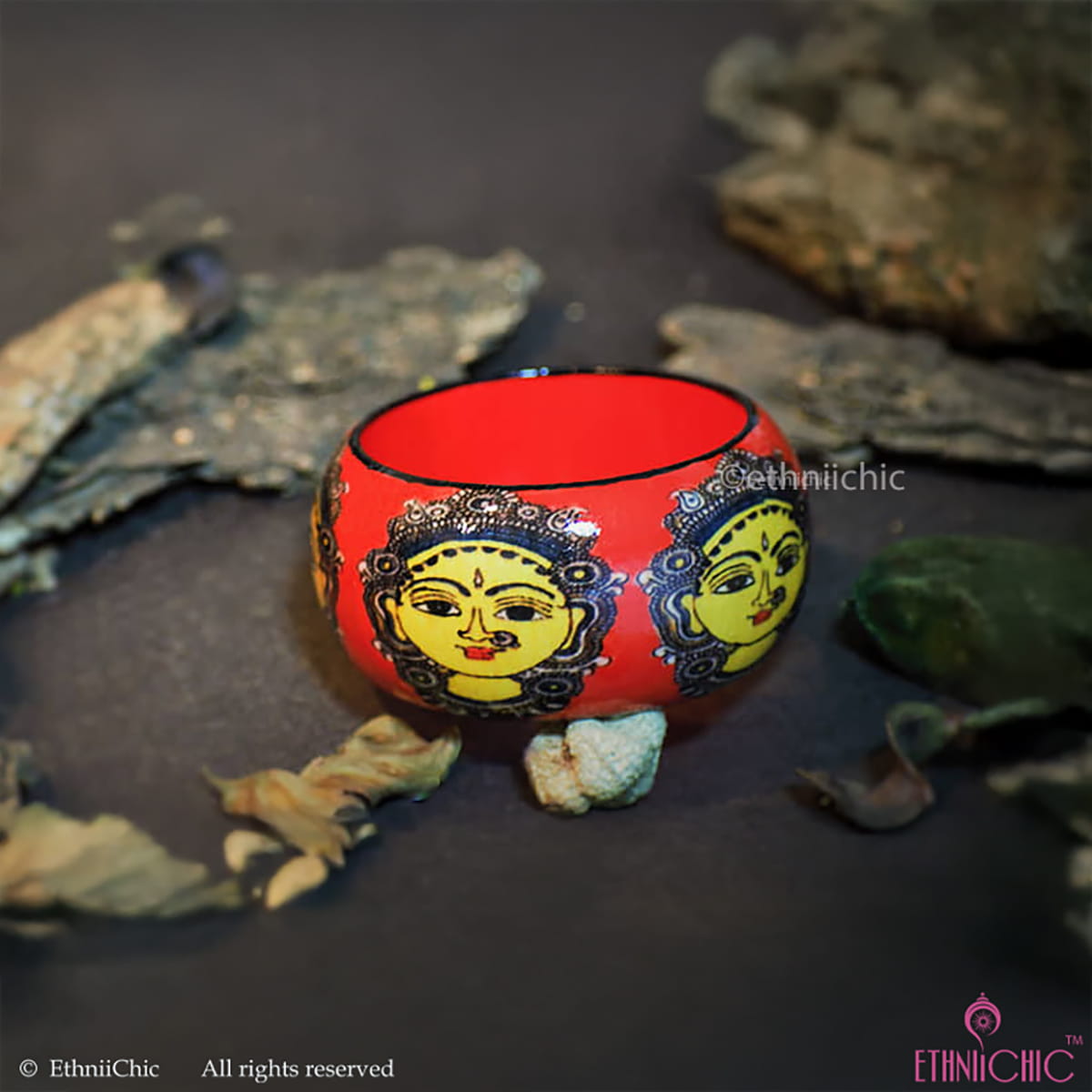
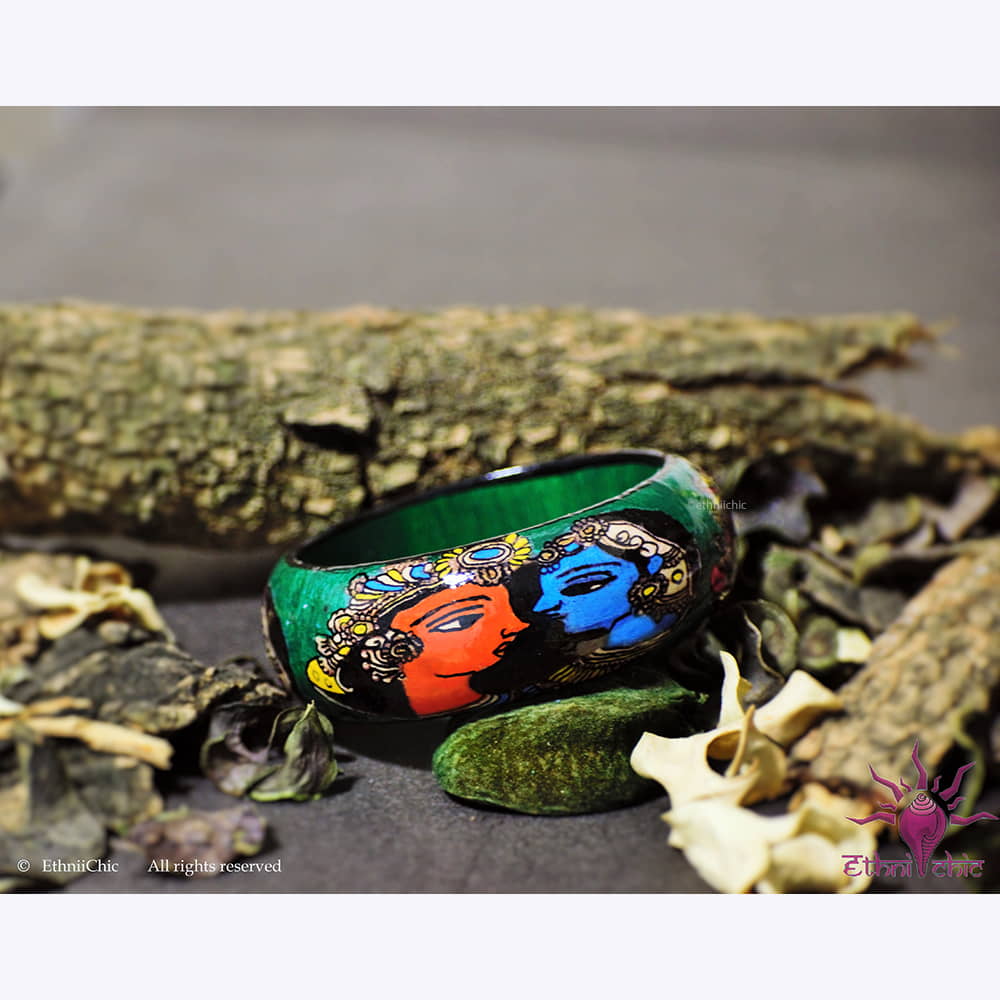
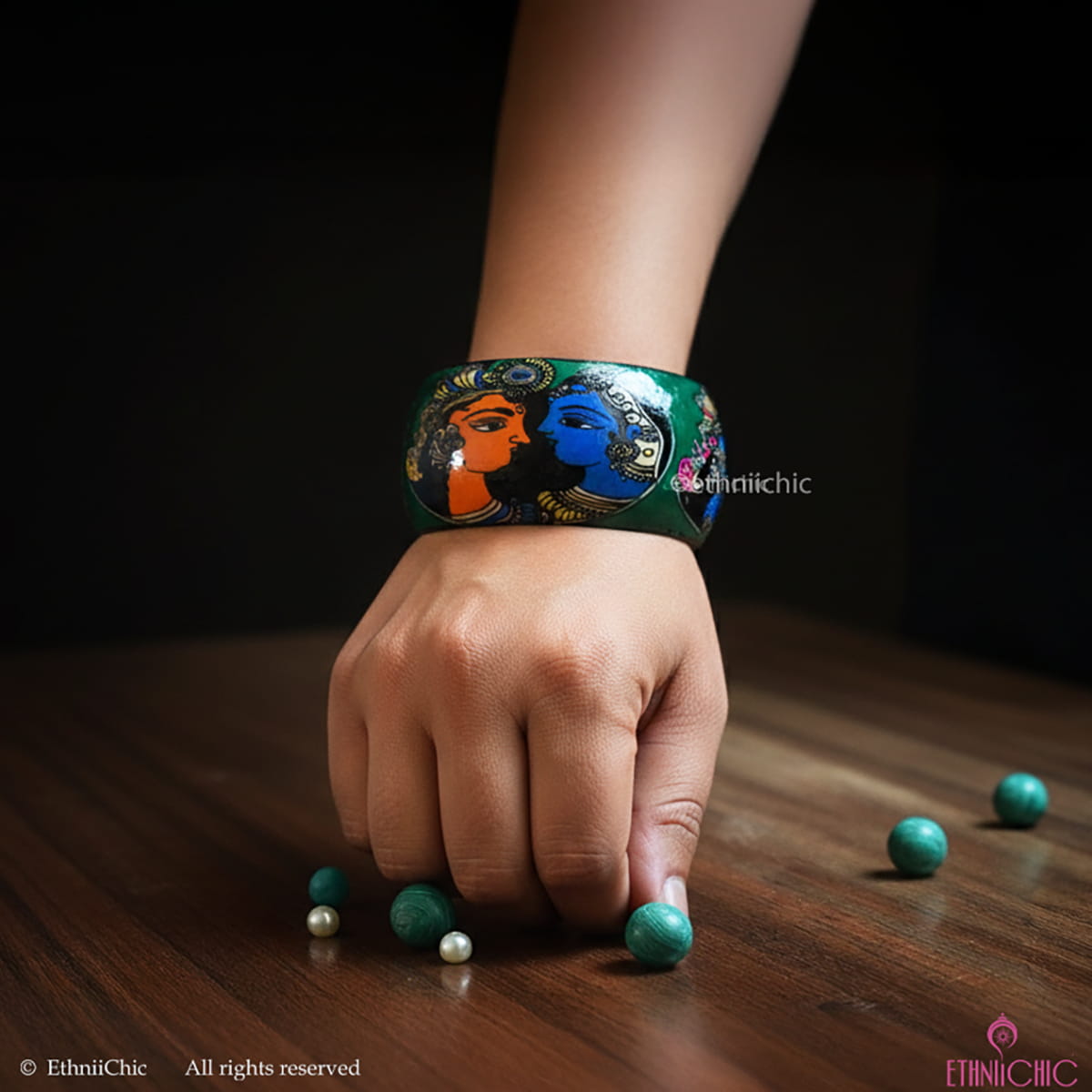
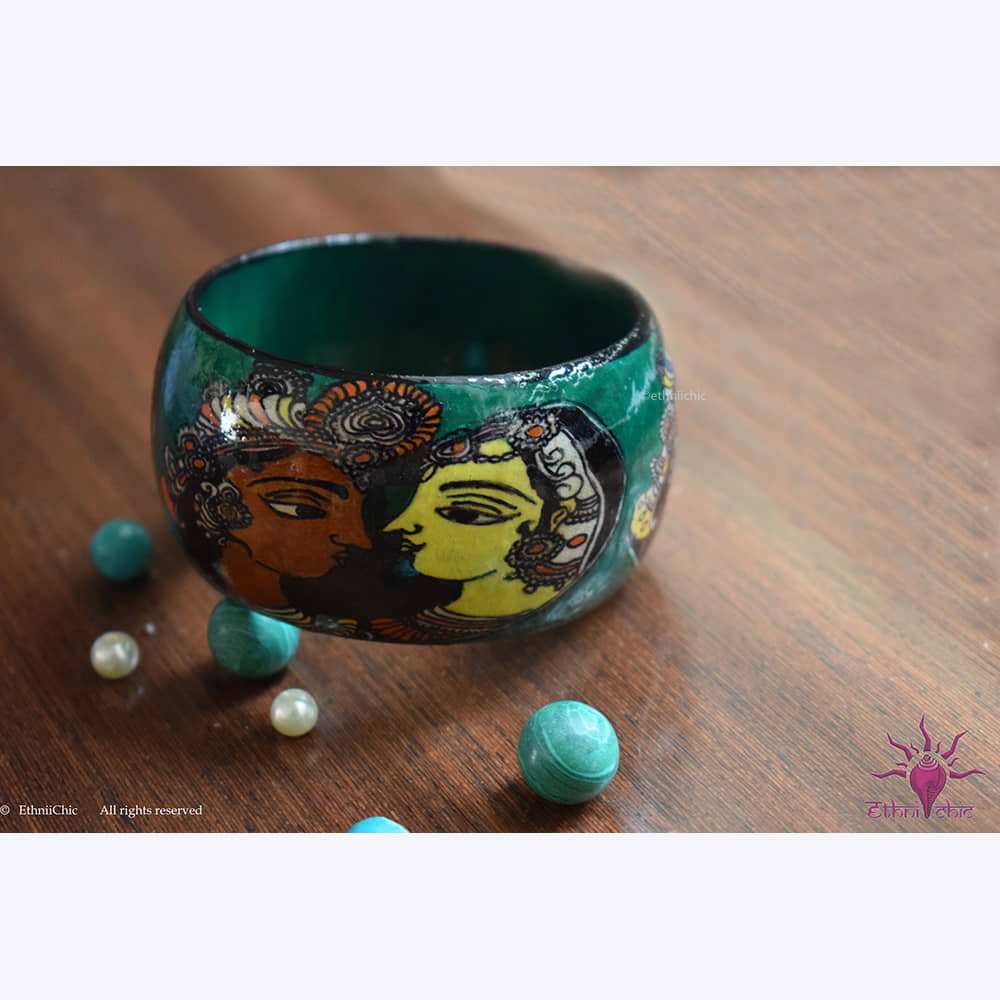
Peacock is the single most repeated motif across this collection — trays, boxes, tissue holders, coasters — which tracks with its place in Kalamkari's traditional visual language as a Machilipatnam-style motif borrowed originally from Persian textile design and folded into the Andhra tradition over centuries. Devotional subjects appear too: a Devi wall plate, a Radha Krishna bangle, and a Nandi-motif pair of earrings, each carrying Kalamkari's narrative, story-first approach into a small wearable or tabletop format rather than the large temple-cloth scale the tradition originates from.
Shop Jewellery → · Shop Bangles →

Choosing Where to Start

If you want the tradition in daily use, the tea coasters and tissue boxes are the easiest, most affordable entry point, and come in enough peacock colourways to build a full set. If you want a single striking piece, the Devi wall plate or the peacock serving tray carries more visual weight. If you want to wear it, the Radha Krishna and Devi-face bangles put Kalamkari's fine linework at wrist scale.

Kalamkari as a Gift

Because Kalamkari carries genuine devotional and narrative weight — not generic peacock motif for its own sake — it works well as a gift for anyone with a connection to Andhra Pradesh, or an interest in Indian textile history specifically rather than décor generally. The coaster sets, at ₹975, are an easy, low-commitment gift; the peacock serving tray at ₹2,800 makes a more substantial housewarming or milestone gift. Every collection ships internationally; write to contactus@ethniichic.com before ordering to confirm rates and delivery timelines for your country.

Frequently Asked Questions (FAQs)

1. What is Kalamkari?
"Pen work" in Persian — one of India's oldest textile painting traditions, originating in the temple towns of Srikalahasti and Machilipatnam in Andhra Pradesh, painted with a bamboo or date-palm pen using entirely natural dyes.

2. What are the two styles of Kalamkari?
Srikalahasti, hand-painted freehand and focused on deities and epic scenes (GI-tagged April 2005), and Machilipatnam (Pedana), block-printed with Persian-influenced floral, bird, and geometric motifs (GI-tagged April 2008).

3. How is Kalamkari cloth traditionally prepared and dyed?
The cloth is steeped in astringents and buffalo milk, then sun-dried. Myrobalan fixes the dye and neutralises the milk's smell. Outlines are drawn in mordant, then the cloth is dyed in a bath — traditionally alizarin for red — using colour from roots, leaves, and mineral salts.

4. Does Kalamkari have GI (Geographical Indication) status?
Yes, both styles are separately GI-recognised: Srikalahasti in April 2005 and Machilipatnam in April 2008.

5. What motifs recur most in Kalamkari art?
Peacocks and floral patterns are the most common, alongside deity figures and scenes from the Ramayana and Mahabharata — several of which appear directly across EthniiChic's Kalamkari range.

6. What kinds of products can I find in this collection?
Trays, wooden boxes, tissue holders, tea coasters, a wall plate, and jewellery (bangles and earrings) — Kalamkari's linework and motifs applied across home and wearable formats.

7. What's the price range across this collection?
From ₹350 for a wooden bangle to ₹2,800 for the peacock serving tray.

8. Do you ship Kalamkari pieces internationally for NRI buyers?
Yes, across the full collection. Write to contactus@ethniichic.com before ordering to confirm shipping rates and delivery timelines for your country.

9. Can I order a custom or bulk Kalamkari piece?
Yes. Custom motifs and bulk or corporate gifting orders can be arranged through Commission Artwork or Contact Us.