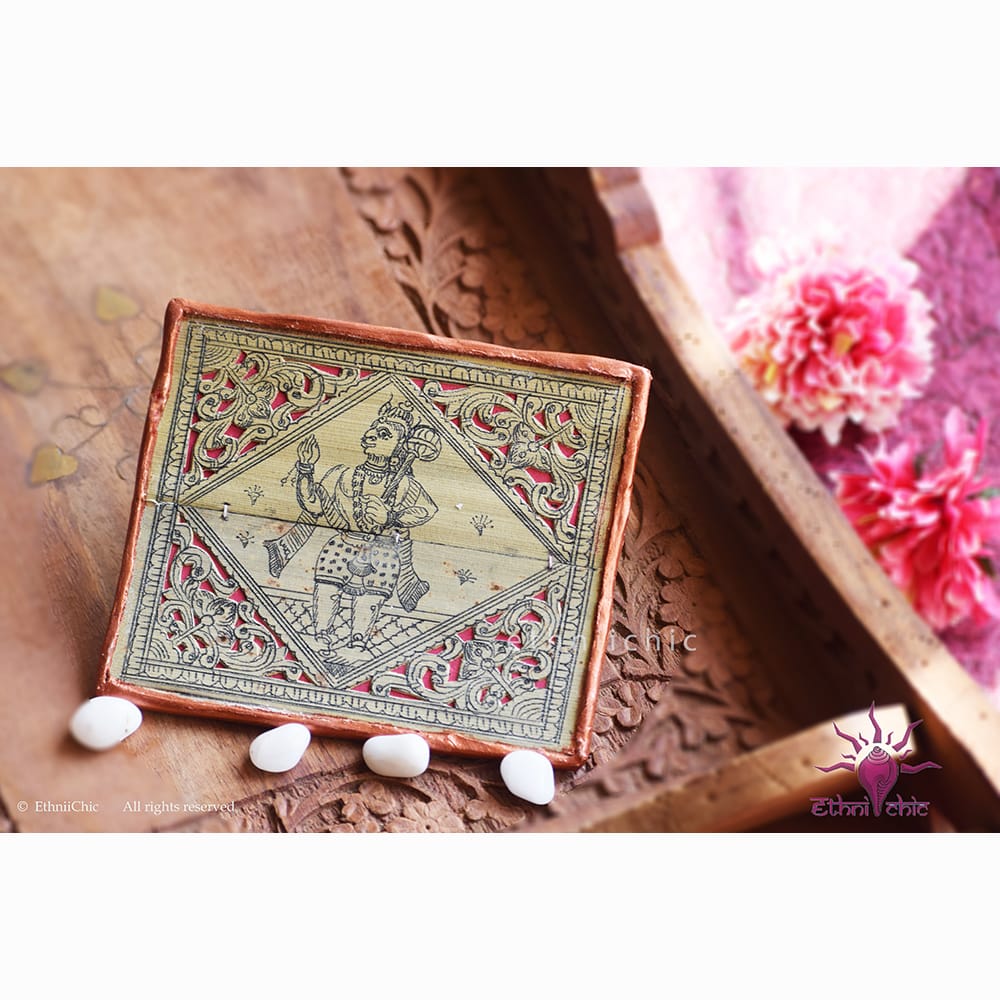
Hanuman — Devotion and Strength, in Cheriyal, Pattachitra, and Tanjore Painting
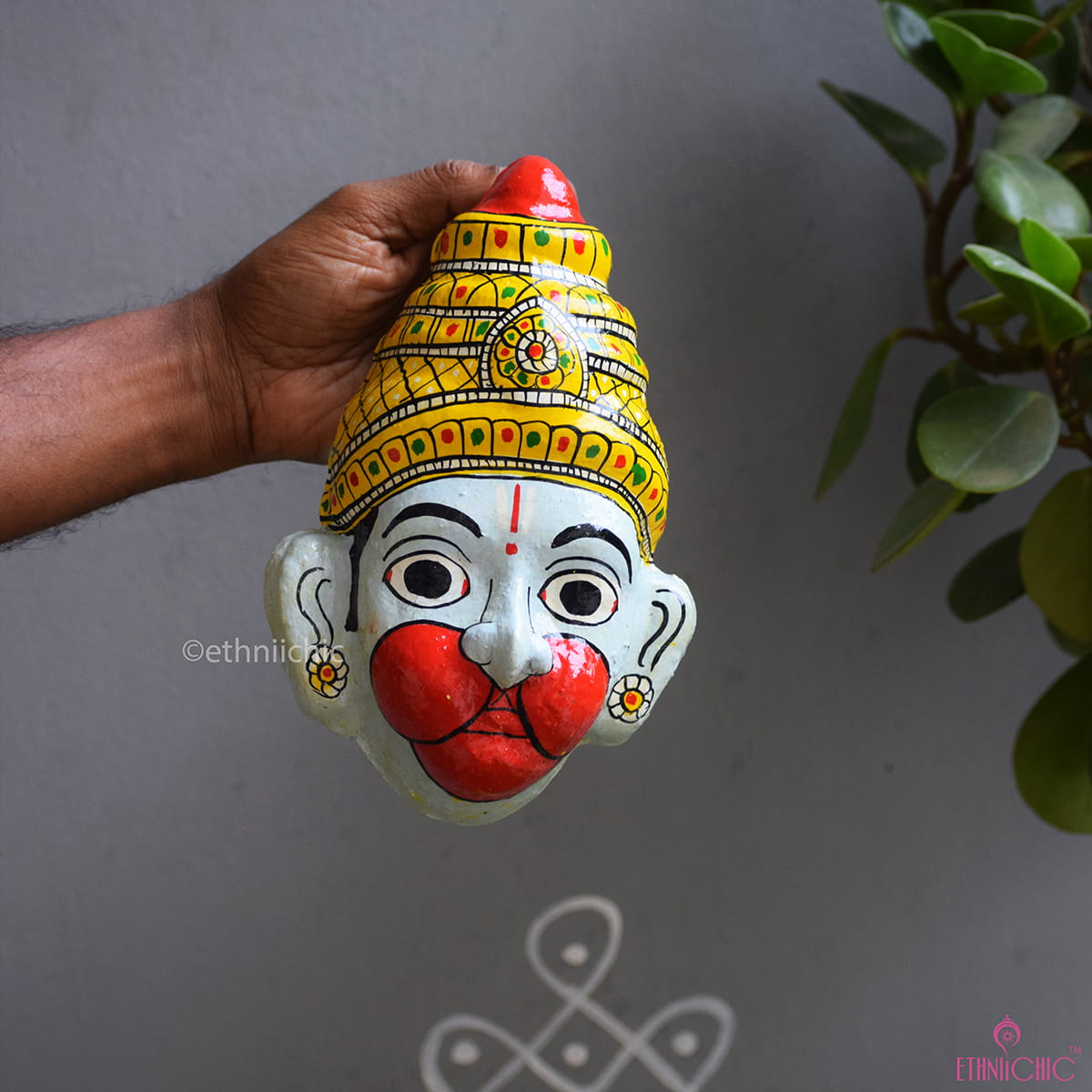
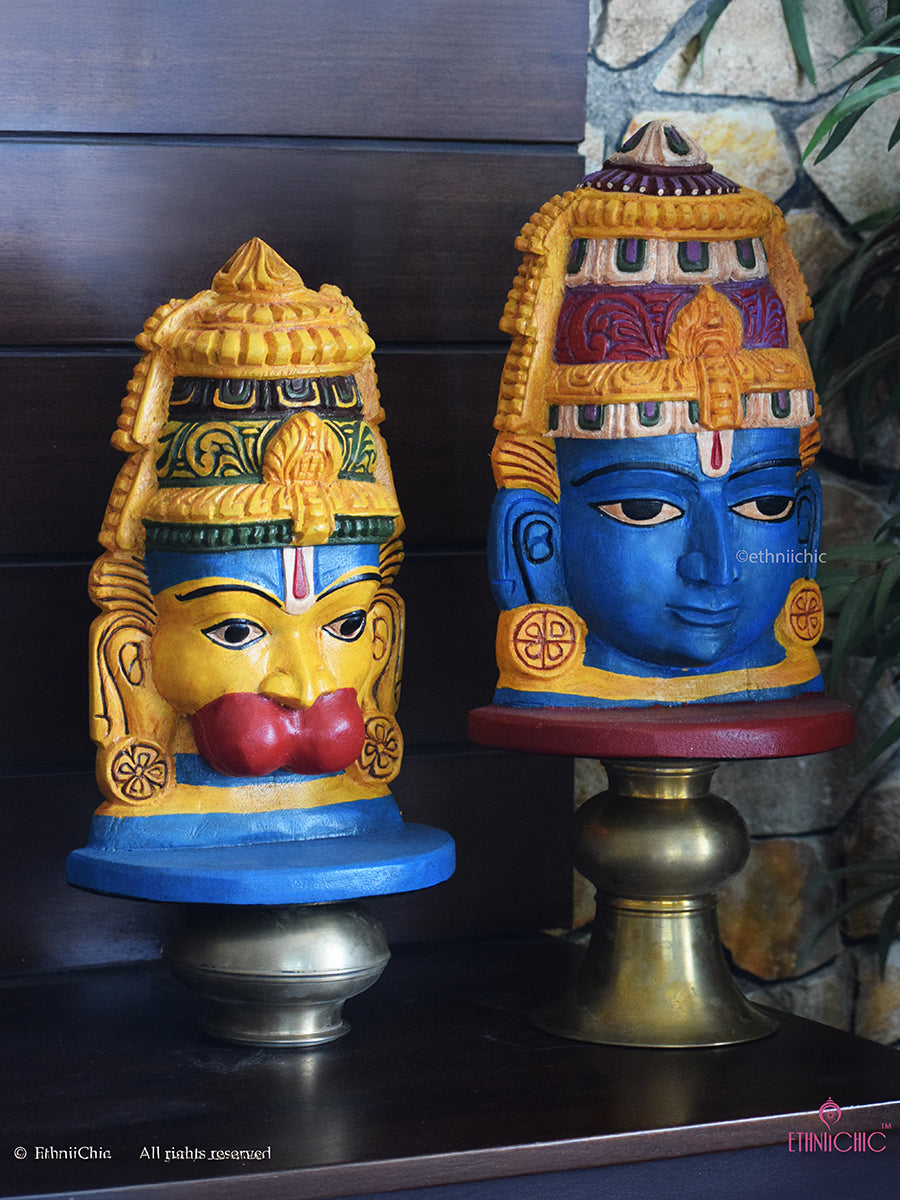
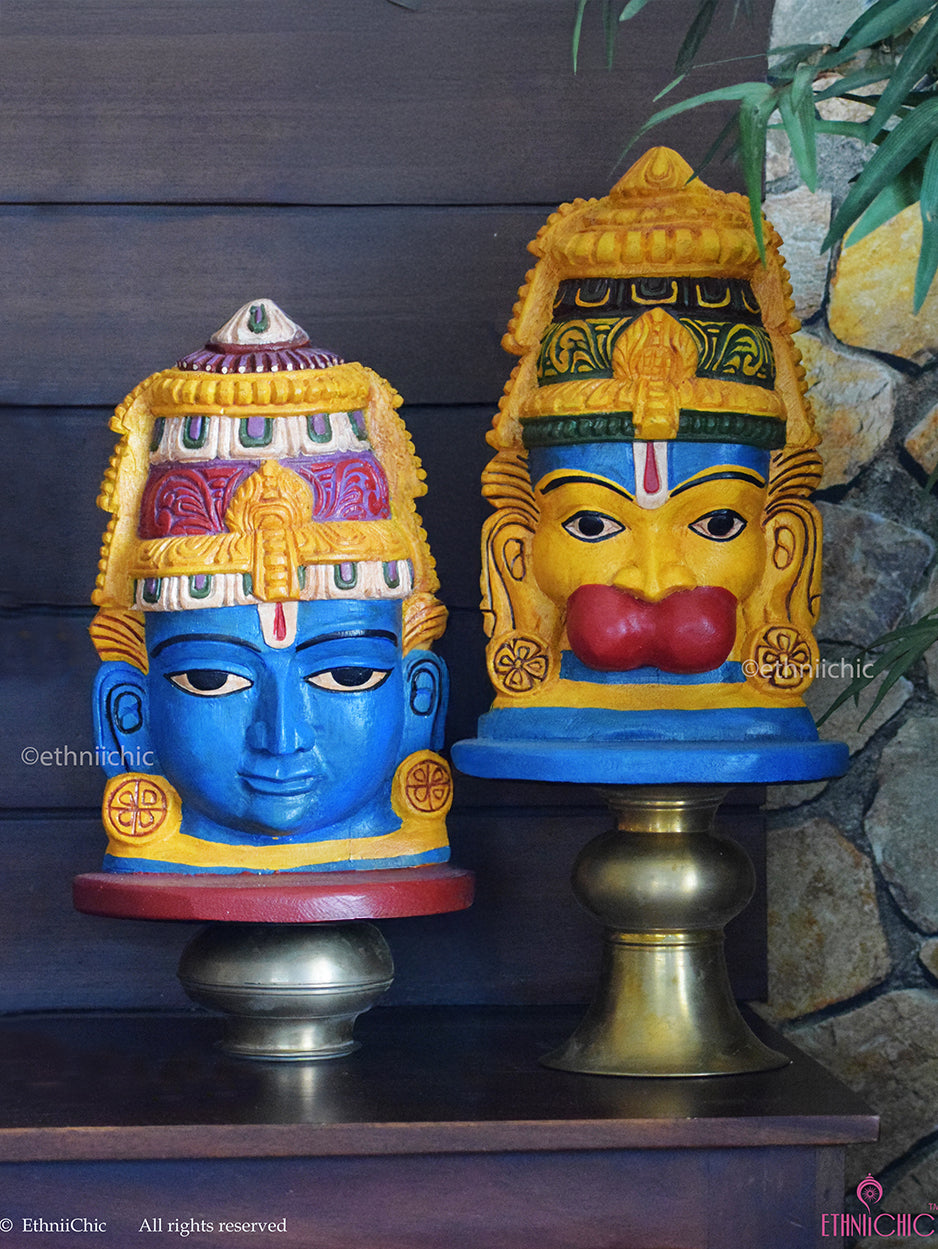
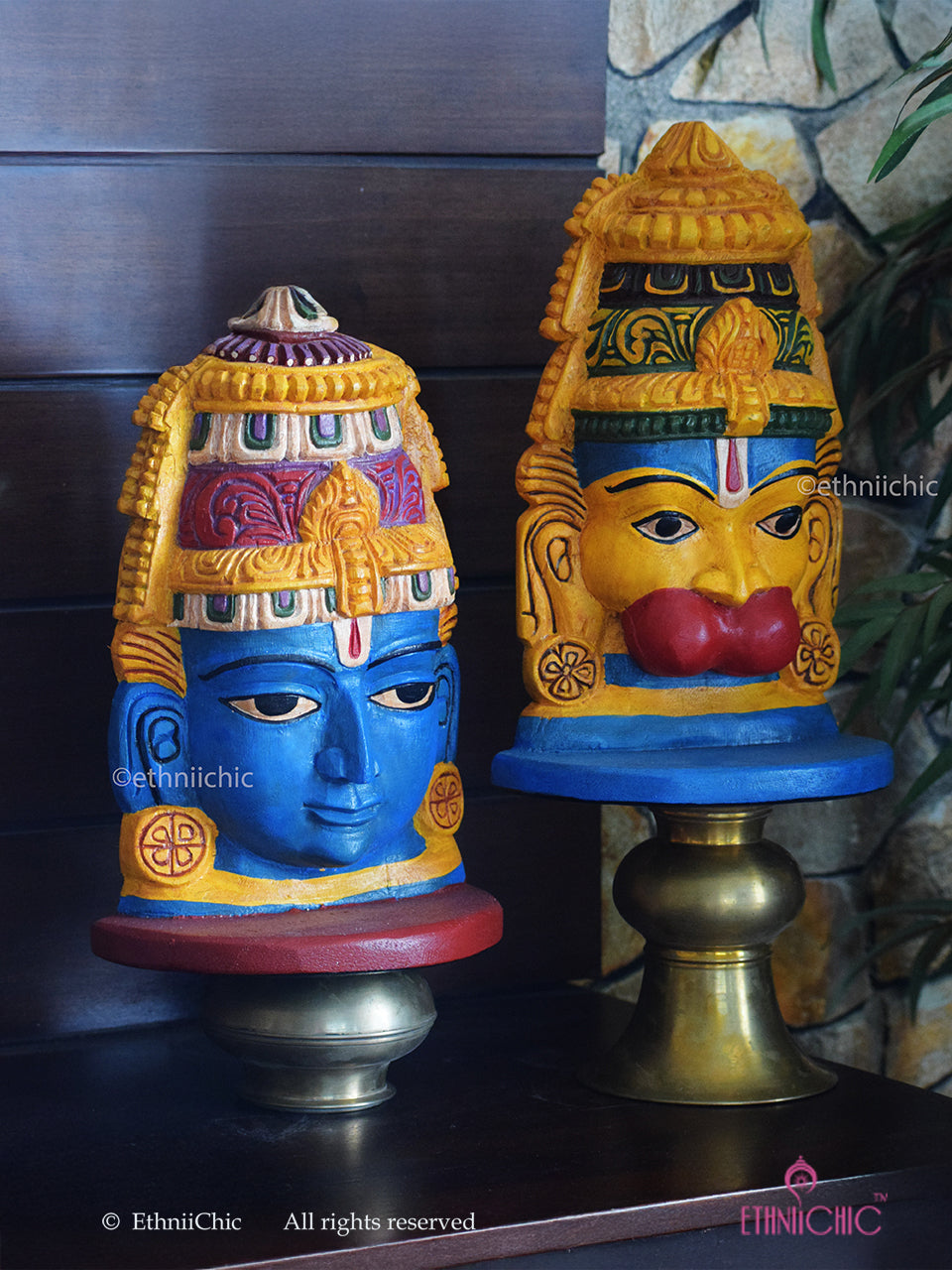
EthniiChic's Hanuman collection brings together Cheriyal, Pattachitra, and Tanjore painting traditions in devotional wall décor and sculpture — three traditional Indian folk art forms from Telangana, Odisha, and Tamil Nadu respectively. Highlights include the jumbo Panchamukhi Hanuman wall frame, the Ekadash Hanuman frame depicting his eleven forms, hand-painted Hanuman bust sculptures, and the Ram-Hanuman head set. Wooden cut-outs of Ram Darbar and Shri Ram with Hanuman sit alongside Cheriyal folk masks and Pattachitra fridge magnets for smaller, everyday pieces. Each product is hand-painted, working in sheesham wood, palm leaf, and cotton cloth depending on the art form.
Panchamukhi Hanuman — The Five Faces, and Why They're There
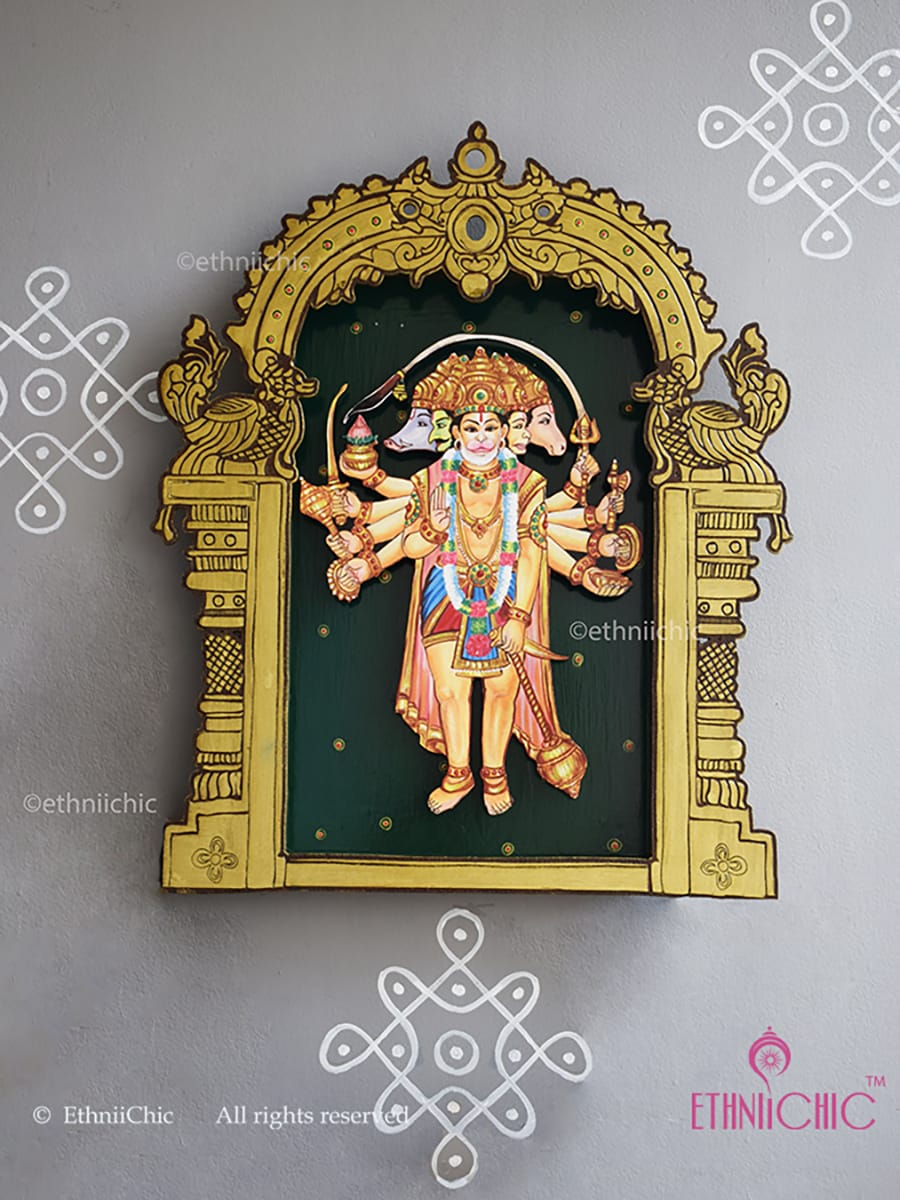
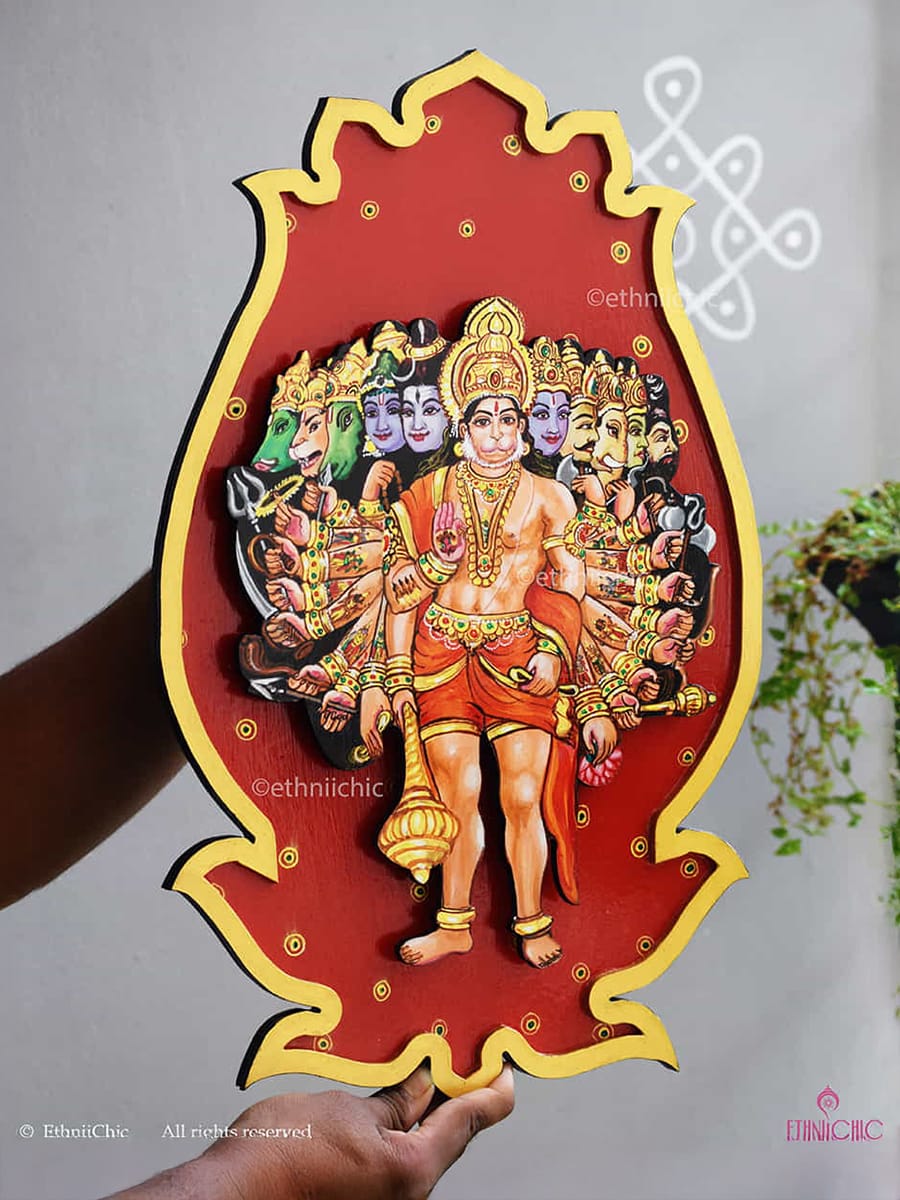
Panchamukhi Hanuman isn't simply "Hanuman with extra faces" for visual effect — each of the five faces is a distinct form associated with Vishnu, facing a specific direction: Hanuman himself faces east, Narasimha (the man-lion) faces south, Varaha (the boar) faces north, Garuda (Vishnu's eagle mount) faces west, and Hayagriva (horse-faced) faces upward. The form comes from a specific episode in regional Ramayana tradition — when the sorcerer-king Ahiravana takes Rama and Lakshmana to the netherworld to sacrifice them at five lamps lit in five directions, Hanuman takes this five-faced form to extinguish all five simultaneously and save them. EthniiChic's jumbo 22" wall frame and matching wooden cut-out both render this full five-faced form by hand.
Shop Wall Frames → · Shop Wooden Sculptures →
Ekadash Hanuman — Eleven Forms Together
Ekadash Hanuman depicts Hanuman in eleven forms shown together in a single composition. Hanuman is widely regarded in Shaiva tradition as an incarnation of the eleventh Rudra — one of Shiva's eleven fierce aspects — which is commonly cited as the basis for this eleven-faced depiction, alongside Panchamukhi as a related but distinct multi-form tradition. Both the wall frame and wooden cut-out versions in this collection render Ekadash Hanuman's eleven aspects in one piece.
Shop Wooden Cut Outs →
Ram Darbar and Shri Ram with Hanuman
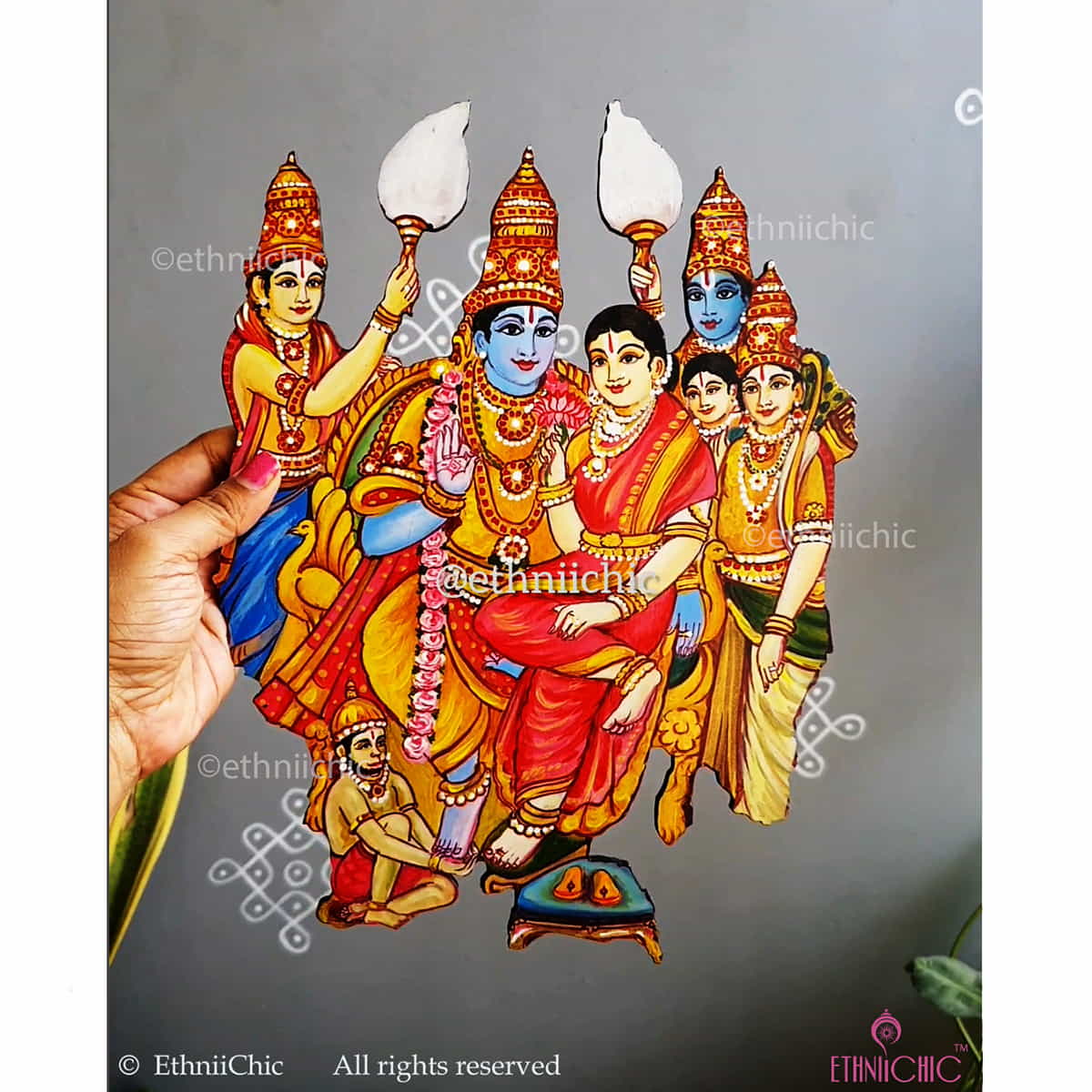
Ram Darbar — literally "the court of Rama" — is a devotional grouping showing Rama enthroned with Sita and his brother Lakshmana, with Hanuman kneeling in devotion before them. It's one of the most widely placed devotional images in Indian homes, representing ideal rule, family harmony, and devoted service in a single composition. The Shri Ram with Hanuman cut-out offers a simpler pairing of the same relationship — Hanuman's devotion to Rama specifically — for a smaller wall space.
Shop Wall Décor →
Choosing Where to Start
If you want the collection's most striking single statement piece, the jumbo 22" Panchamukhi wall frame or the Hanuman bust sculpture anchor a room on their own. If you want a more contained devotional grouping, the Ram Darbar or Shri Ram with Hanuman cut-outs suit a pooja room or devotional corner without dominating the space. If you're drawn to Hanuman's specific iconographic forms rather than a general devotional piece, the Panchamukhi and Ekadash cut-outs are the most detail-focused choices in the range.
Hanuman as a Gift
Hanuman pieces are commonly placed in pooja rooms and devotional corners as well as living spaces, and read as a considered choice for anyone who holds a personal devotion to Hanuman specifically — strength, protection, and loyal service are central to what he represents. The Hanuman bust or a Panchamukhi frame suits a significant gift for a new home; once restocked, the smaller Tala Patra fridge magnets are an easy, affordable way to bring the same devotion into an everyday space. Every collection ships internationally; write to contactus@ethniichic.com before ordering to confirm rates and delivery timelines for your country.