Pattachitra Art

Pattachitra Art

Pattachitra - from the Sanskrit words patta (cloth) and chitra (picture) - is one of India's oldest and most visually complex folk art traditions, originating in the temple town of Puri in Odisha. For centuries, the Chitrakar artist communities of Raghurajpur have painted intricate narrative scenes from the life of Lord Jagannath, the Ramayana, and the Mahabharata on cloth treated with a special chalk and gum mixture, using brushes made from hair and colours derived from natural minerals and plants. Pattachitra is recognisable by its characteristic features: bold black outlines, rich flat colours, intricate floral borders, and the extraordinary density of detail that comes from a tradition where every inch of surface is considered sacred space.

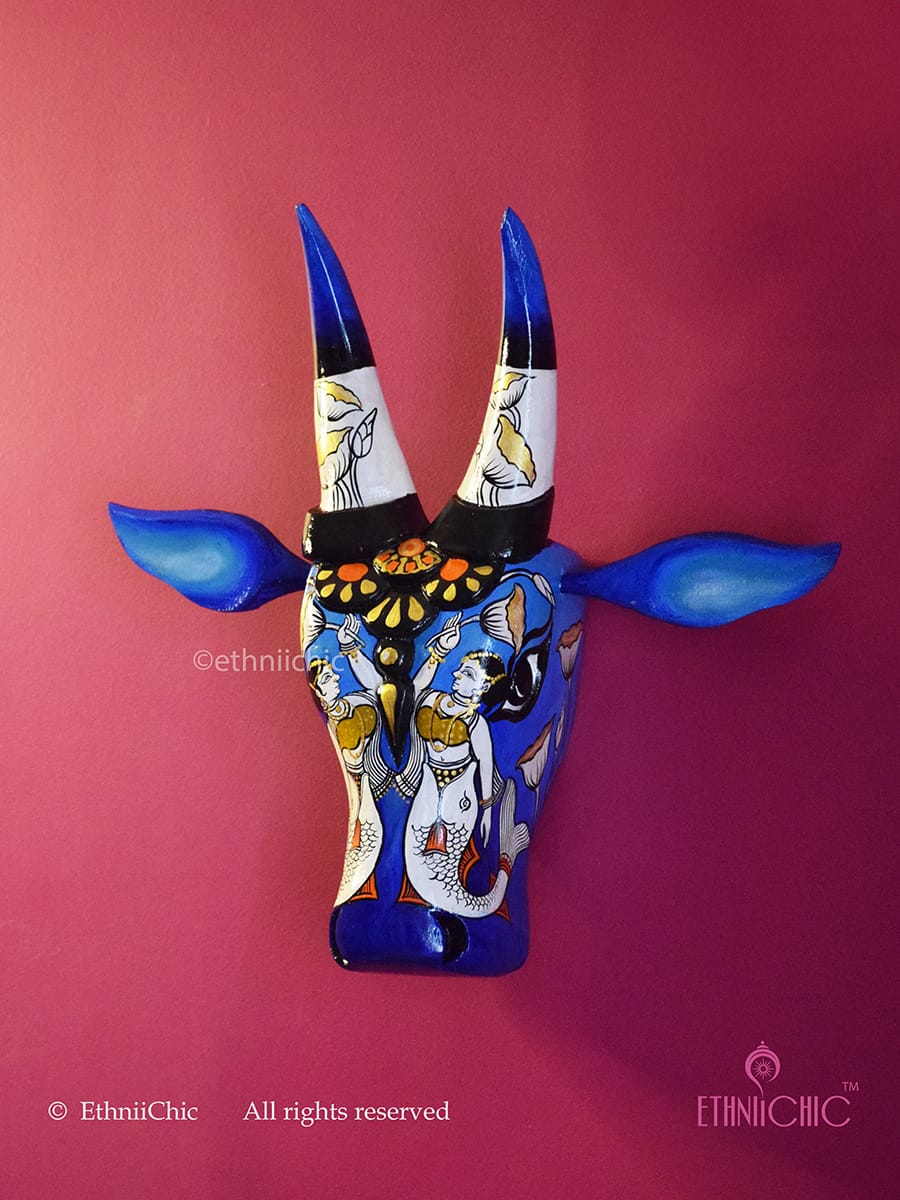
At EthniiChic, we bring this deeply revered tradition into hand-painted decor objects - wall art, plates, and collector pieces that carry Pattachitra's visual richness and narrative depth into the modern home. For the Odisha-rooted buyer, the Indian art collector, or anyone who has encountered Pattachitra and understood immediately that they were looking at something extraordinary -- this collection holds what you're looking for.

Skip to results list
51 items
Column grid
Column grid

Filter

Popular Searches :

Read More

Pattachitra — Odisha's Cloth-Painted Narrative Art, by the Chitrakar Tradition

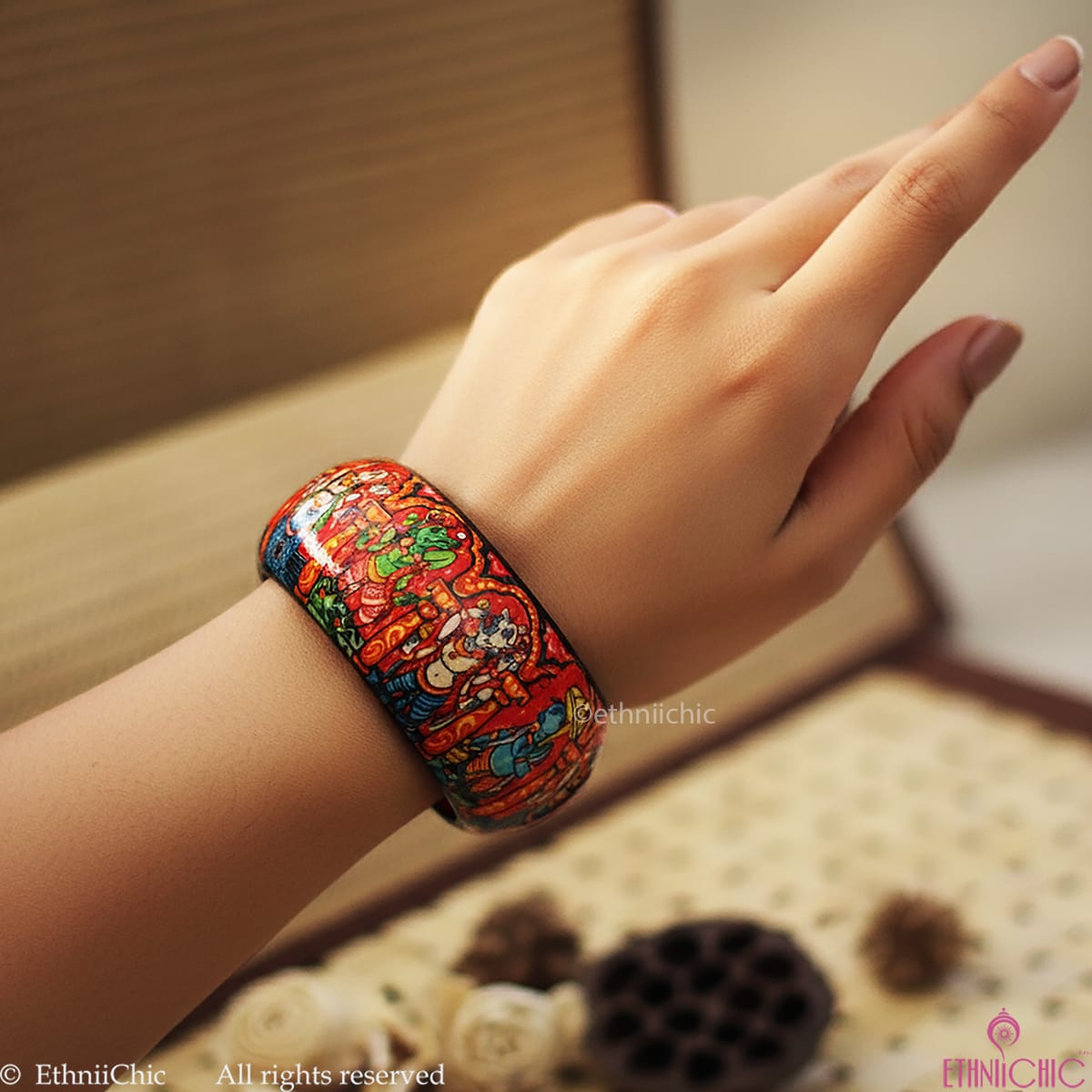
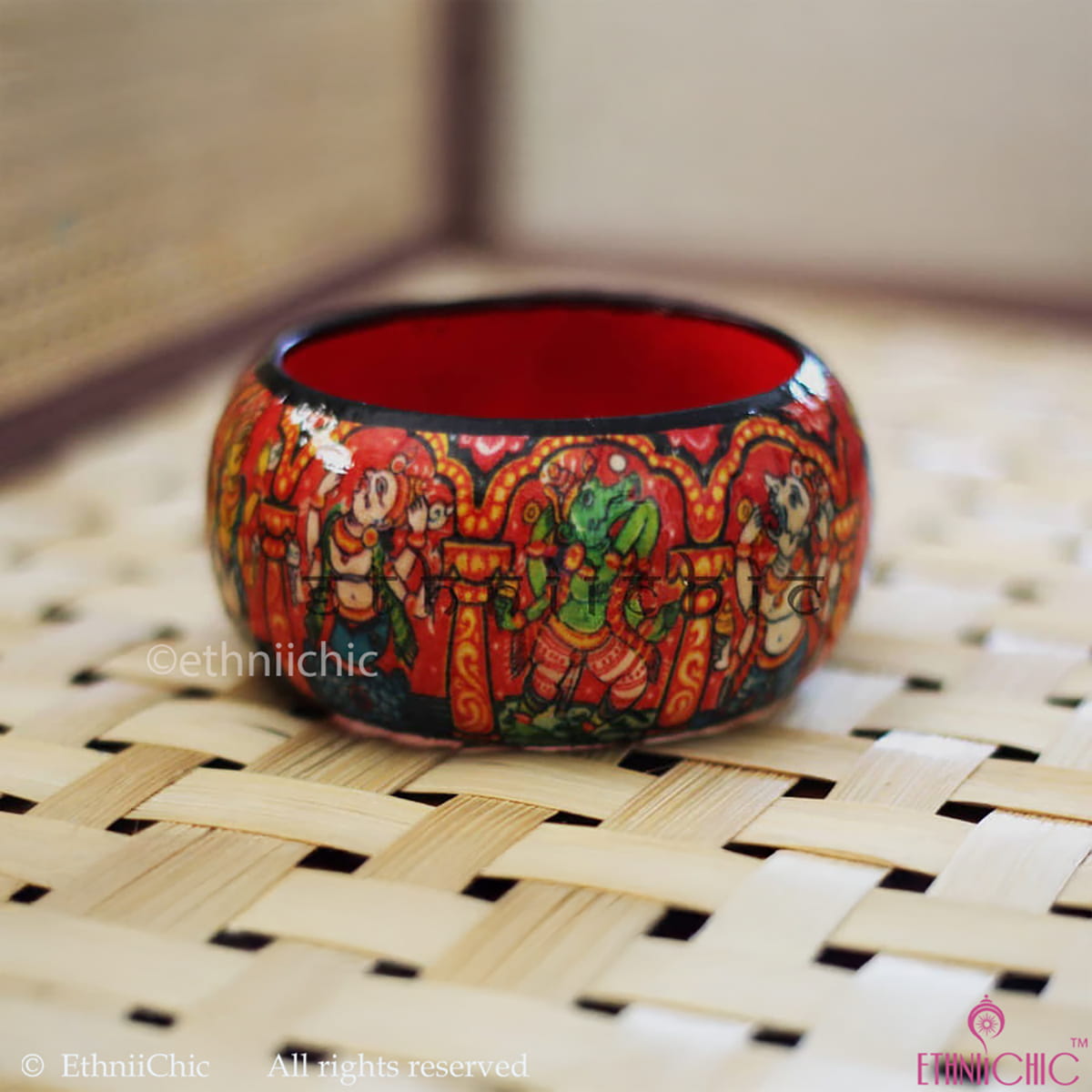
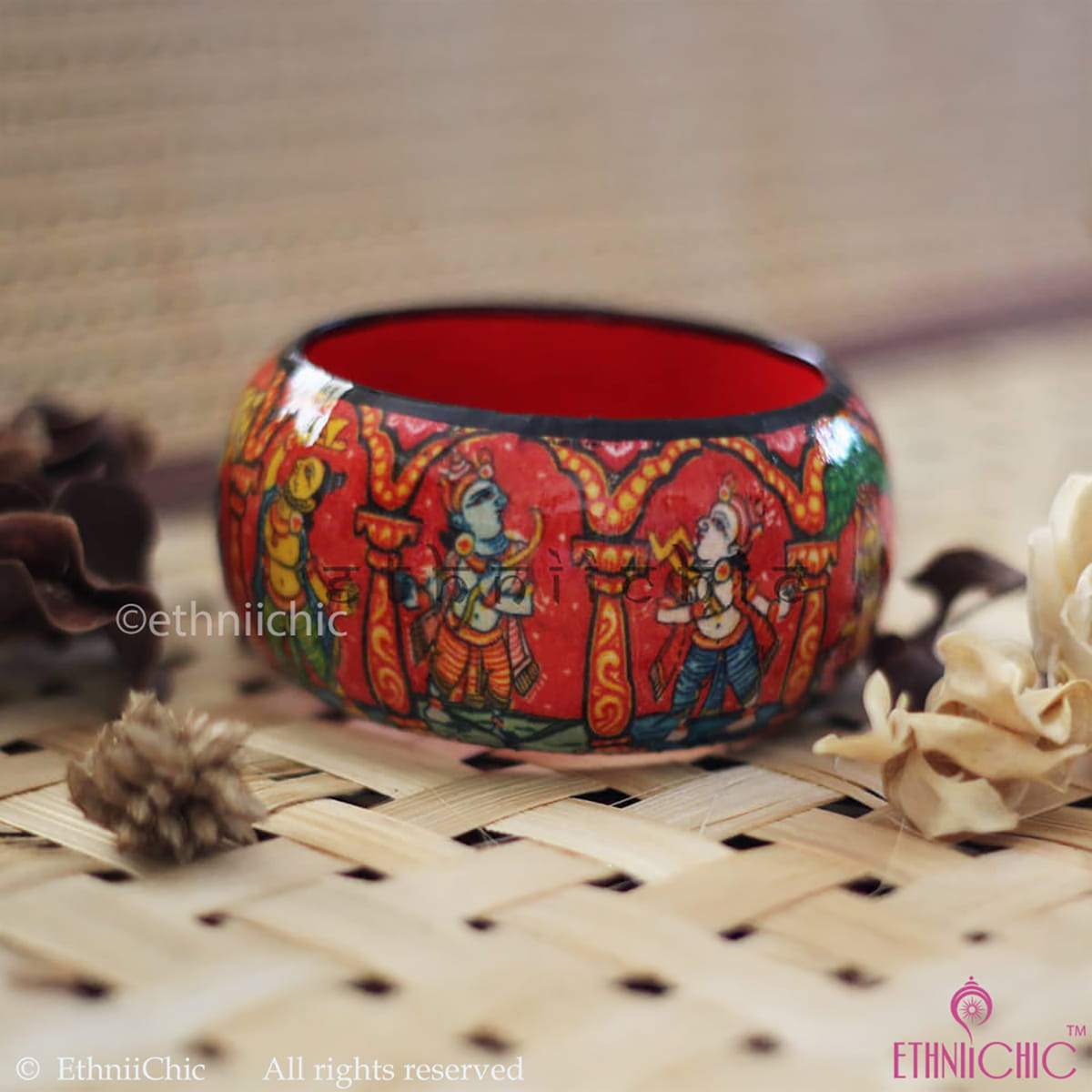
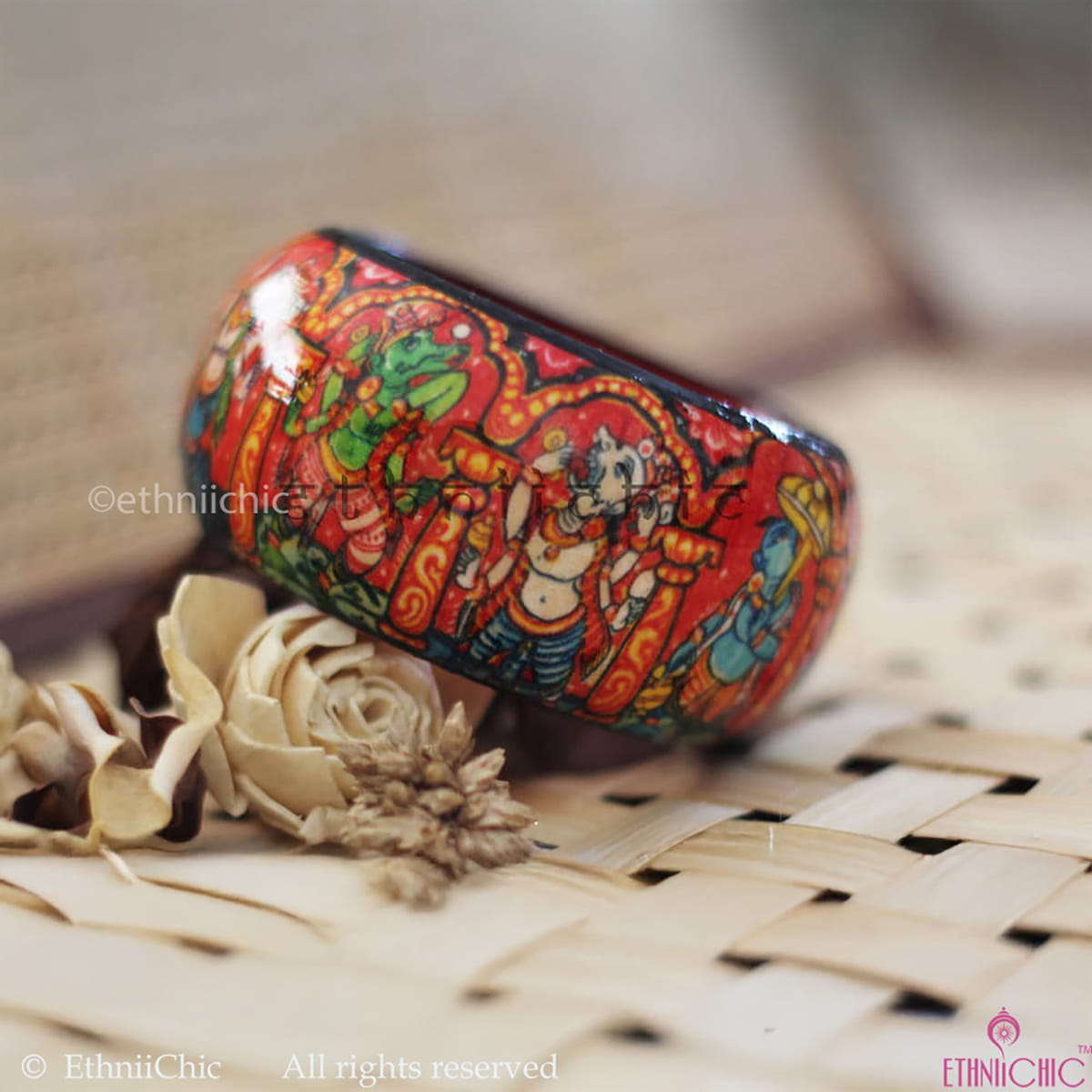
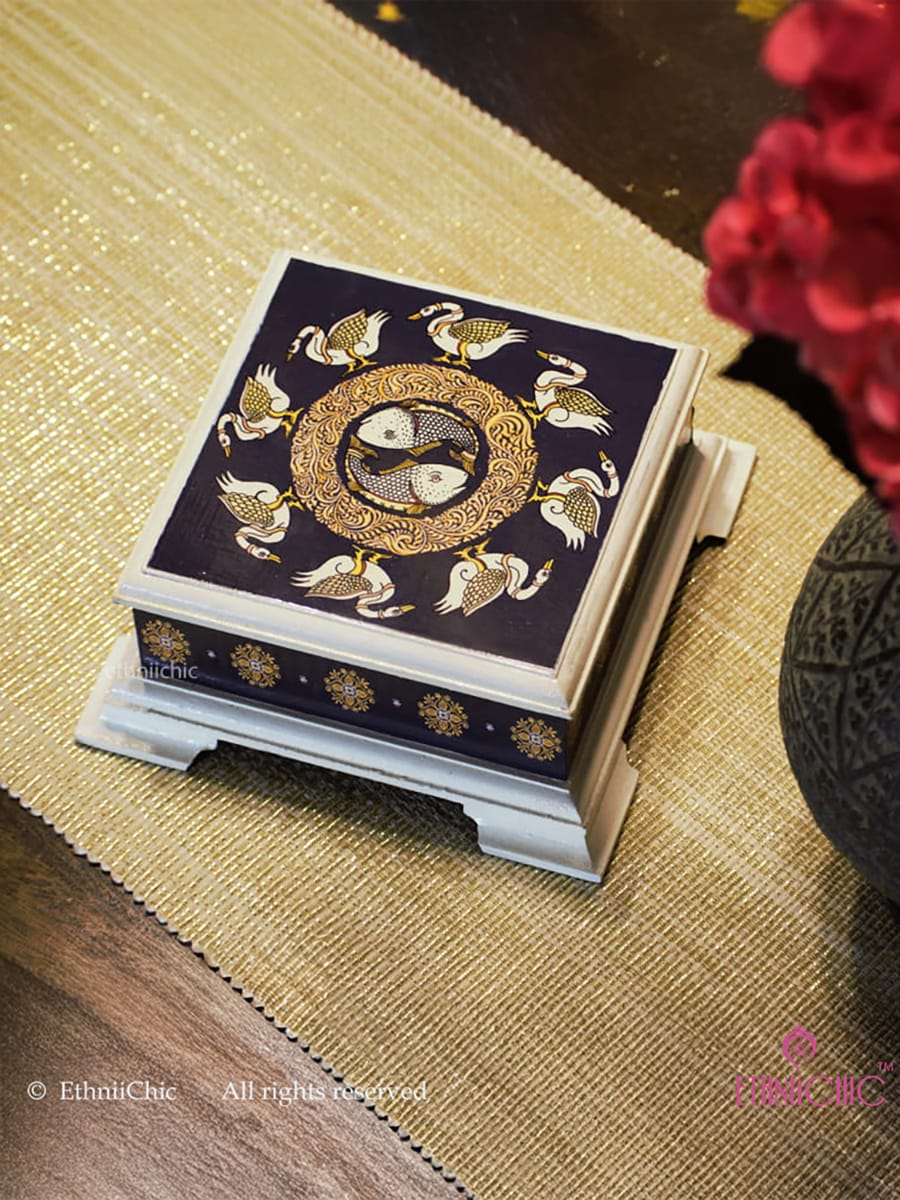
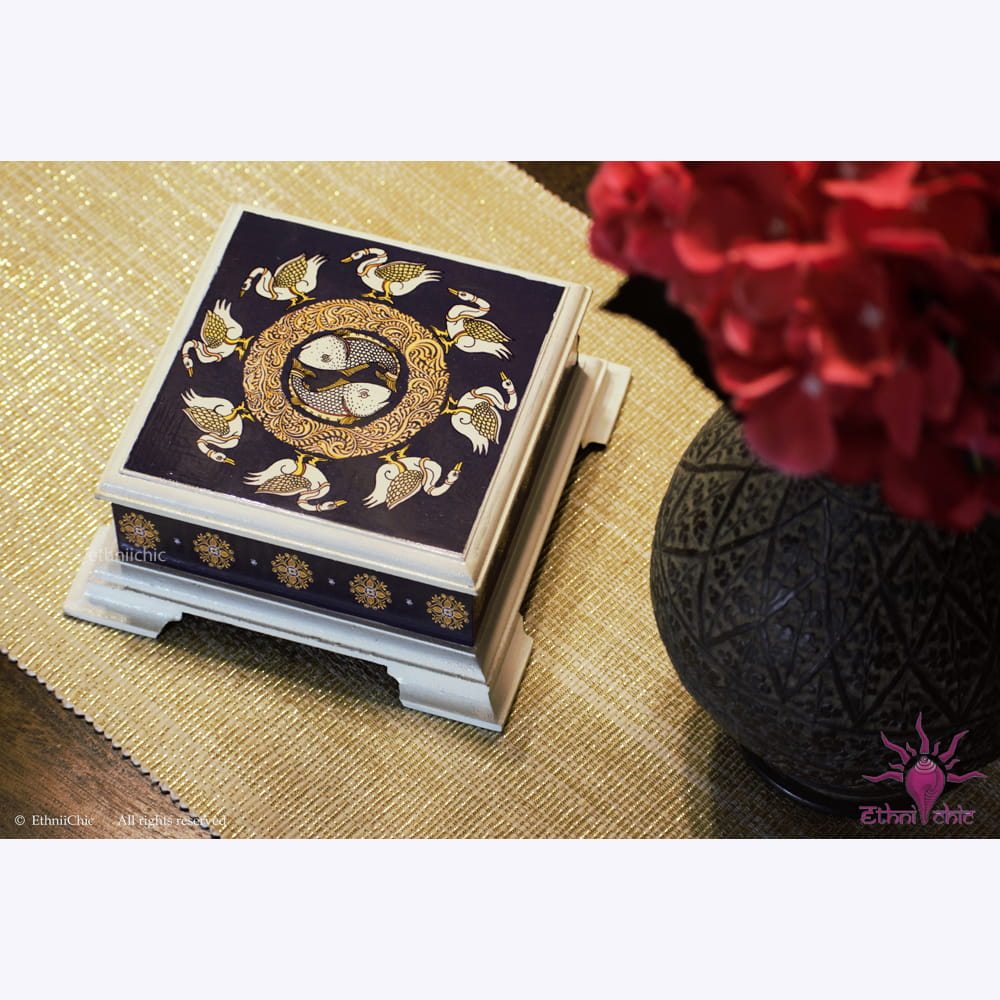
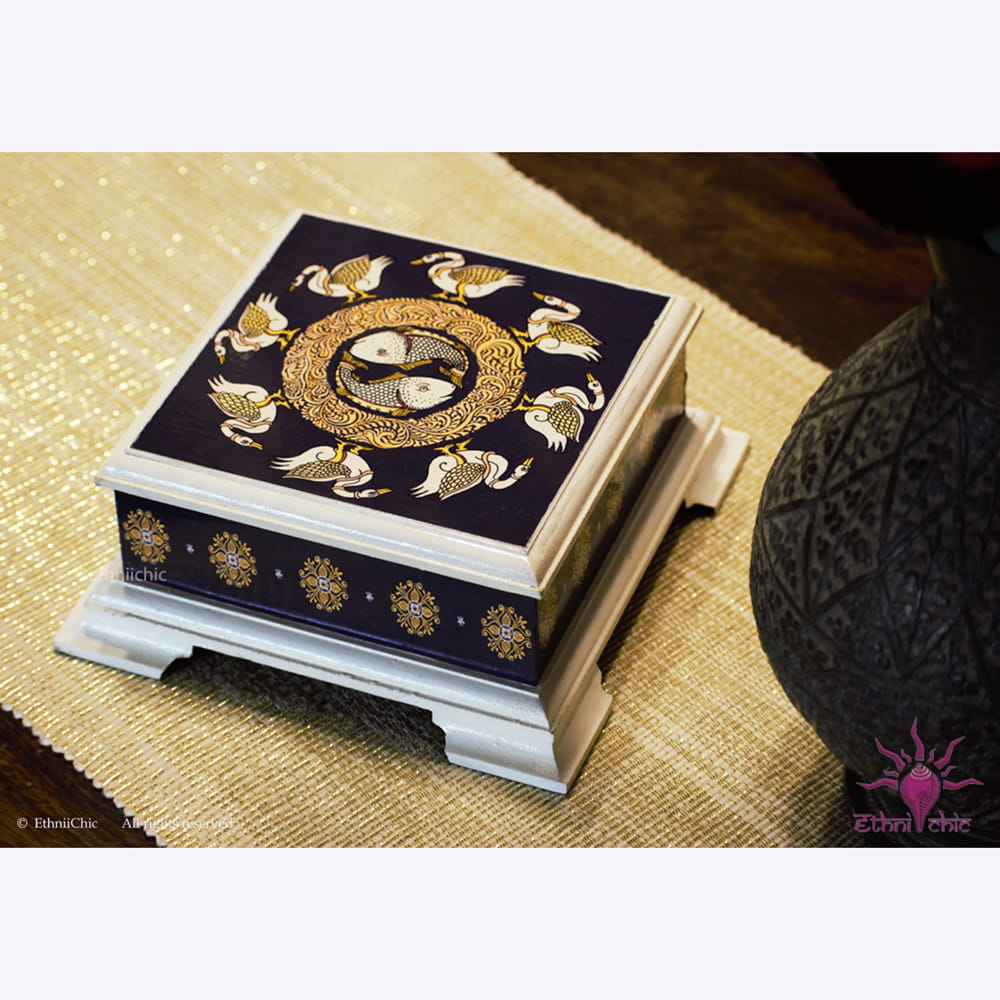
Pattachitra is one of India's oldest surviving painting traditions — a form of narrative cloth art from the temple town of Puri, Odisha, practised for generations by hereditary painter families known as Chitrakars. The name itself tells you what it is: patta means cloth in Sanskrit, chitra means picture. Every piece in this collection carries that lineage — bold black outlines, flat saturated colour, dense ornamental borders, and narrative scenes drawn from Hindu epic and devotional storytelling, translated by EthniiChic's studio artists across wall art, jewellery, trays, boxes, coasters, and fridge magnets.

What sets Pattachitra apart from most Indian folk painting traditions still practised today is how disciplined its materials and process remain. Traditional artists prepare their own canvas — cloth coated with a chalk-and-tamarind-gum mixture and burnished smooth with stone until it takes on a leathery finish — then paint using just five natural colours: Hingula (vermilion), Haritala (green), Kala (black), Sankha (pearl white), and Geru (brick orange). No colour outside that palette, no shortcuts in preparation. It's a tradition defined as much by its constraints as by its imagery.

The Chitrakar Family Workshop

Pattachitra isn't produced by individual artists working alone — it's historically a family craft, with the whole household operating as one studio and labour divided by task. That hereditary, workshop-based structure is part of what's kept the technique so consistent across generations, centred especially around Raghurajpur, the village near Puri most closely associated with the tradition. EthniiChic's Pattachitra pieces are hand-painted by studio artists trained in that same visual grammar — the bold outline work, the flat colour blocking, the ornamental border density — rather than a loosely "folk-inspired" interpretation of it.

Two Techniques, One Tradition: Cloth-Painted and Palm-Leaf-Etched

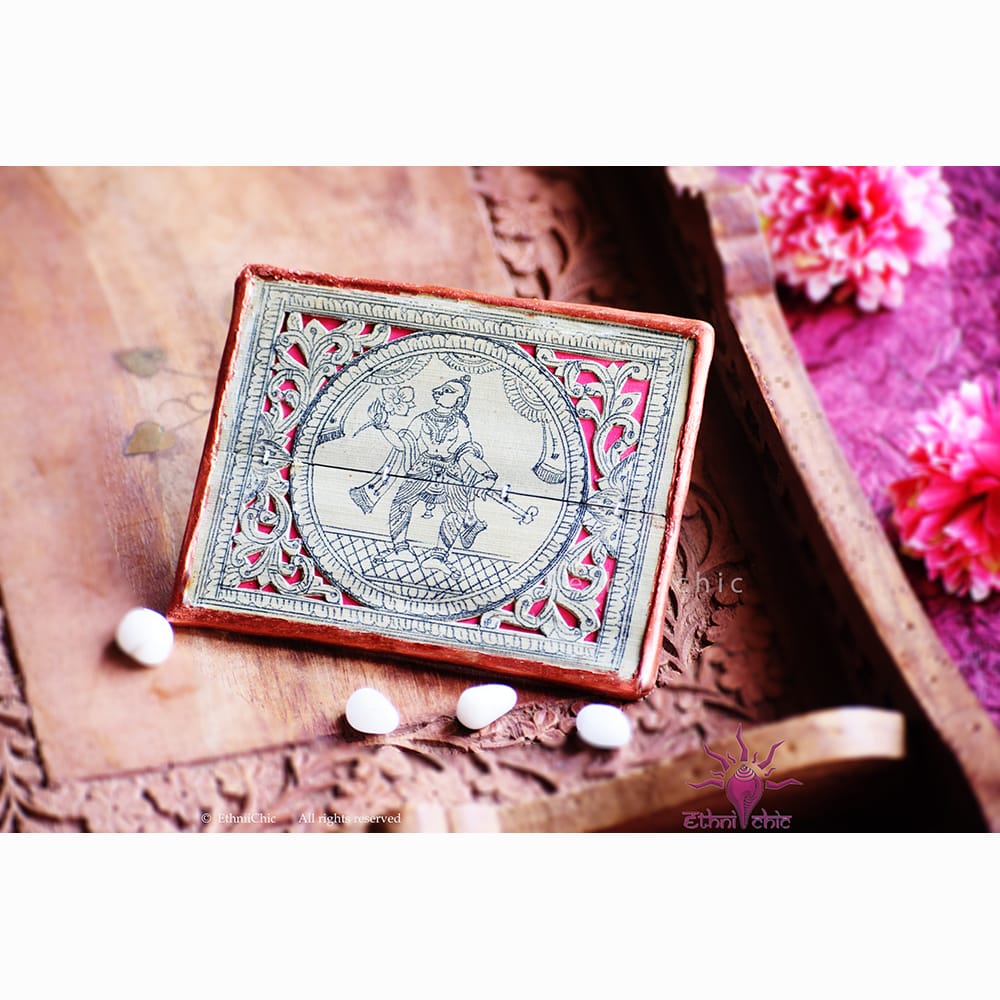
This collection actually holds two distinct Pattachitra techniques side by side. The cloth-painted pieces — the Raas Leela silk painting, the wooden trays and boxes, the jewellery — carry the traditional five-colour palette described above. The Tala Patra fridge magnets are something technically different: images etched with a stylus into sewn palm-leaf panels rather than painted with a brush, then inked to bring the etched line work forward. Traditional Tala Patra panels fold fan-like for storage and sometimes hide a second image beneath a layer of cut-work — a technique built for intricacy at a much smaller scale than the painted pieces.
Shop Wall Art → · Shop Fridge Magnets →

What the Imagery Means

Pattachitra's subject matter isn't decorative embellishment picked for visual effect — it's devotional narrative. Lord Jagannath and Radha-Krishna appear constantly, alongside the ten avatars of Vishnu (the Dashavatara motif shows up here across a bangle and a full necklace set) and scenes from the Ramayana and Mahabharata. Even the fridge magnets, small as they are, each depict a specific mythological figure — Hanuman, Buddha, Ram and Sita, Ram and Lakshman, Navagunjara, Parshuram — rather than a generic decorative face. That specificity is part of what makes them collectible as a set rather than interchangeable as single pieces.
Shop Jewellery → · Shop Trays →

Choosing Where to Start

If you want Pattachitra at its fullest expression, the Raas Leela silk painting is the collection's centrepiece — the format closest to the tradition's original scroll-painting scale. If you want to wear the craft rather than hang it, the Dashavathar necklace-and-earring set carries the same narrative density at jewellery scale. And if you're drawn to the story-by-story specificity of the tradition, the Tala Patra fridge magnets are the easiest entry point — though worth checking stock first, since most of that line is currently sold out.

Pattachitra as a Gift

Because each piece tells a specific, identifiable story — a named avatar, a named scene, a named deity — Pattachitra gifts read as considered rather than generic, especially for anyone with a connection to Odisha, Jagannath worship, or Indian epic storytelling more broadly. A single fridge magnet is an easy, low-commitment introduction; the necklace set or a wall-art piece makes a more significant milestone gift — a housewarming, an anniversary, a gift for someone setting up a first home away from India. Every collection ships internationally; write to contactus@ethniichic.com before ordering to confirm rates and delivery timelines for your country.

Frequently Asked Questions (FAQs)

1. What is Pattachitra?
A centuries-old cloth-painting tradition from Puri, Odisha, practised by hereditary painter families called Chitrakars. The name comes from Sanskrit — patta (cloth) and chitra (picture) — and the style is known for bold black outlines, flat saturated colour, and dense narrative detail.

2. What colours are traditionally used in Pattachitra?
Exactly five natural colours: Hingula (vermilion), Haritala (green), Kala (black), Sankha (pearl white), and Geru (brick orange), applied to cloth prepared with a chalk-and-tamarind-gum coating.

3. Who are the Chitrakars?
The traditional painter community behind Pattachitra — a hereditary, family-based craft where the whole household works as one studio, historically centred around Raghurajpur village near Puri.

4. What's the difference between Pattachitra and Tala Patra?
Pattachitra is painted on prepared cloth with a brush. Tala Patra is a related but distinct technique where images are etched with a stylus into sewn palm-leaf panels and then inked — the process behind EthniiChic's Pattachitra fridge magnets specifically.

5. What do Pattachitra pieces typically depict?
Devotional and epic narrative subjects — Lord Jagannath, Radha-Krishna, the ten avatars of Vishnu (Dashavatara), and scenes from the Ramayana and Mahabharata.

6. Does Pattachitra have GI (Geographical Indication) status?
Yes, Pattachitra holds GI recognition tying the craft to Odisha as its place of origin.

7. What kinds of products are in this collection?
Wall art, jewellery (bangles, necklaces), wooden trays and boxes, coasters, a large-format silk painting, and Tala Patra fridge magnets — the same core Pattachitra and Tala Patra techniques applied across both wearable and home formats.

8. Do you ship Pattachitra pieces internationally for NRI buyers?
Yes, across the full collection. Write to contactus@ethniichic.com before ordering to confirm shipping rates and delivery timelines for your country.

9. Can I order a custom or bulk Pattachitra piece?
Yes. Custom motifs, specific mythological scenes, and bulk or corporate gifting orders can be arranged through Commission Artwork or Contact Us.