Hand-Painted Indian Necklaces — Folk Art You Wear
The oldest form of Indian jewellery was never just about adornment. It was a declaration of origin, of devotion, of cultural belonging. A Kerala Mural deity worn at the throat announced a woman's connection to her southern heritage. A Pattachitra Ganesha on a layered necklace told a story of Odisha's narrative painting tradition. The materials were secondary to the meaning embedded in the motif.
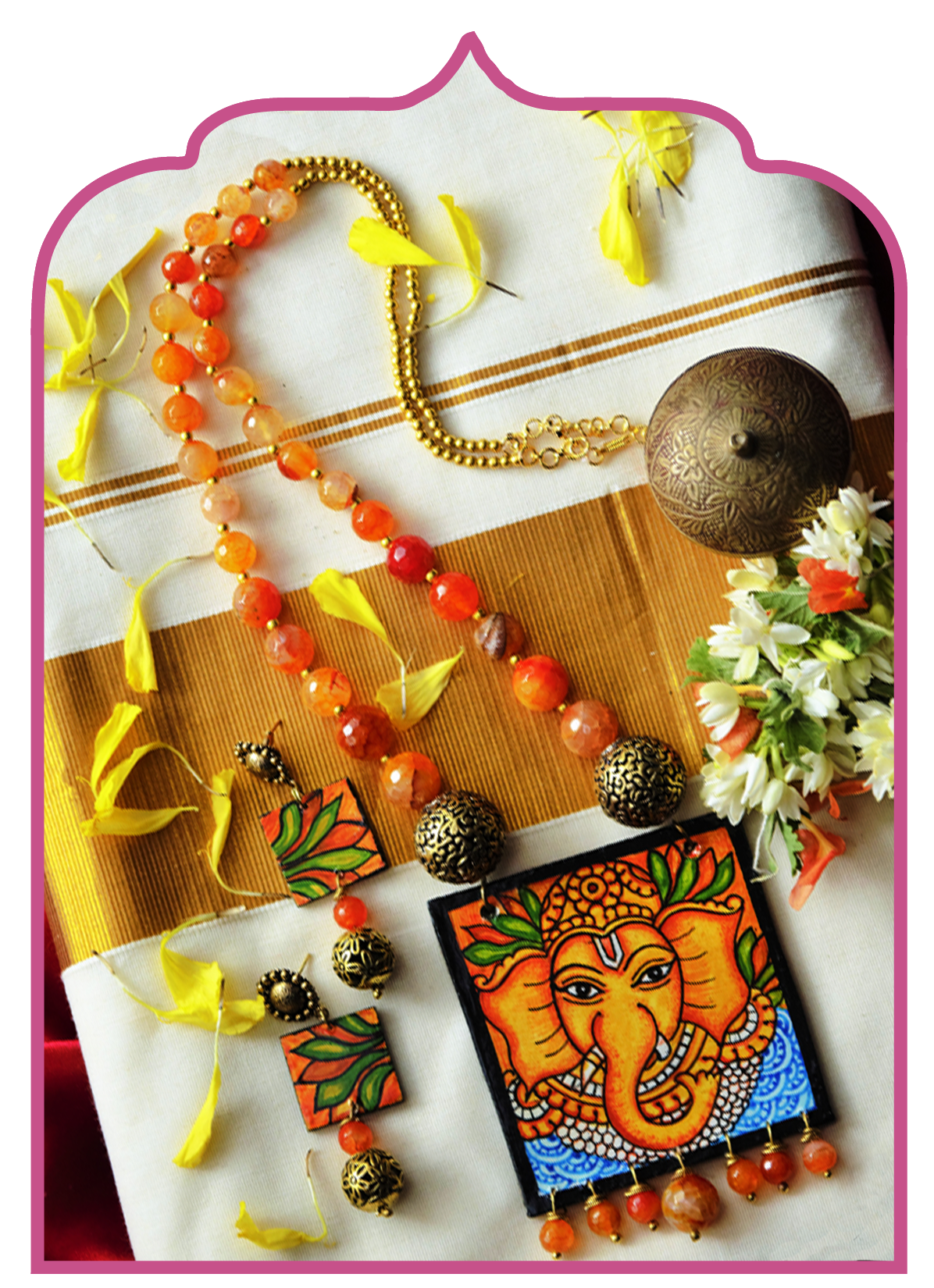
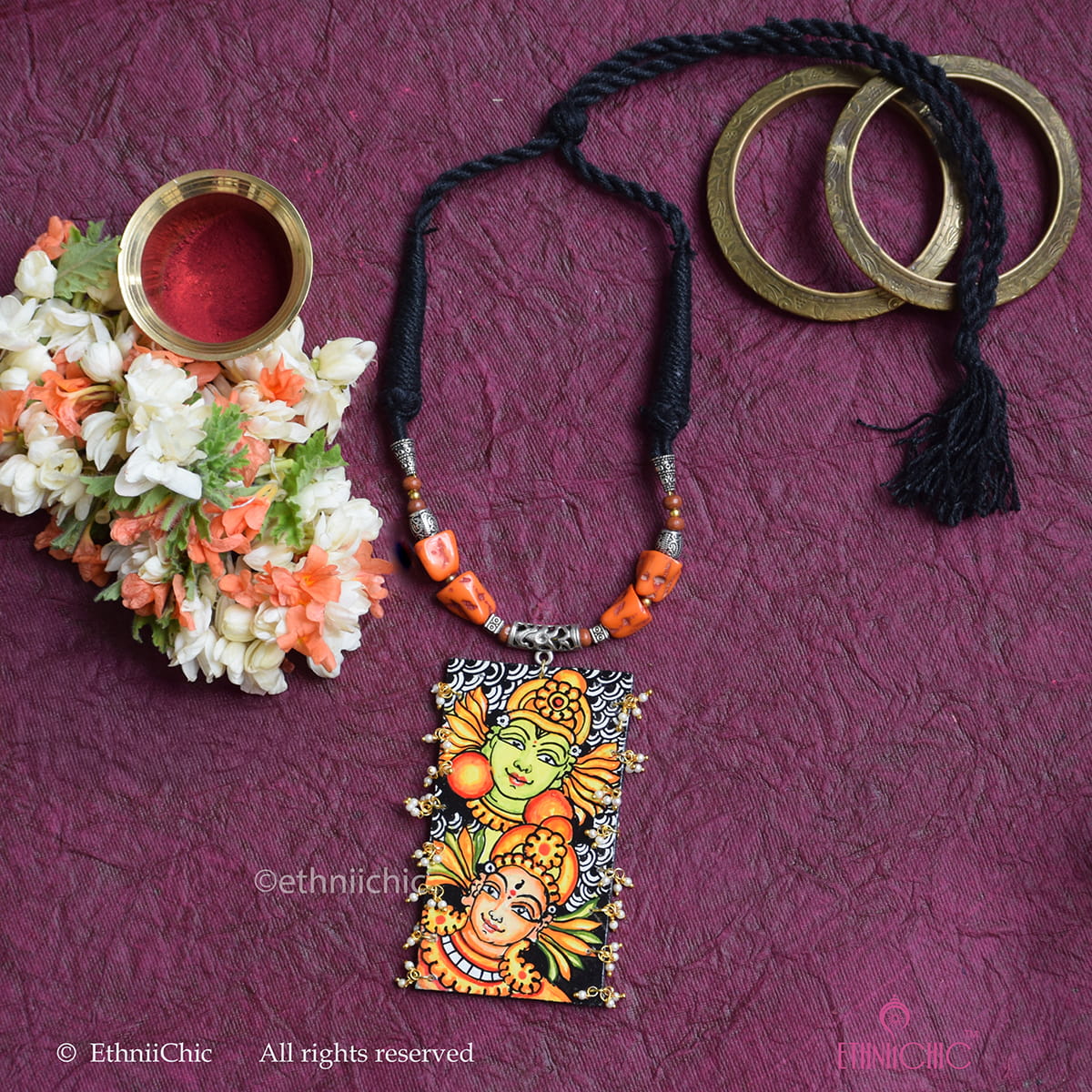
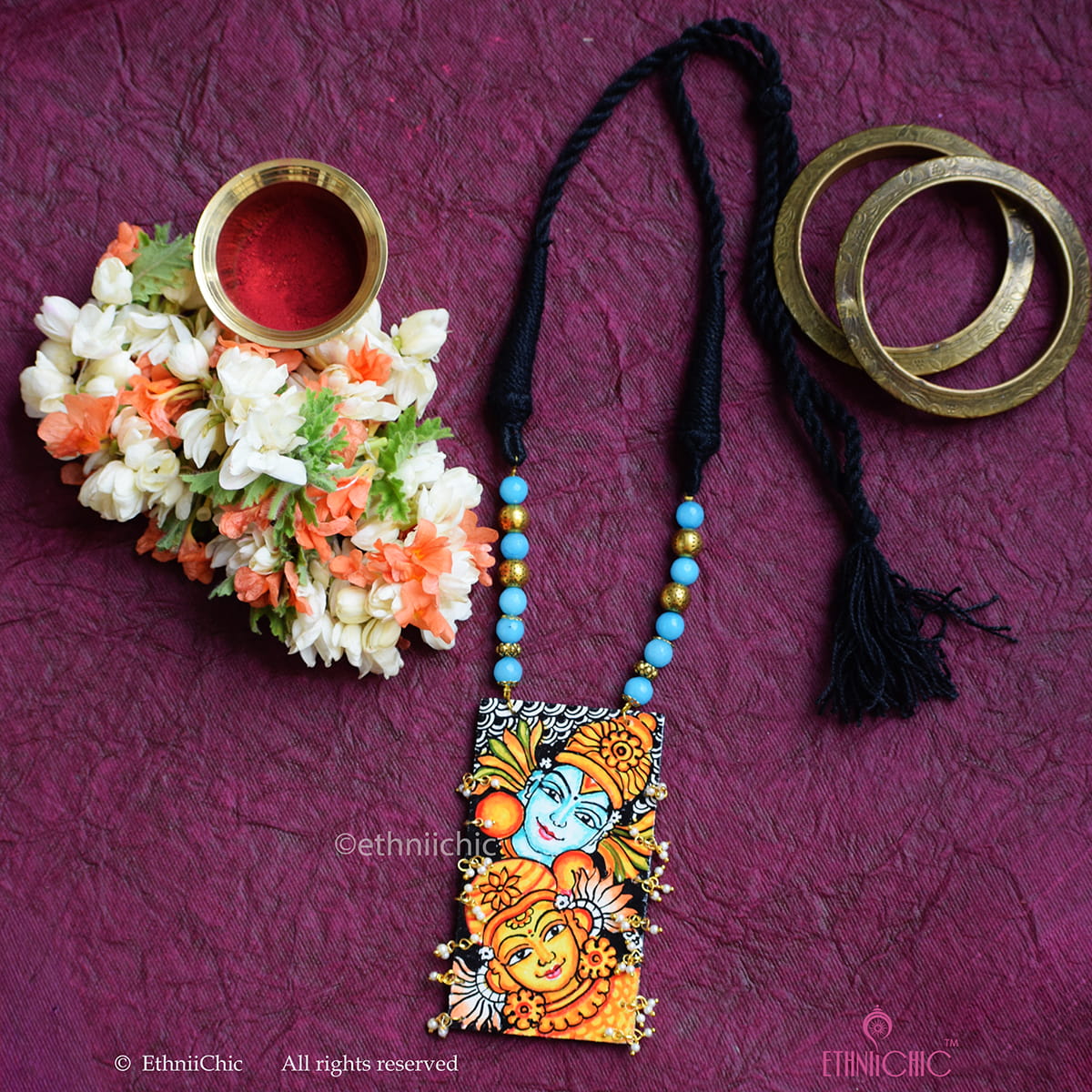
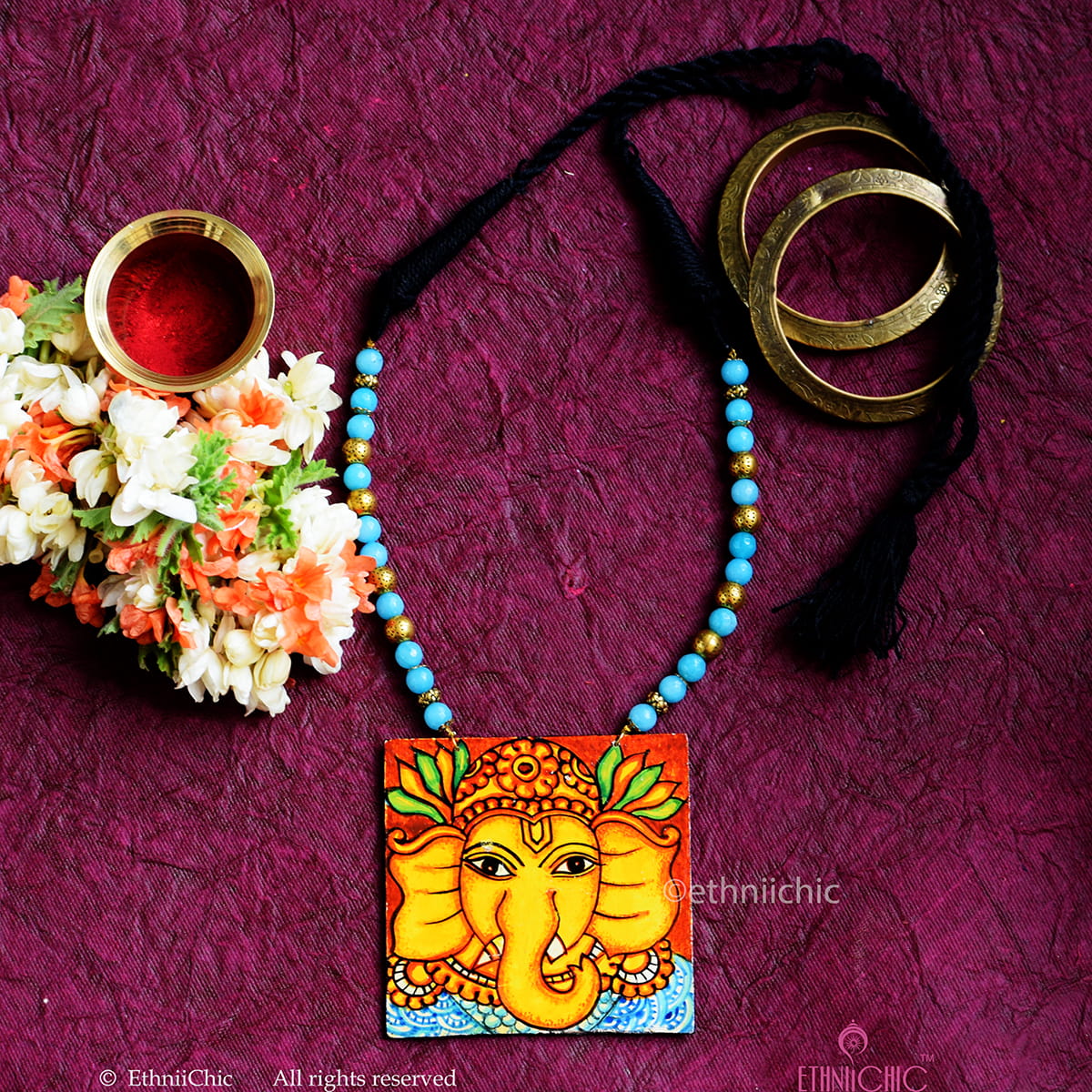
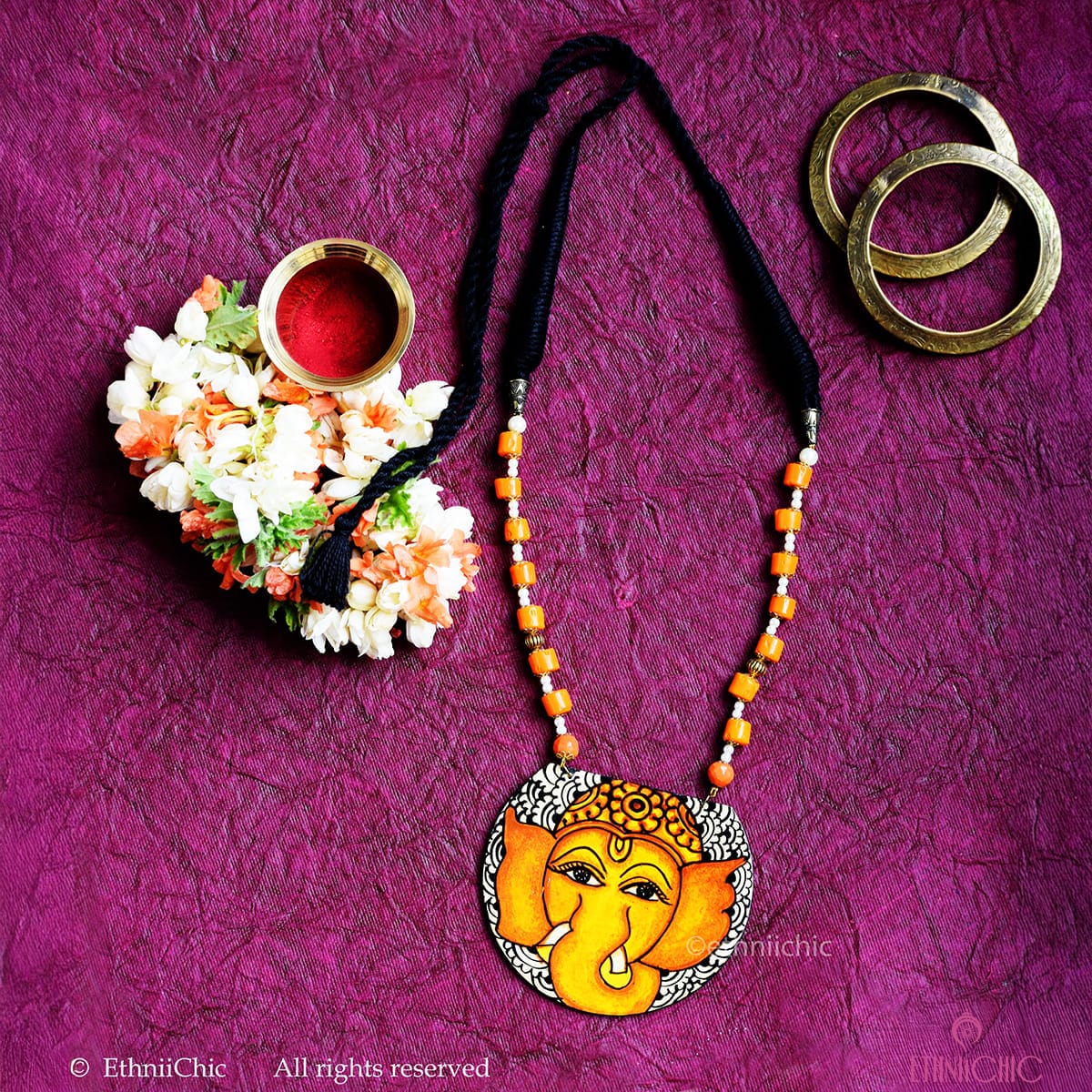
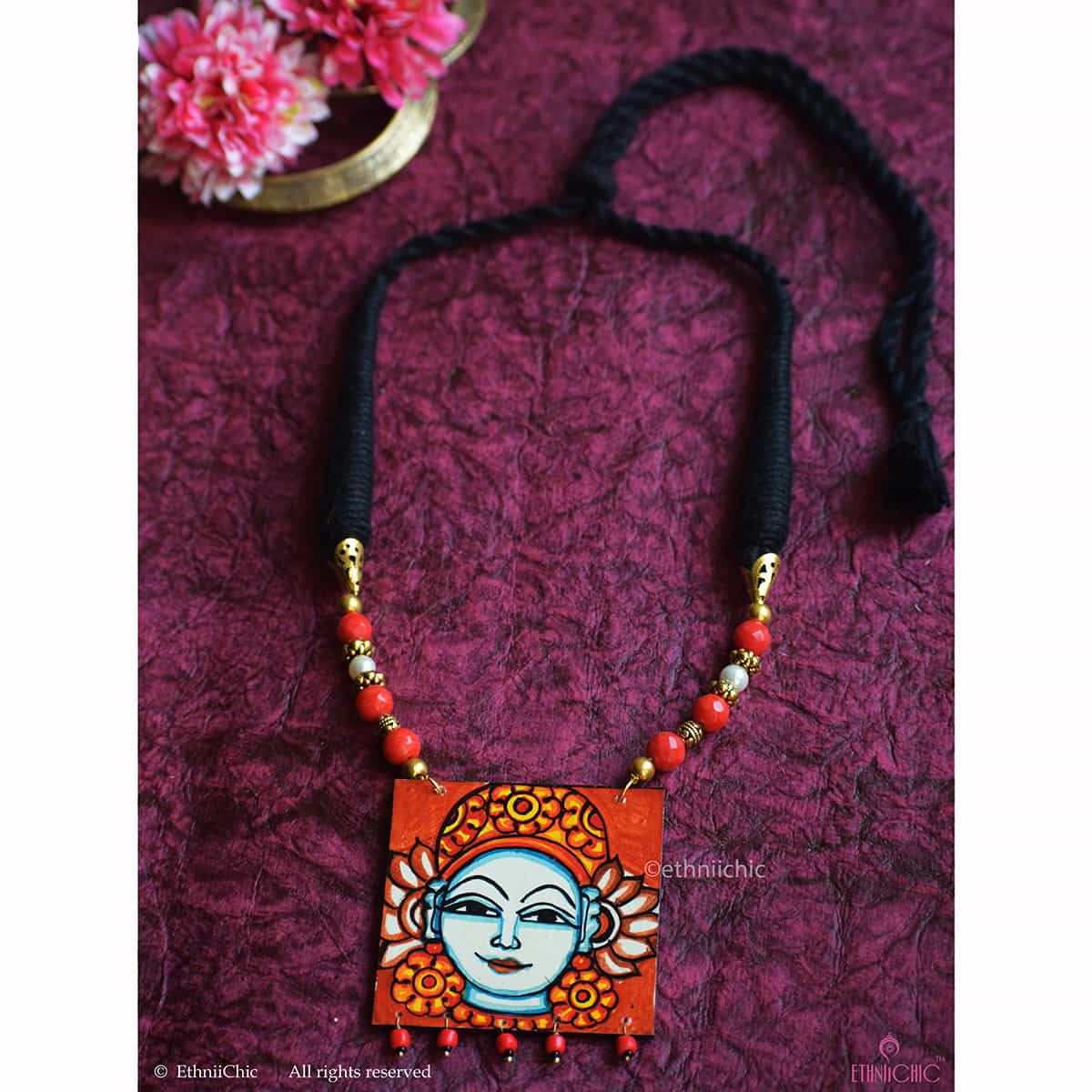
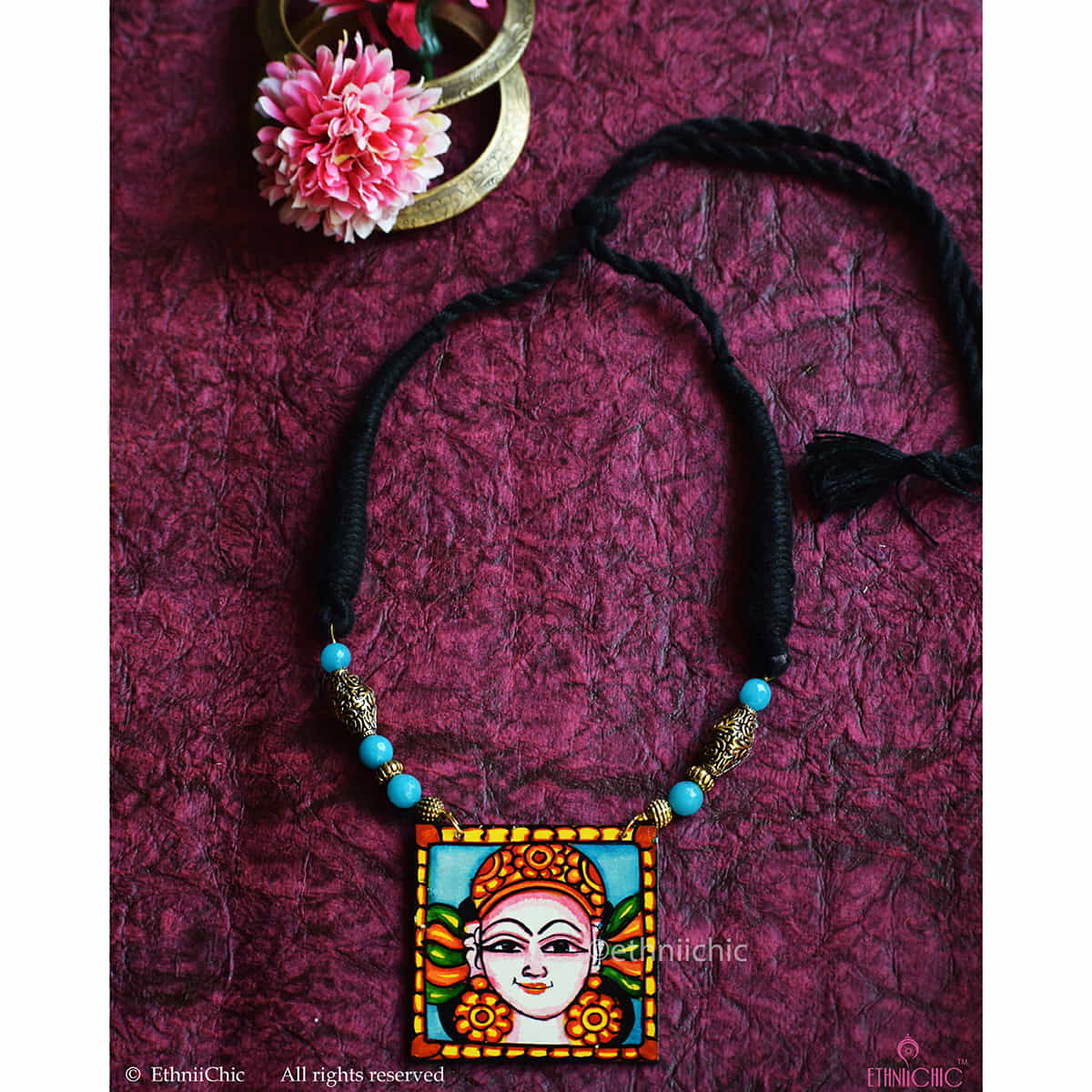
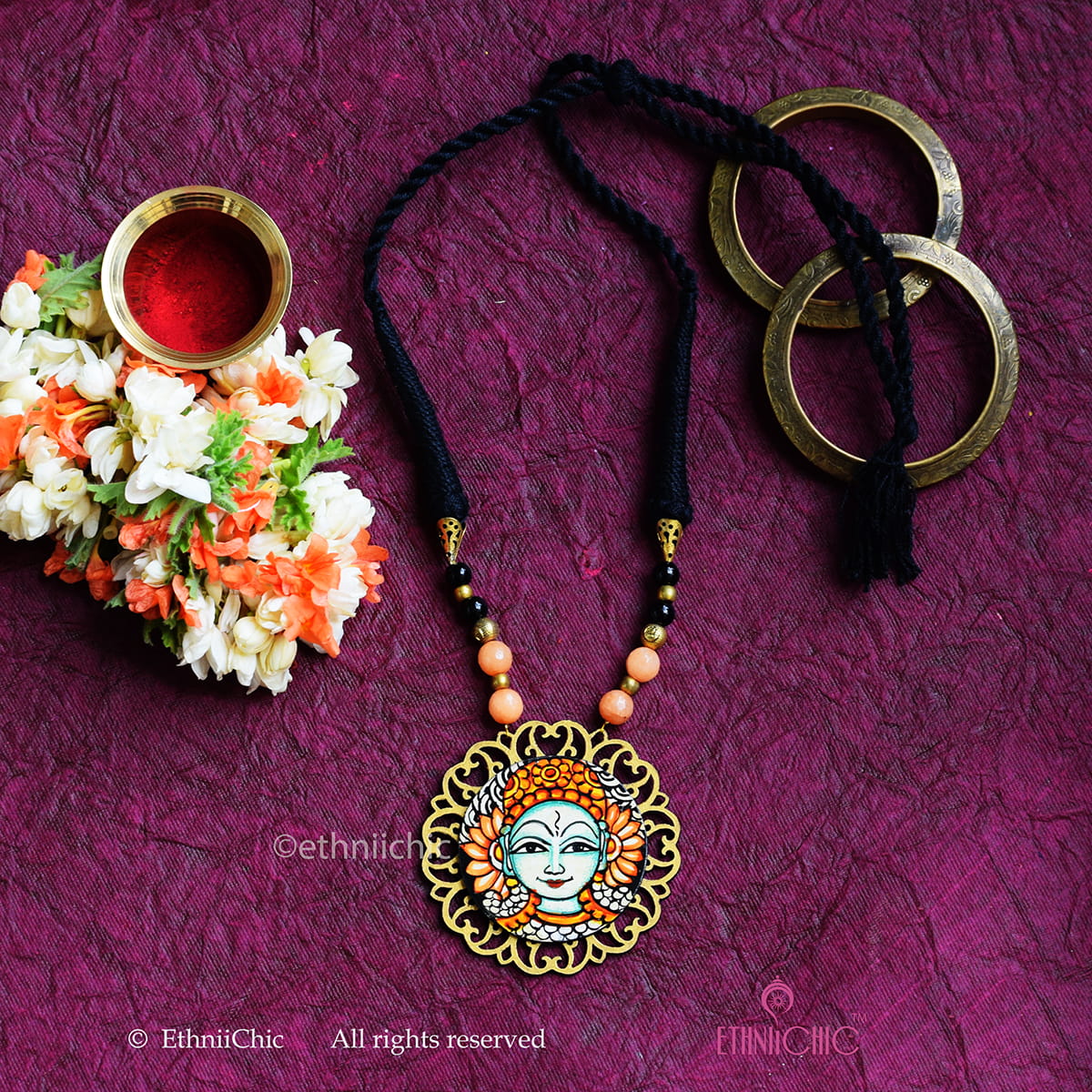
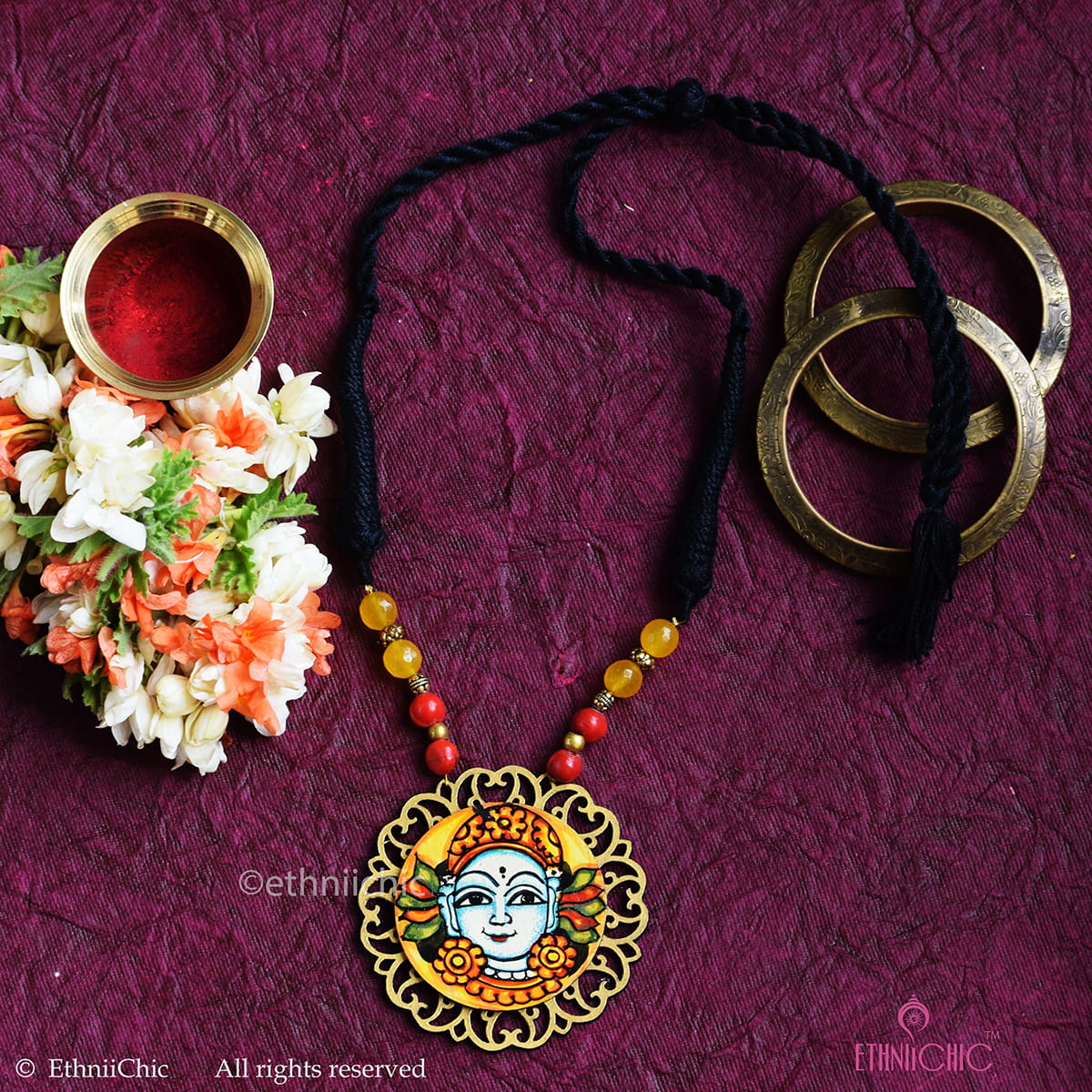
EthniiChic's Hand-Painted Necklaces Collection brings that logic into the present. Each of the 37 pieces in this collection starts as a shaped wooden pendant — cut by hand into teardrops, triangles, rectangles, diamonds, rounds, fans, arches, and silhouettes. An artist then paints directly on that surface, drawing from one of seven distinct Indian folk art traditions: Kerala Mural, Theyyam, Pattachitra, Madhubani, Kalamkari, Tholu Bommalatha, and Cheriyal. The pendant is then strung on a hand-assembled chain — black cotton rope, cobalt blue twisted cord, red braided rope, pearl cluster chains, raw coral stone, rudraksha beads, turquoise rounds — each chain chosen to suit the pendant's palette and character.
The result is a collection with no two identical pieces, no factory production, and no generic aesthetic. These are necklaces made one at a time by artists in Bangalore, and they wear like it.
The Art Forms Behind the Collection
Seven distinct Indian art traditions are represented in this collection, each with its own painting vocabulary and geographic heritage.
Kerala Mural
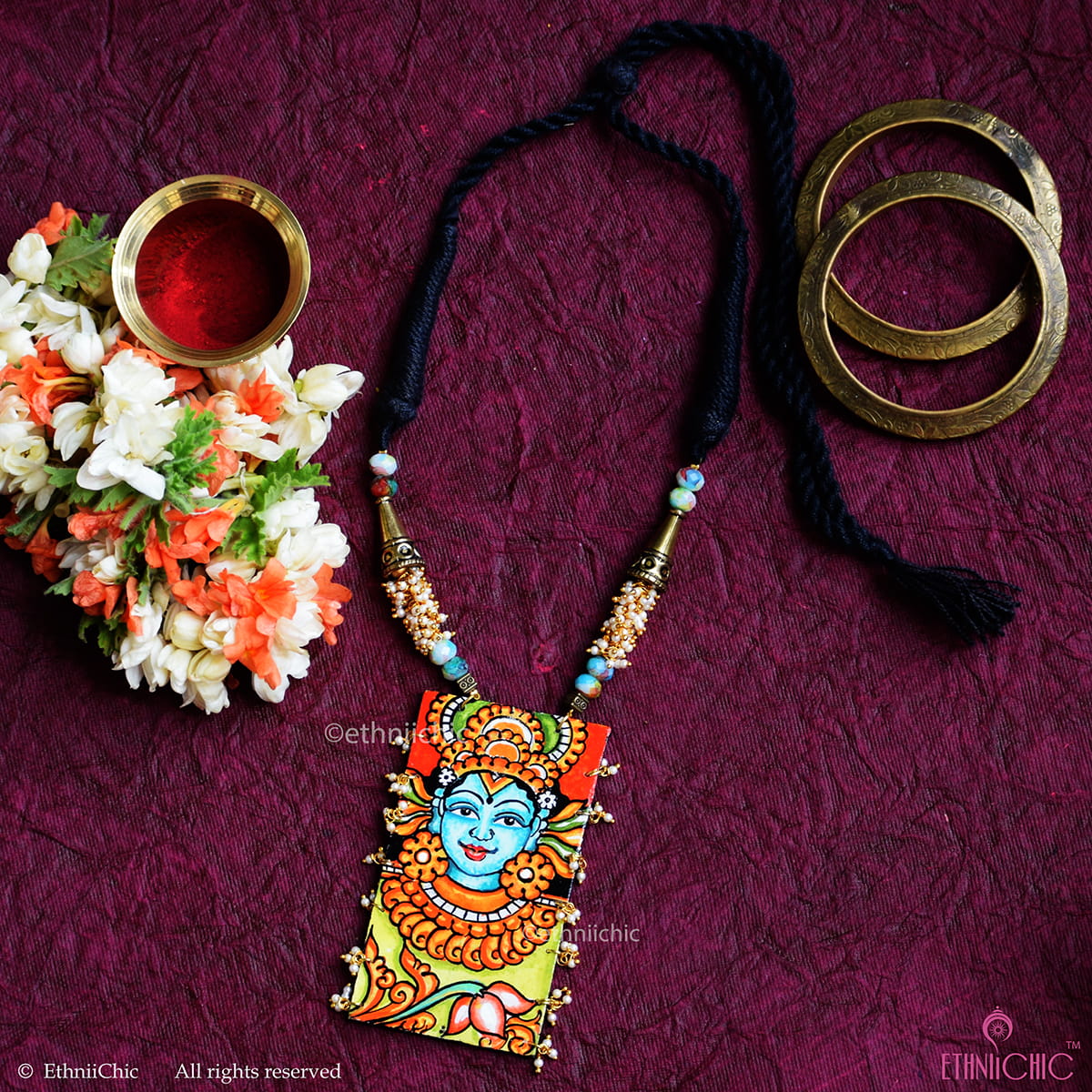
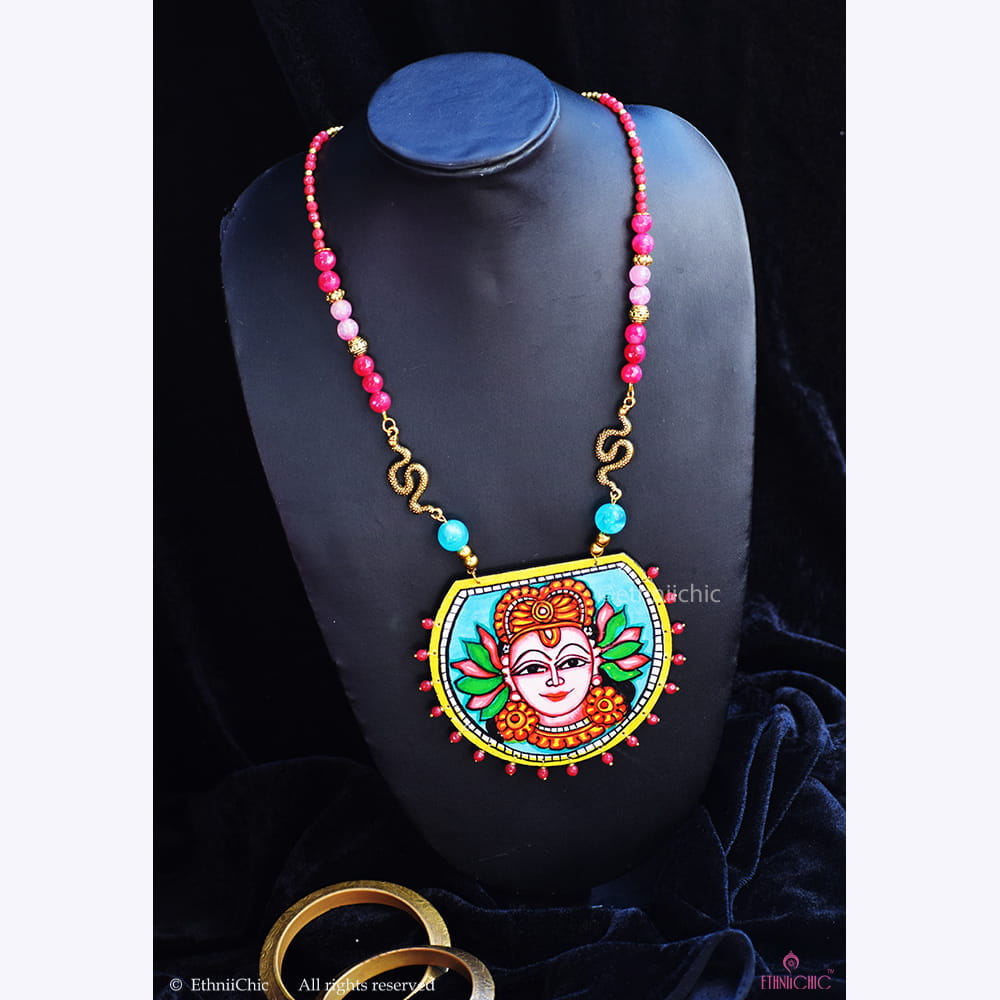
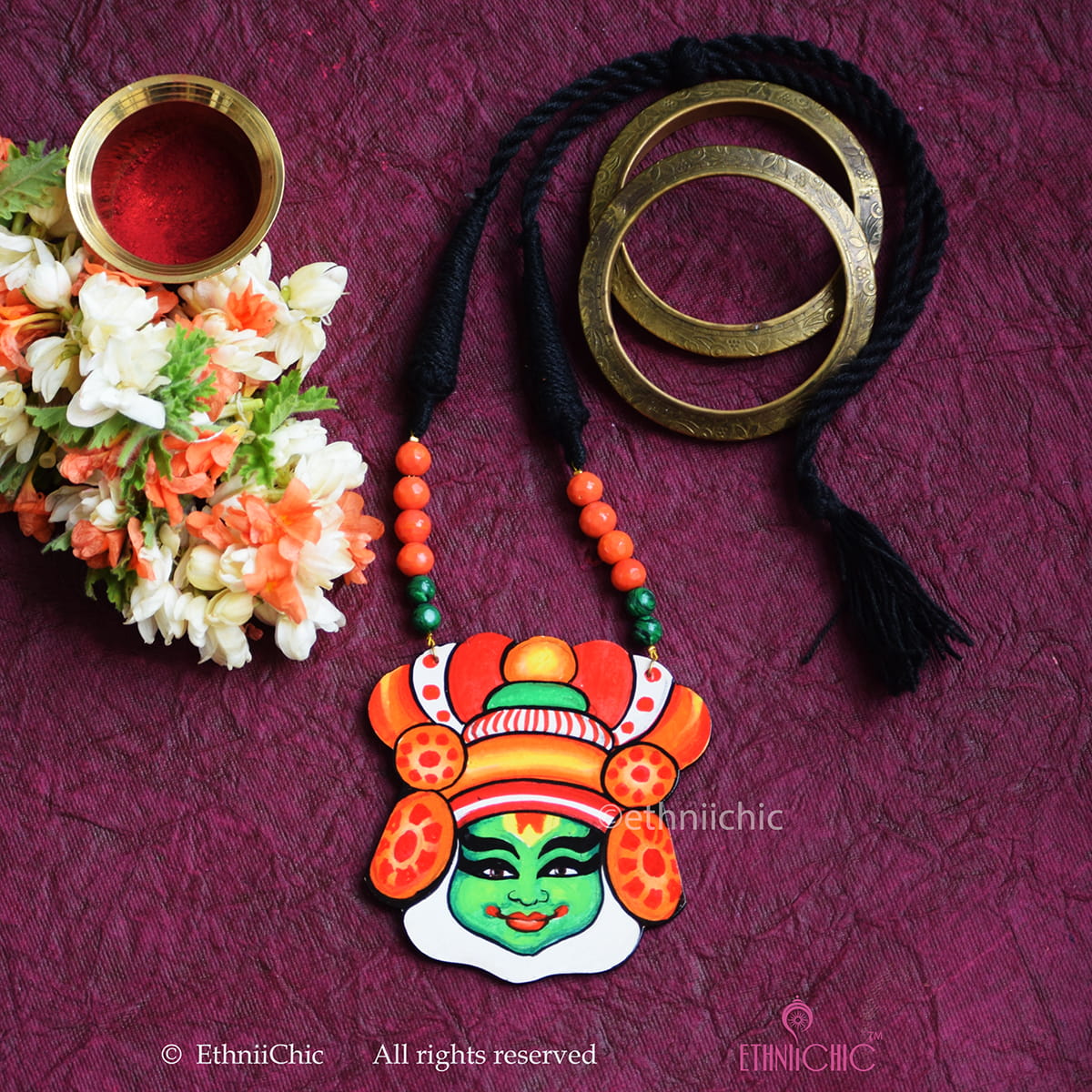
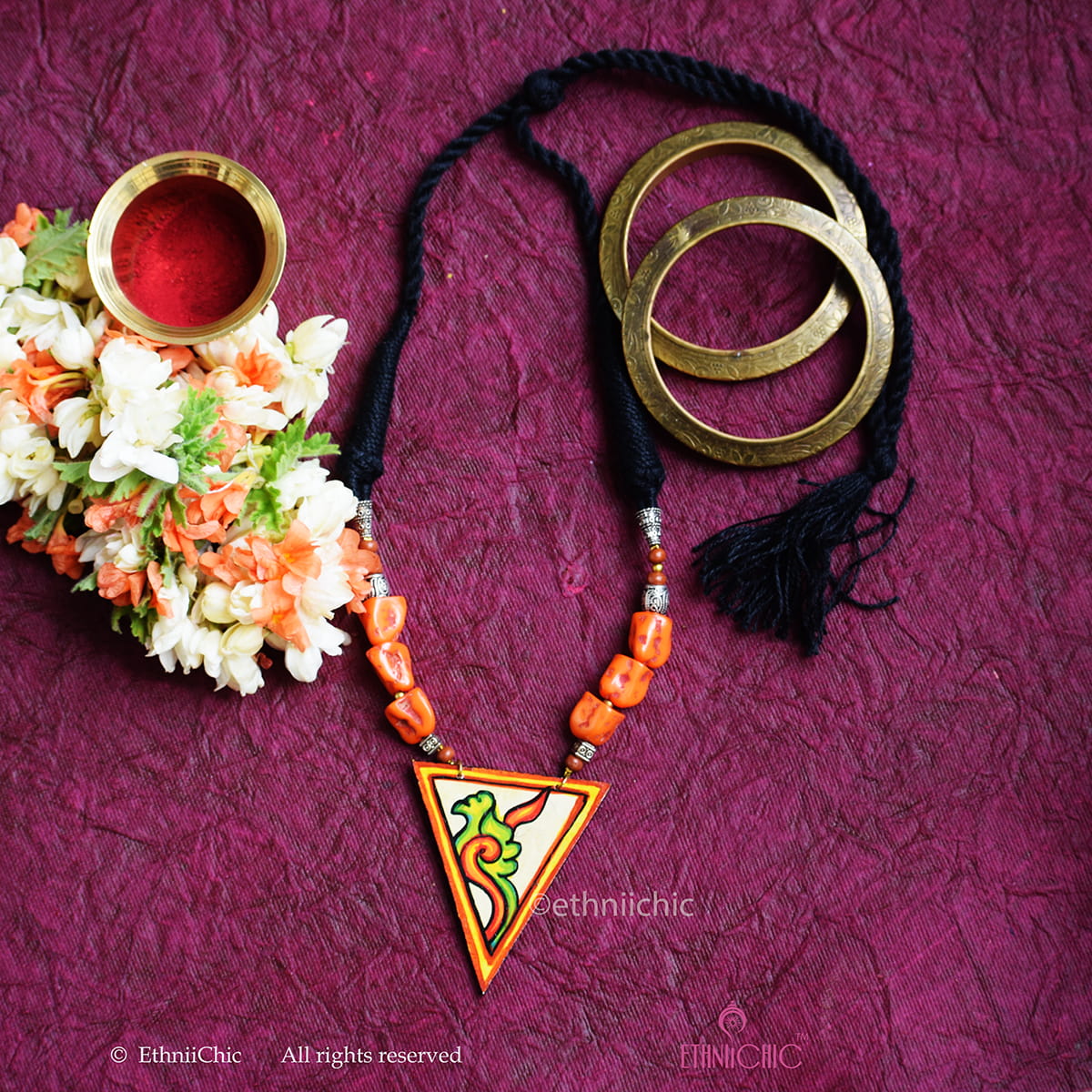
The largest single tradition in this collection, Kerala Mural painting originates from the temple interiors of Kerala, where large-scale murals depicting deities, epics, and ceremonial scenes were painted using five natural colours derived from minerals and plant extracts. The painting style is characterised by bold outlines, expressive faces with characteristic fish-eye forms, wave and scale pattern backgrounds, and vibrant natural pigments of red ochre, green, yellow, black, and white. On a necklace pendant, Kerala Mural work brings the grandeur of a temple wall down to a wearable scale. In this collection, Kerala Mural pendants range from serene deity faces to dramatic Kathakali portraits to geometric triangle and diamond forms with abstract wave pattern fills.
Theyyam
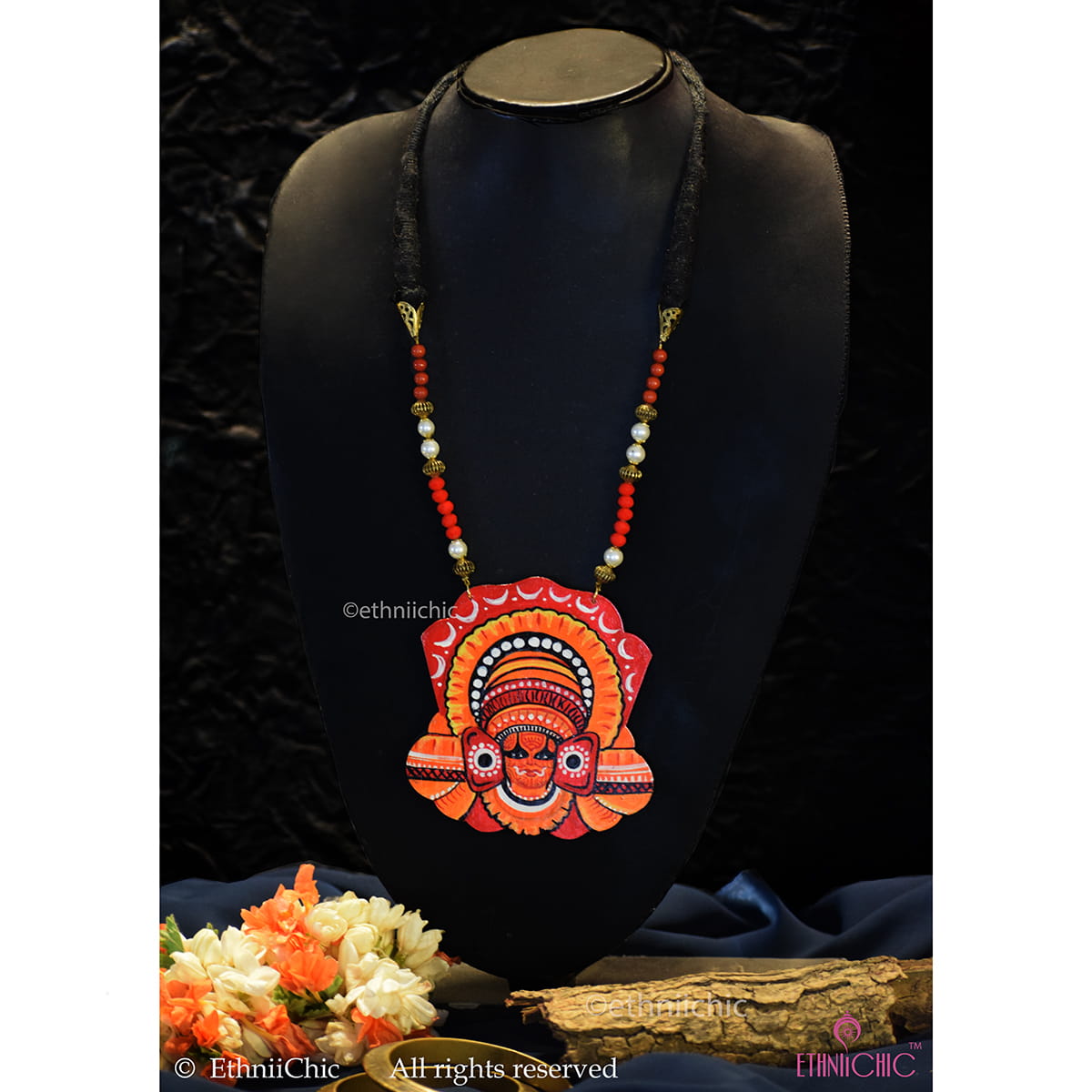
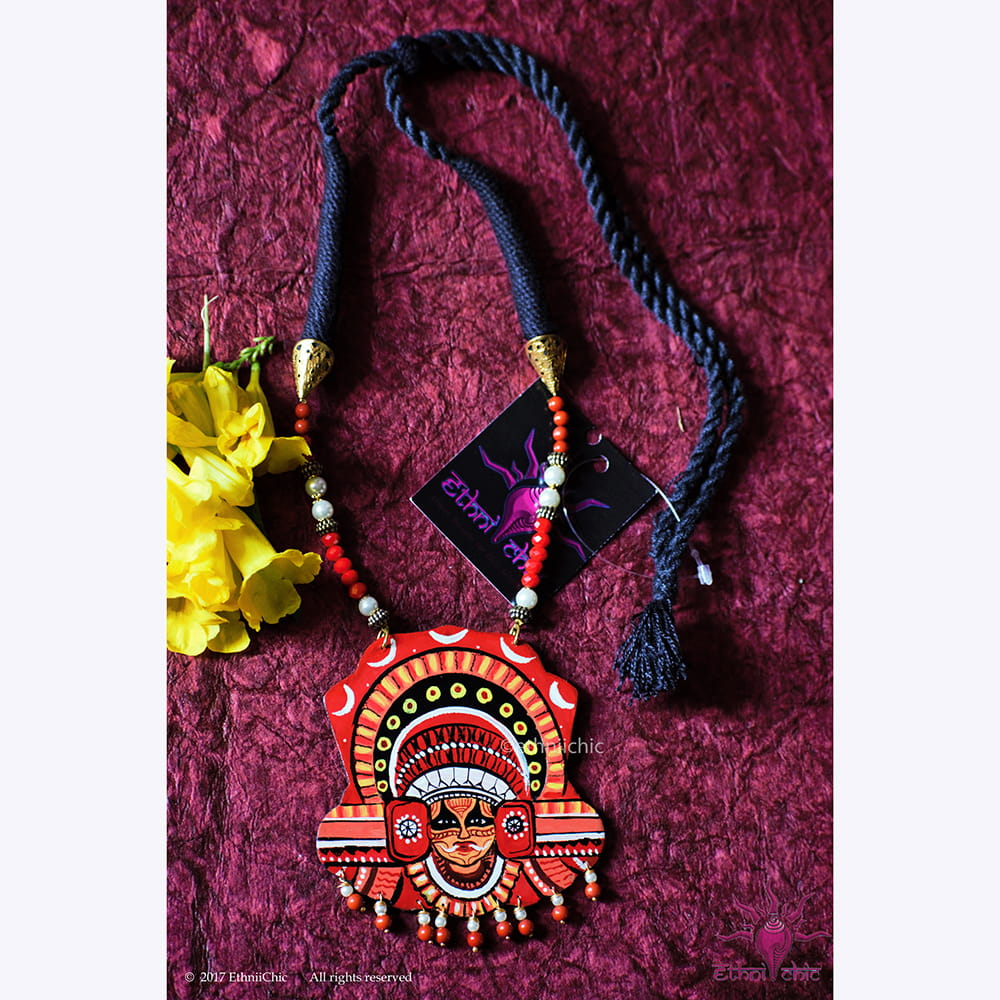
Theyyam is a ritual art form from northern Kerala in which performers transform into fierce deities through elaborate face painting and costumed performance. The Theyyam aesthetic is immediately recognisable: strong primary colours, bold black outlines, crescent moon motifs in headdresses, circular eye detailing, and an intensity of expression that is unlike any other Indian folk art. Two Theyyam pendants in this collection — the Crescent Deity Red Pearl Drop and the Sunburst Deity — capture that theatrical power on silhouette-cut wood, with pendant chain treatments that match the boldness of the face.
Pattachitra
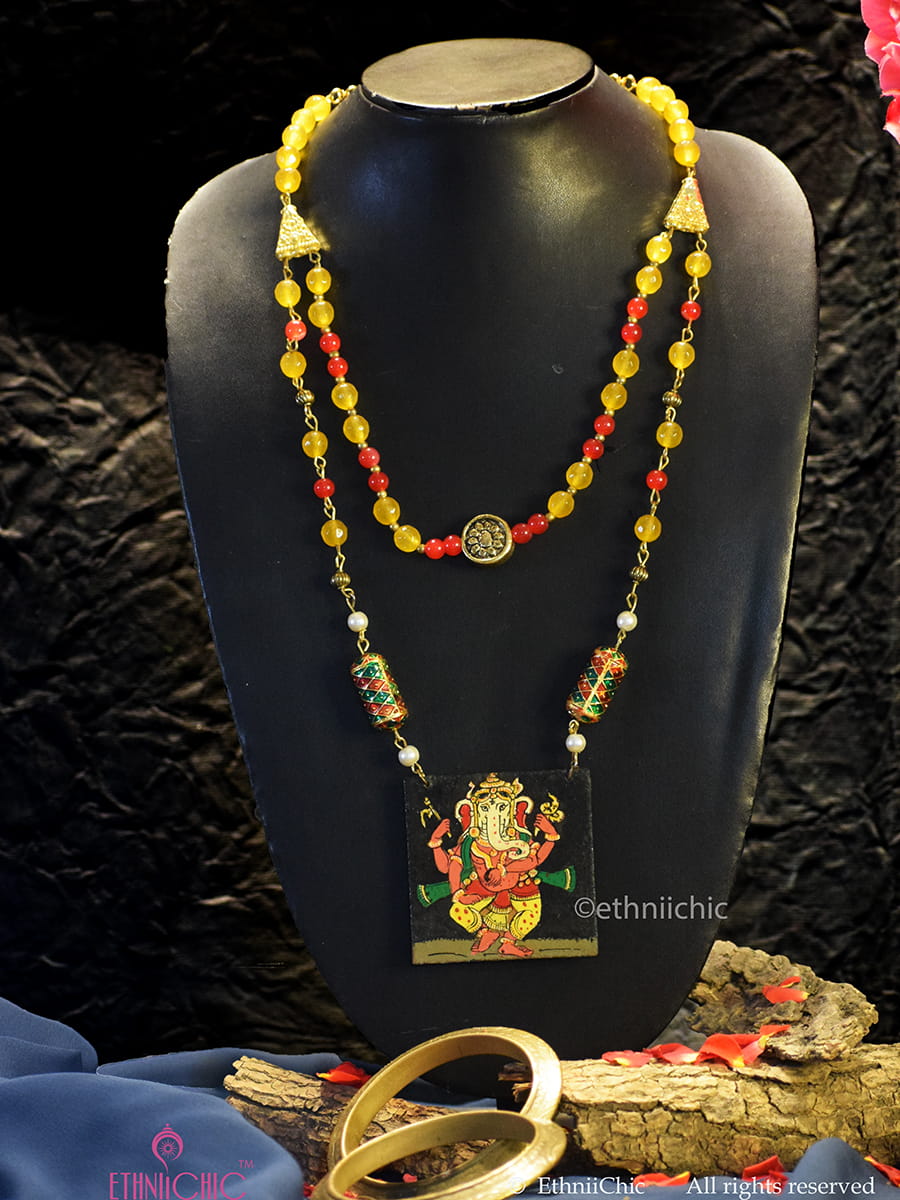
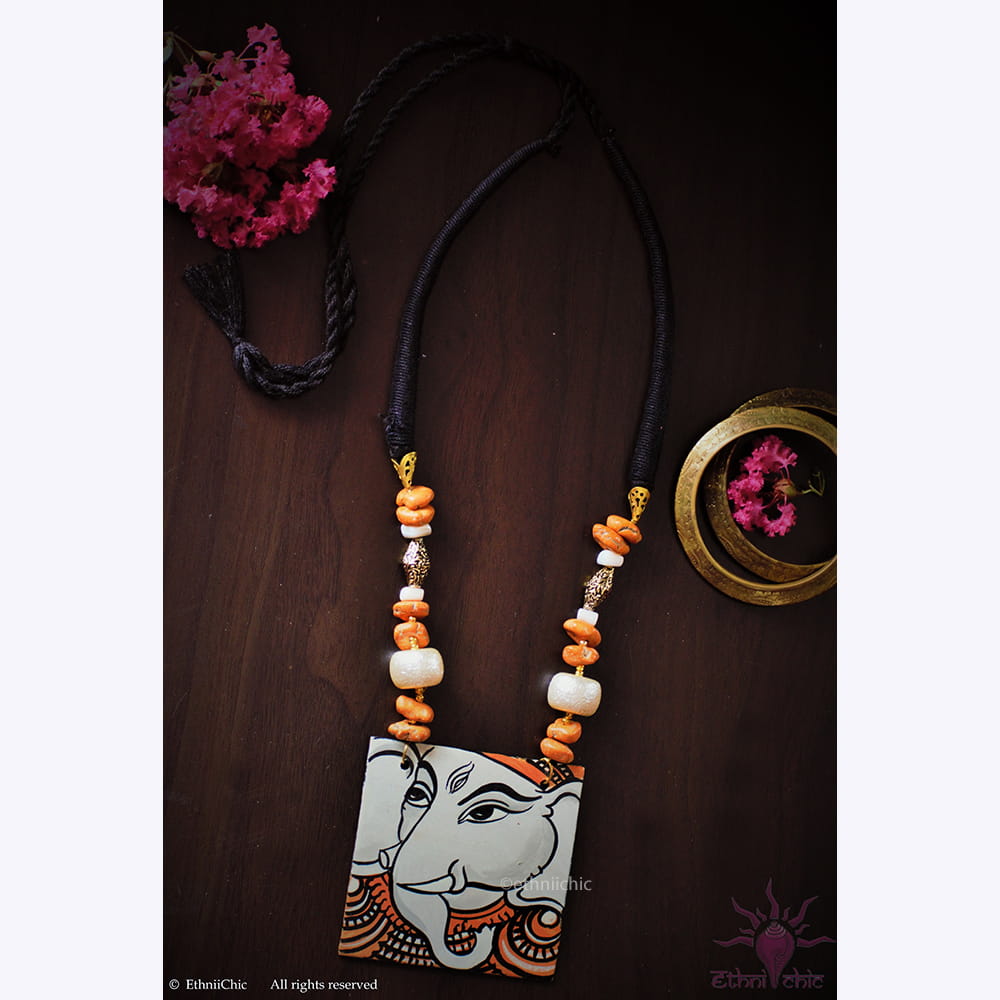
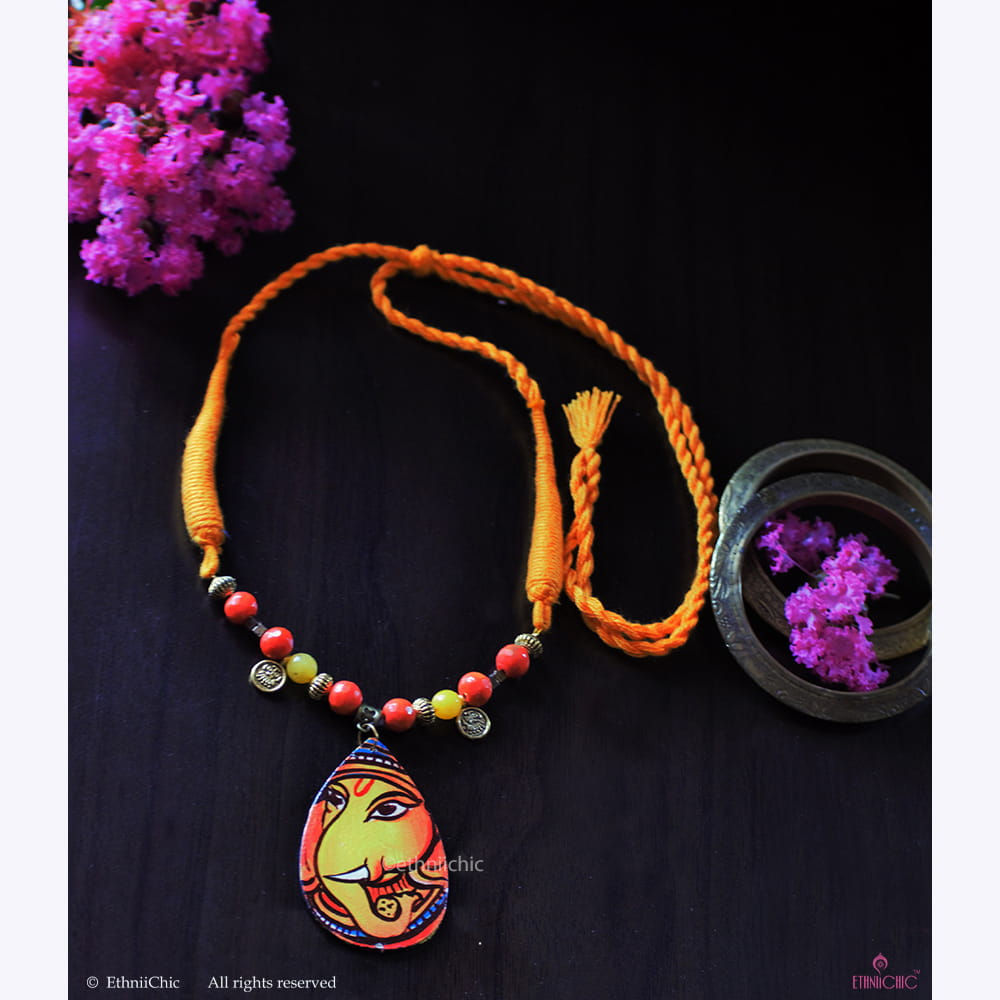
Originating from Odisha and West Bengal, Pattachitra is a narrative painting tradition characterised by its crisp outlines, natural colours, and sequential storytelling. The Pattachitra Ganesha pieces in this collection — including the showpiece Dashavathar Necklace Set featuring the ten avatars of Vishnu across a curved choker — demonstrate the art form's ability to pack dense narrative content into a single frame. The Dashavathar Set is the most elaborate and highest-value piece in the collection and is the only jewellery set EthniiChic offers.
Kalamkari, Tholu Bommalatha, Madhubani & Cheriyal
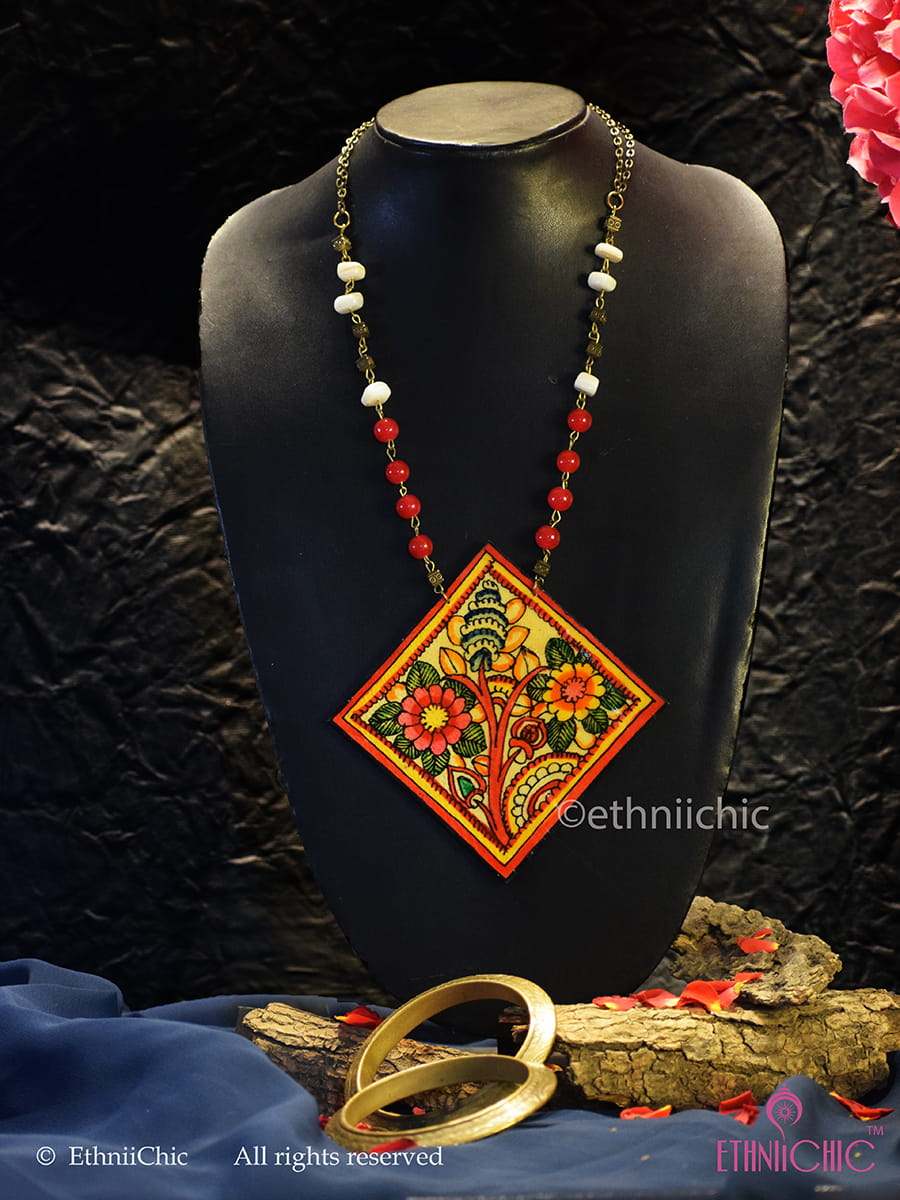
Kalamkari, the hand-drawn textile painting tradition of Andhra Pradesh and Telangana, contributes the collection's regal woman pendant and its tree of life diamond piece. Tholu Bommalatha — the leather puppet art of Andhra Pradesh — informs the floral tree of life diamond necklace. Madhubani, the line-drawing tradition of Bihar, appears in the twin fish shield pendant. Cheriyal, the scroll painting art of Telangana, informs the teardrop deity face pieces. Each art form has its own visual signature, and each is faithfully translated rather than generically interpreted.
How These Necklaces Are Made
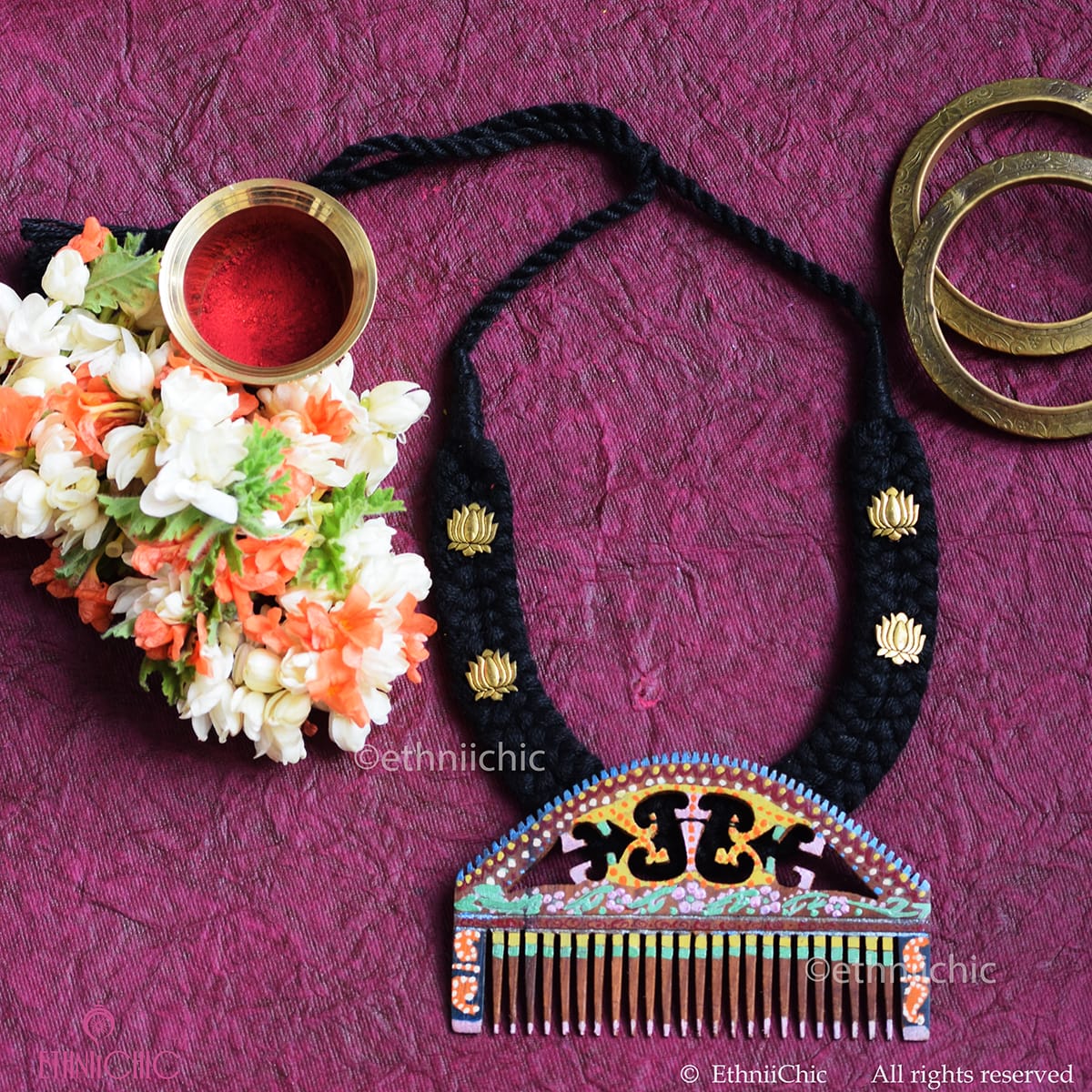
Every pendant in this collection is cut from pre-engineered wood — lightweight, humidity-resistant, and capable of holding fine painted detail. The shapes range from precise geometric forms (equilateral triangles, diamond-on-point
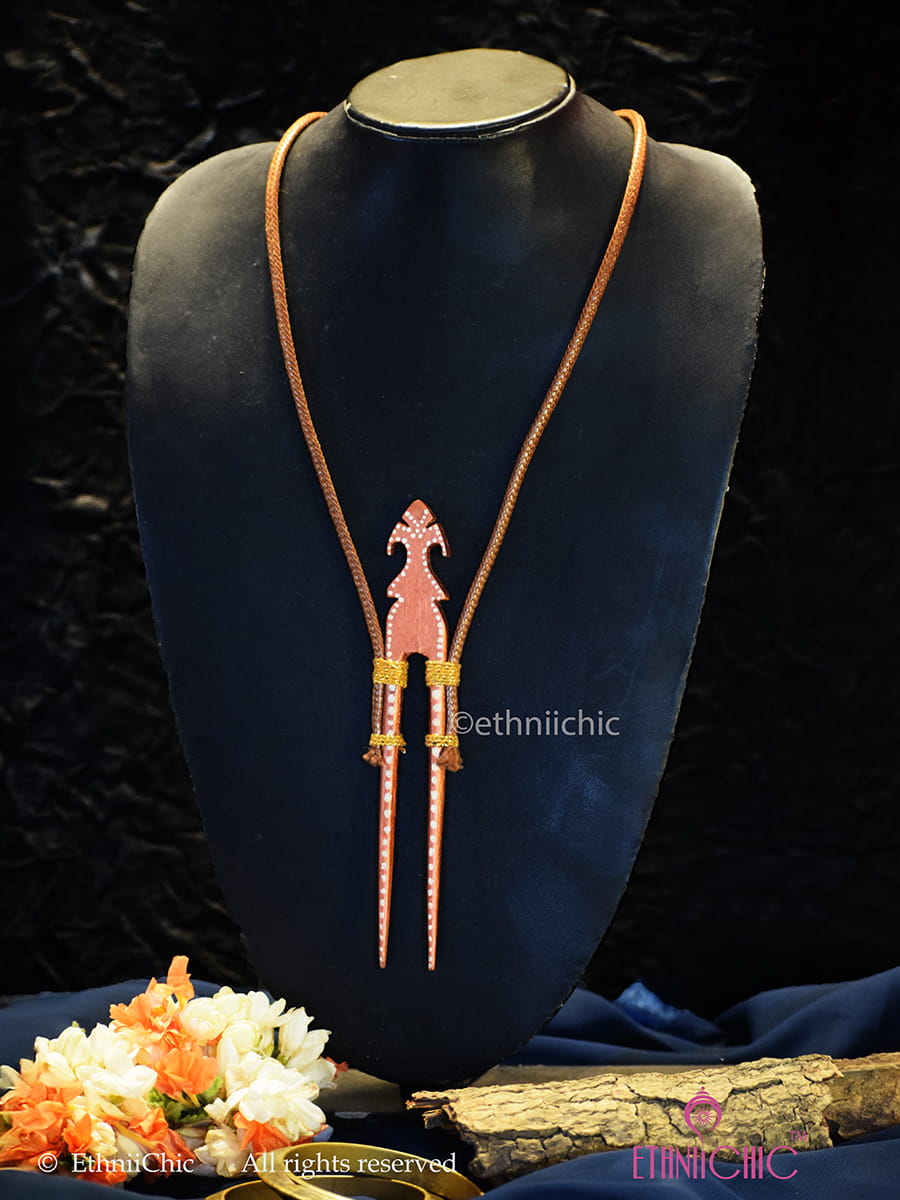
squares, concentric circles) to organic silhouettes that follow the outline of the subject: a Kathakali headdress, a Theyyam deity face, a comb, a Trishul.
Painting is done by hand using non-toxic pigments, applied with fine brushes on the sealed wood surface. The scale of painting on these pendants is genuinely miniature — a 5 cm teardrop pendant holds a complete face with headdress, jewellery, expression, and background motif. Chain assembly is done separately, with natural beads (coral, turquoise, jade, rudraksha, pearl), rope, and antique-gold or silver accent fittings chosen individually for each pendant design. No two chains are mass-produced to match a pendant — each combination is considered.
Pendant Shapes and What They Wear Like
Triangle pendants — pointing downward in the inverted arrowhead form — wear as bold statement pieces, sitting centrally on the chest. The collection includes five triangle variations, each with a distinctly different painted surface: ivory floral scroll, amber wave scale, blue flame phoenix, black-red scale with white lotus, and orange stupa chakra motif.
Round and oval pendants — including the large Ganesha round, the teal deity face circle, the cobalt blue Madhubani fish circle, and the two filigree-framed Kerala Mural rounds — are the most versatile shape in the collection. They sit higher on the chest and work equally well with kurtas, sarees, and western tops.
Teardrop pendants are the most intimate scale in the collection. The Cheriyal teardrop, the Ganesha teardrop, the Kathakali teardrop, and the red-rope goddess teardrop all sit close to the collarbone and read as refined rather than statement. They are the pieces for daily wear, office styling, and occasions where a smaller focal point is appropriate.
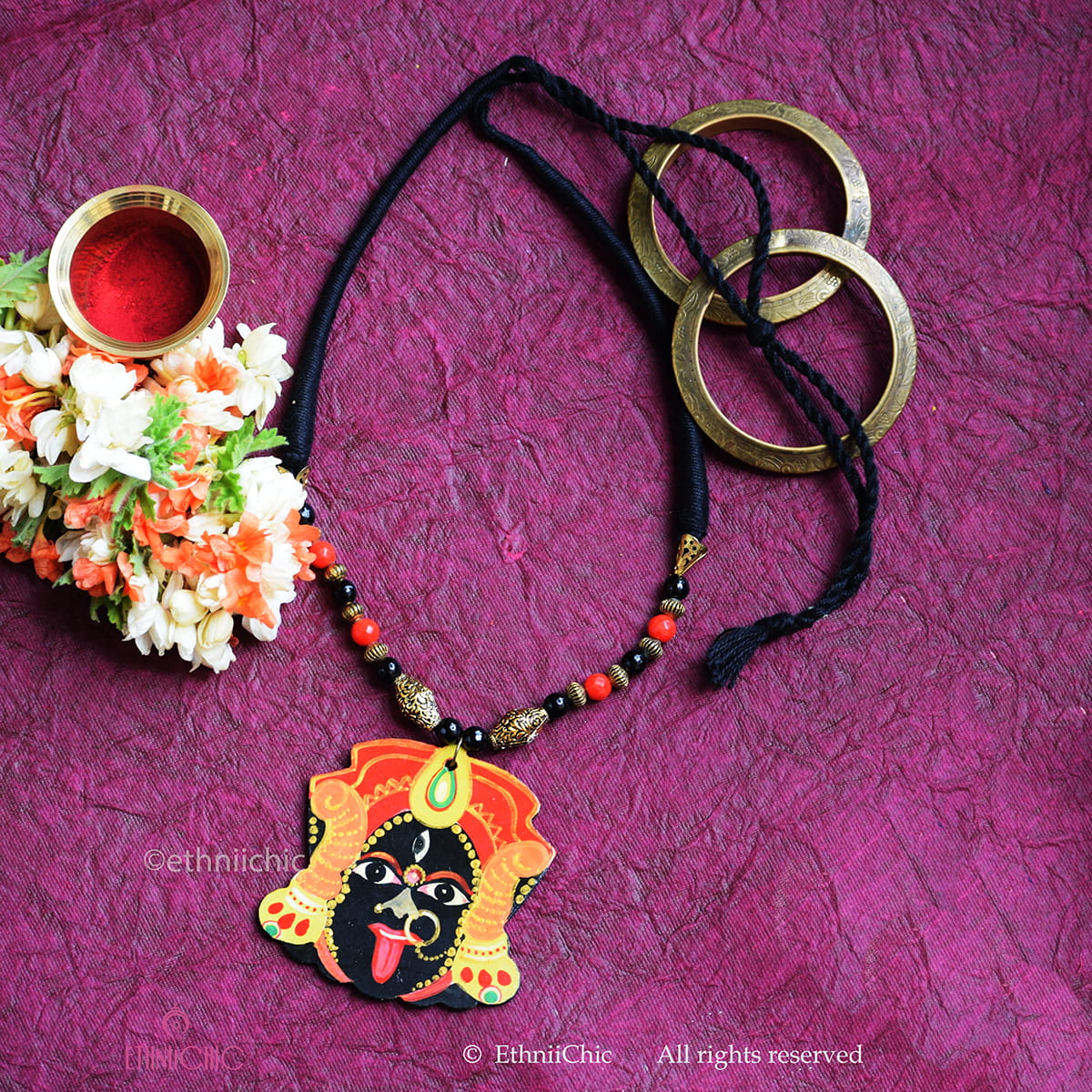
Rectangular and shield pendants — the Blue Deity Lotus rectangular, the Dual Figure Wave silhouette, the Kali face pendant, the Regal Woman Kalamkari — offer a horizontal visual weight that works especially well with V-necks and boat necklines. The Dashavathar choker is in its own category entirely, functioning more as a breastplate than a pendant.
Styling Across Occasions
The range in this collection — from a ₹650 Trishul pendant on a terracotta rope to a ₹2,950 Dashavathar set — is deliberate. It means there is an EthniiChic hand-painted necklace for every occasion on the Indian festive calendar, and for everyday cultural wear between those occasions.
For Onam and Kerala festivals, the Kerala Mural pendants — particularly the Kathakali face, the Dual Figure Wave, and the Filigree Krishna — pair naturally with the set-mundu and white-gold colour scheme. For Navaratri and Diwali, the Theyyam pendants and the Kali face pendant bring the fierce, devotional energy that these festivals honour. For weddings and receptions, the Dashavathar set and the Fan Arch Deity Pink Bead are statement choices that will attract more conversation than any mass-market jewellery could. For everyday wear, the teardrop and round pendants are sized and weighted for all-day comfort.
Hand-Painted Necklaces as Gifts
A hand-painted pendant necklace is a gift that does the explaining for you. When the recipient asks about it — and they will — the story is already there: the art form, the tradition, the painter, the pendant shape, the beads. Every EthniiChic necklace carries that story.
These necklaces are among the most popular gifting choices for South Indian weddings, housewarming ceremonies, Diwali, and NRI homecoming occasions. They are light enough to carry in hand luggage from Bangalore, distinctive enough to be remembered, and culturally specific enough that they cannot be bought anywhere else. For corporate gifting, the smaller teardrop and round pendant designs in the ₹985 to ₹1,200 range offer the right combination of cultural thoughtfulness and practical price point. For premium gifting, the Dashavathar Necklace Set is the statement piece.
A Note on the One-of-a-Kind Nature of This Collection
Because every pendant is hand-painted and every chain is hand-assembled, no two necklaces from this collection are completely identical — even when the design is the same. This is not a quality issue. It is what hand-painted art looks like at the production scale of one. The slight variation in line weight, the exact placement of a motif, the natural variation in coral or jade stone beads — these are the marks of a human hand, and they are what you are paying for when you choose EthniiChic over a machine-printed fashion jewellery brand. Each necklace in this collection is, in the truest sense, one of a kind.