Faux Tanjore

Faux Tanjore

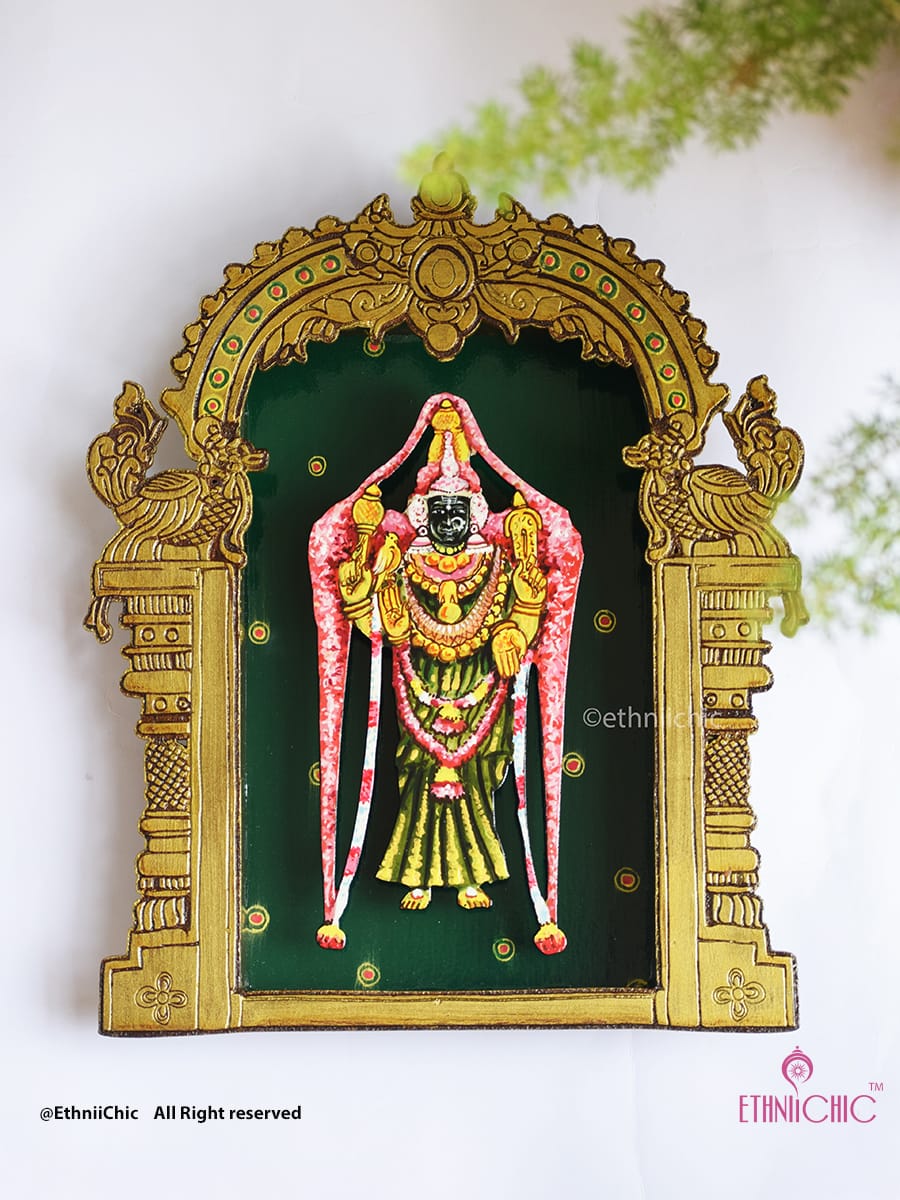
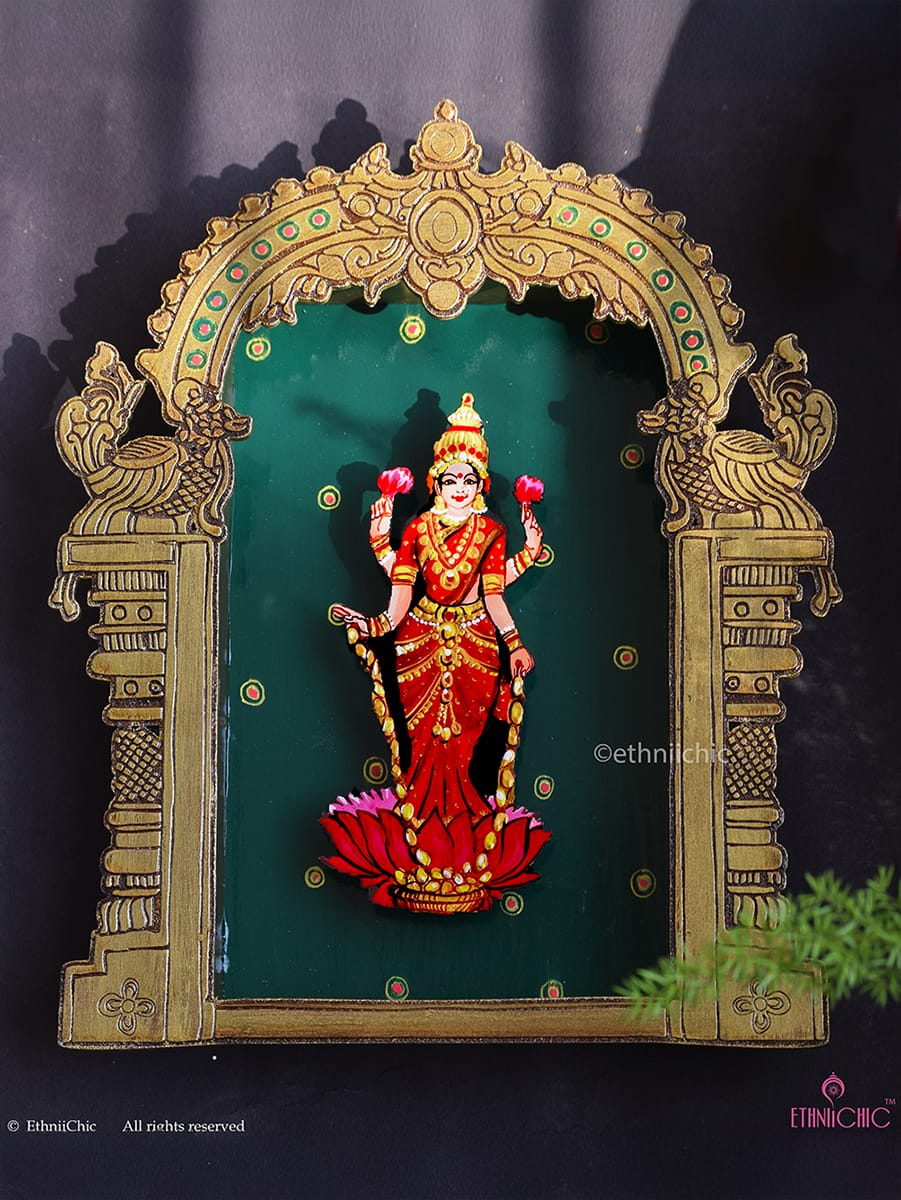
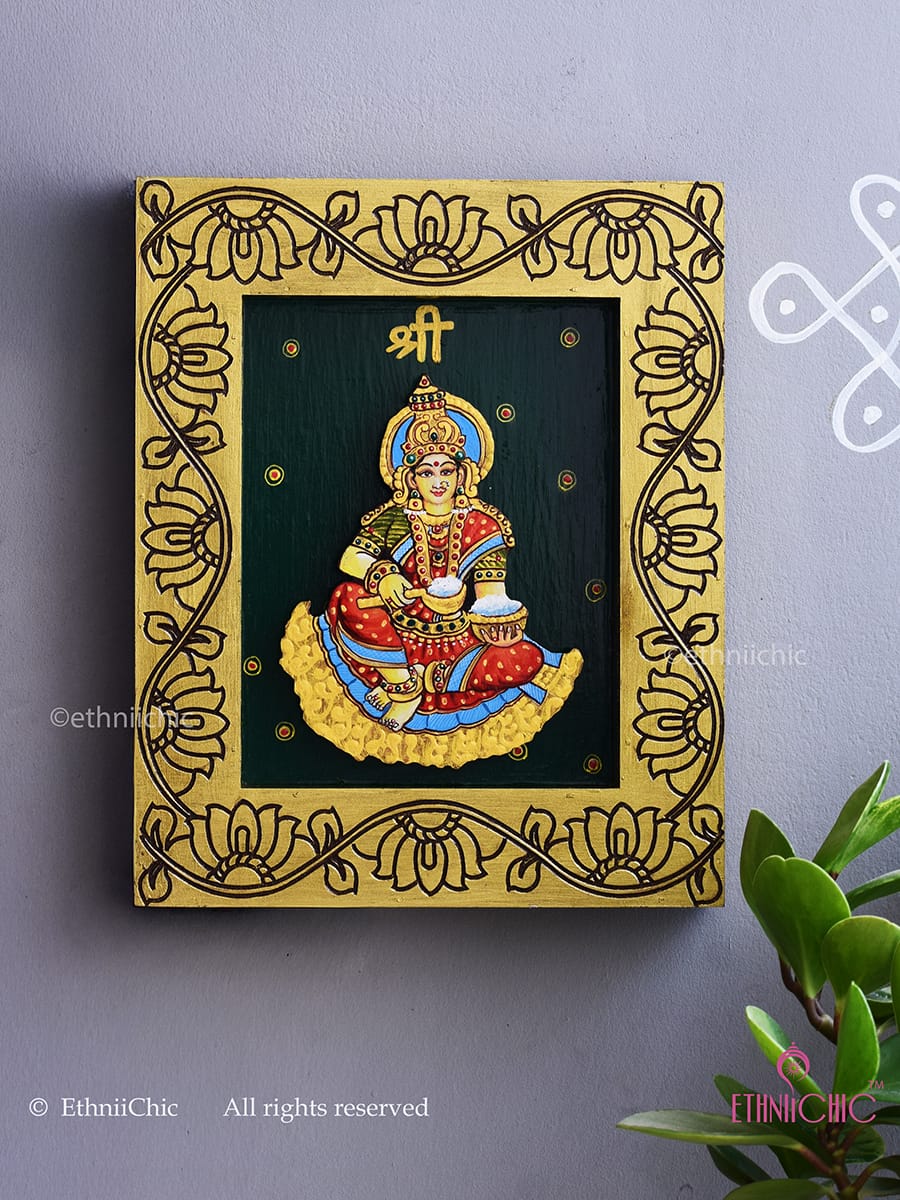
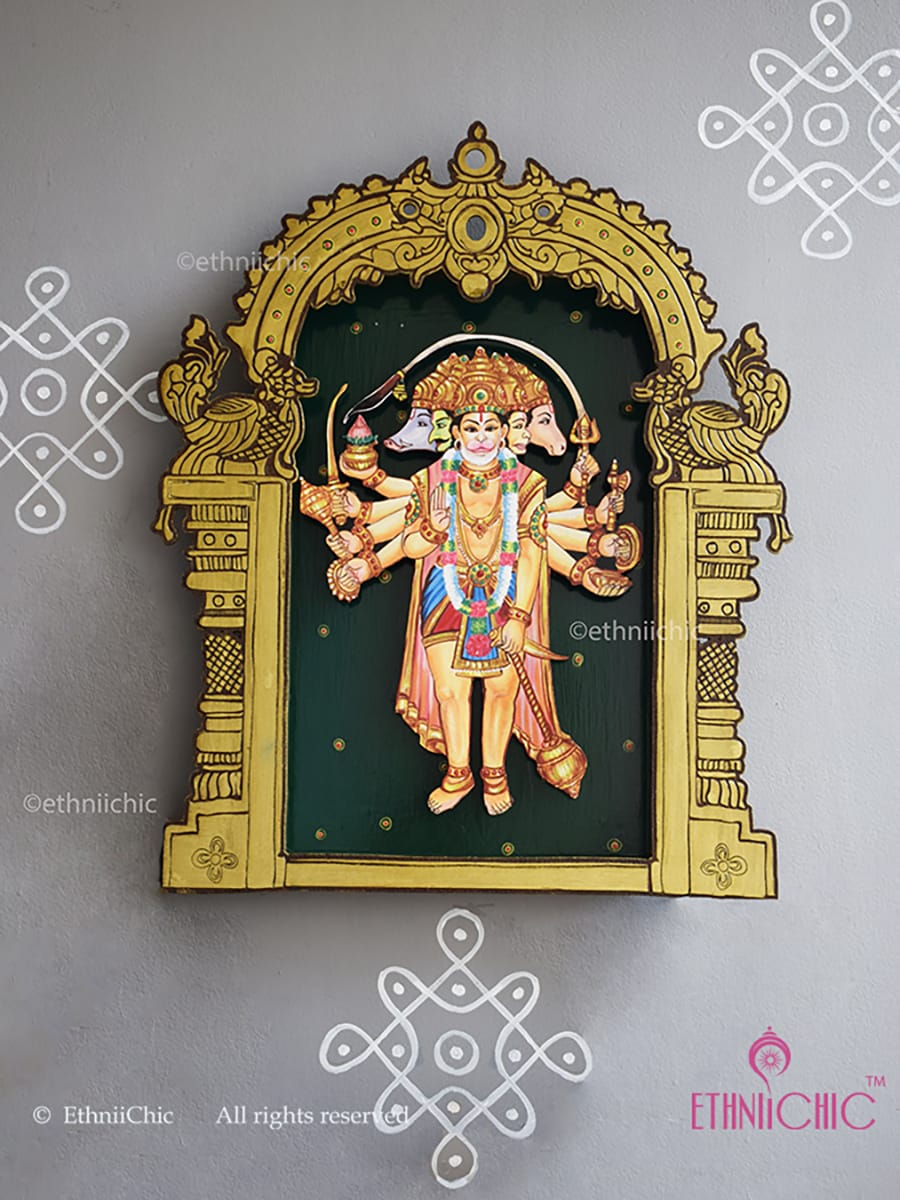
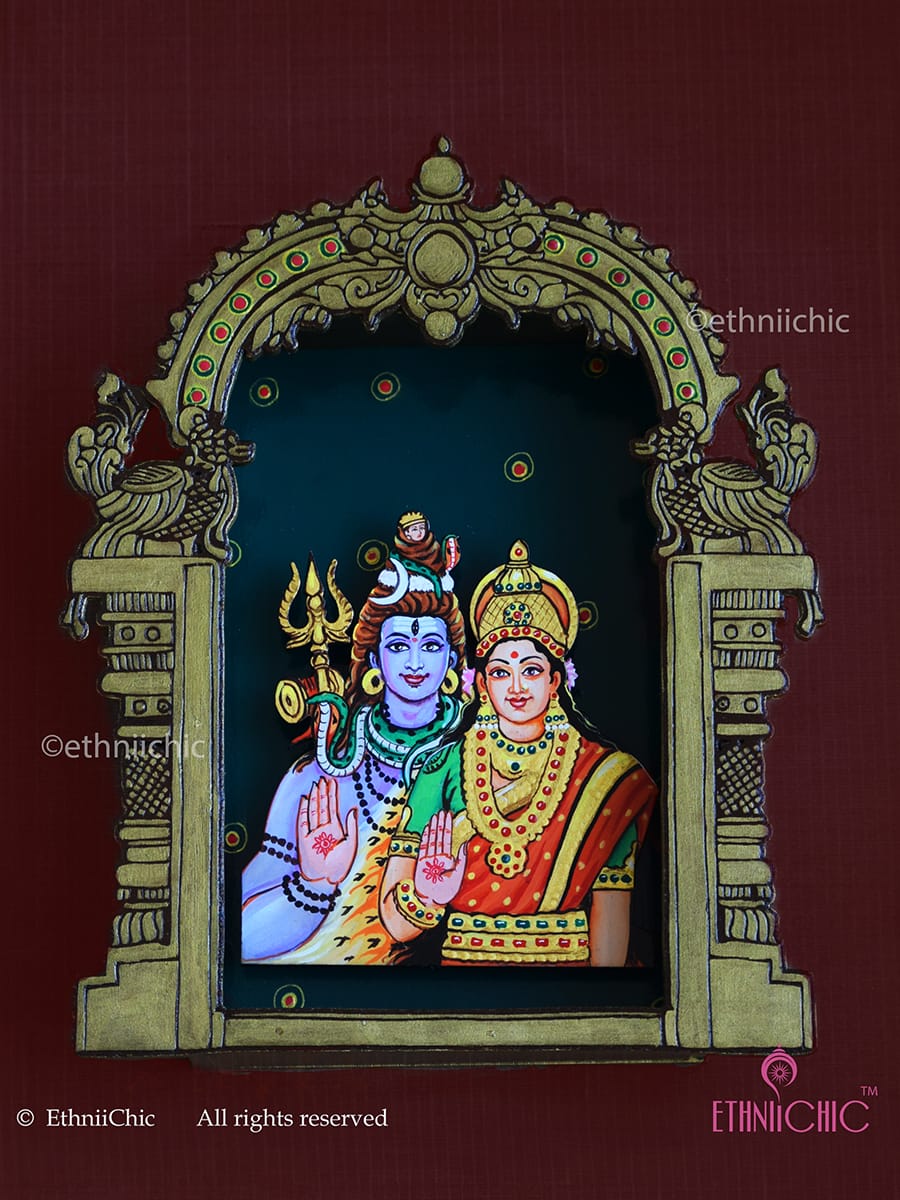
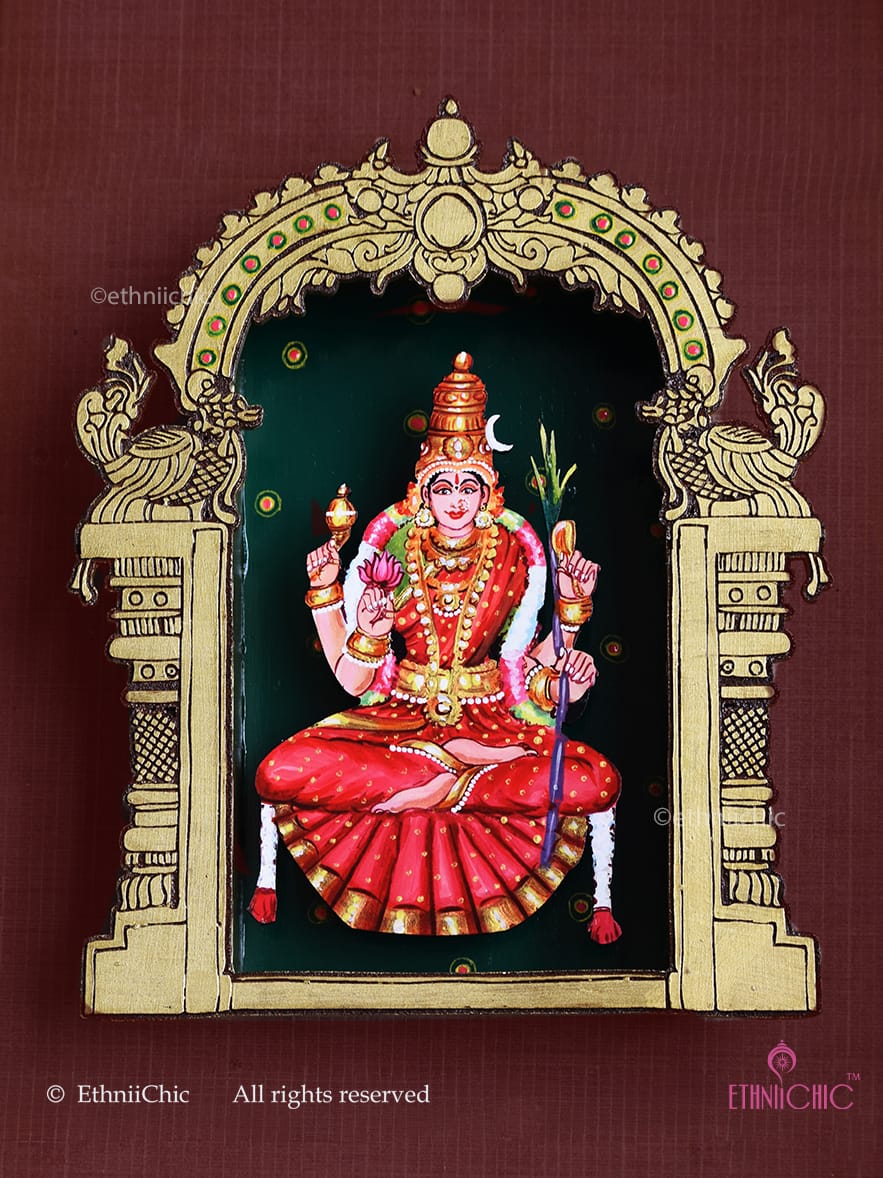
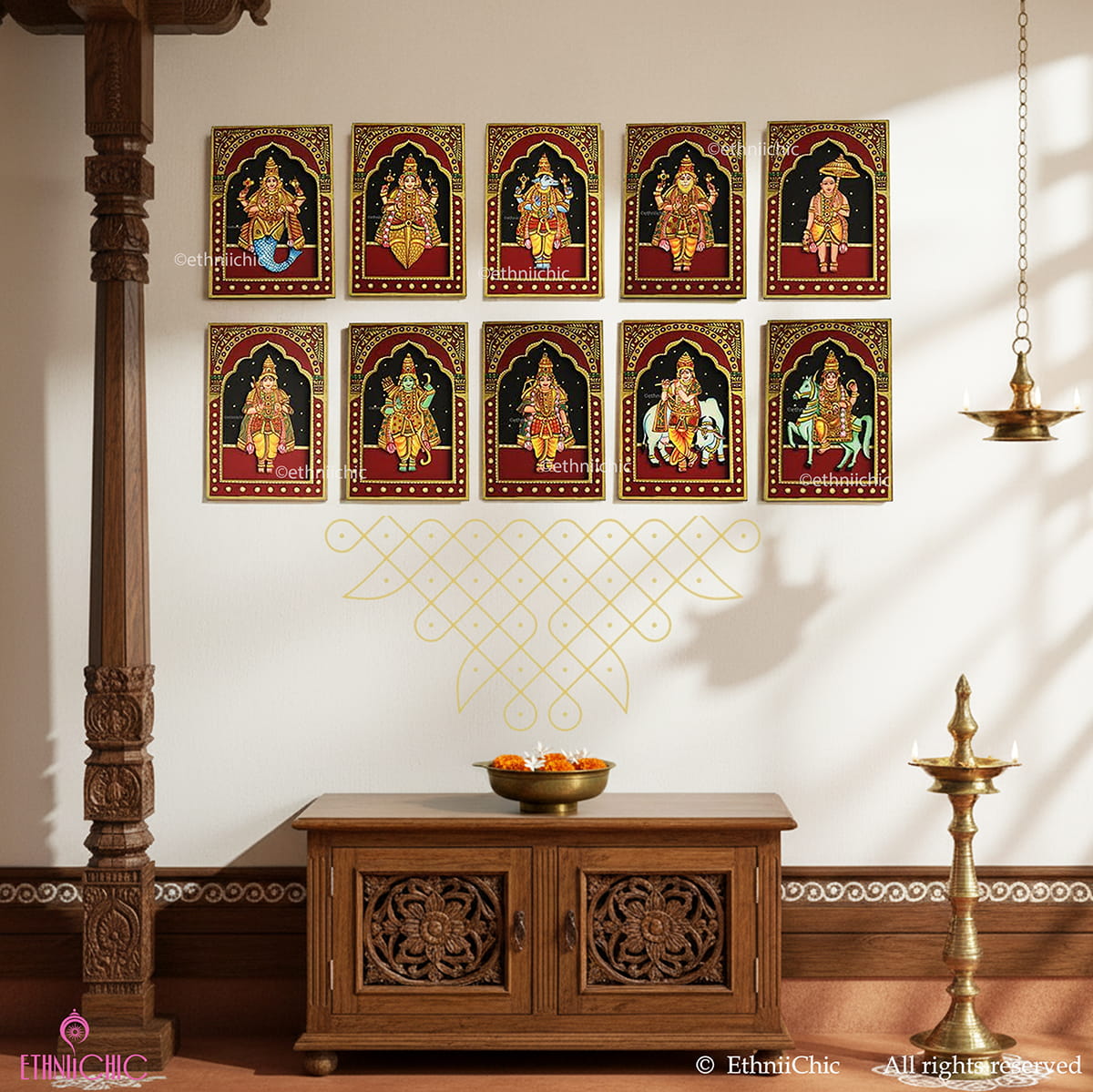
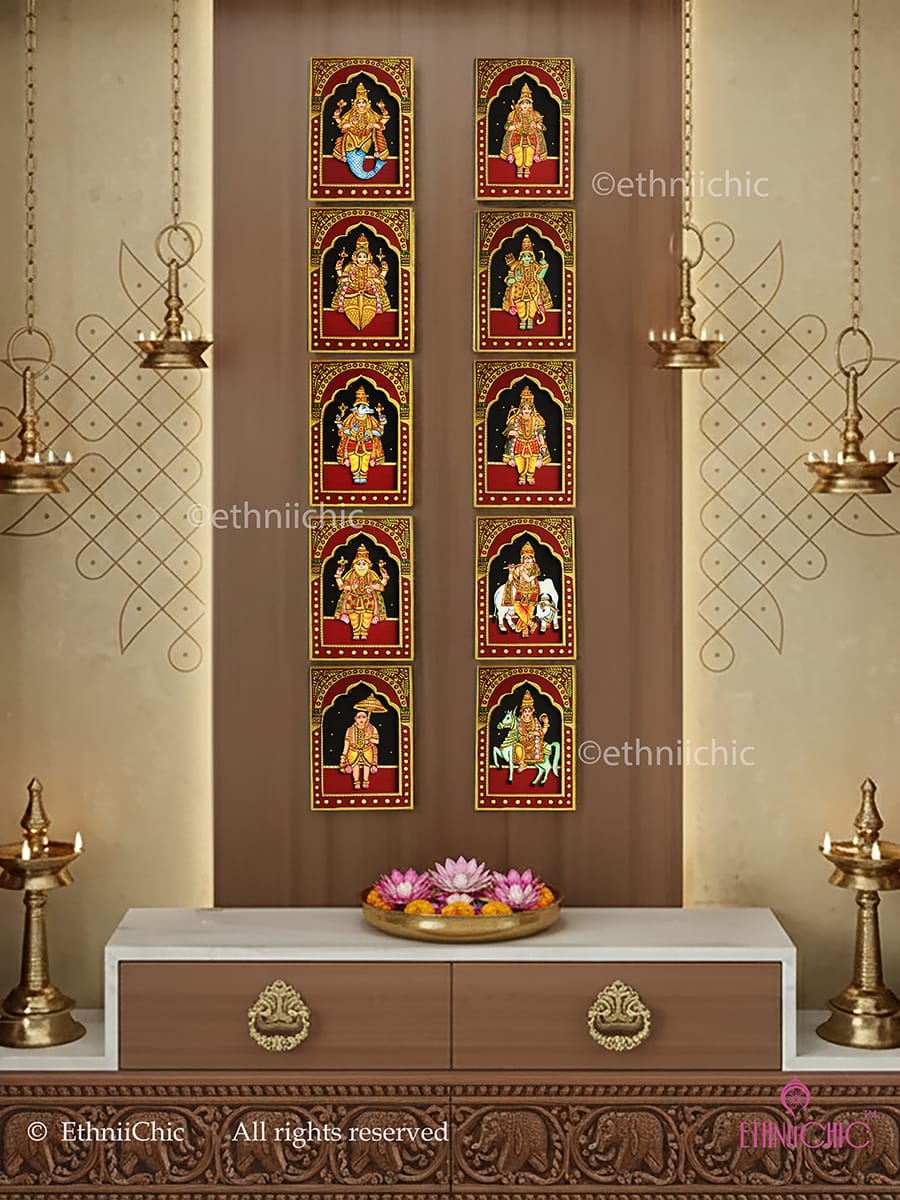
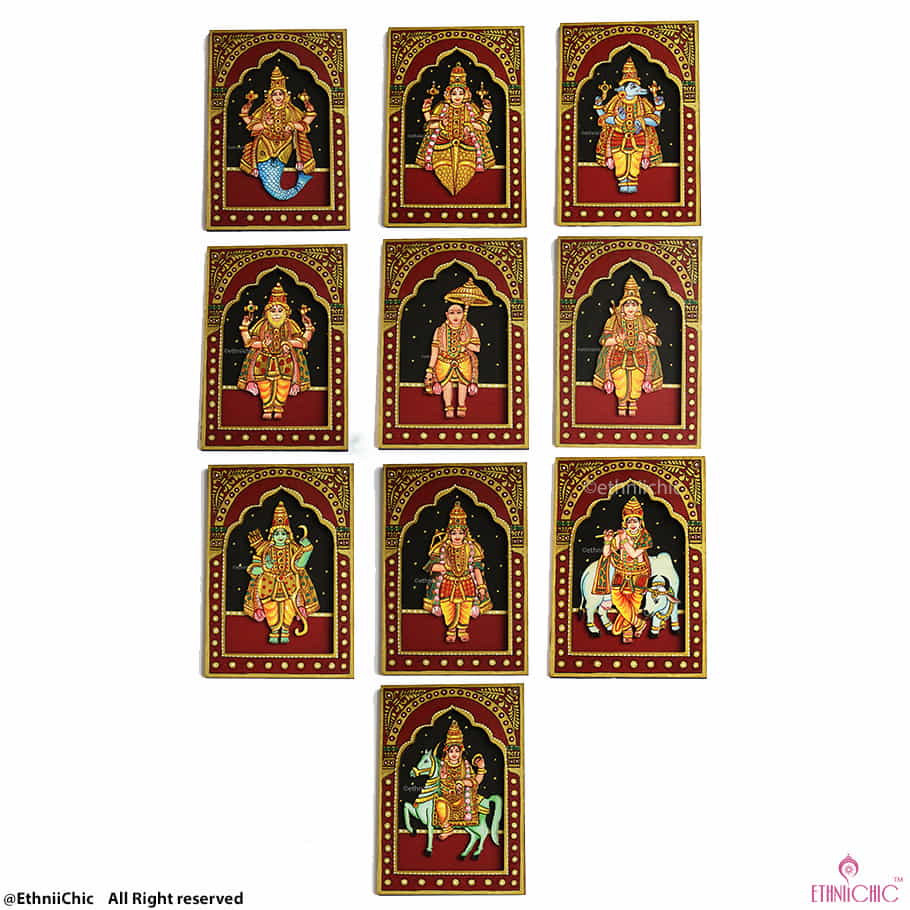
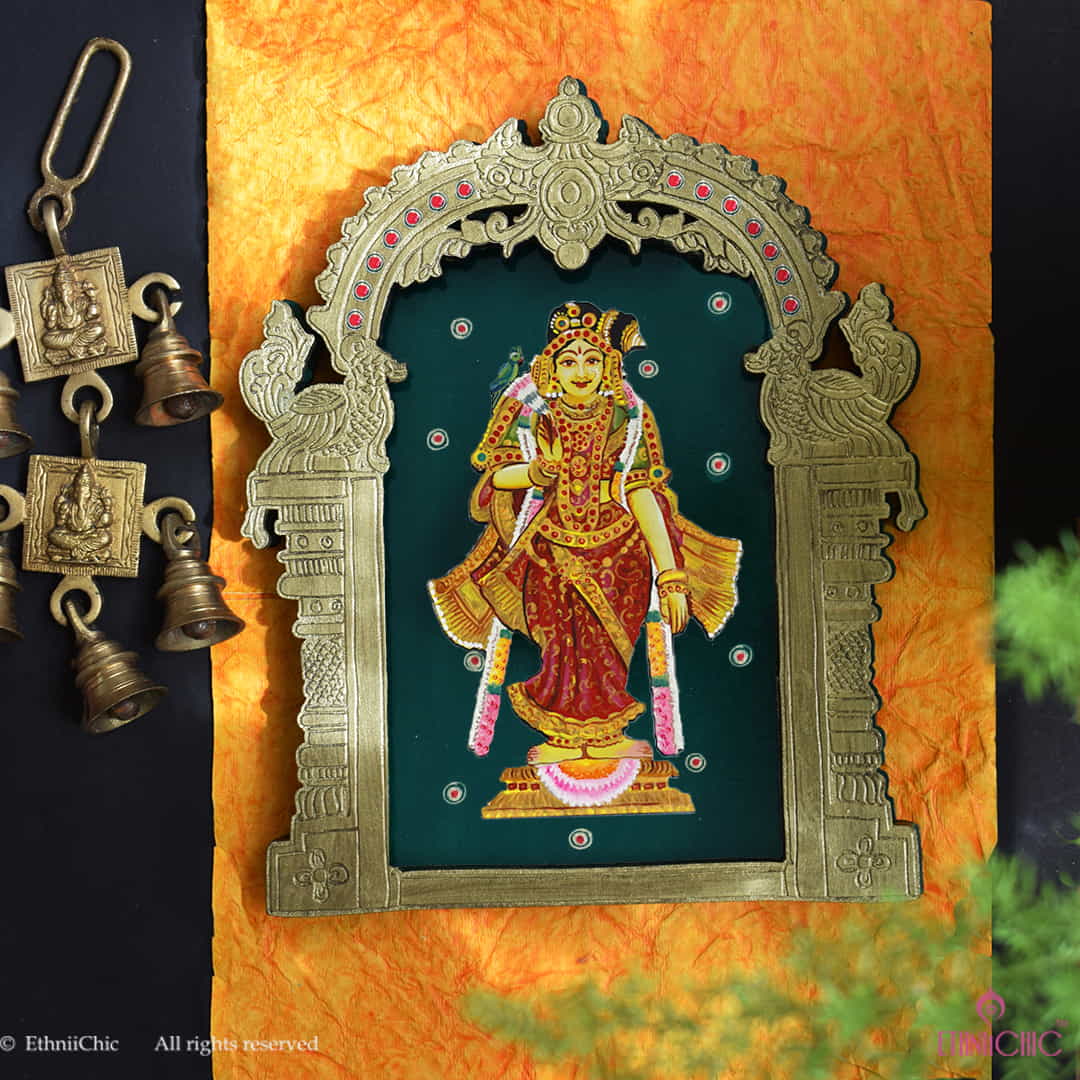
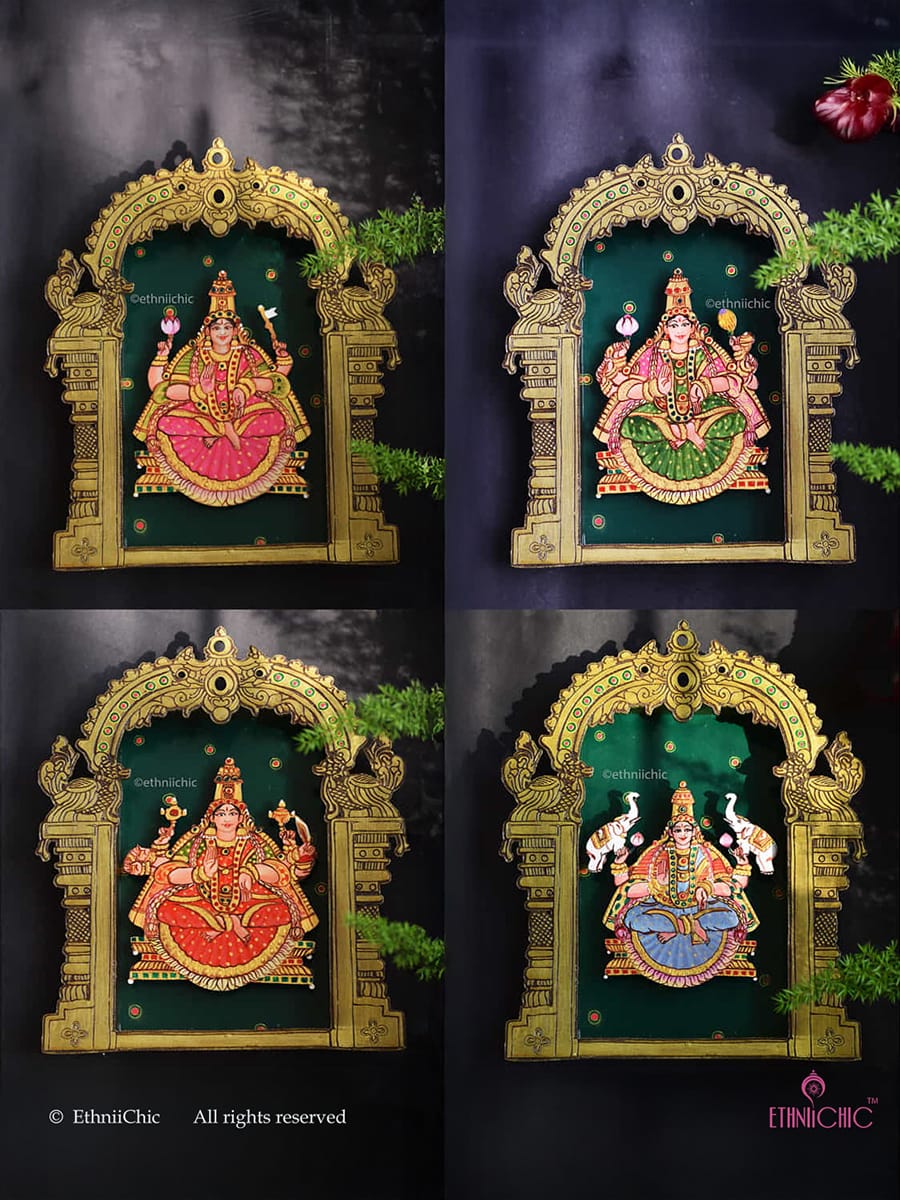
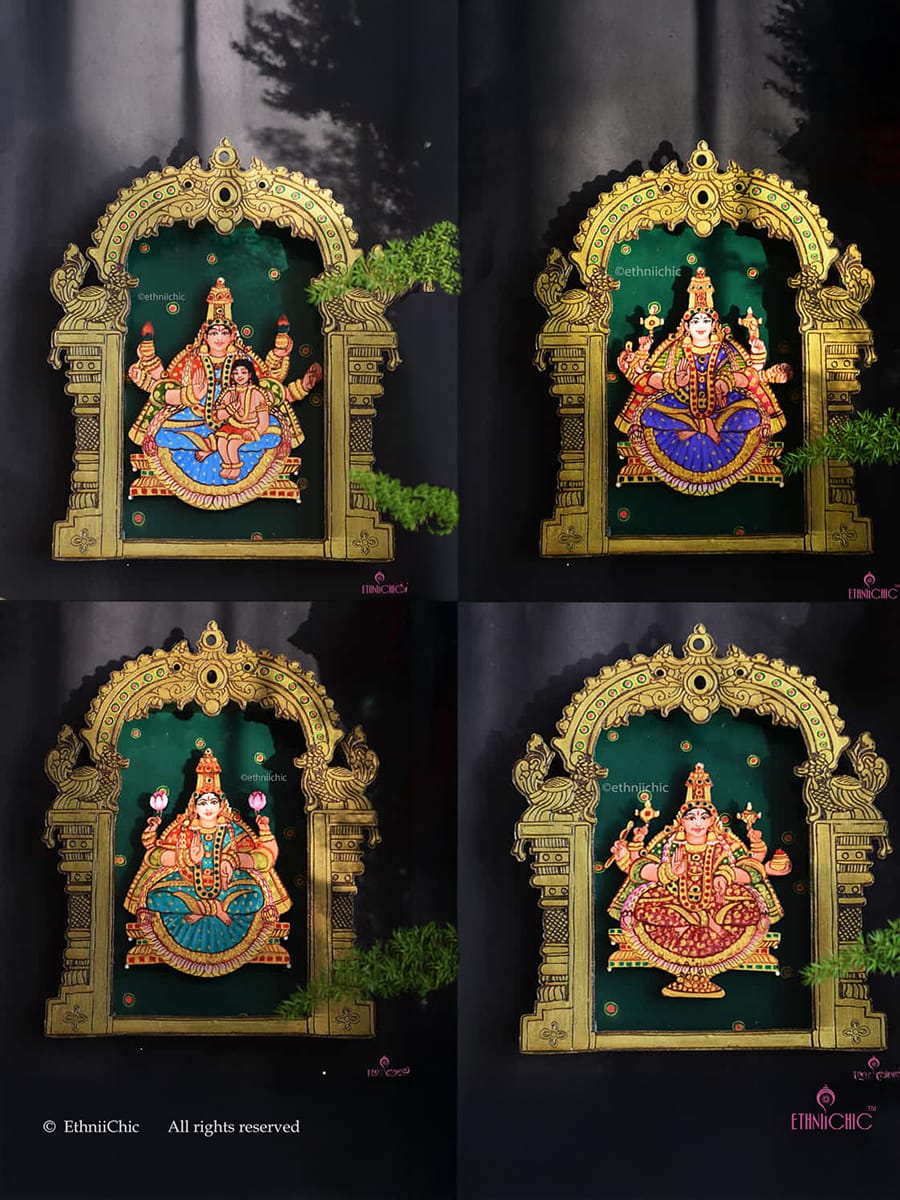
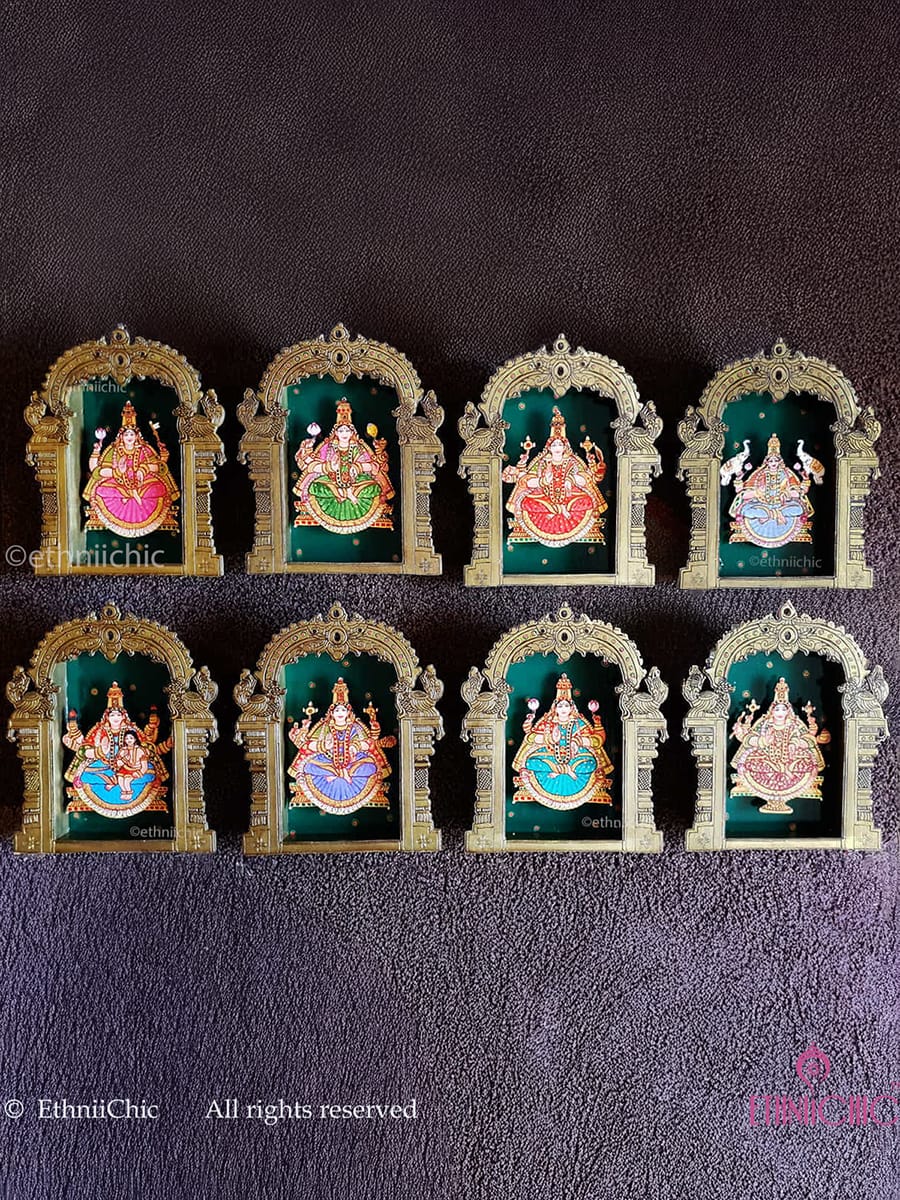
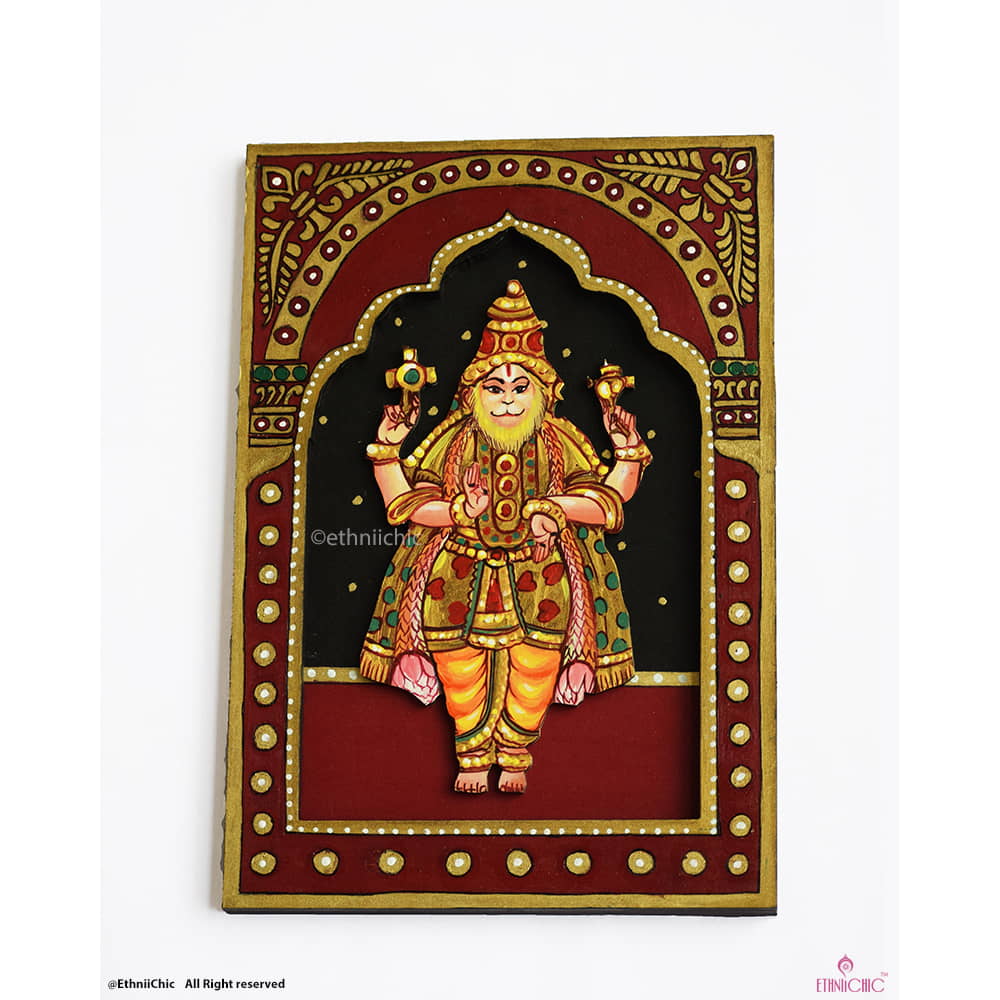
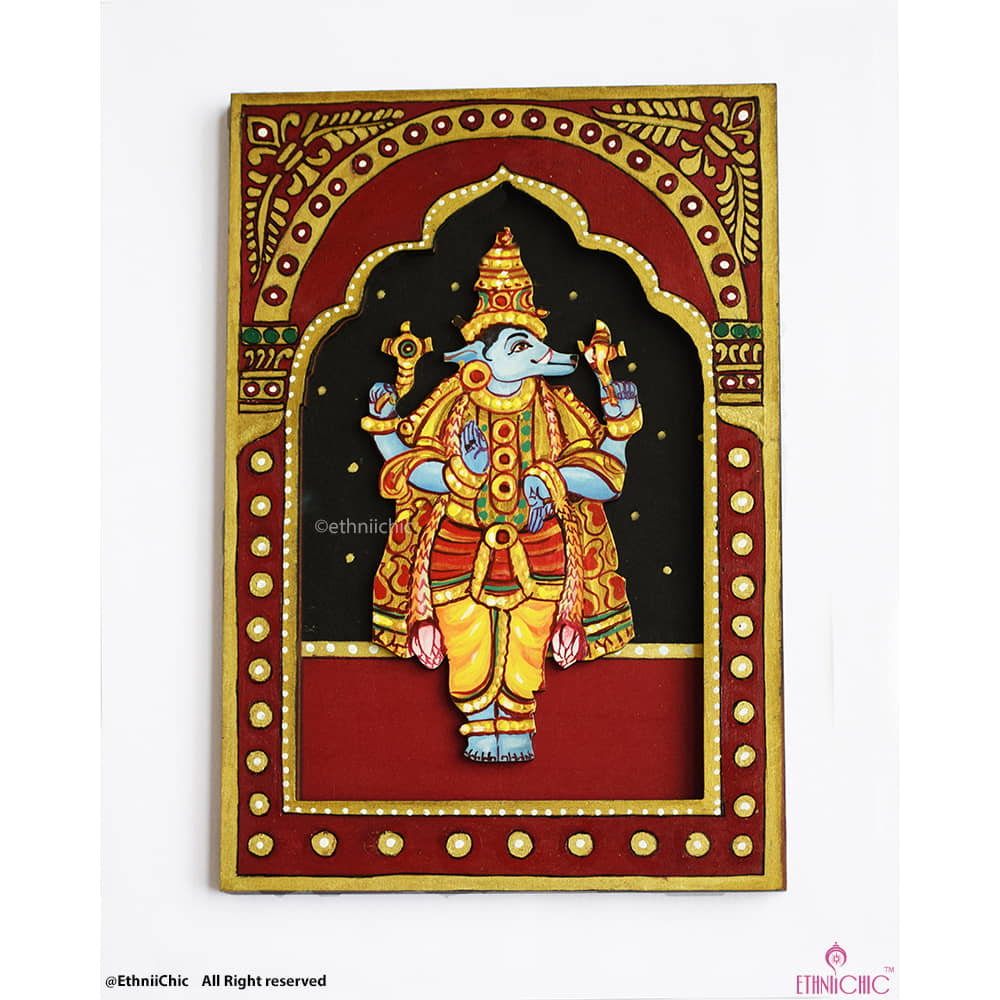
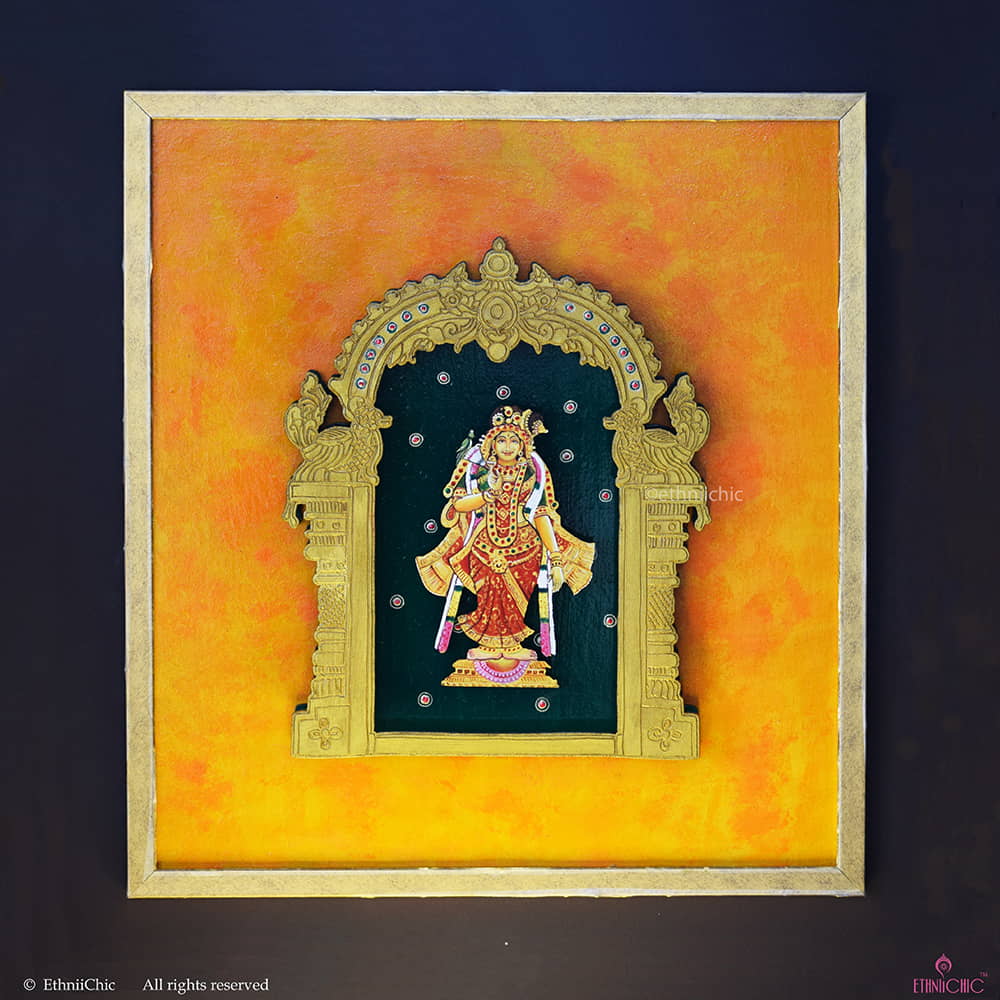
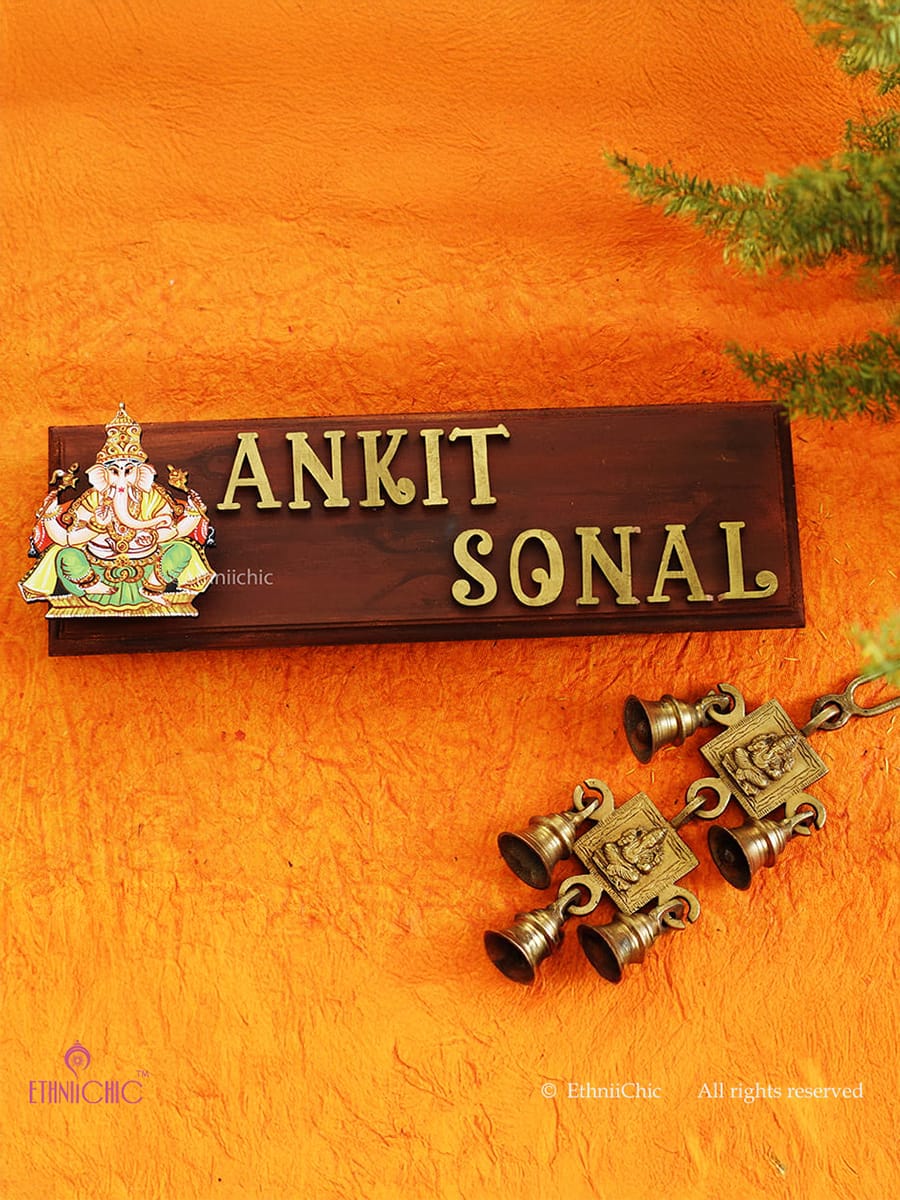
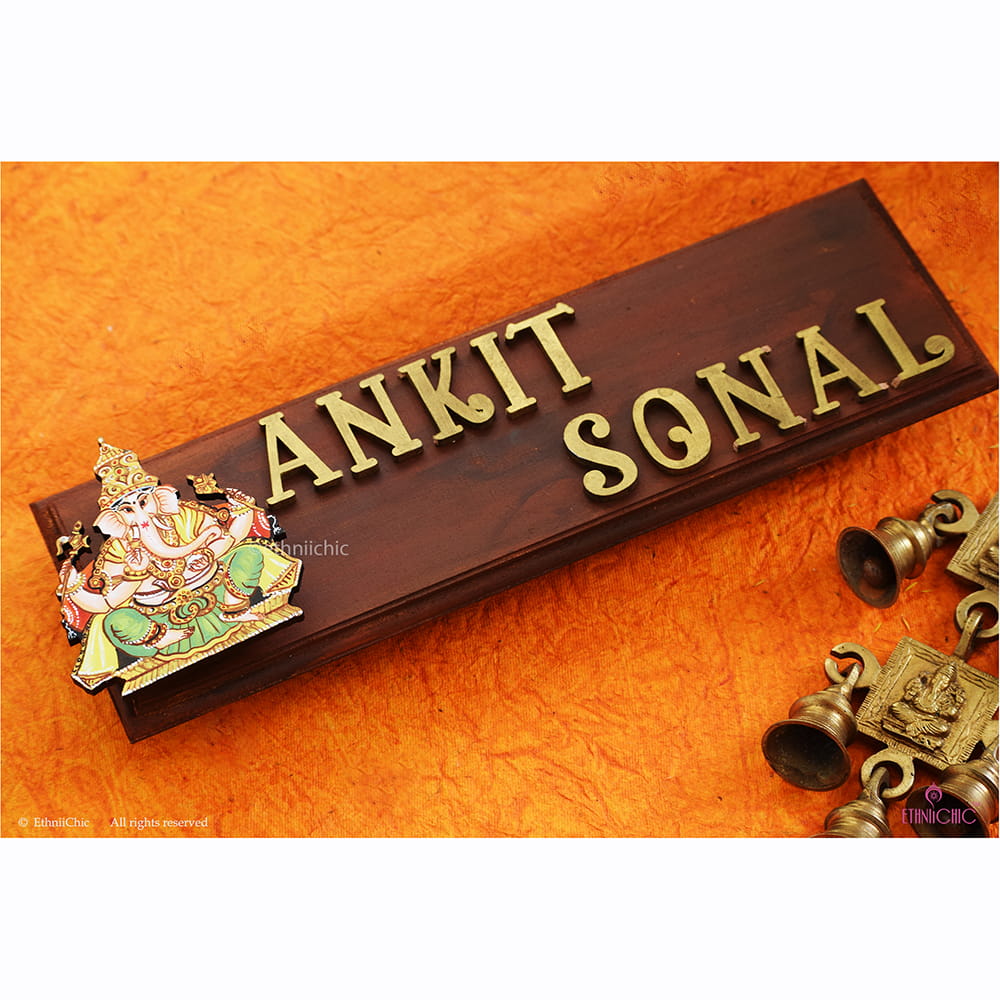
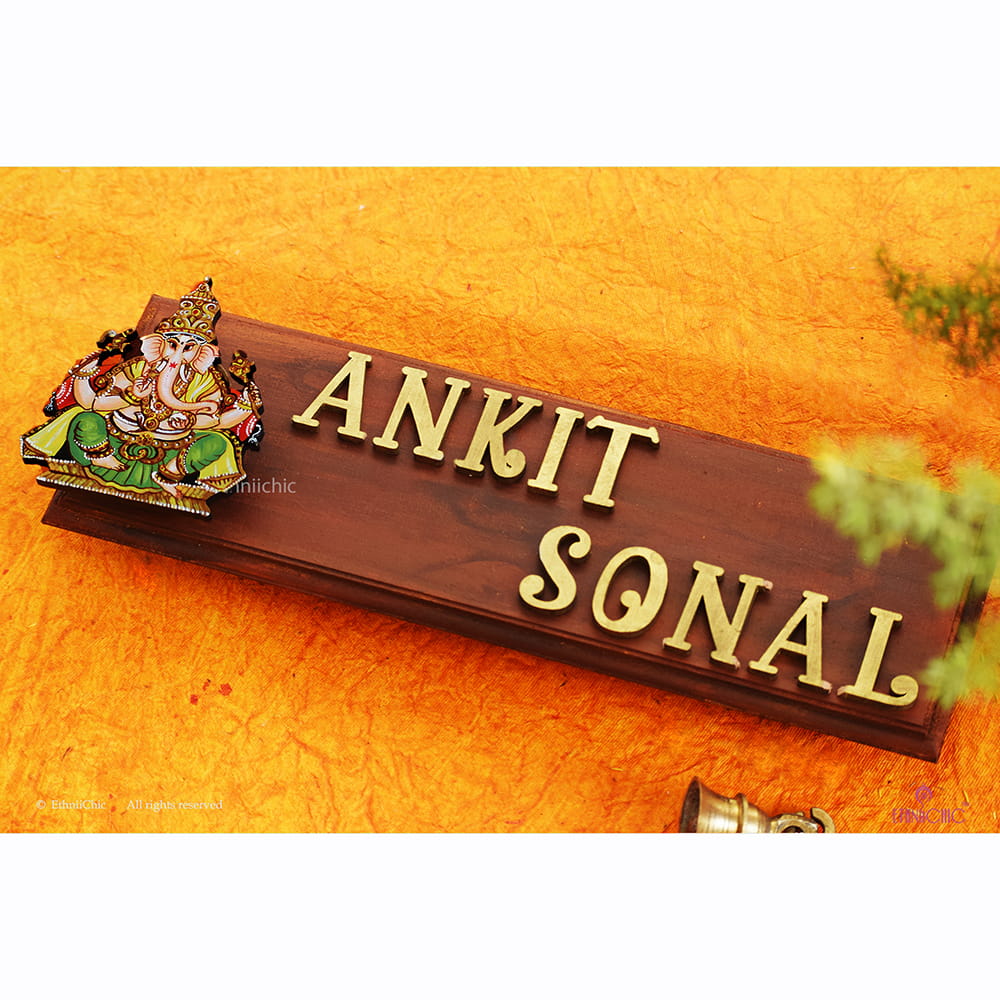
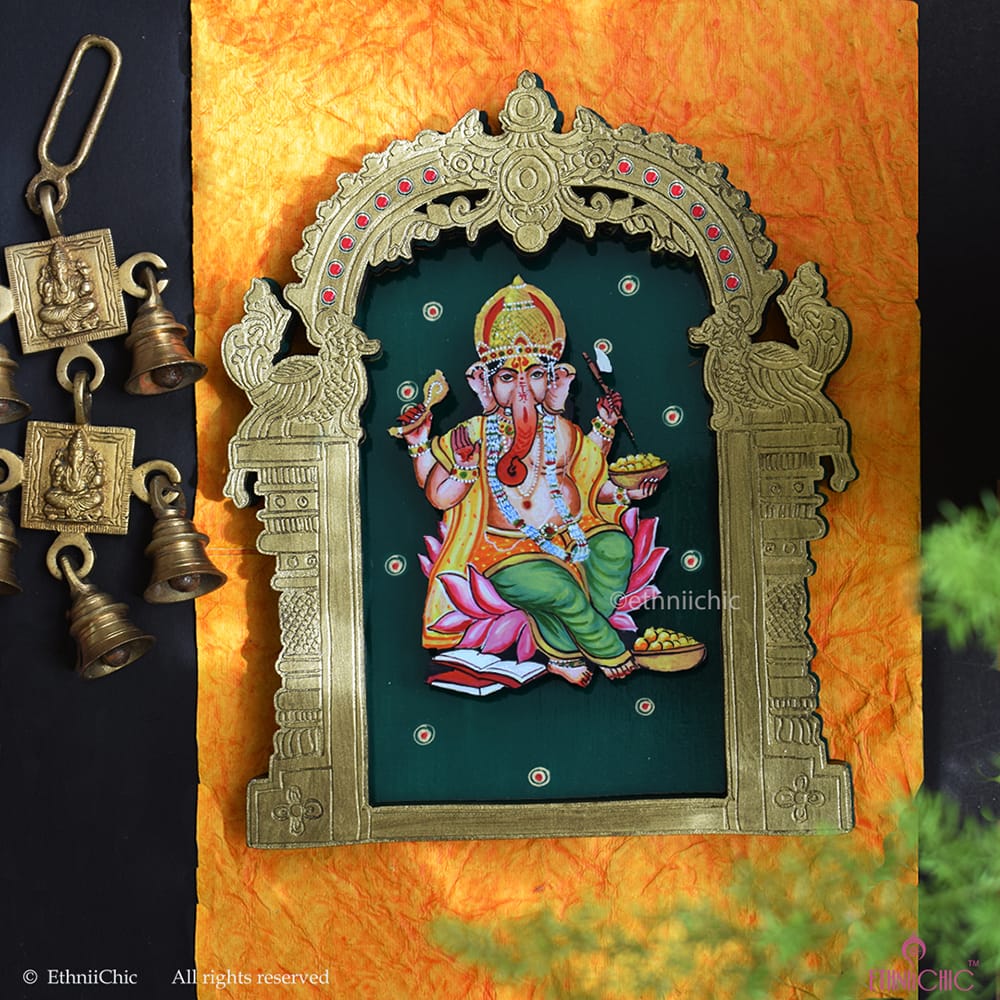
Faux Tanjore recreates the look of traditional Thanjavur gold-leaf painting using hand-painted detailing in place of 22k gold foil and gemstones — the same rich, layered visual language at a more accessible price point. This collection spans prabhavali and jharoka wall frames of South Indian deities — Mahalakshmi, Kanchi Kamakshi, Vadivudai Amman, Lalitha Devi, Shiv Parvathy, Andal, Meenakshi and Saraswathi — alongside the ten-frame Dashavatharam set depicting Vishnu's avatars, the eight-frame Ashtalakshmi set, the jumbo Panchamukhi Hanuman frame, and Tanjore-style Ganesha name boards. Every piece is hand-painted, not gold-leafed or machine-printed, and each prabhavali frame can be mounted individually or grouped into a themed wall display.

Skip to results list
27 items
Column grid
Column grid

Filter

Popular Searches :

Read More

Faux Tanjore — The Thanjavur Look, Hand-Painted Instead of Gold-Leafed

EthniiChic's Faux Tanjore collection recreates the visual richness of traditional Thanjavur gold-leaf painting — using fine hand-painted detailing in place of 22k gold foil and inset gemstones — across prabhavali and jharoka wall frames, avatar sets, and name boards. Genuine Thanjavur painting is a centuries-old craft built on real gold leaf laid over raised gesso relief work, traditionally finished with gemstone inlay — a labour- and material-intensive process that makes authentic pieces correspondingly expensive. Faux Tanjore keeps the same visual language — the layered gold tones, the architectural framing, the devotional subject matter — while replacing the gold and gems with skilled hand-painting on wood, at a fraction of the price.

That's a deliberate trade-off, not a shortcut, and it's worth being upfront about: you're not buying gold leaf here, you're buying the same centuries-old visual tradition rendered by hand in paint. For most homes, that's exactly the right choice — the look reads just as rich from across a room, without the cost or fragility of real gold leaf.

How Faux Tanjore Differs From Genuine Thanjavur Painting

Traditional Thanjavur (Tanjore) painting, which originated in Thanjavur, Tamil Nadu, during the Maratha court period (1676–1855 CE), uses a raised gesso base — traditionally limestone powder and a binding medium — overlaid with real gold foil, with gemstones historically inset into the relief work. It's been GI-recognised craft since 2007–08, and genuine pieces are typically treated as heirloom or collector objects given the cost of real gold and stone. EthniiChic's Faux Tanjore range is hand-painted on medium-density wood to recreate that same gold-toned, richly detailed look, without the raised gesso relief or actual gold and gemstone materials — a considered, accessible alternative rather than an attempt to pass as the genuine article.

What's in This Collection

The range centres on prabhavali and jharoka-style wall frames depicting South Indian goddesses — Kanchi Kamakshi, Meenakshi, Lalitha Devi, Saraswathi, Andal, and others — alongside two large statement sets: the Ashtalakshmi set of 8 (the eight forms of Lakshmi) and the Dashavatharam set of 10 (Vishnu's ten avatars), plus individual Dashavatharam frames, Tanjore-style name boards, and a Gajalakshmi box.
Shop Wall Frames → · Shop Name Boards →

Choosing Where to Start

If you want one statement piece with real visual impact, the Ashtalakshmi or Dashavatharam sets are built for that — a full wall arrangement in a single purchase. If you want something more contained, the single-goddess prabhavali frames offer the same look at a more modest scale and price. If you want the tradition applied somewhere functional, the Tanjore-style name boards bring the same gold-toned detailing to your front door.

Faux Tanjore as a Gift

This collection's devotional subject matter and gold-toned richness make it a natural fit for housewarmings, weddings, and festival gifting, especially for recipients who'd appreciate the look of Thanjavur art without the price or fragility that comes with real gold leaf. Being upfront that these are hand-painted, not gold-leafed, is worth mentioning if you're gifting to someone knowledgeable about the craft — it reads as considered rather than something to gloss over. Every collection ships internationally; write to contactus@ethniichic.com before ordering to confirm rates and delivery timelines for your country — larger sets like Ashtalakshmi and Dashavatharam may need a separate freight quote.

Frequently Asked Questions (FAQs)

1. What is Faux Tanjore?
A hand-painted recreation of traditional Thanjavur (Tanjore) painting's gold-leaf look, using fine painted detailing in place of real 22k gold foil and gemstones — the same rich visual language at a more accessible price point.

2. How is Faux Tanjore different from genuine Thanjavur painting?
Genuine Thanjavur painting uses real gold foil laid over a raised gesso base, traditionally with inset gemstones — a GI-recognised craft dating to the Maratha court period (1676–1855). Faux Tanjore is hand-painted on wood to recreate that same look without real gold or gemstone materials.

3. Is Faux Tanjore still hand-painted?
Yes, entirely. "Faux" refers to the absence of real gold foil and gemstones, not to the process — every piece is individually hand-painted by an artist, the same as the rest of EthniiChic's catalogue.

4. Why choose Faux Tanjore over genuine Thanjavur work?
Price and practicality. Genuine gold-leaf-and-gemstone pieces are typically treated as expensive heirloom objects; Faux Tanjore delivers the same visual richness at a fraction of the cost, without the fragility that comes with real gold leaf.

5. What subjects are depicted in this collection?
Mostly South Indian goddesses in prabhavali and jharoka wall frames — Kanchi Kamakshi, Meenakshi, Lalitha Devi, Saraswathi, and others — plus the Ashtalakshmi set of 8 (eight forms of Lakshmi) and the Dashavatharam set of 10 (Vishnu's ten avatars).

6. What materials are Faux Tanjore pieces made from?
Medium-density wood, hand-painted to recreate the layered, gold-toned look of traditional Thanjavur work.

7. What's the price range across this collection?
From around ₹1,600 for a smaller box to ₹22,400 for the full Ashtalakshmi set of 8, with most single wall frames in the ₹2,800–₹3,800 range.

8. Do you ship Faux Tanjore pieces internationally for NRI buyers?
Yes, across the full collection. Write to contactus@ethniichic.com before ordering to confirm shipping rates and delivery timelines for your country — larger sets may need a separate freight quote.

9. Can I order a custom or bulk Faux Tanjore piece?
Yes. Custom motifs and bulk or corporate gifting orders can be arranged through Commission Artwork or Contact Us.