Pichwai Art

Pichwai Art

Pichwai is one of India's most revered devotional art forms - originating in the temple town of Nathdwara, Rajasthan, where artists have been painting intricate depictions of Lord Krishna for over four centuries. The word itself means "that which hangs behind" - referring to the large painted backdrops hung behind the deity in the Shrinathji temple.

At EthniiChic, we bring this deeply spiritual and visually breathtaking tradition into hand-painted decor objects: wall plates, art pieces, and decorative works that carry the richness of Pichwai - its lotus motifs, gopis, cows, and divine narratives - into the contemporary home. Each piece is hand-painted by our studio artists with deep respect for the tradition.

For the collector, the culturally rooted buyer, and anyone who wants their home to carry something genuinely sacred and beautiful - this collection is for you.

Skip to results list
14 items
Column grid
Column grid

Filter

Popular Searches :

Read More

Pichwai — Krishna's Temple Backdrop Art from Nathdwara

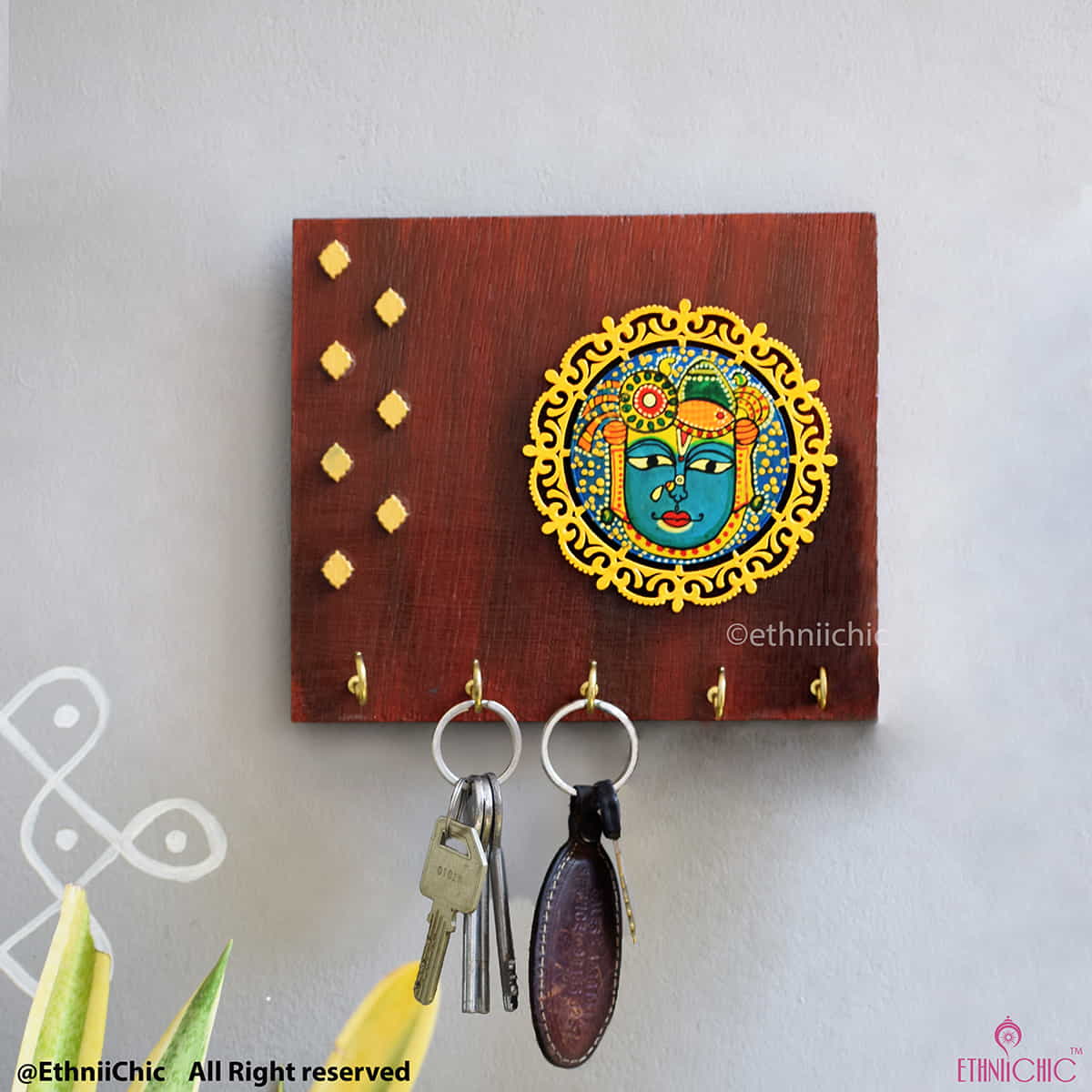
Pichwai — literally "that which hangs from the back" — is a devotional cloth-painting tradition born inside a specific temple: Shrinathji Temple in Nathdwara, Rajasthan, founded around 1672 CE. The name describes exactly what these paintings were made to do — hang directly behind the temple idol of Shrinathji, a form of Krishna, as a backdrop that changed with the ritual calendar rather than staying fixed. EthniiChic's Pichwai collection carries that same devotional visual language onto key holders, trays, wooden boxes, mirror frames, coasters, a name board, and studs.

Pichwai isn't a loosely devotional decorative style — it's tied to a specific religious lineage. Vitthalnath, chief priest at the temple and son of Vallabhacharya (who founded the Pushtimarg sect of Vaishnavism), is credited with employing the original artisans who painted these backdrops under temple administration. Traditional pieces were painted on cotton cloth with opaque watercolours, finished with gold and silver detailing — a materials choice built for a devotional object, not a purely decorative one.

Painted to the Calendar, Not Just to a Theme

What makes genuine Pichwai distinct from generic "Krishna art" is that its imagery follows the Pushtimarg festival calendar directly. Different scenes correspond to different festivals across the year — Govardhan Puja, Sharad Purnima, Raslila, Holi, the cattle festival Gopashtami, and the harvest festival Annakuta among them. That calendrical structure is exactly why cows, lotus flowers, and seasonal motifs recur so consistently across this collection: they're not decorative filler, they're tied to specific festival observances within the tradition.
Shop Key Holders → · Shop Trays →

The Recurring Cast: Shrinathji, Cows, and Lotus

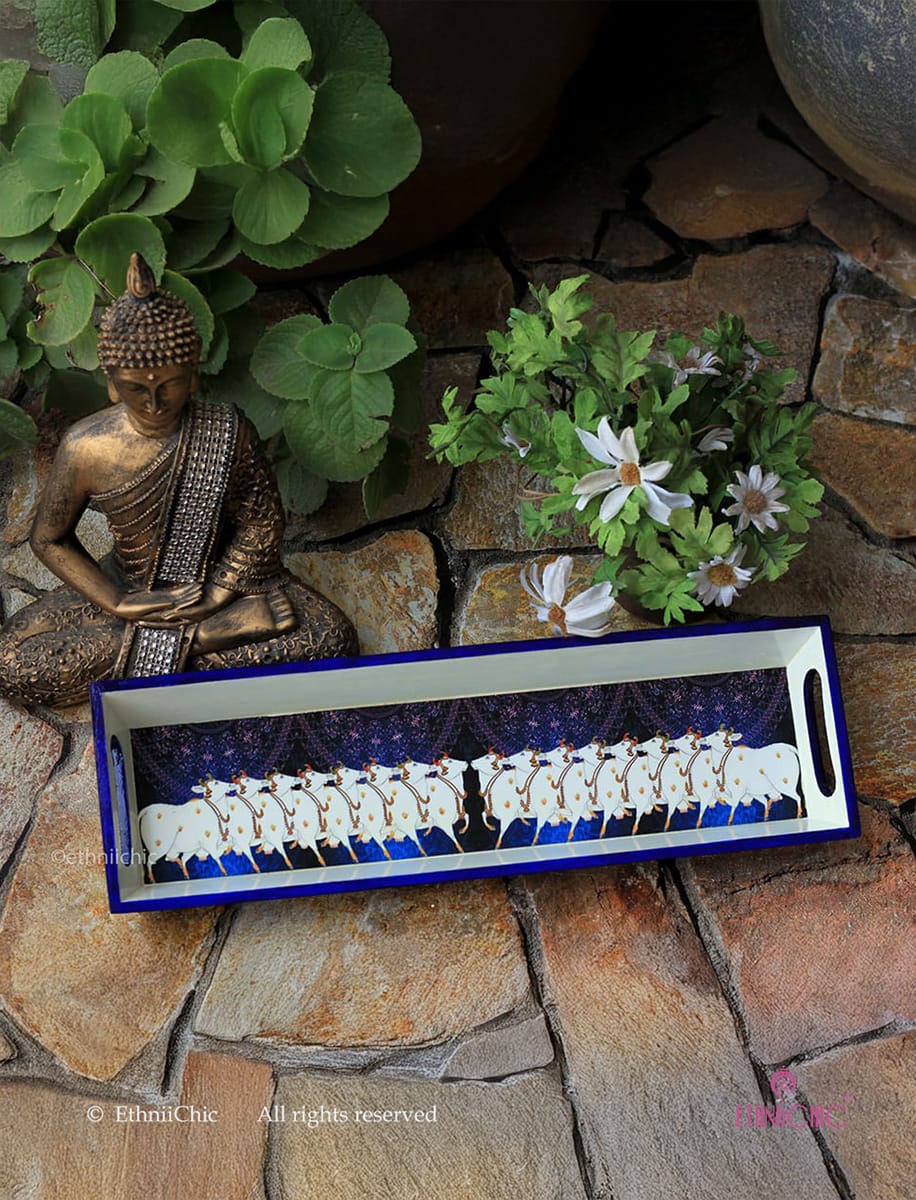
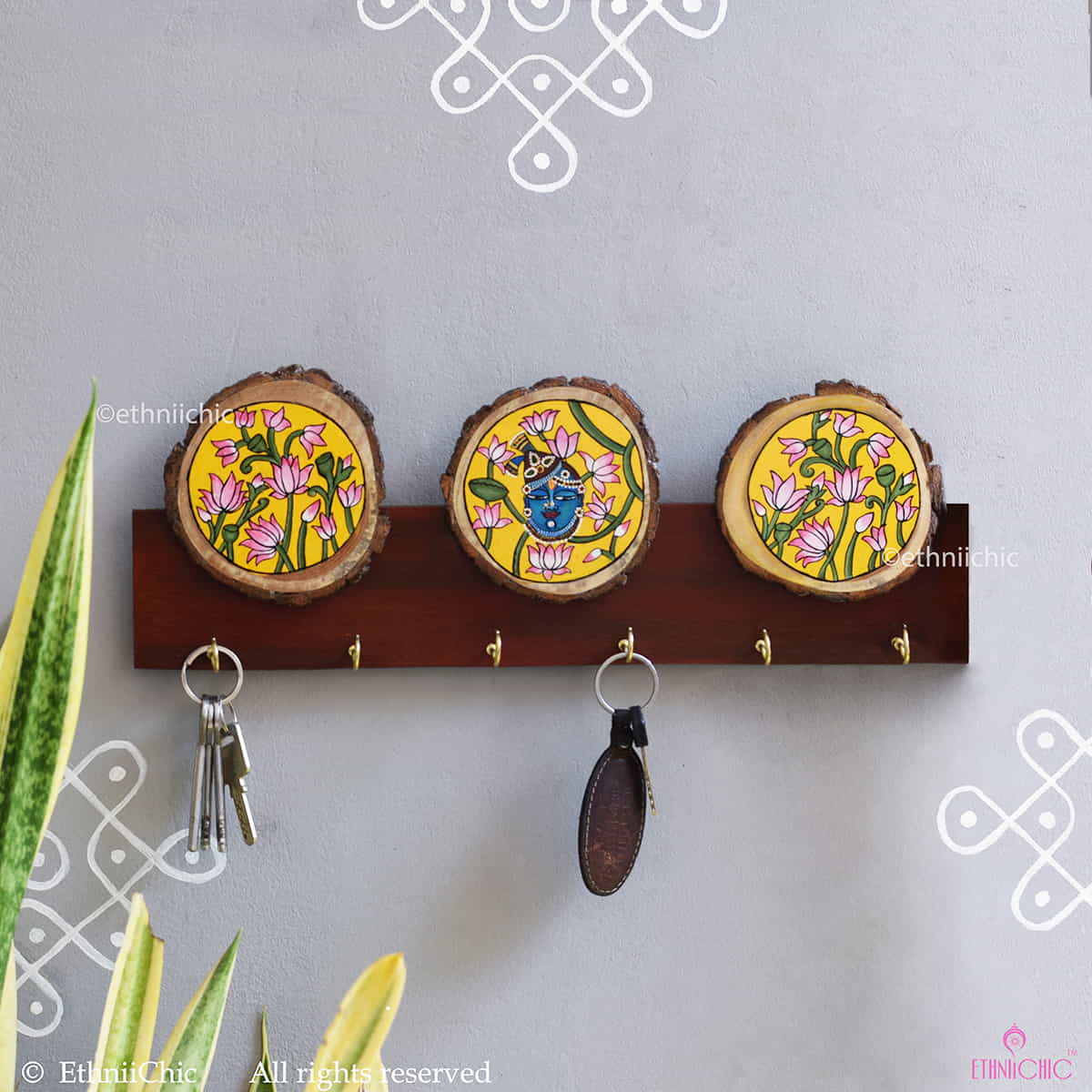
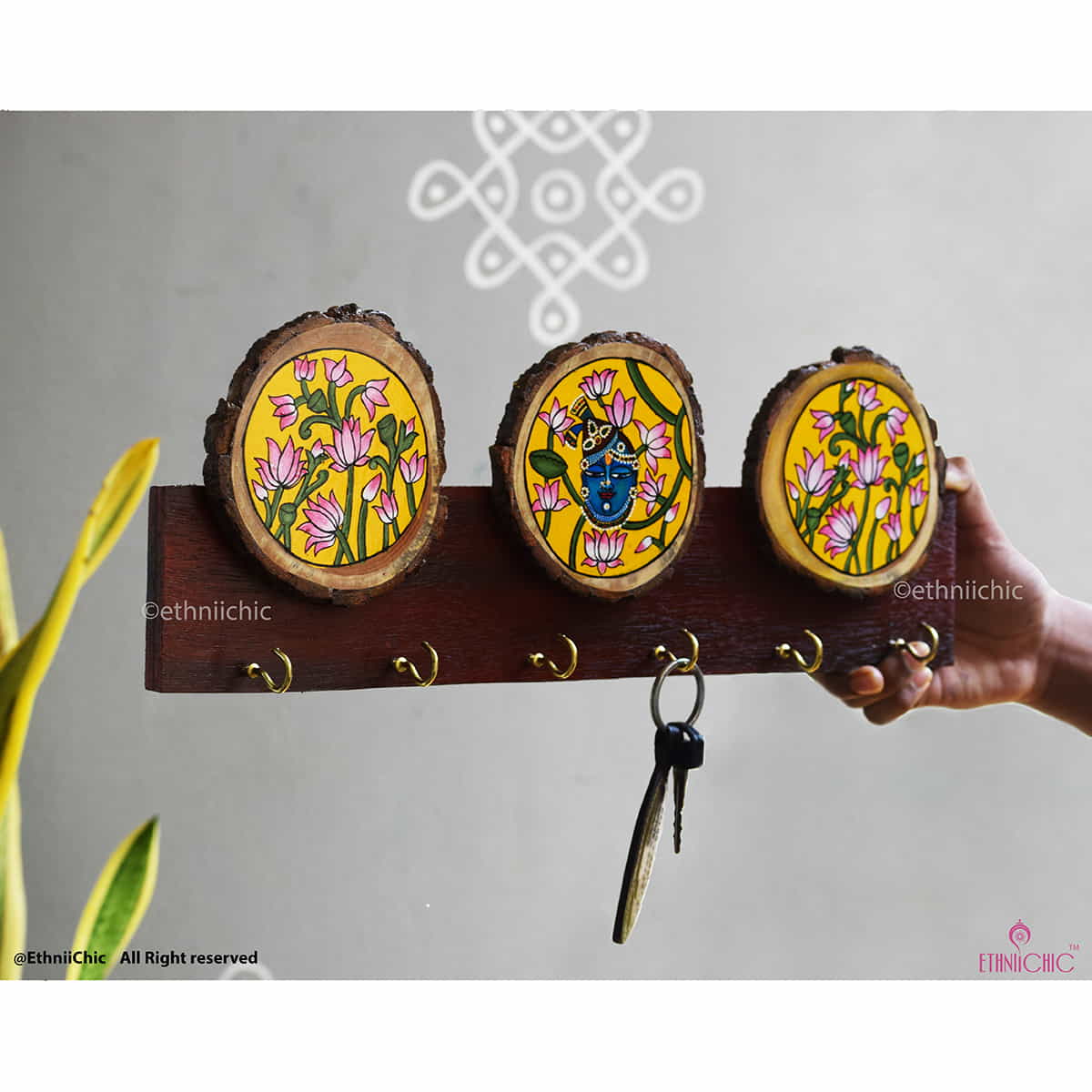
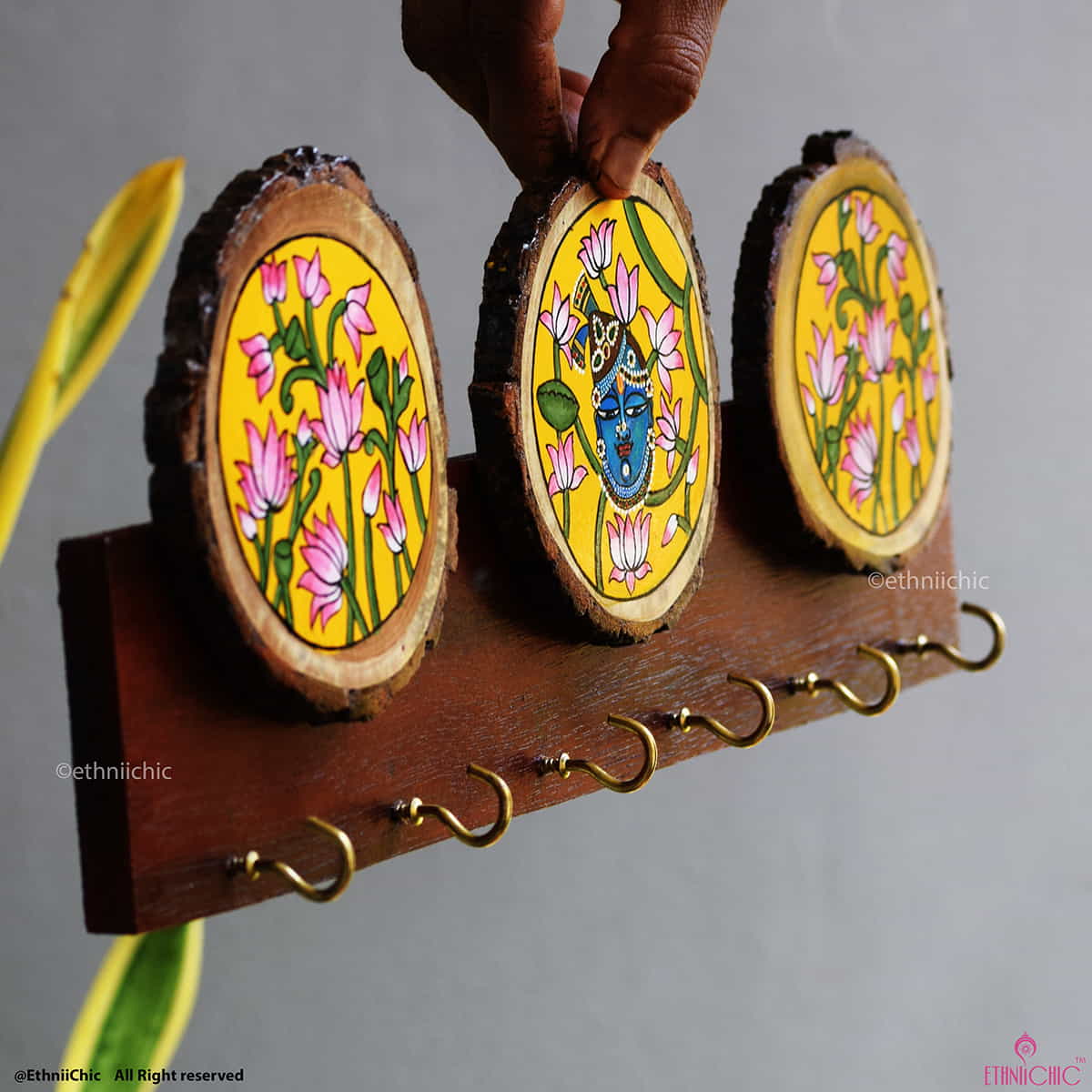
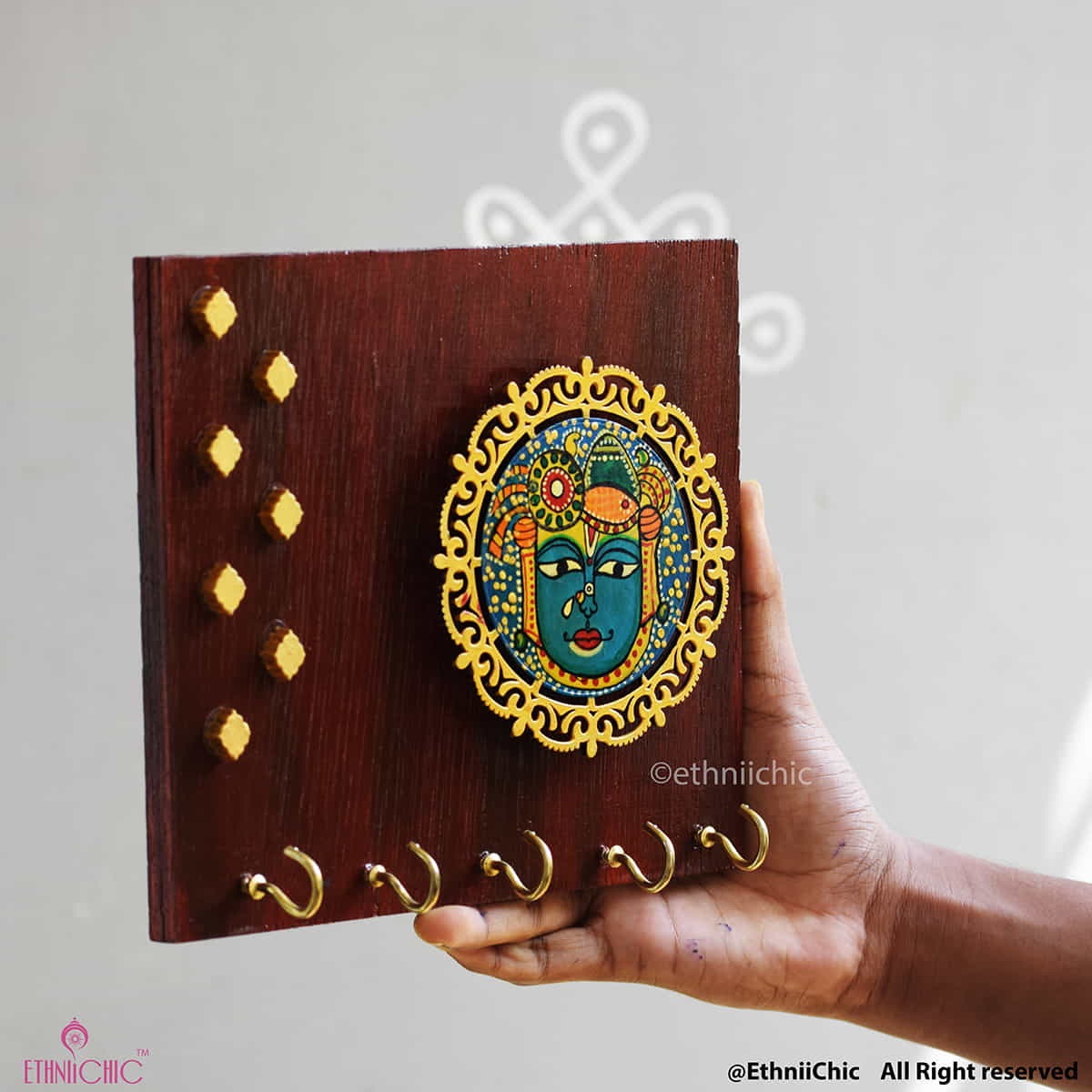
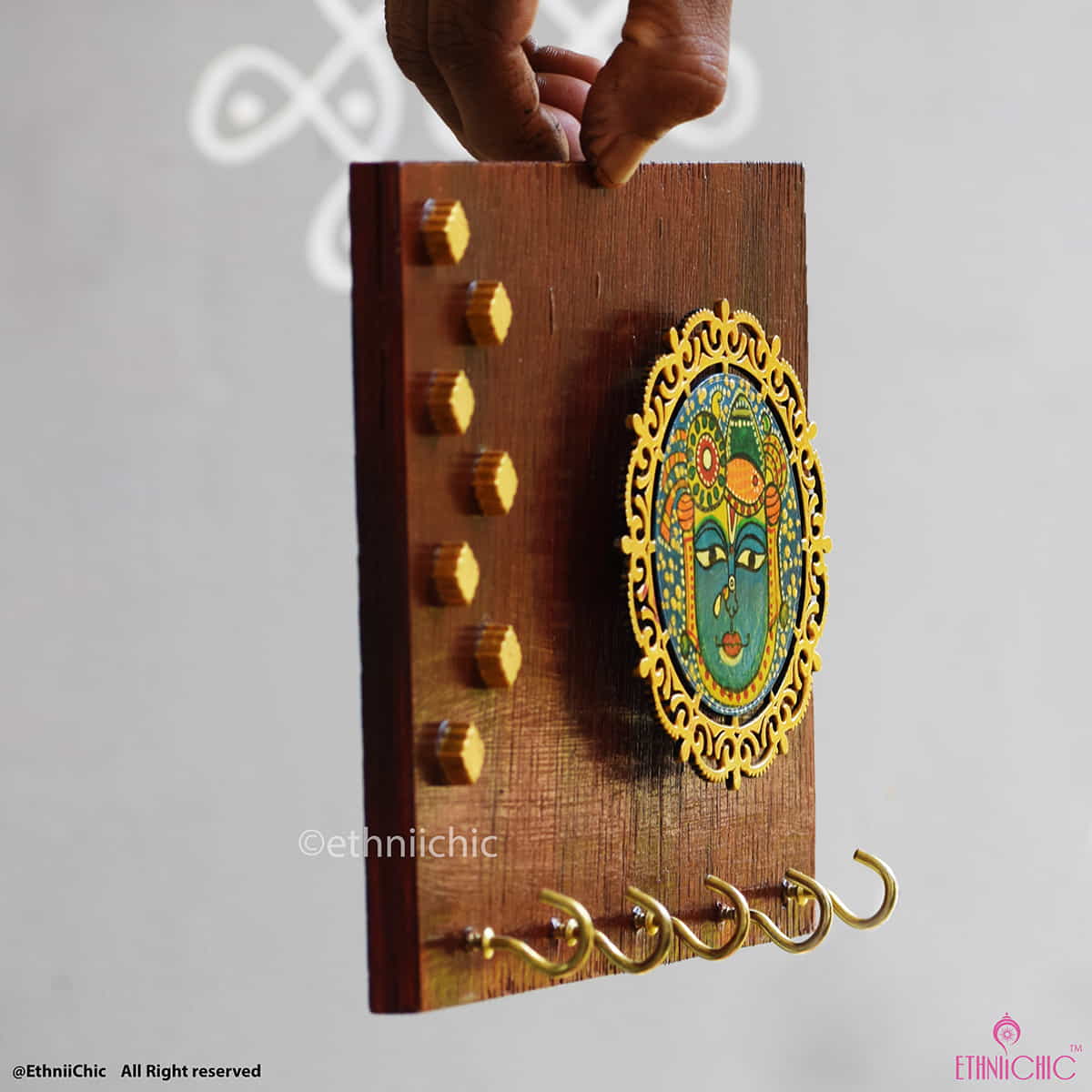
Shrinathji himself — recognisable by his distinctive dark-hued, wide-eyed form — appears directly across this collection, including a dedicated Sreenathji key holder and a Srinathji hexagon box. Cows appear almost as often, tied to Krishna's pastoral, cow-herding association and to the Gopashtami festival specifically, showing up on the serving tray, narrow tray, and one of the Aranmula wooden frames. The lotus, a symbol of purity and divine presence throughout Vaishnavism, rounds out the collection's core motif set.
Shop Boxes → · Shop Mirror Frames →

Choosing Where to Start

If you want the most direct devotional piece, start with the Sreenathji key holder or the Srinathji hexagon box — both name the deity outright. If you want something for daily use that still carries the tradition clearly, the tea coasters or a narrow tray bring the cow and lotus motifs into a room you use every day. If you want a larger statement piece, the Lotus Name Board or one of the Aranmula mirror frames makes a more substantial entryway or wall piece.
Pichwai as a Gift

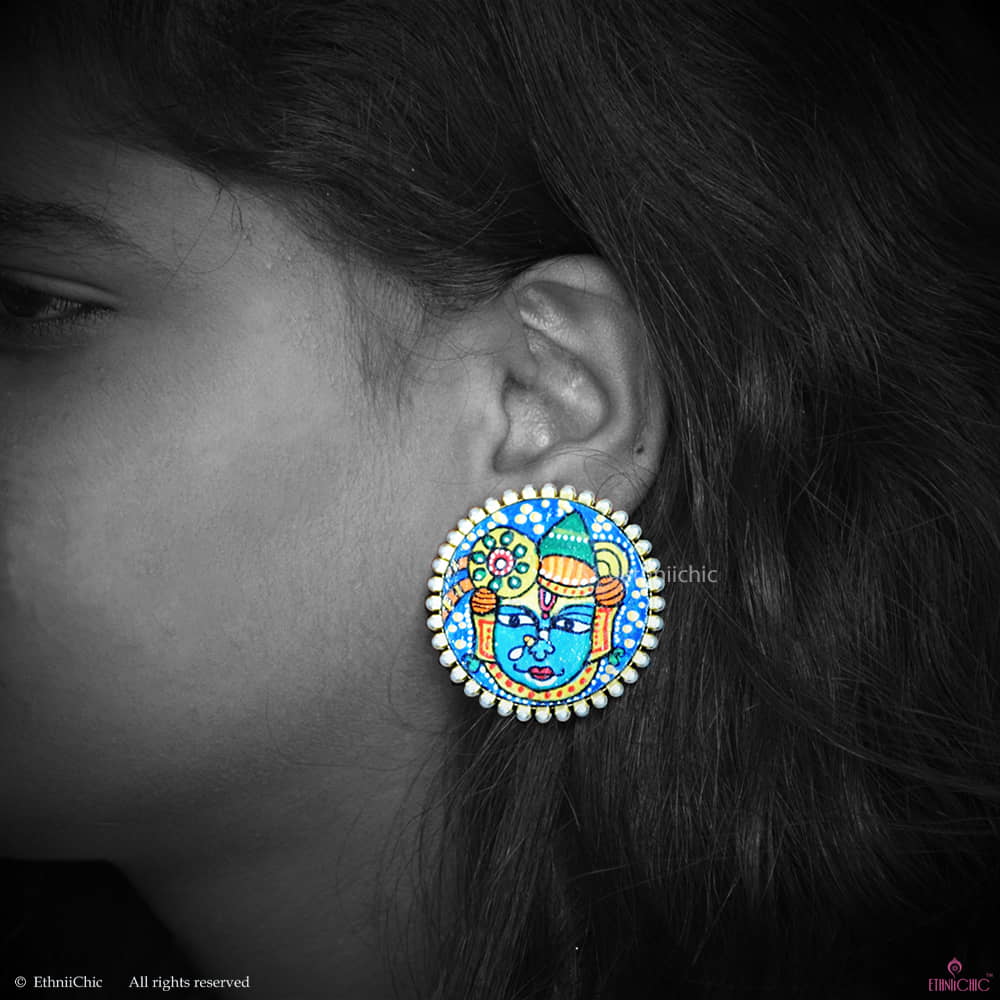
Because Pichwai is tied so specifically to Krishna devotion and to Nathdwara's Pushtimarg tradition, it's a considered choice for anyone with a personal connection to Krishna worship, Vaishnavism, or Rajasthan specifically — more so than a generic "Indian folk art" gift would read. The studs at ₹599 are an easy, low-commitment gift; the Pichwai key holder or a serving tray makes a more substantial housewarming gift for someone setting up a new home. Every collection ships internationally; write to contactus@ethniichic.com before ordering to confirm rates and delivery timelines for your country.

Frequently Asked Questions (FAQs)

1. What is Pichwai?
A devotional cloth-painting tradition from the Shrinathji Temple in Nathdwara, Rajasthan, founded around 1672 CE. The name literally means "that which hangs from the back," referring to its traditional placement behind the temple idol.

2. Who is depicted in Pichwai paintings?
Shrinathji, a form of Krishna worshipped at the Nathdwara temple, is the central and constant subject — shown in scenes tied to specific festivals in the Pushtimarg religious calendar.

3. What festivals or themes recur in Pichwai art?
Govardhan Puja, Sharad Purnima, Raslila, Holi, Gopashtami (a cattle festival), and Annakuta (a harvest festival) — which is why cows, lotus flowers, and seasonal imagery appear so consistently.

4. What materials are traditionally used in Pichwai painting?
Cotton cloth, painted with opaque watercolours and finished with gold and silver detailing.

5. Where does the Pichwai tradition come from?
Nathdwara, Rajasthan — specifically the Shrinathji Temple, where Vitthalnath, chief priest and son of Pushtimarg founder Vallabhacharya, employed artisans to create the original devotional backdrops.

6. Does Pichwai have GI (Geographical Indication) status?
No confirmed formal GI recognition was found for Pichwai, unlike some other Indian craft traditions such as Kalamkari or Madhubani.

7. What kinds of products can I find in this collection?
Key holders, trays, wooden boxes, coasters, mirror frames, a name board, and studs — Pichwai's devotional motifs applied across wall décor, tabletop, and wearable formats.

8. What's the price range across this collection?
From ₹599 for a pair of studs to ₹2,800 for the Pichwai cow serving tray.

9. Do you ship Pichwai pieces internationally for NRI buyers?
Yes, across the full collection. Write to contactus@ethniichic.com before ordering to confirm shipping rates and delivery timelines for your country.

10. Can I order a custom or bulk Pichwai piece?
Yes. Custom motifs and bulk or corporate gifting orders can be arranged through Commission Artwork or Contact Us.