Kolam

Kolam

Kolam is one of South India's most intimate and enduring art forms - drawn at the threshold of homes each morning by women across Tamil Nadu, Andhra Pradesh, Karnataka, and Kerala, using rice flour or chalk on the ground, before the day begins and the world enters. It is both ritual and geometry: intricate interlocking patterns built from dots and lines, symmetrical and recursive, designed to welcome, protect, and invoke auspiciousness. The kolam is erased by footsteps, rain, and the passage of the day — and drawn again the next morning.

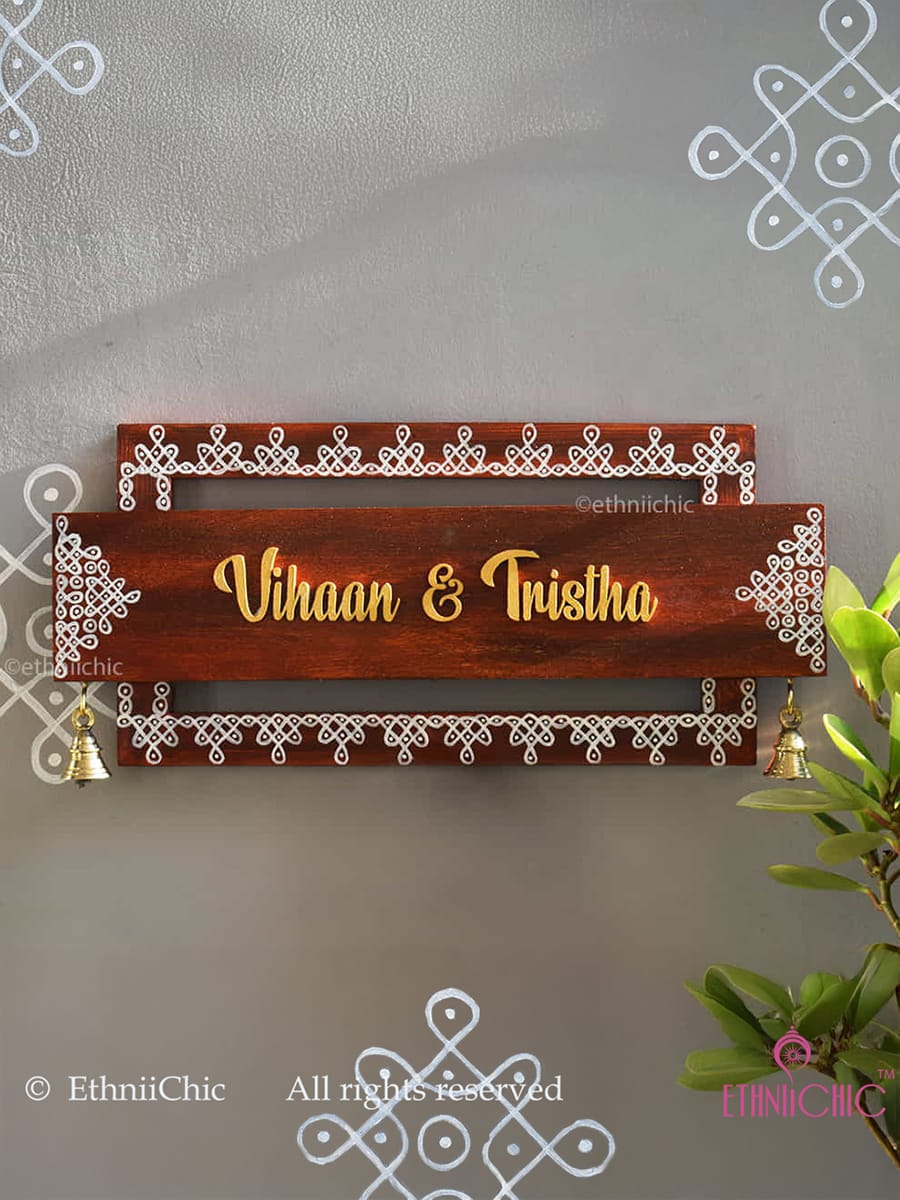
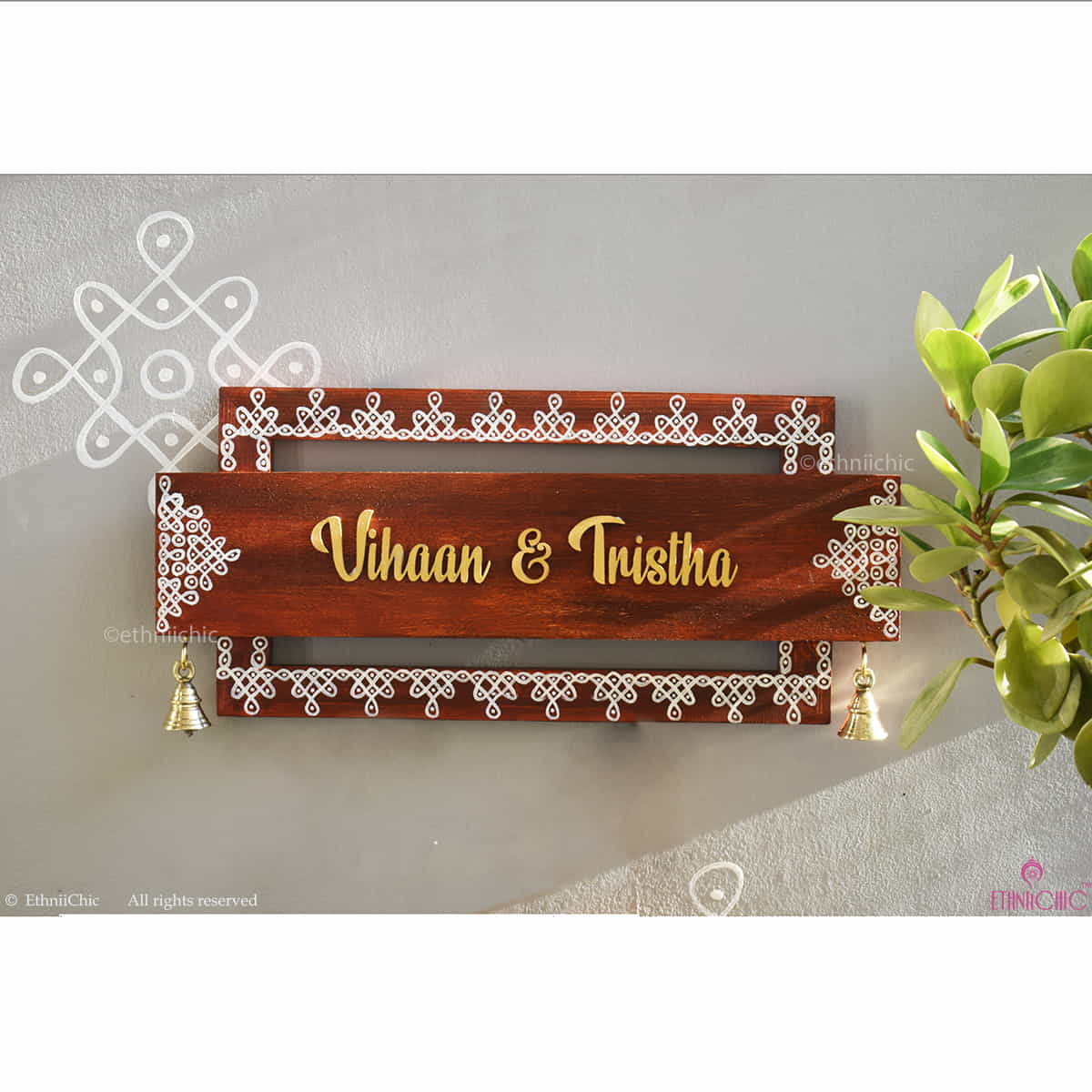
At EthniiChic, we bring the visual language of kolam into hand-painted decor objects that hold its geometric beauty permanently: wall art, plates, and pieces that carry the mathematical precision and cultural warmth of this daily ritual into the contemporary home. For anyone with Tamil, Telugu, Kannada, or Malayalam roots - or anyone who has ever stood at a South Indian doorstep at dawn and understood immediately that they were looking at something sacred - this collection is for you.

Skip to results list
7 items
Column grid
Column grid

Filter

Popular Searches :

Read More

Kolam — South India's Threshold Art, Made Permanent

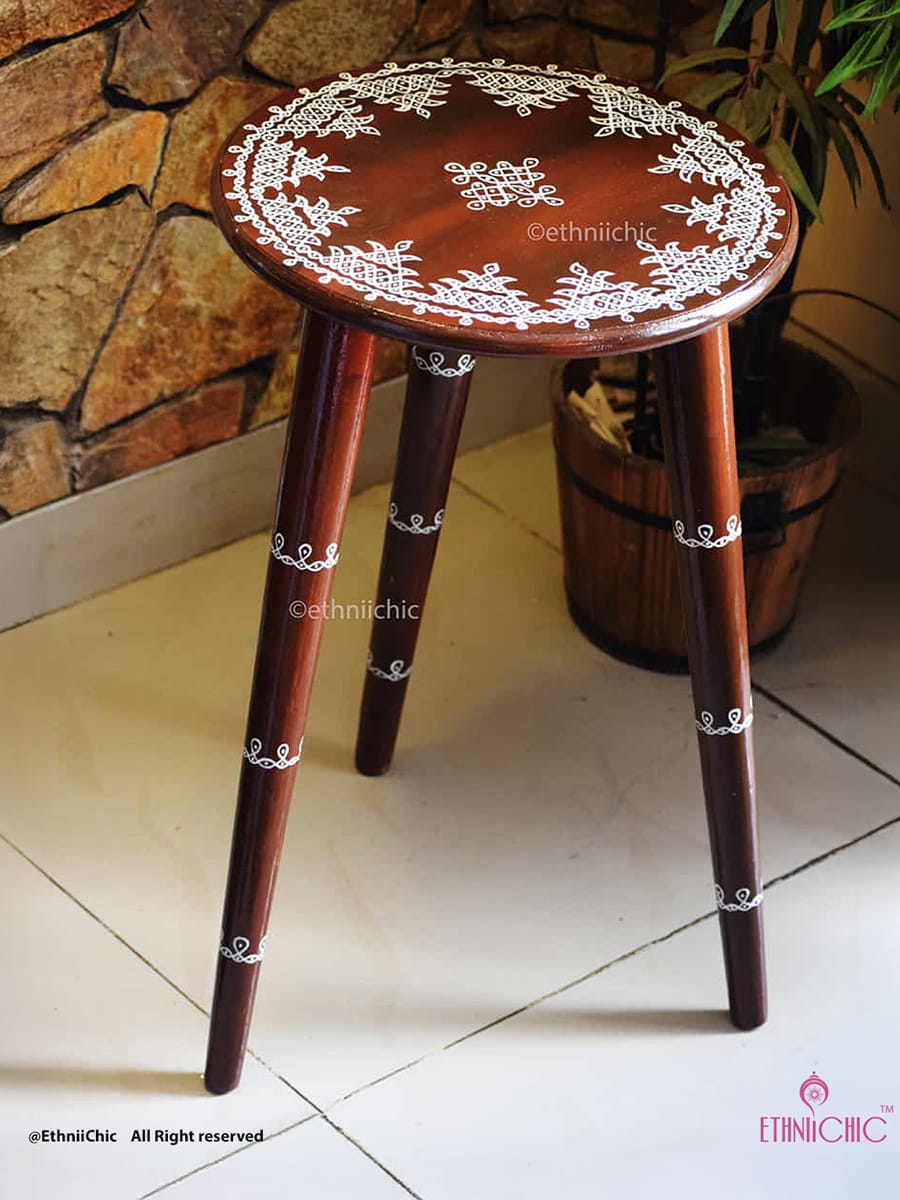
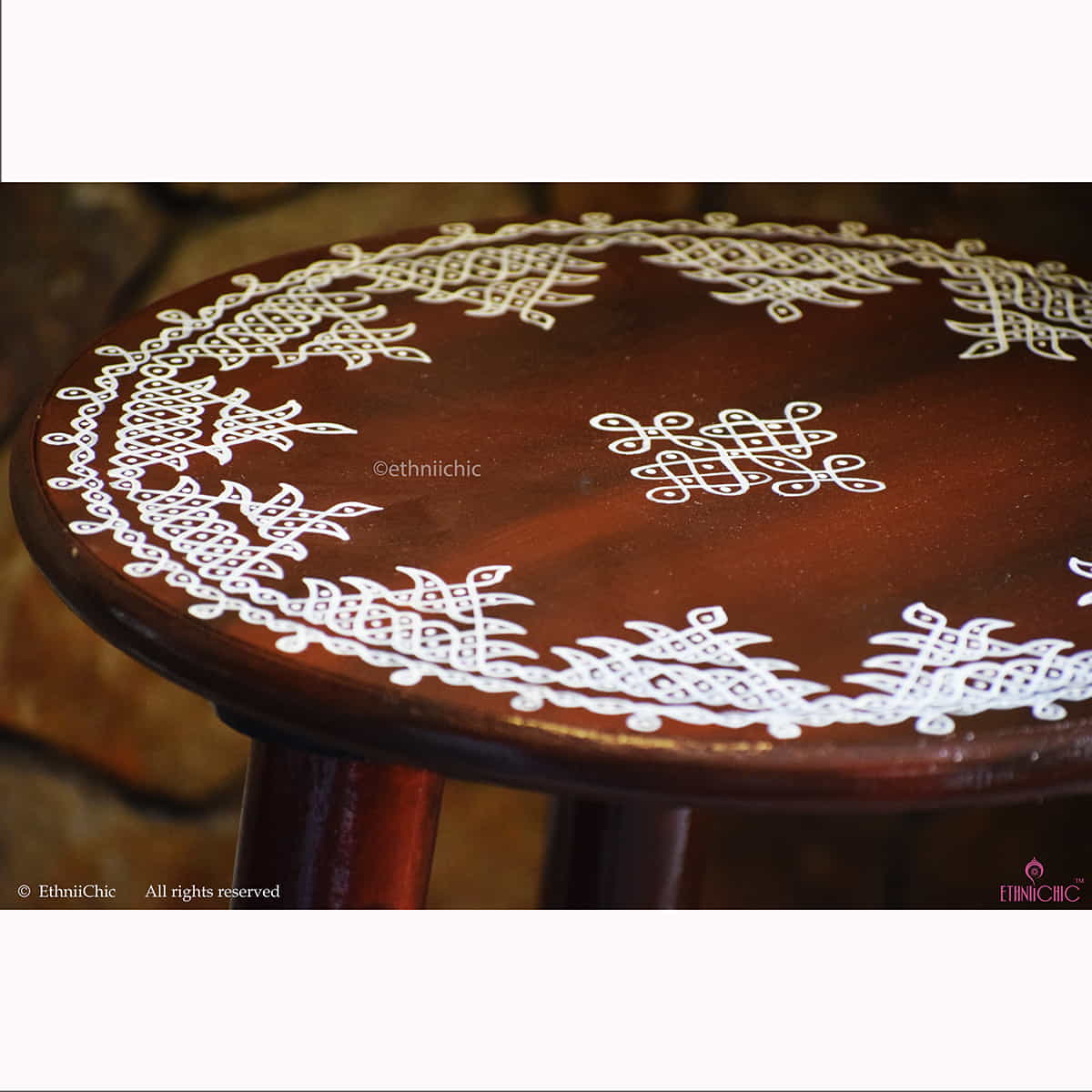
EthniiChic's Kolam collection translates one of South India's most intimate daily art forms — the geometric pattern traditionally drawn fresh each dawn at a home's threshold — into permanent hand-painted pieces: a name board, a key holder, a peg table, coasters, and a tissue box. Kolam is drawn using straight lines, curves, and loops arranged around a grid of dots, traditionally in rice flour, and is meant to symbolise prosperity and welcome — specifically, an invitation for the goddess Lakshmi to enter the home.

What makes Kolam distinct from a lot of decorative motif work is that it's never been purely ornamental. Traditionally, the pattern must be drawn as one complete, unbroken line — leaving gaps was believed to let misfortune in rather than keep it out. EthniiChic's pieces carry that same geometric precision, even rendered permanently in paint rather than redrawn fresh each morning.

A Tradition Shared Across South India

Kolam isn't confined to one state — it's practised across Tamil Nadu, Andhra Pradesh, Telangana, Karnataka, and Kerala, known by different regional names in each (Muggu in Telugu, Rangoli in Kannada, among others), and has travelled with the South Indian diaspora to countries including Sri Lanka, Singapore, and Malaysia. That makes this collection a meaningful choice for anyone with roots in South India broadly, not just one specific state.
Shop Name Boards → · Shop Key Holders →

What's in This Collection

The Kolam Name Board and Key Holder bring the motif to an entryway — fitting, given the tradition's own threshold origins. The Peg Table carries it into a living space. The coasters and tissue box translate it into daily kitchen and dining use, which keeps the pattern in view the way it was traditionally redrawn every day, just in a lasting form instead.
Shop Coasters → · Shop Tissue Holders →

Choosing Where to Start

If you want the most literal echo of Kolam's original placement, start with the name board or key holder — both sit at the entryway, the same threshold position where Kolam is traditionally drawn each morning. If you want something for daily kitchen use, the coasters and tissue box are the easiest way to bring the motif into a room you're in every day.

Kolam as a Gift

Because Kolam is specifically a welcome-and-prosperity symbol, it's a well-suited housewarming gift — a Kolam name board or key holder for someone moving into a new home carries the same meaning the original threshold drawing does. It's also a meaningful choice for anyone with South Indian heritage across any of the four language traditions it spans. Every collection ships internationally; write to contactus@ethniichic.com before ordering to confirm rates and delivery timelines for your country.

Frequently Asked Questions (FAQs)

1. What is Kolam?
A geometric line-drawing tradition from South India, traditionally drawn fresh each dawn at a home's threshold using rice flour, arranged around a grid of dots with straight lines, curves, and loops.

2. What does Kolam symbolise?
Prosperity and welcome — traditionally an invitation for the goddess Lakshmi to enter the home. The pattern is also meant to be drawn as one complete, unbroken line, which carries a protective meaning against misfortune.

3. Is Kolam specific to one South Indian state?
No. It's practised across Tamil Nadu, Andhra Pradesh, Telangana, Karnataka, and Kerala under different regional names, including Muggu in Telugu and Rangoli in Kannada.

4. What products are available in the Kolam collection?
A name board, a key holder, a peg table, two coaster colourways, and a tissue box — the geometric Kolam pattern applied to both entryway pieces and everyday kitchen accessories.

5. Is Kolam art hand-painted the same as the rest of EthniiChic's catalogue?
Yes. Each piece is individually hand-painted, translating the traditional threshold pattern into a permanent, lasting form.

6. What's the price range across this collection?
From ₹975 for a coaster set to ₹5,790 for the Kolam peg table.

7. Is Kolam décor a good housewarming gift?
Yes — given its meaning as a symbol of welcome and prosperity, a Kolam name board or key holder is a fitting gift for someone moving into a new home.

8. Do you ship Kolam pieces internationally for NRI buyers?
Yes, across the full collection. Write to contactus@ethniichic.com before ordering to confirm shipping rates and delivery timelines for your country.

9. Can I order a custom or bulk Kolam piece?
Yes. Custom sizing and bulk or corporate gifting orders can be arranged through Commission Artwork or Contact Us.