Lotus

Lotus

Shop hand-painted lotus décor online, spanning Kerala Mural, Pattachitra, Phad, Pichwai, Rajput and Tanjore painting. The lotus, a symbol of purity and spiritual awakening in Indian tradition and the seat associated with several goddesses, appears throughout this collection on goddess wall frames — including the Ganesha-on-Lotus jharoka, and Annapoorneshwari and Saraswathi plaques — as well as name boards, Aranmula mirror frames, tea coasters and Pattachitra fridge magnets. Wall frames suit a pooja room or statement wall, name boards work at the entrance, and coasters make an easy gifting piece.

Skip to results list
40 items
Column grid
Column grid

Filter

Popular Searches :

Read More

Lotus — Purity, Prosperity, and the Seat of the Divine, Across Six Traditions

EthniiChic's Lotus Motif collection spans hand-painted lotus décor across six Indian folk art traditions — Kerala Mural, Pattachitra, Phad, Pichwai, Rajput, and Tanjore painting — on goddess wall frames, name boards, Aranmula mirror frames, tea coasters, and Pattachitra fridge magnets. The lotus is one of the most consistently reused sacred motifs in Indian art, and for real reasons: it's the traditional seat of several major deities, and its own growth cycle — rising unstained from murky water — has carried a specific spiritual meaning across Hindu and Buddhist thought for millennia.

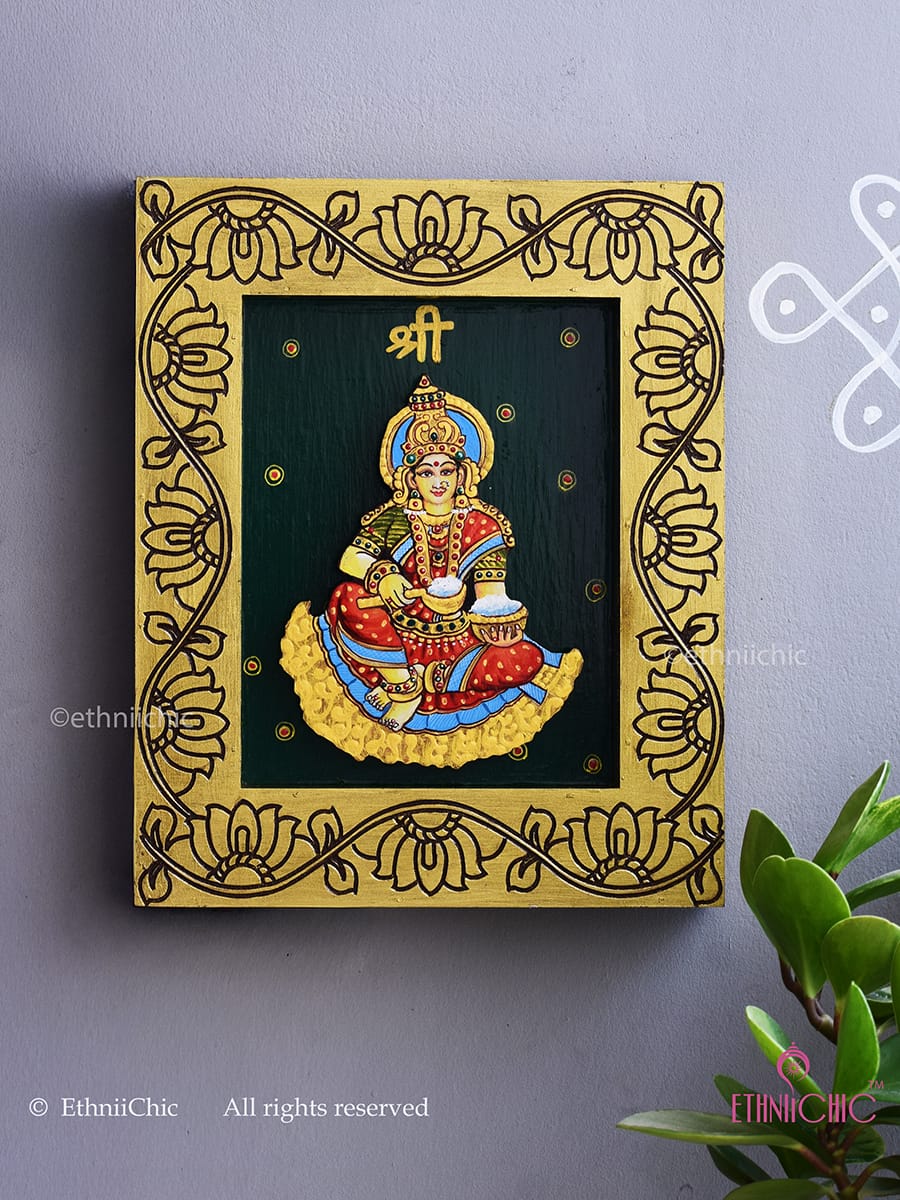
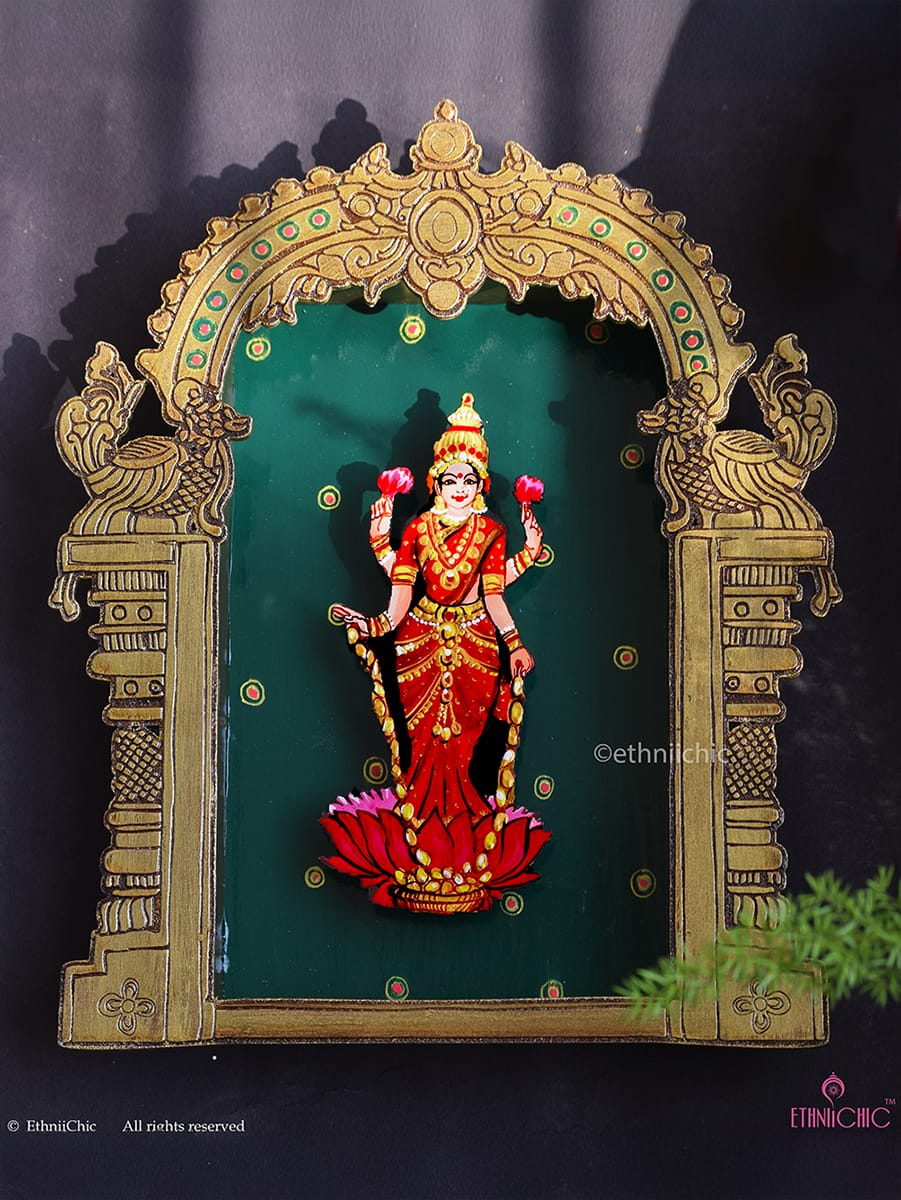
That symbolic weight is exactly why the lotus recurs across the goddess pieces in this collection specifically — the Ganesha-on-Lotus jharoka, the Annapoorneshwari and Saraswathi plaques, and the standing Mahalakshmi frame all place a deity directly on or with the flower, rather than using it as background decoration.

Why the Lotus, Specifically

The lotus's central meaning is purity through spiritual awakening: it grows from muddy, murky water yet blooms completely unstained, a widely used metaphor for rising above material circumstance. Lakshmi, goddess of prosperity, carries lotus-derived names — Padma, Kamala, Ambuja — and is traditionally depicted seated on a full bloom, holding one in her hand, pairing material fortune with spiritual grounding rather than wealth alone. Brahma is said to have emerged from a lotus growing out of Vishnu's navel, and Vishnu himself carries the epithet Padmanabha, "lotus-naveled," for exactly that reason. The flower's daily bloom-and-close cycle is also read as a symbol of rebirth and renewal — which is part of why it appears so often alongside deities associated with creation, prosperity, and new beginnings.
Shop Devi / Goddess → · Shop Wall Frames →

The Goddess Pieces Built Around the Lotus

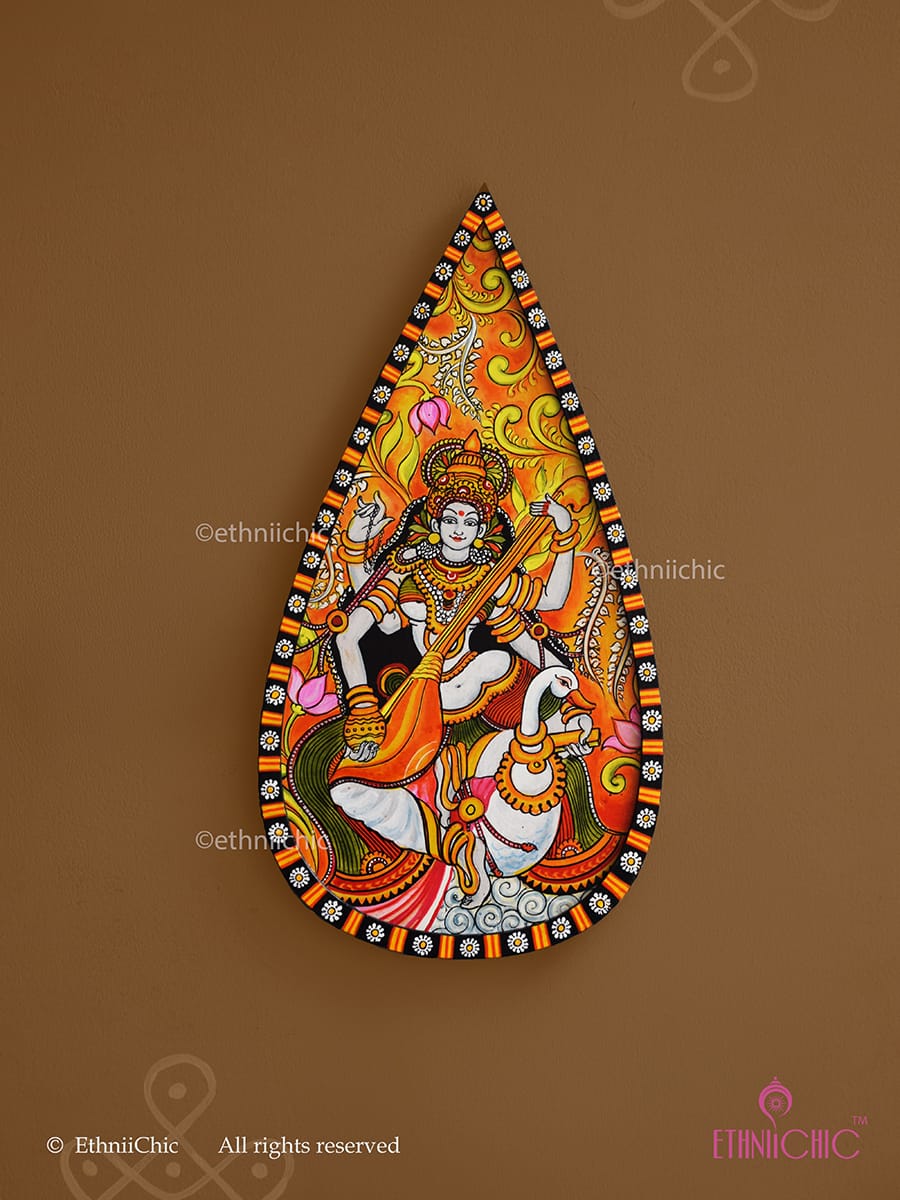
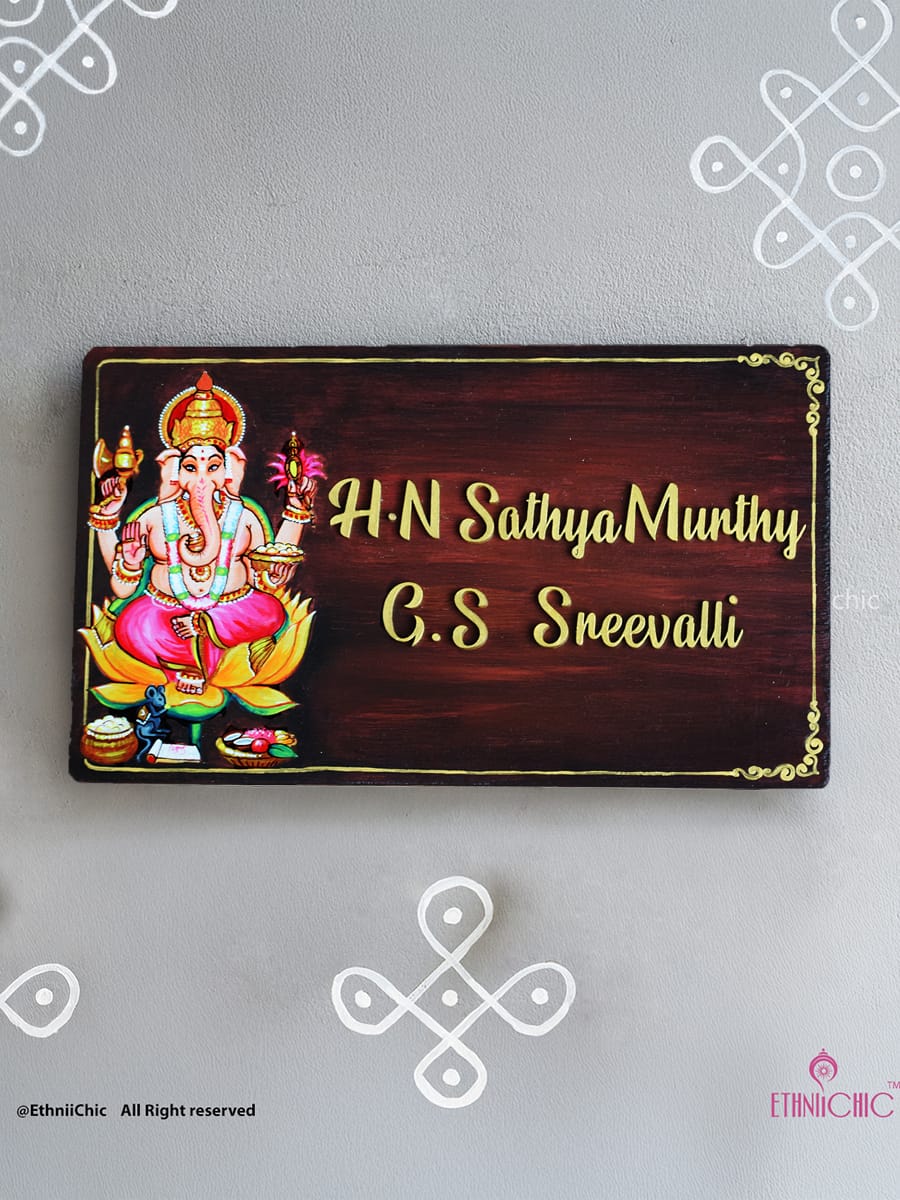
Several of this collection's centrepieces place a specific deity directly on the flower rather than using it decoratively: the Ganesha-on-Lotus jharoka and matching name board show Ganesha enthroned on a lotus pedestal, the Annapoorneshwari and Saraswathi Kerala Mural plaques carry the same seated iconography for goddesses of nourishment and knowledge respectively, and the standing Mahalakshmi frame ties directly back to Lakshmi's own lotus association described above.
Shop Name Boards → · Shop Annapoorna Devi →

Six Traditions, One Motif

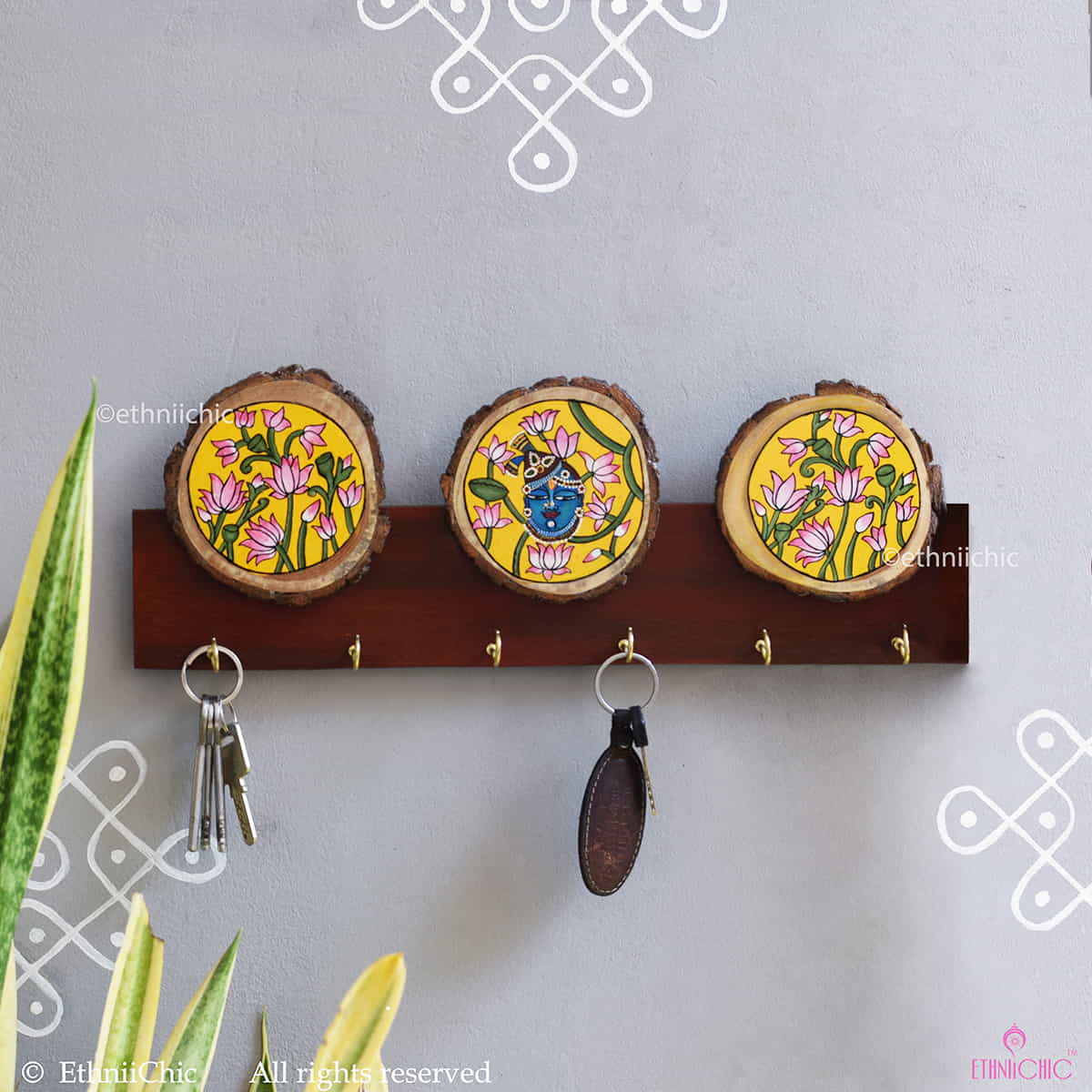
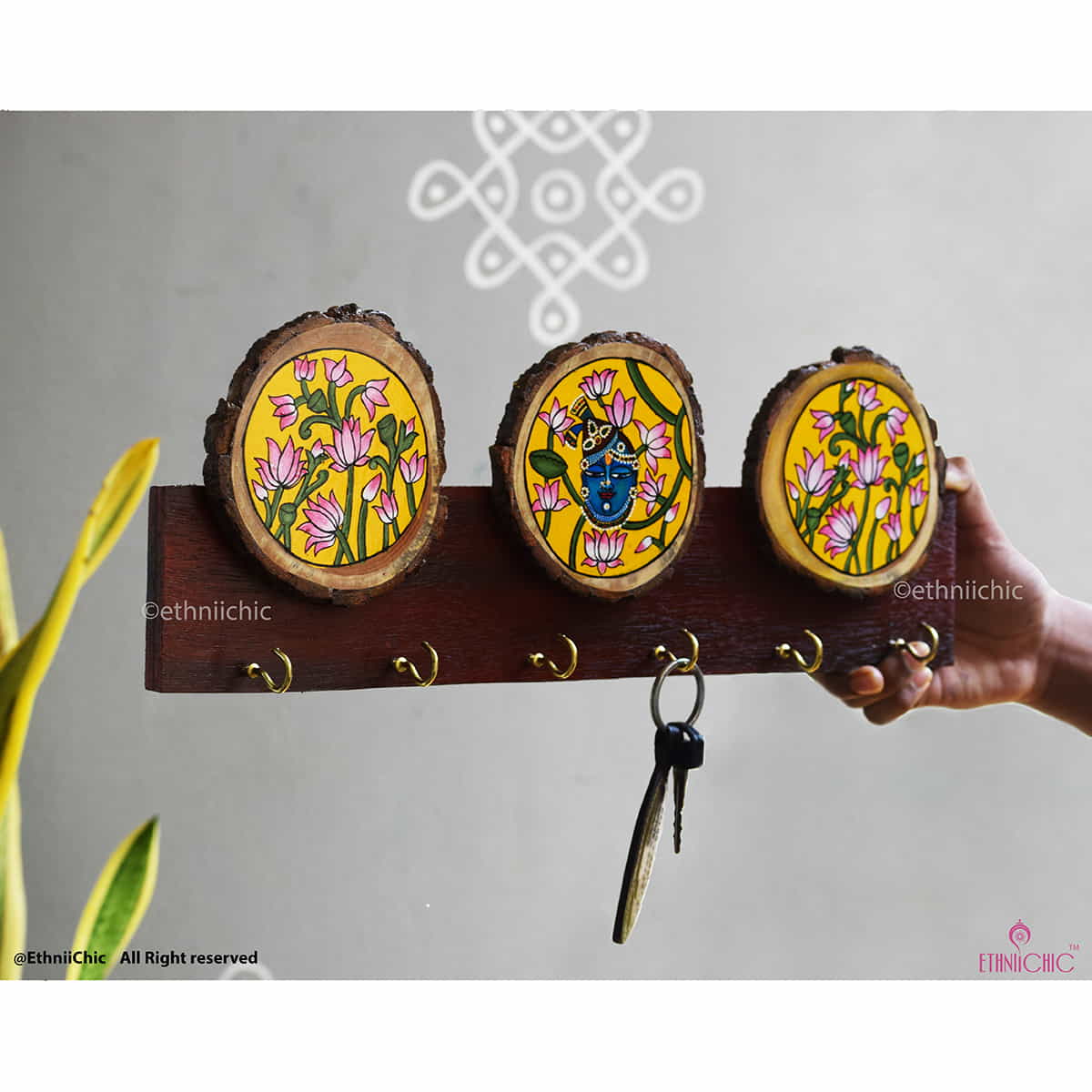
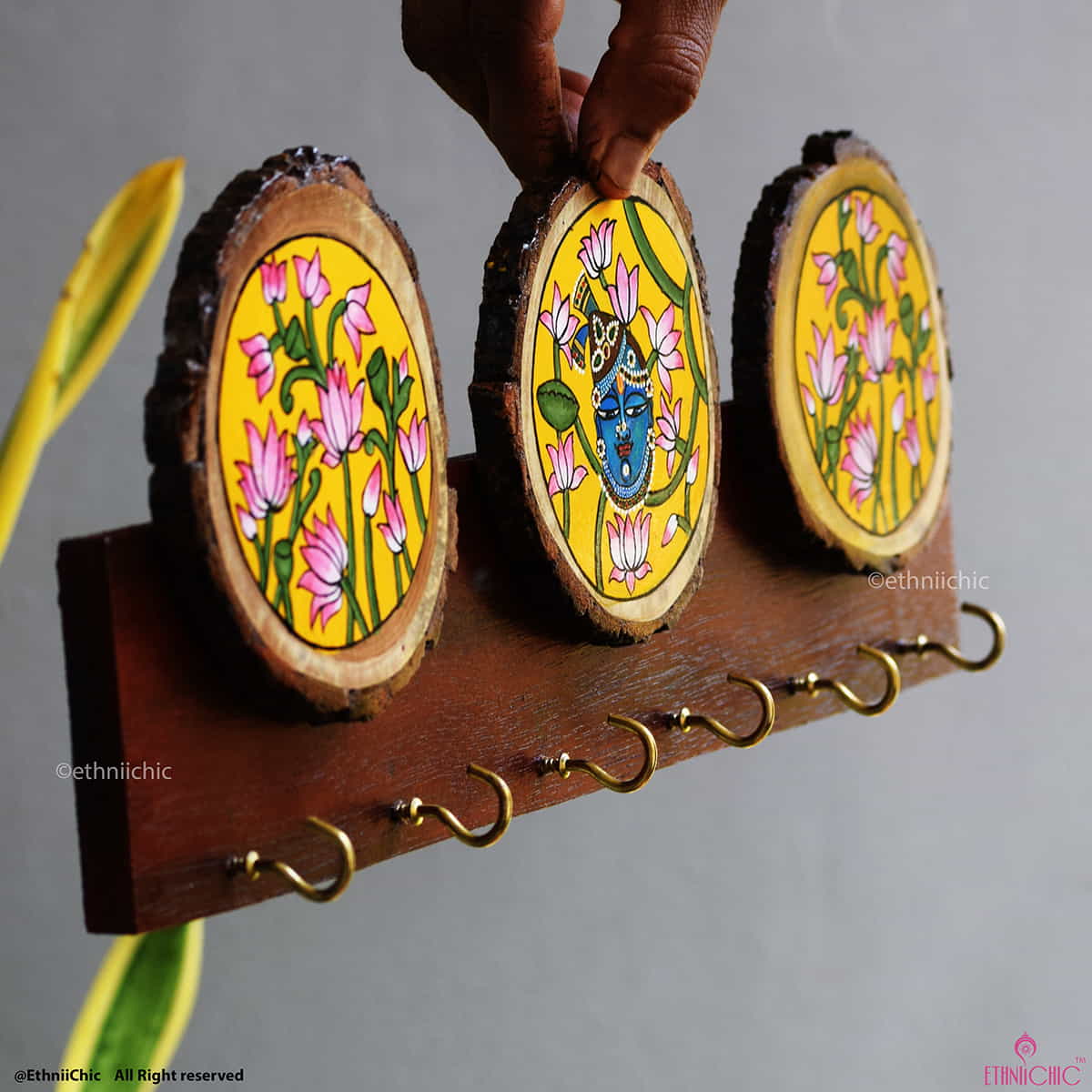
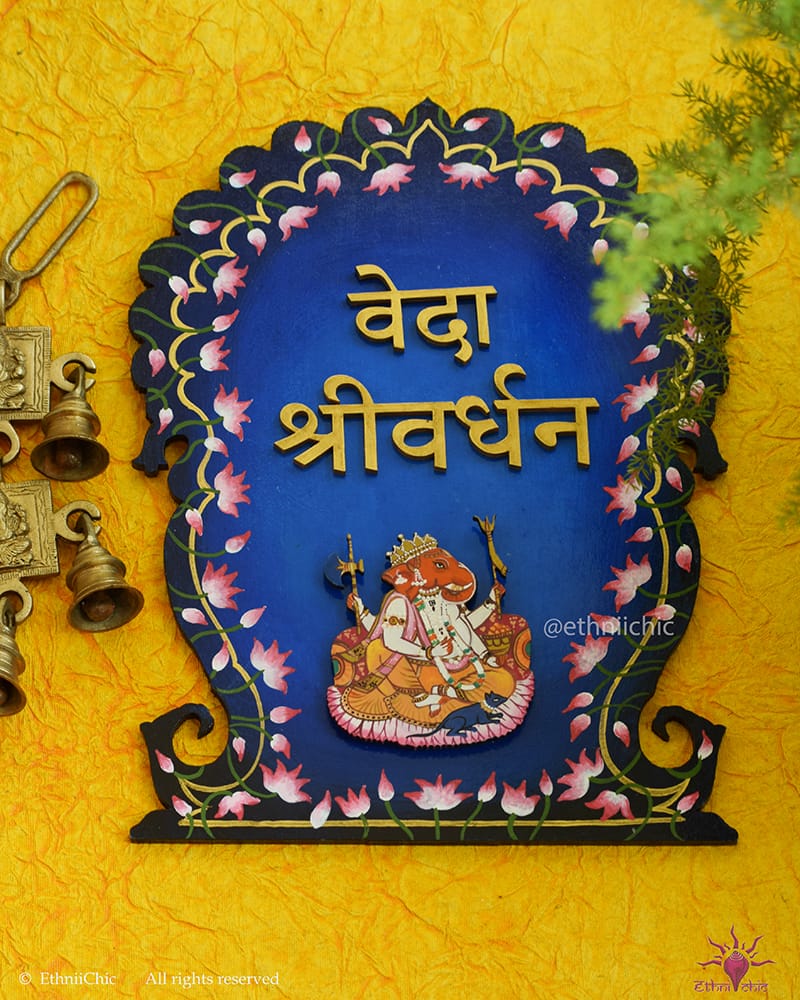
Kerala Mural's fine temple-fresco style carries the lotus across coasters and wall plates. Pattachitra's palm-leaf Tala Patra technique renders it in miniature on fridge magnets. Pichwai's devotional cloth-painting tradition — where the lotus is one of Shrinathji's recurring festival motifs — appears on a key holder, a wooden box, an Aranmula frame, and a dedicated Lotus name board. Phad, Rajput, and Tanjore each carry the motif into their own visual registers across the collection's remaining pieces.
Shop Kerala Art → · Shop Pichwai Art →

Choosing Where to Start

If you want the motif tied to a specific deity, start with the Ganesha-on-Lotus name board or the Mahalakshmi wall frame — both use the lotus as part of the deity's own iconography rather than as background pattern. If you want something for everyday use, the tea coasters are the simplest, most affordable entry point. If you're drawn to a specific tradition, the Pichwai pieces carry the deepest single-craft depth in this particular collection.

Lotus Motif as a Gift

Because the lotus reads as auspicious, spiritually grounded, and visually elegant without requiring deep cultural context to appreciate, it's a considered gift for housewarmings, new beginnings, and anyone drawn to Lakshmi or Saraswati's specific symbolism — prosperity and knowledge respectively. A coaster set makes an easy, affordable gift; the Ganesha-on-Lotus name board or a goddess wall frame makes a more significant milestone or housewarming piece. Every collection ships internationally; write to contactus@ethniichic.com before ordering to confirm rates and delivery timelines for your country.

Frequently Asked Questions (FAQs)

1. What art forms are represented in this lotus collection?
Six: Kerala Mural, Pattachitra, Phad, Pichwai, Rajput, and Tanjore painting, each rendering the lotus through its own regional visual tradition.

2. What does the lotus symbolise in Indian art and tradition?
Purity and spiritual awakening — it grows from muddy water yet blooms unstained, a widely used metaphor for rising above material circumstance. It's also the traditional seat of Lakshmi, Brahma, and other deities, and its daily bloom cycle is read as a symbol of rebirth and renewal.

3. Which deities are associated with the lotus?
Lakshmi, goddess of prosperity, carries lotus-derived names (Padma, Kamala, Ambuja) and is shown seated on one. Brahma is said to have emerged from a lotus growing from Vishnu's navel, and Vishnu himself carries the epithet Padmanabha, "lotus-naveled."

4. Is the lotus officially India's national flower?
It's widely recognised as such and listed on the Indian government's own website, but a 2017 Right to Information query confirmed the Botanical Survey of India has never issued a formal official designation — so the status is by convention rather than a dated government notification.

5. What kinds of products can I find in this collection?
Goddess wall frames, name boards, Aranmula mirror frames, tea coasters, and Pattachitra fridge magnets — the lotus motif applied across wall décor, tabletop, and devotional pieces.

6. Which pieces show a deity seated directly on a lotus?
The Ganesha-on-Lotus jharoka and name board, the Annapoorneshwari and Saraswathi Kerala Mural plaques, and the standing Mahalakshmi wall frame all place a specific deity on or with the flower directly.

7. What's the price range across this collection?
From ₹975 for a set of tea coasters to ₹3,600 for the Saraswathi Kerala Mural wall plaque.

8. Do you ship lotus motif pieces internationally for NRI buyers?
Yes, across the full collection. Write to contactus@ethniichic.com before ordering to confirm shipping rates and delivery timelines for your country.

9. Can I order a custom or bulk lotus motif piece?
Yes. Custom sizing, specific deity pairings, and bulk or corporate gifting orders can be arranged through Commission Artwork or Contact Us.