Kerala Mural

Kerala Mural

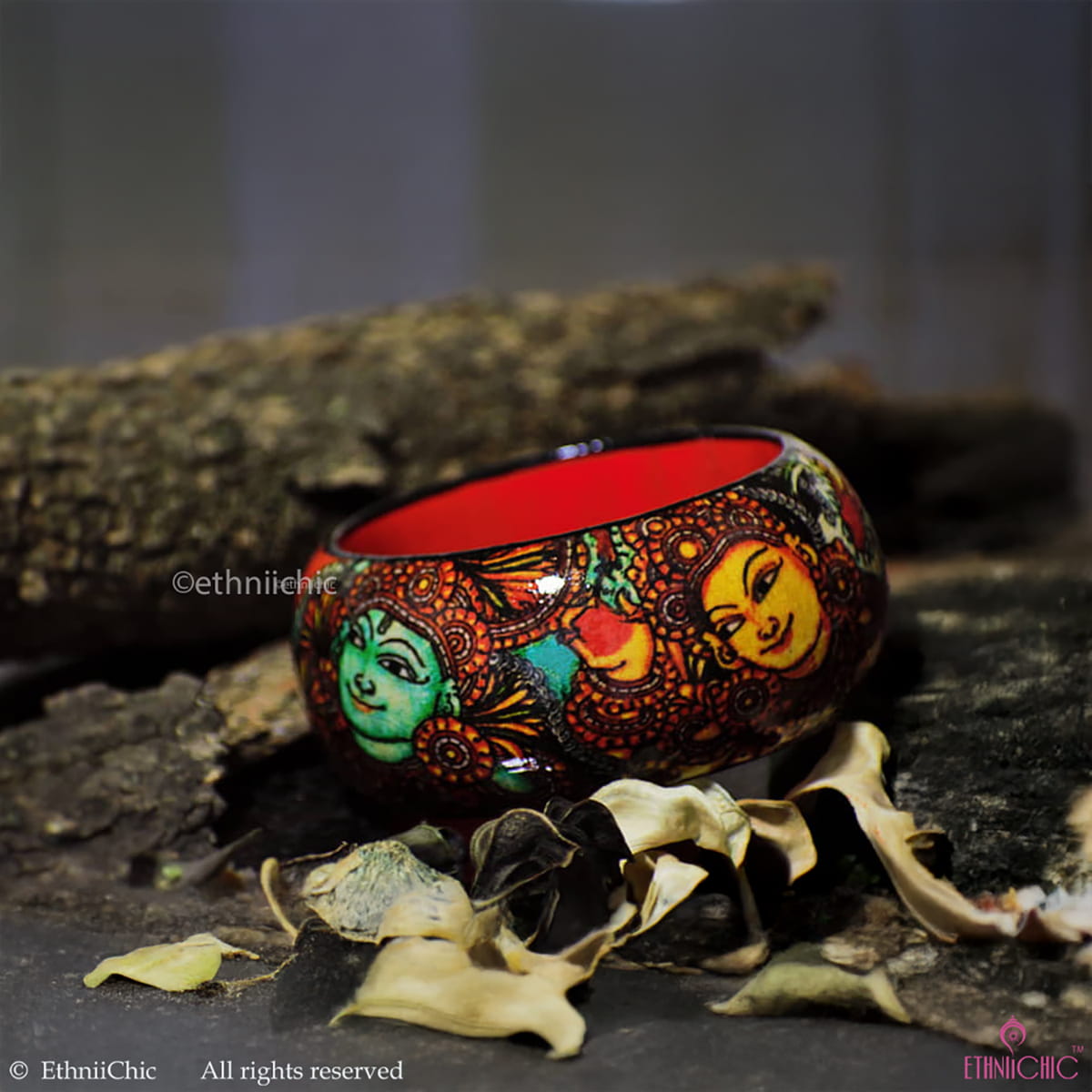
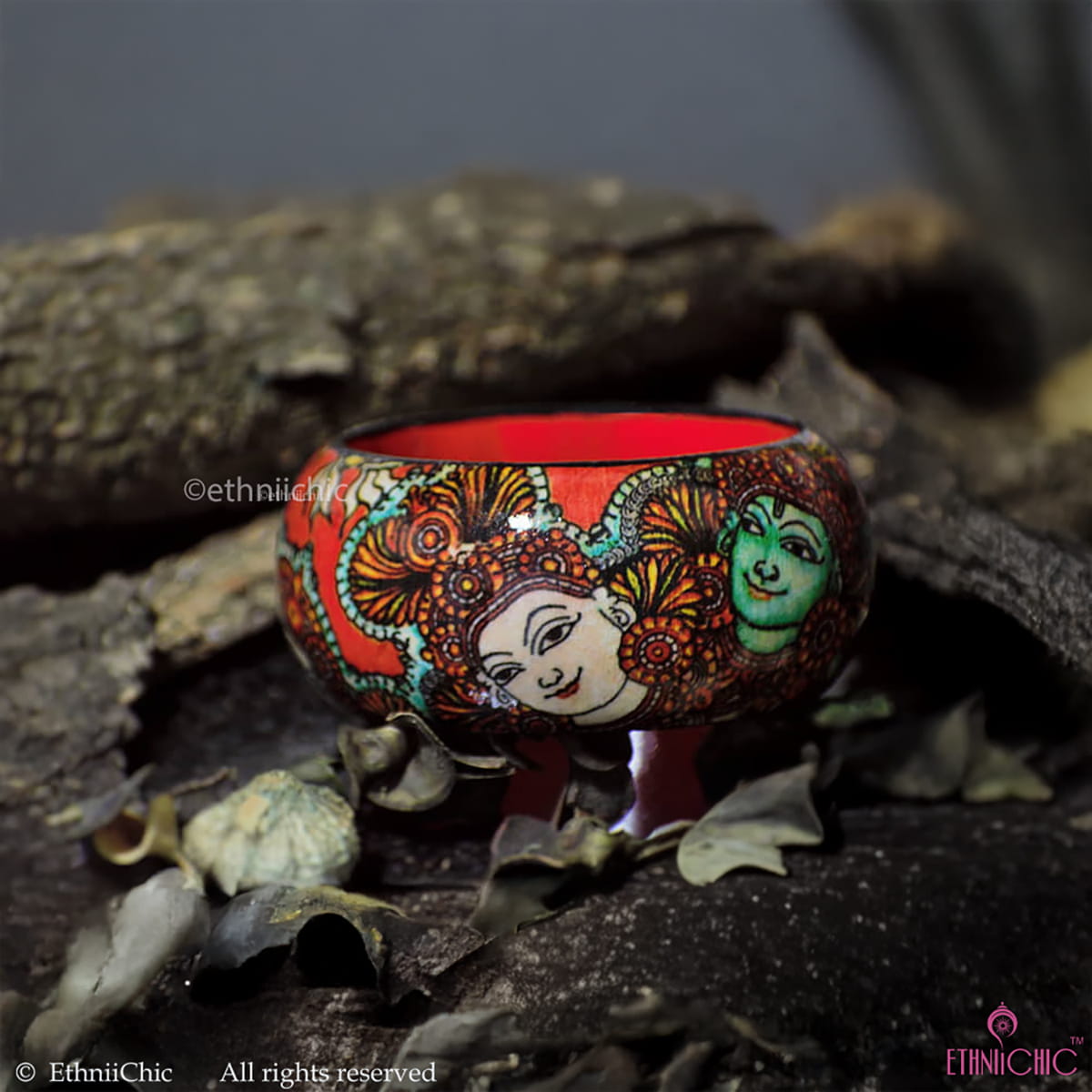
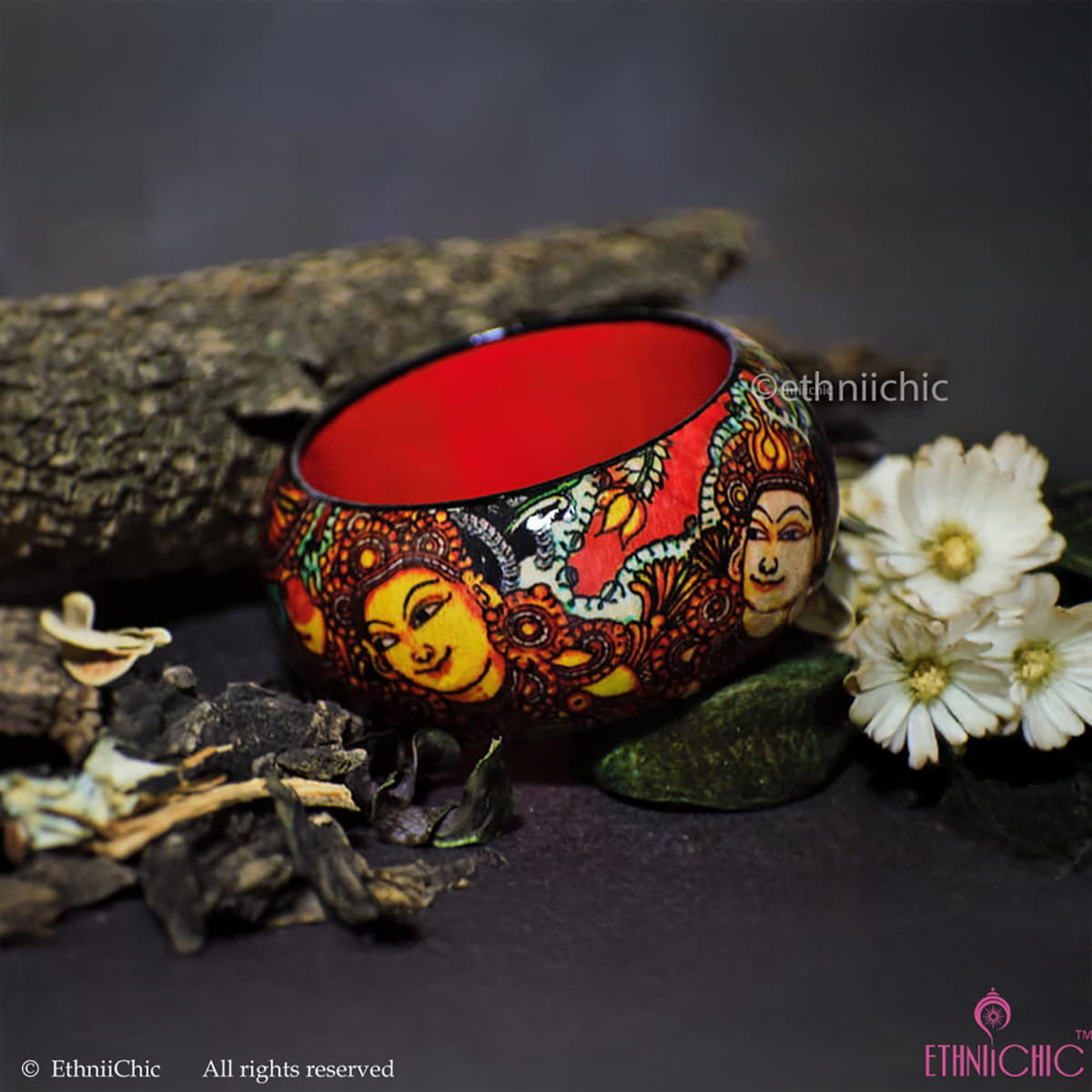
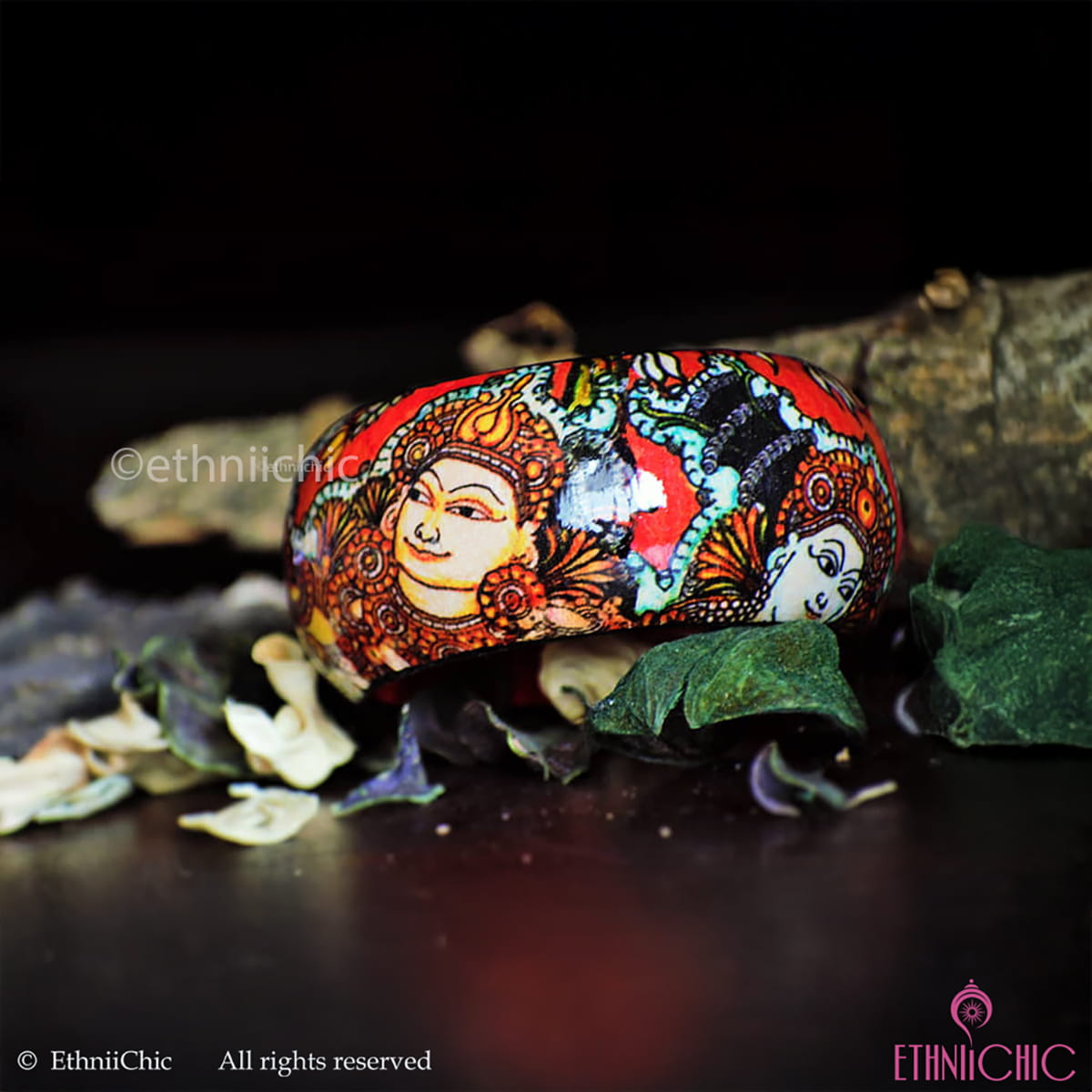
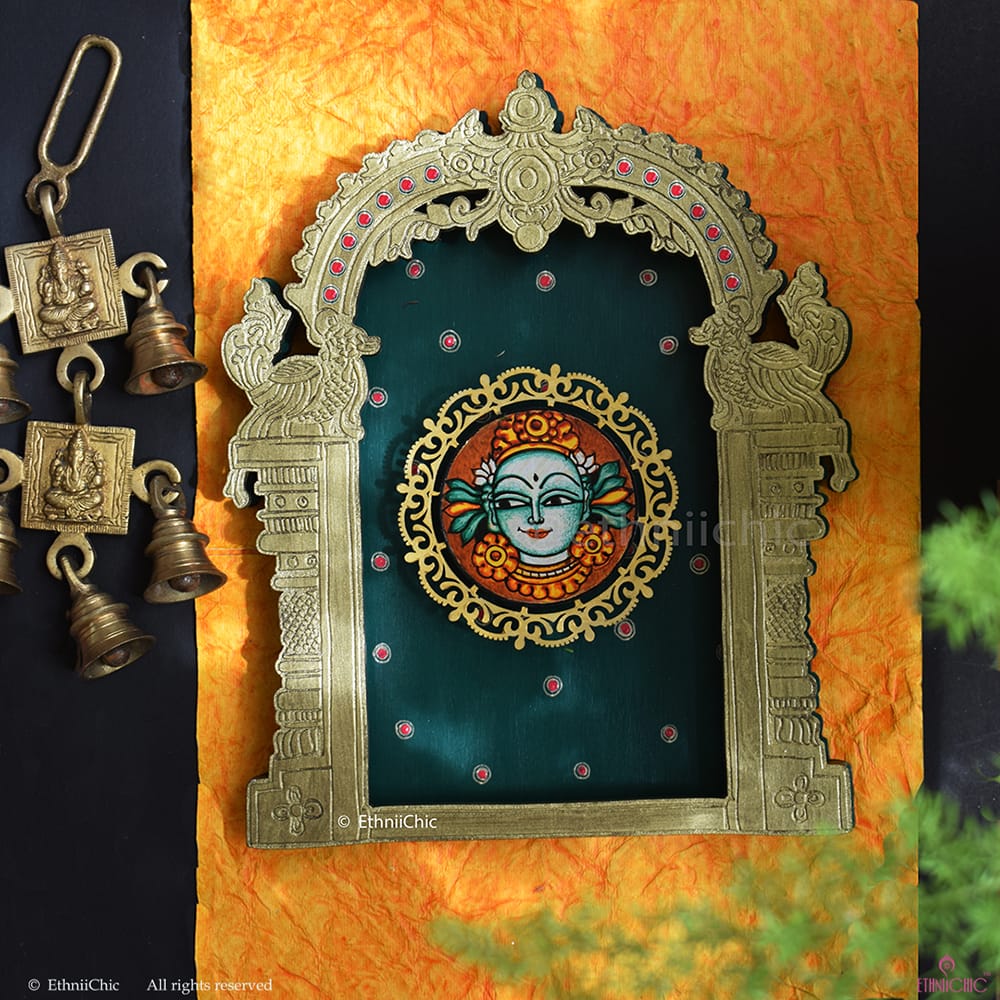
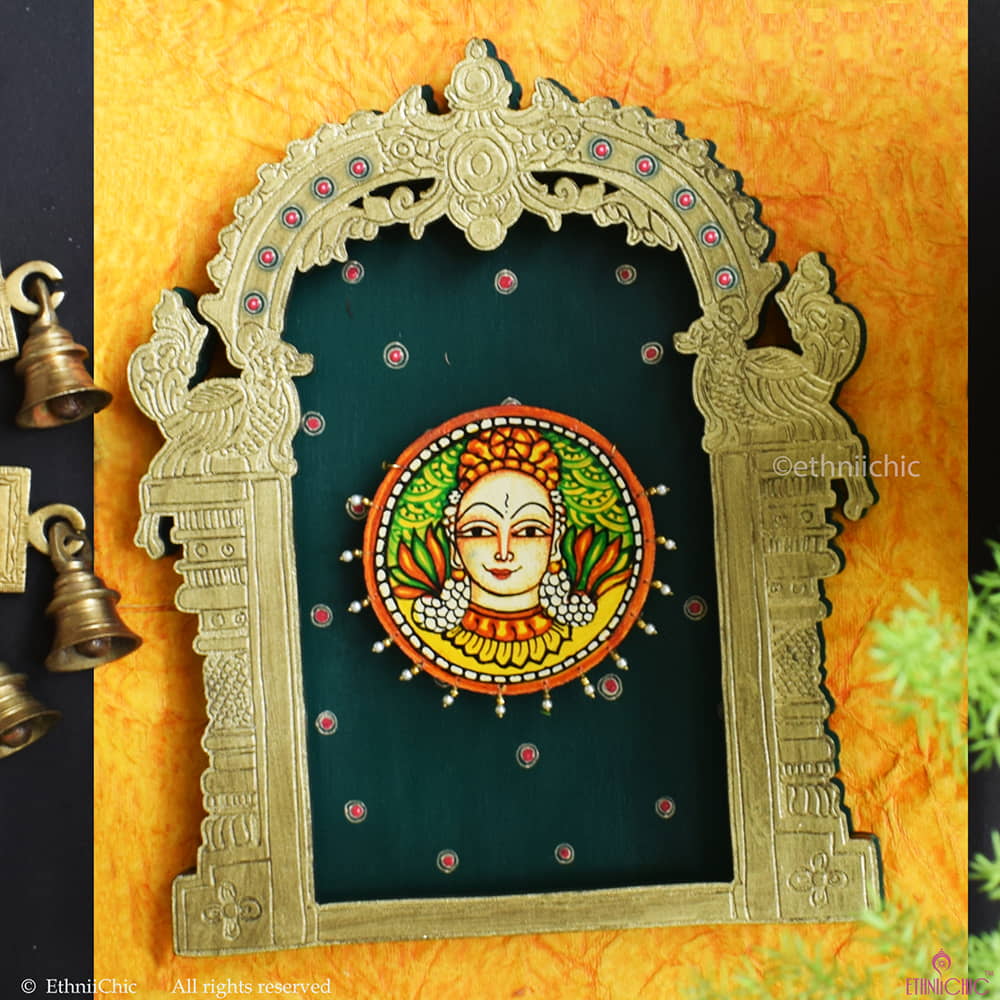
Kerala mural painting is among the most technically demanding and visually majestic of all Indian art forms - a tradition born on the walls of temples and palaces across Kerala, where artists working in the Chitrasutra style used five sacred colours (panchavarnam) to paint elaborate scenes from the Ramayana, Mahabharata, and the Puranas. The figures are distinctive: elongated, ornamented forms with almond-shaped eyes, elaborate jewellery, and the deep ochres, greens, blacks, and whites that define the palette.

At EthniiChic, we bring Kerala mural art into hand-painted decor objects - wall art, decorative pieces, and collector works that carry the grandeur and spiritual depth of this tradition into the contemporary home. This collection speaks directly to buyers with Kerala roots, South Indian cultural identity, and anyone who recognises that the murals on a temple wall in Thrissur or Padmanabhapuram are among the greatest paintings ever made - and deserves a place in a home built around that understanding.

Skip to results list
130 items
Column grid
Column grid

Filter

Popular Searches :

Read More

Kerala Mural Art — Temple Painting, From Wall Frescoes to Wearable Jewellery

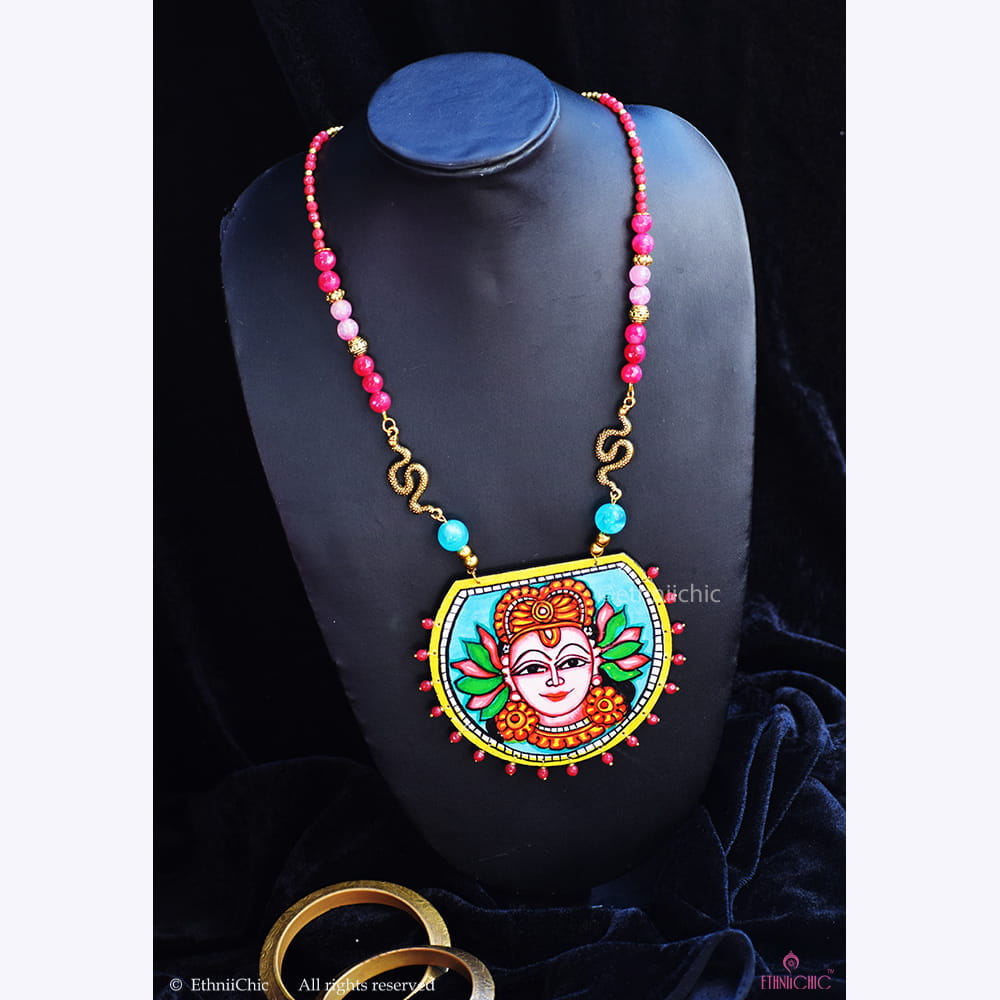
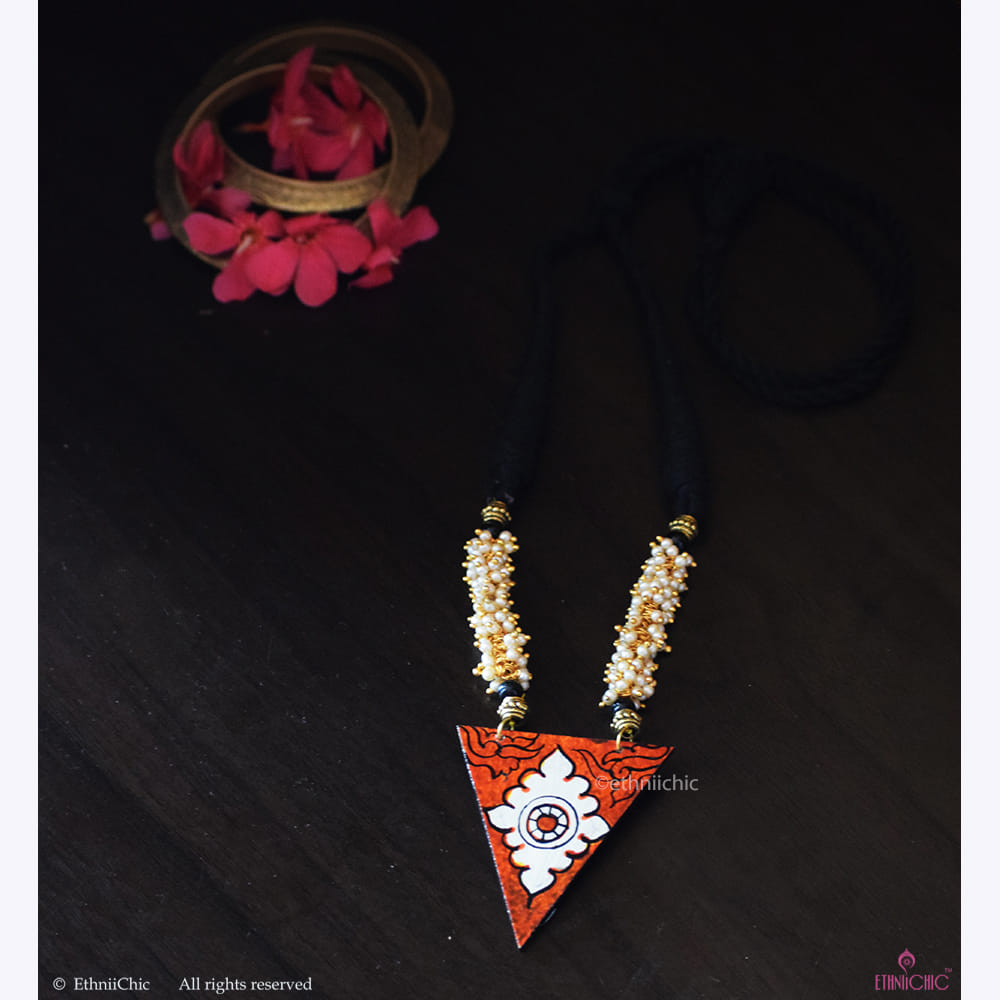
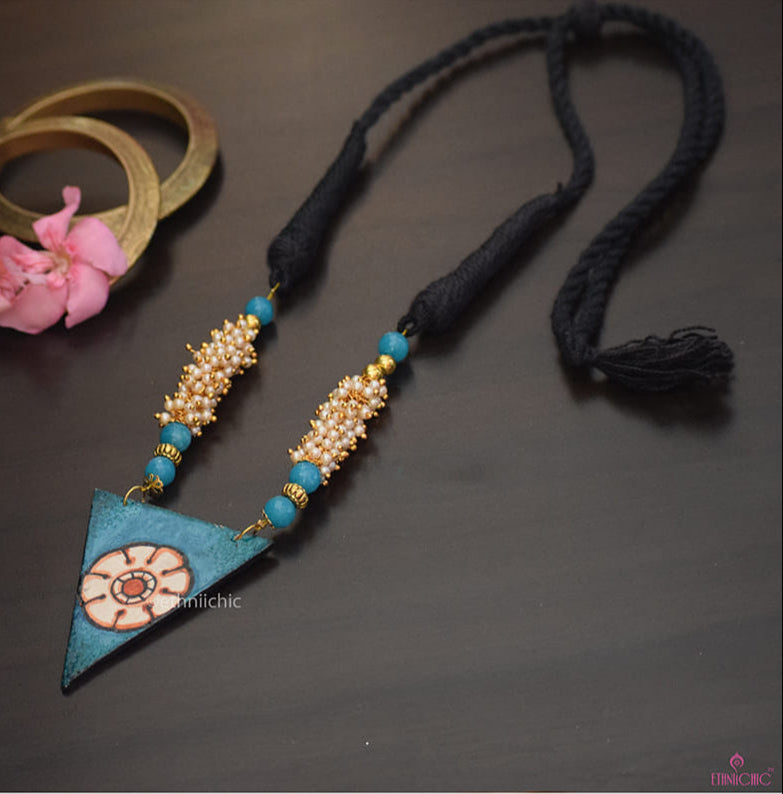
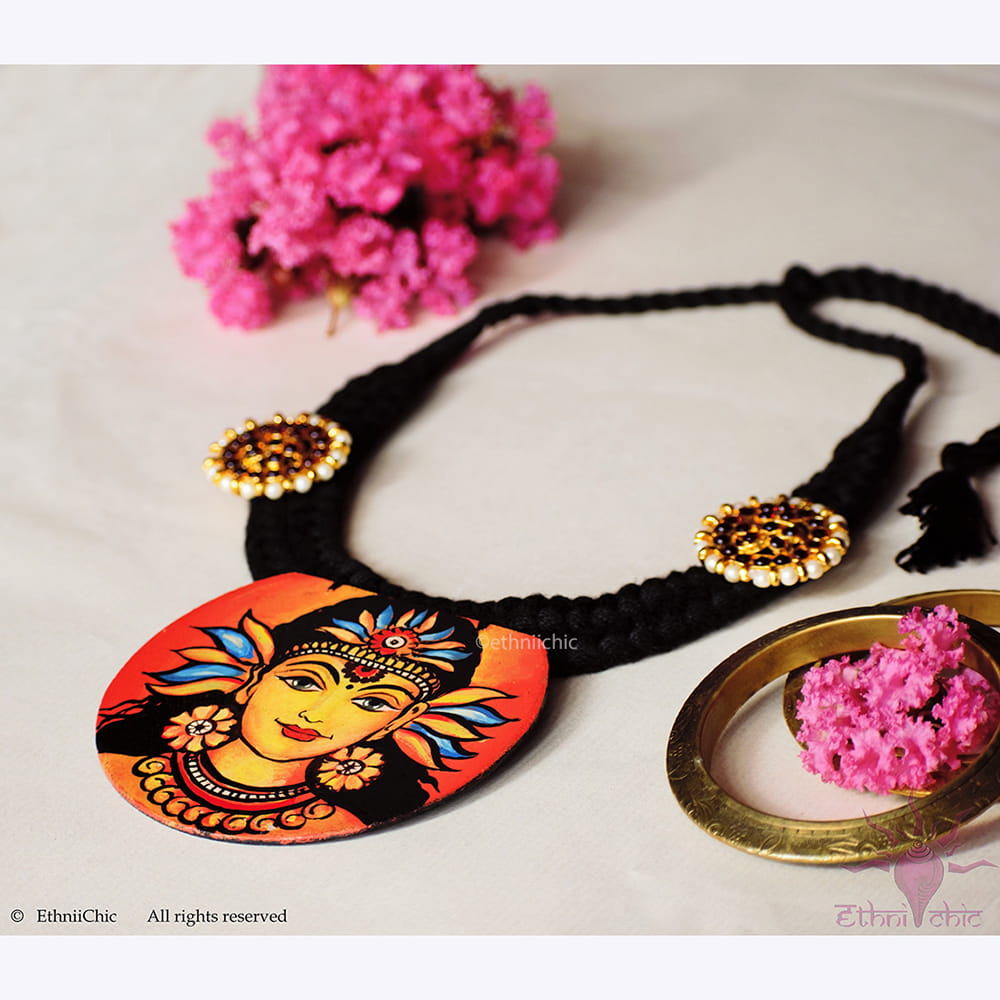
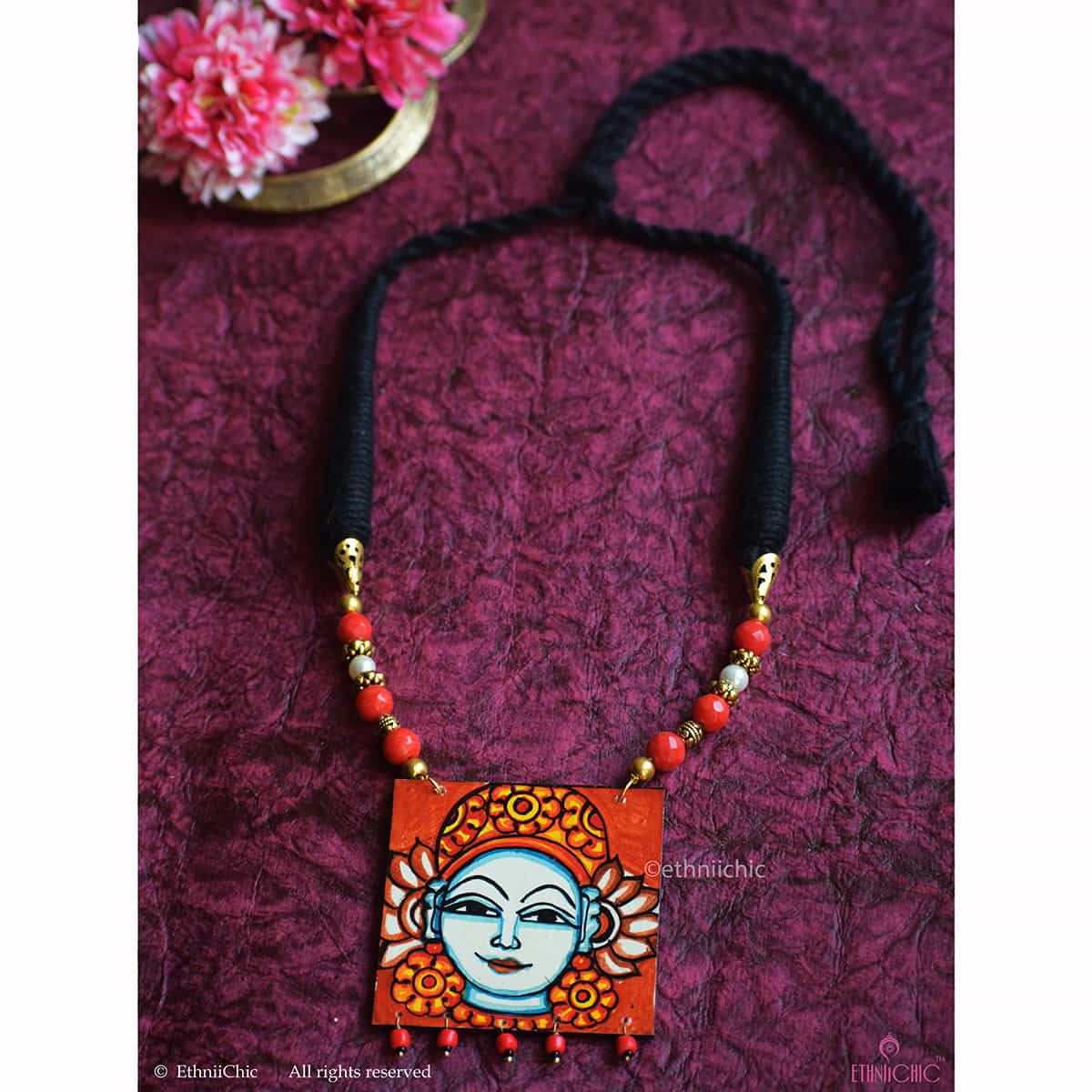
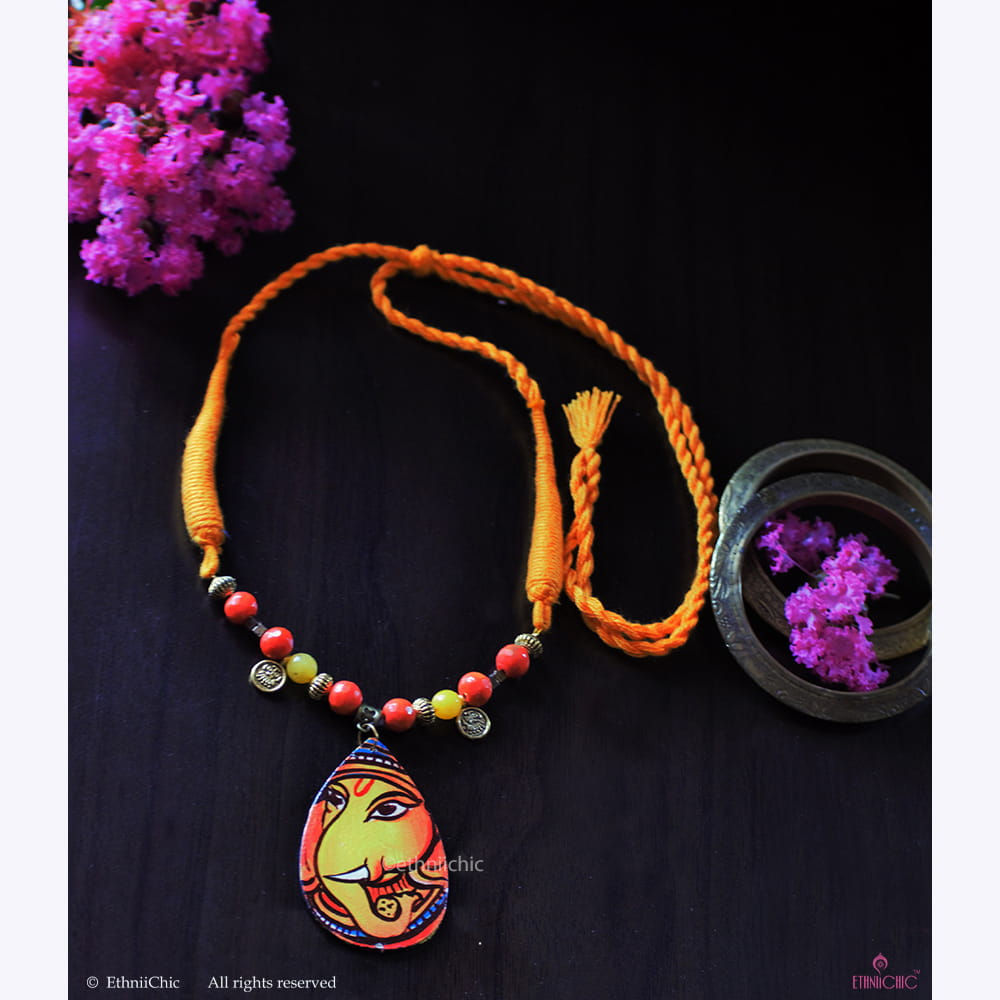
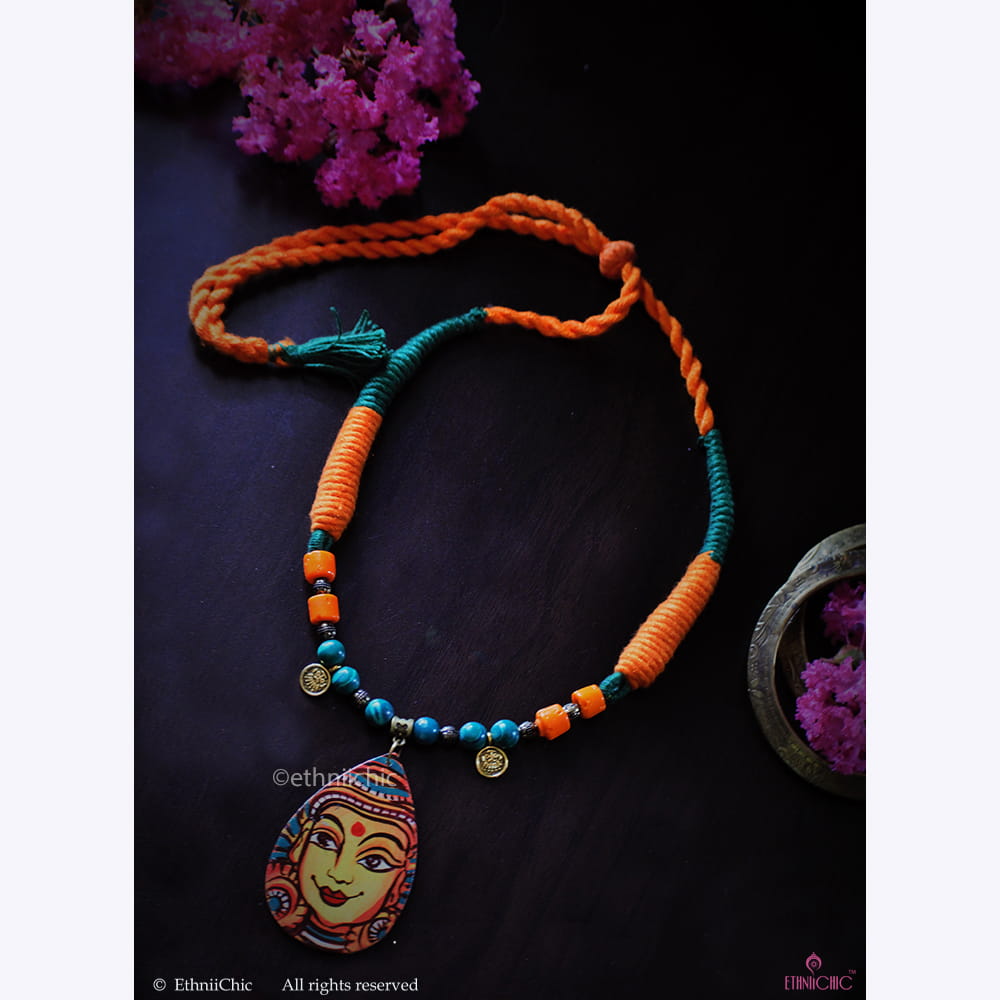
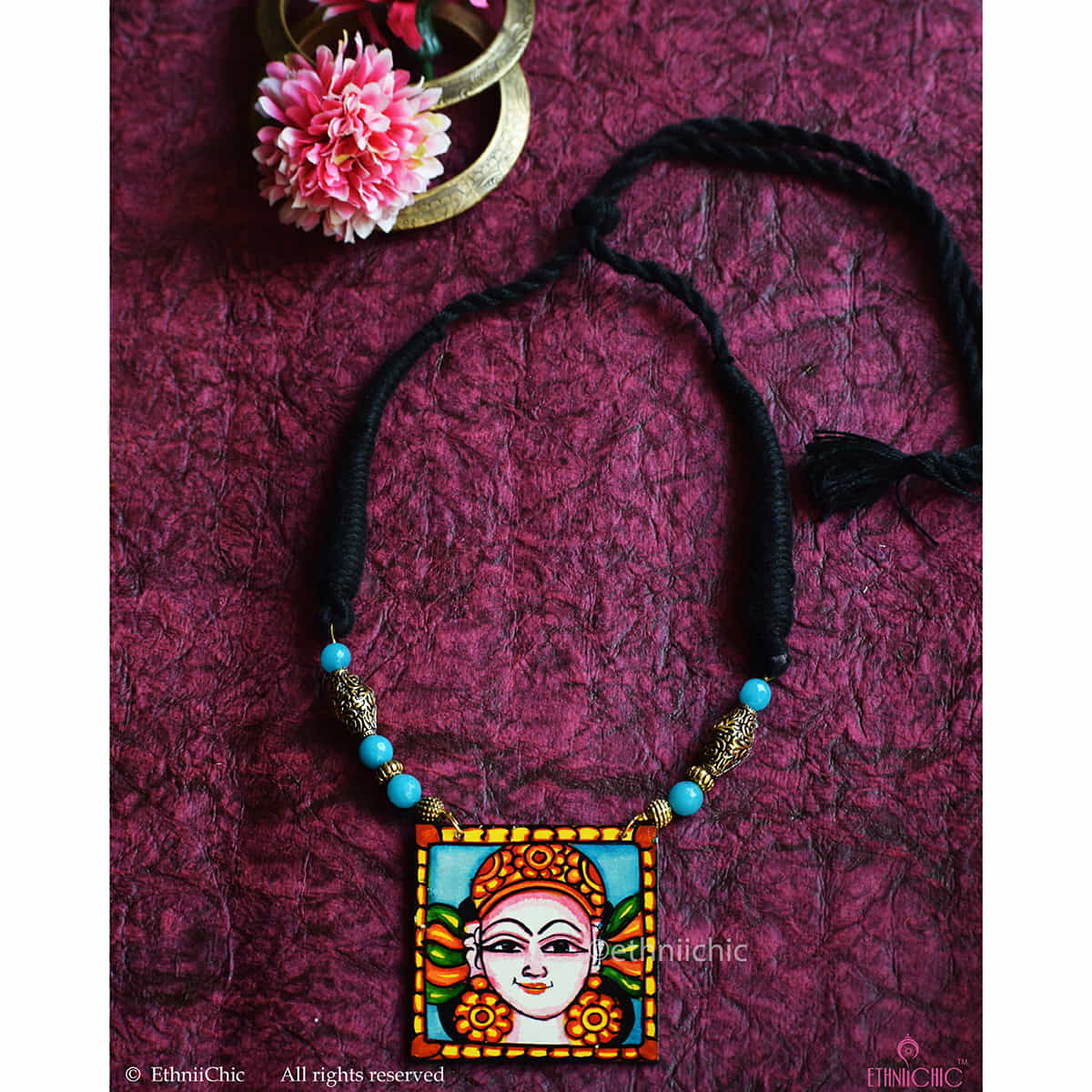
EthniiChic's Kerala Mural Art collection is the fullest expression of one of India's most technically demanding classical painting traditions — a temple and palace fresco style dating primarily from the 9th to 12th centuries CE, translated here across wall frames, wall hangings, key holders, coasters, and an extensive range of pendant necklaces and bangles. At 130 pieces, this is the deepest single-art-form collection on the site, and the jewellery range in particular shows how far a wall-painting tradition can travel in scale — from a full architectural fresco down to a pendant you can wear.

Kerala Mural painting follows classical principles of colour, proportion, and composition rooted in ancient Sanskrit painting theory, including texts like the Chitrasutra — a section of the Vishnudharmottara Purana and one of the oldest surviving treatises on Indian painting, dating to roughly the 5th or 6th century CE. That text isn't unique to Kerala; it shaped classical painting principles across India. What makes Kerala Mural distinctive is how those principles were applied specifically in Kerala's temples, using a defined five-colour palette and iconography developed and refined there over centuries.
The Five-Colour Tradition (Panchavarnam)

Traditional Kerala Mural painting uses just five natural colours — red and yellow from laterite, white from lime, black from lamp soot, and green from a mix of indigo and garcinia — a palette traditionally called panchavarnam. Colour itself carries meaning within the tradition: divine and benevolent figures are painted green, powerful characters in red-gold tones, and malevolent characters in white or black. The finest surviving examples are found in temples and palaces including Ettumanoor, Vadakkumnatha, Guruvayoor, Sri Padmanabhaswamy Temple, and Mattancherry Palace.

From Temple Wall to Wearable Piece

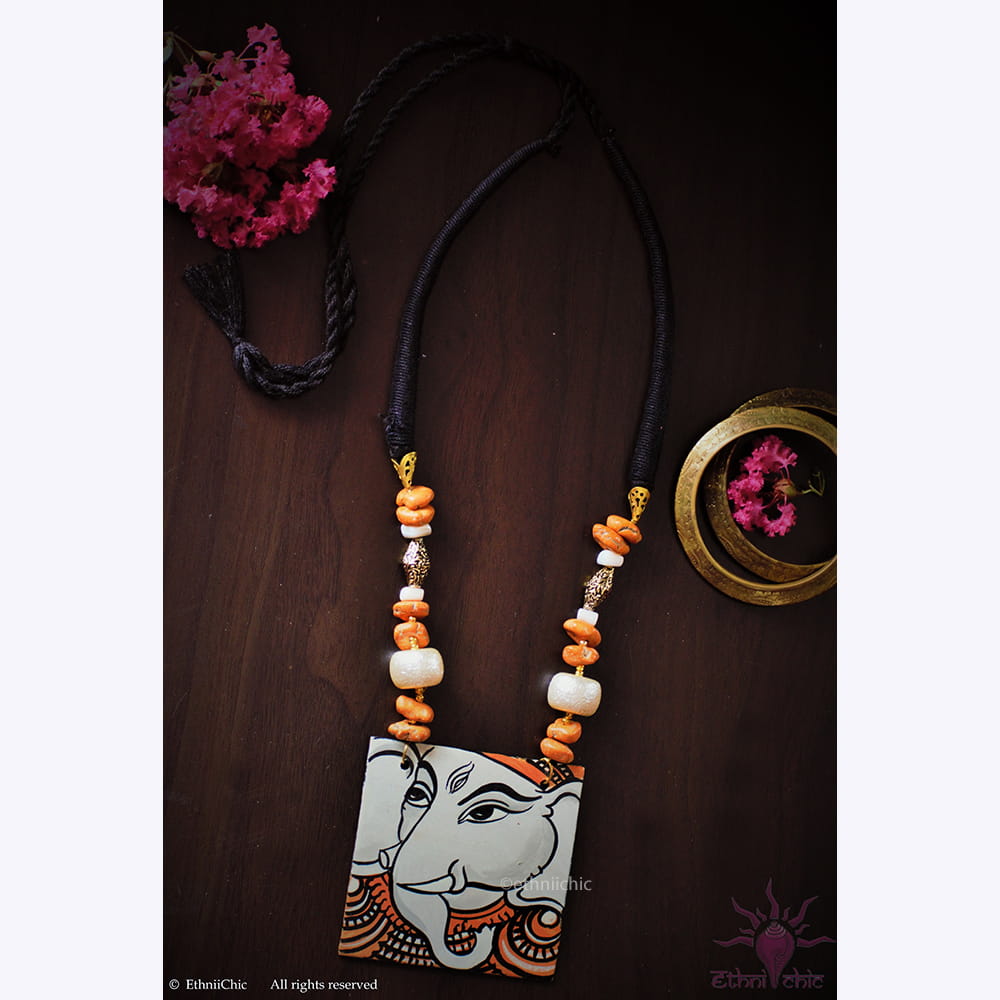
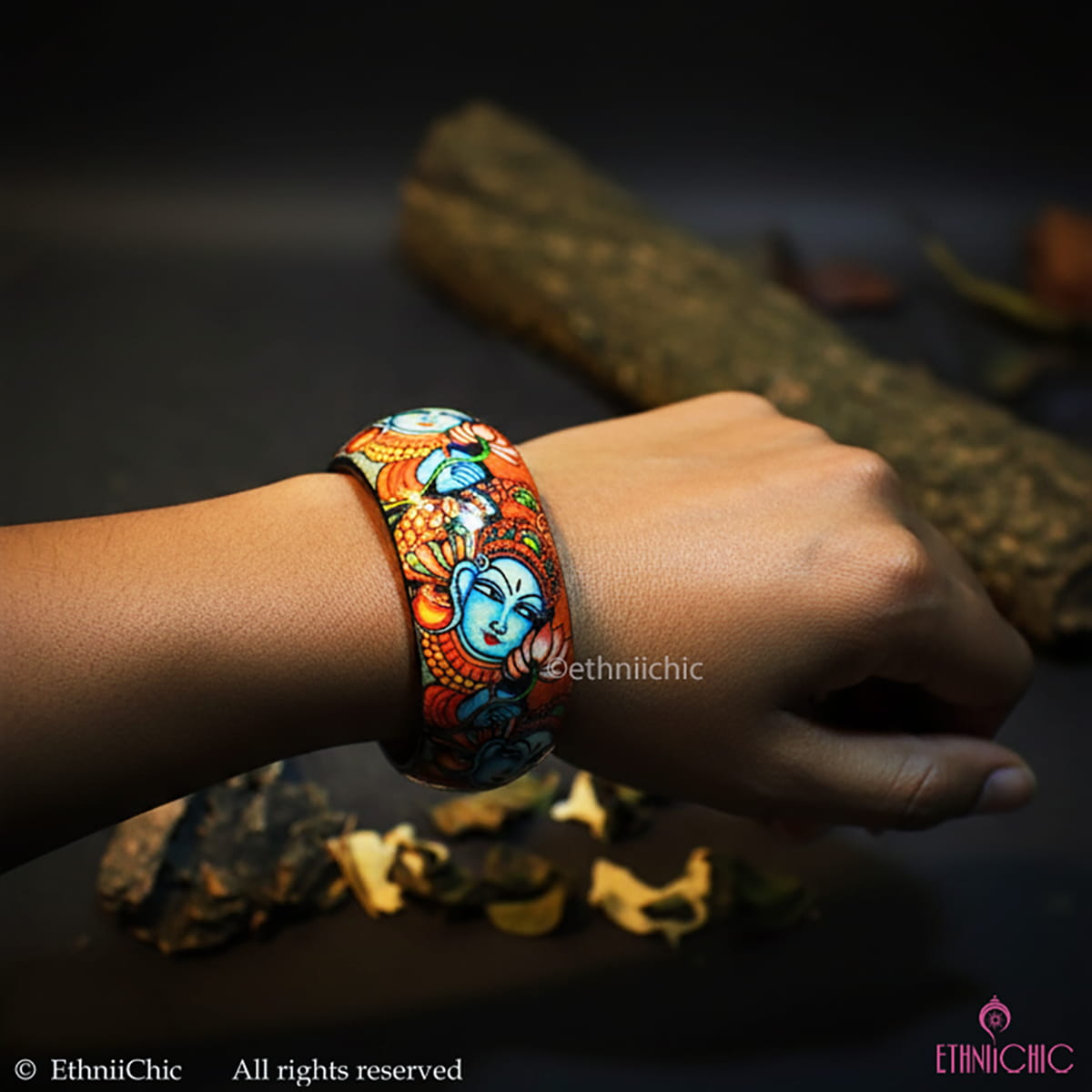
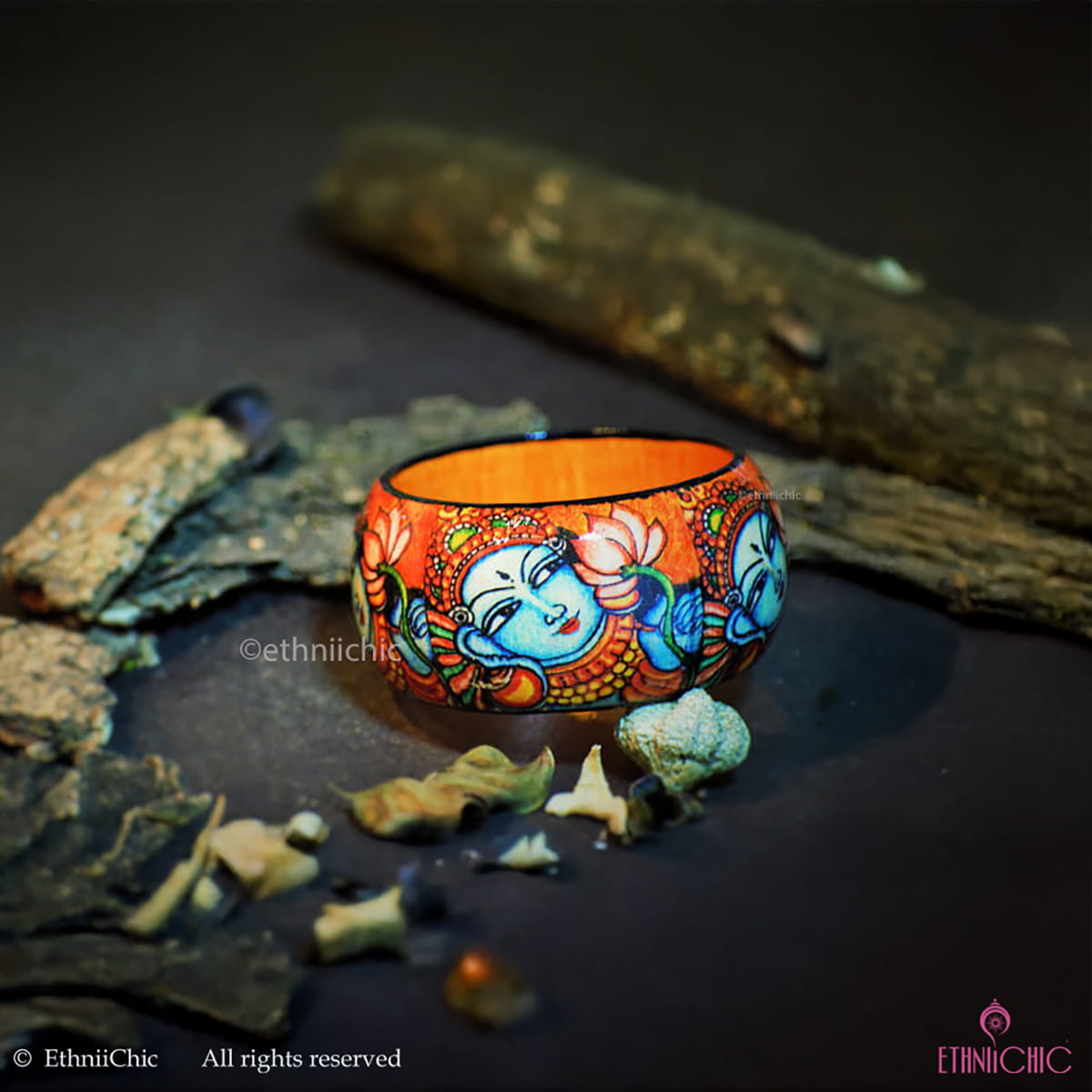
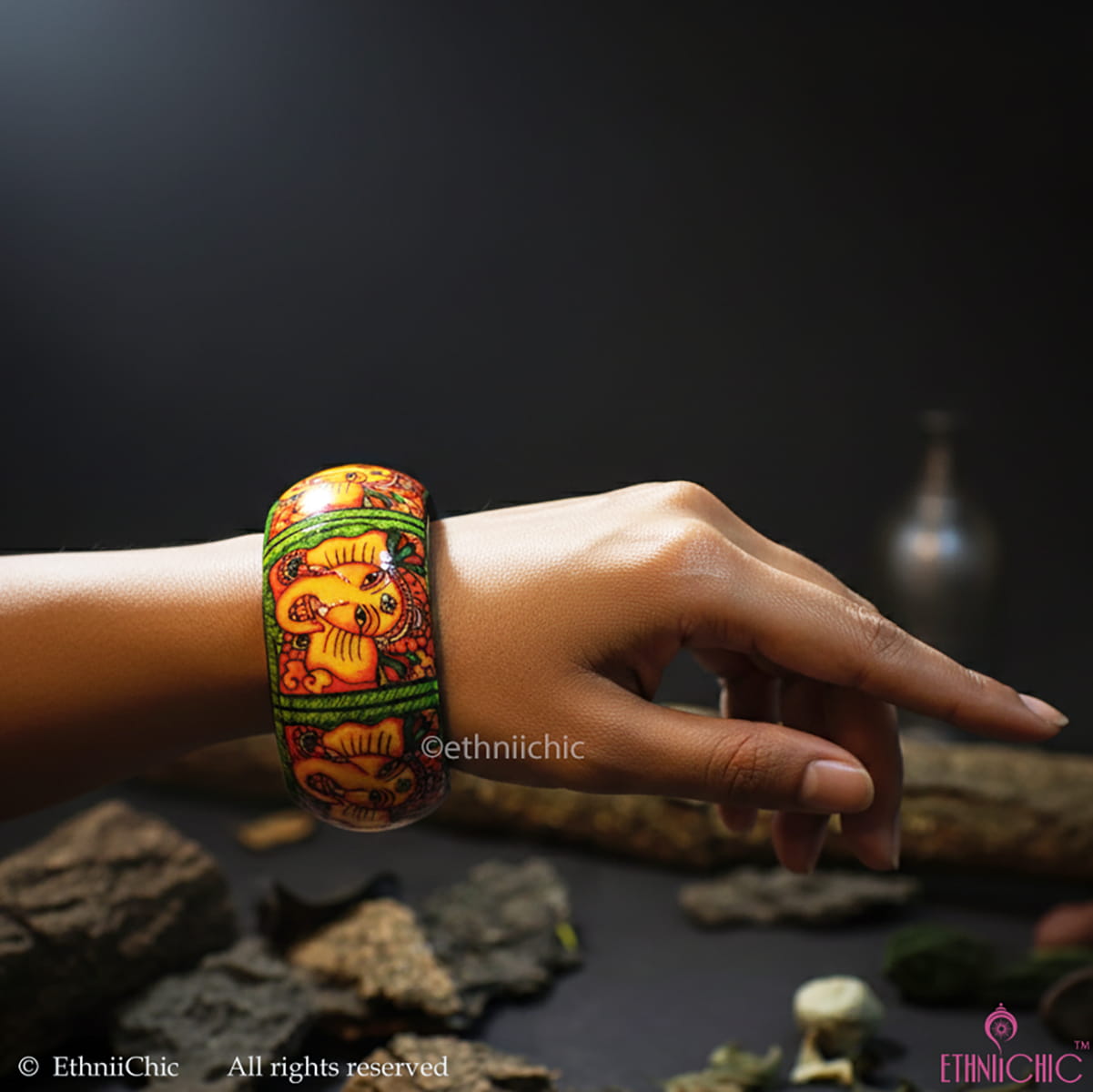
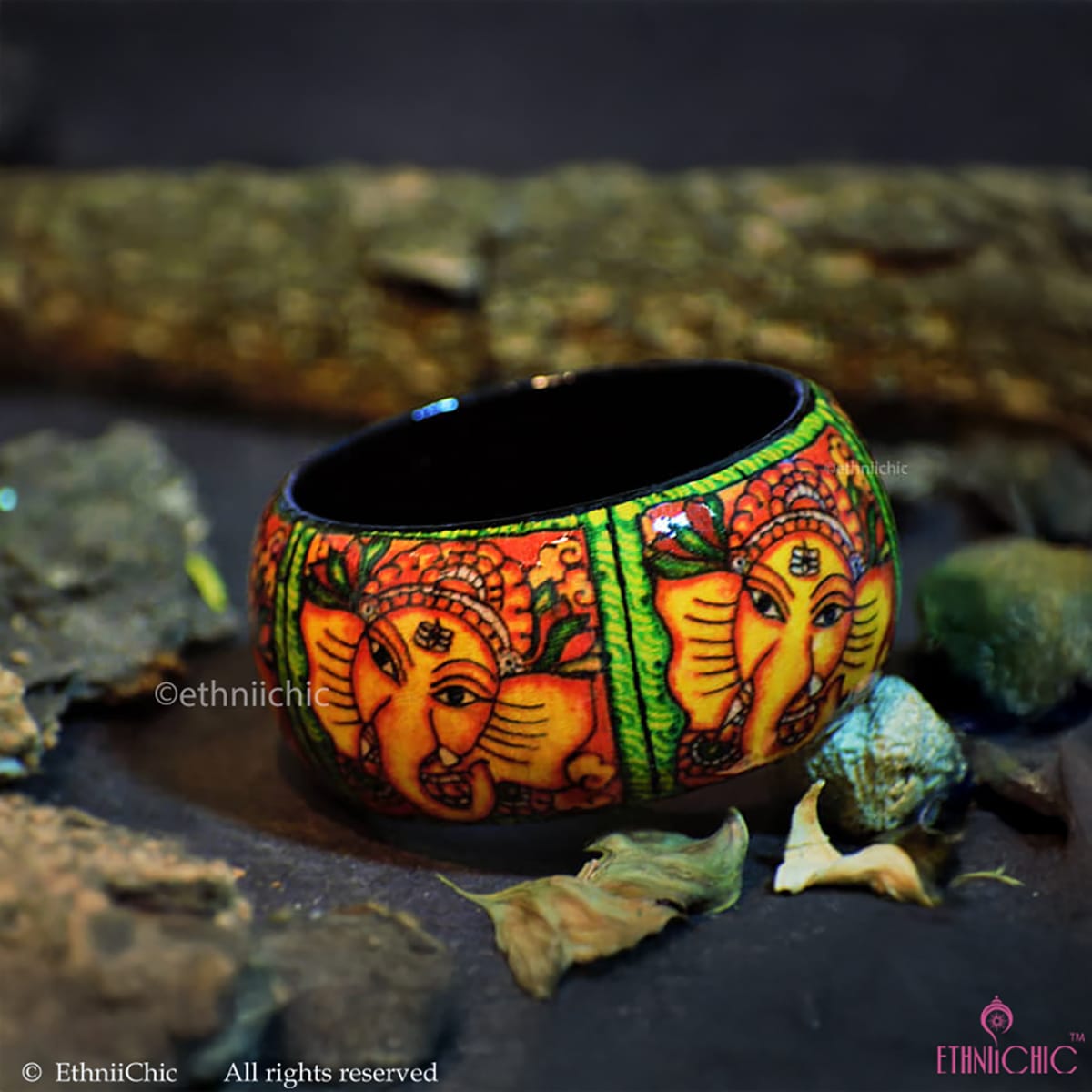
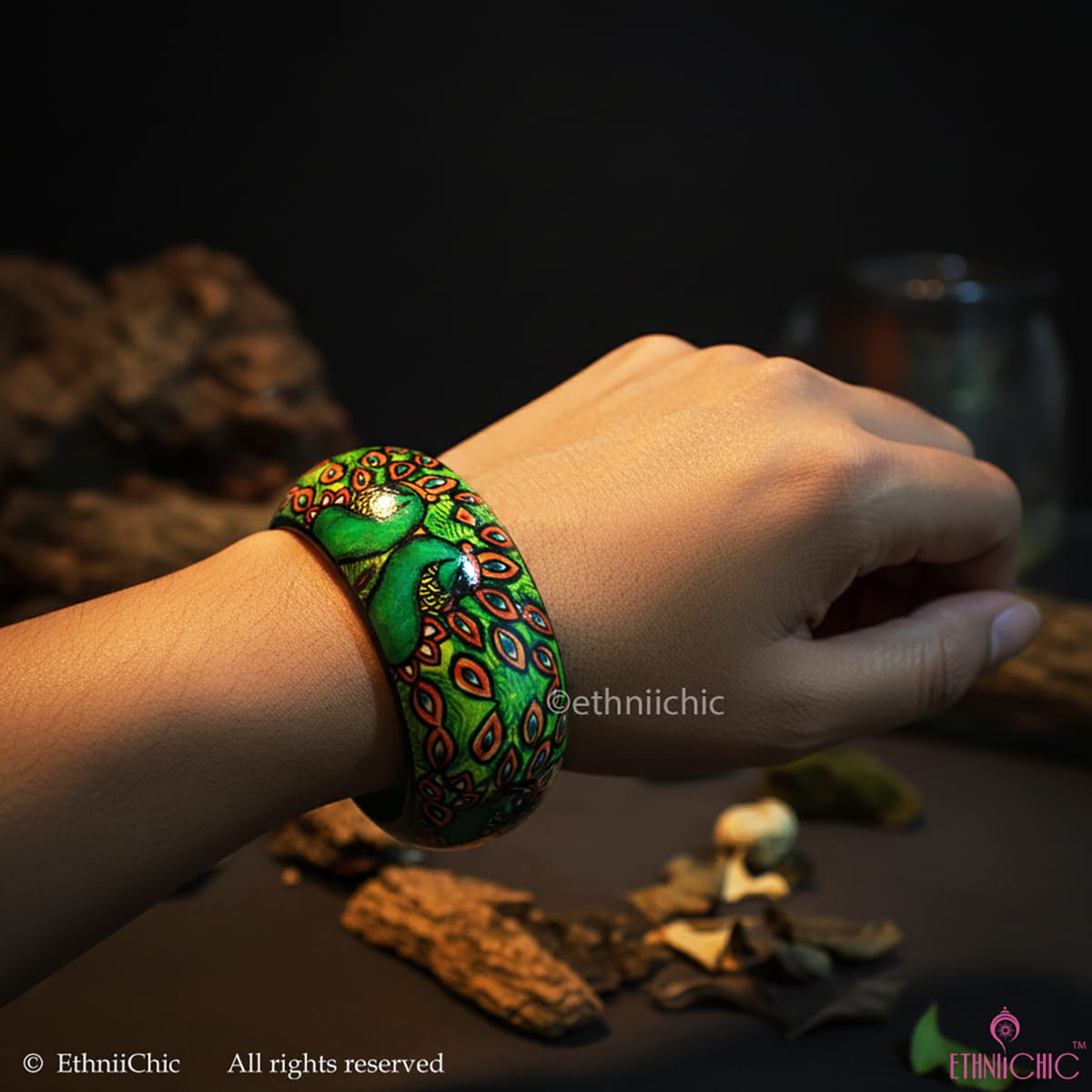
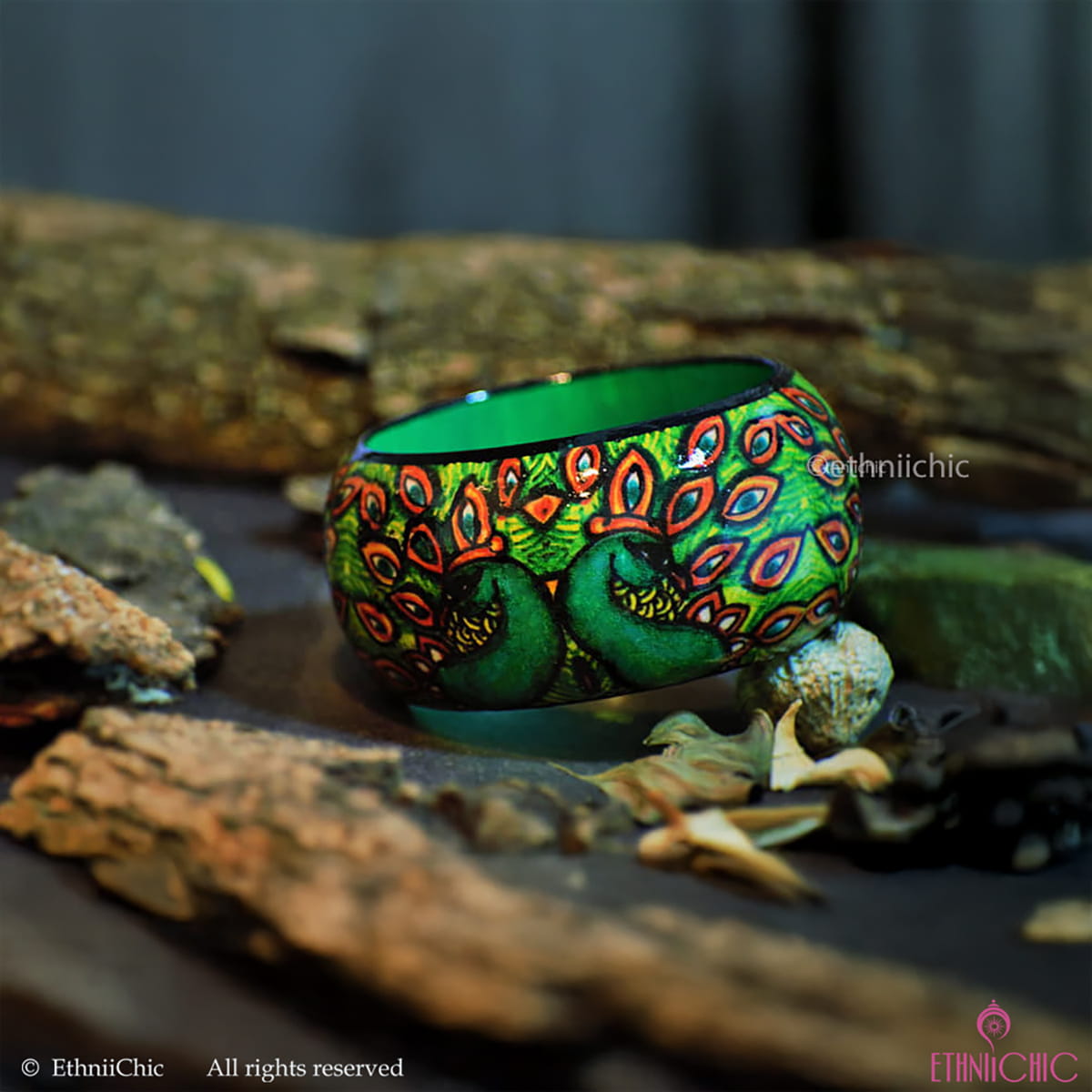
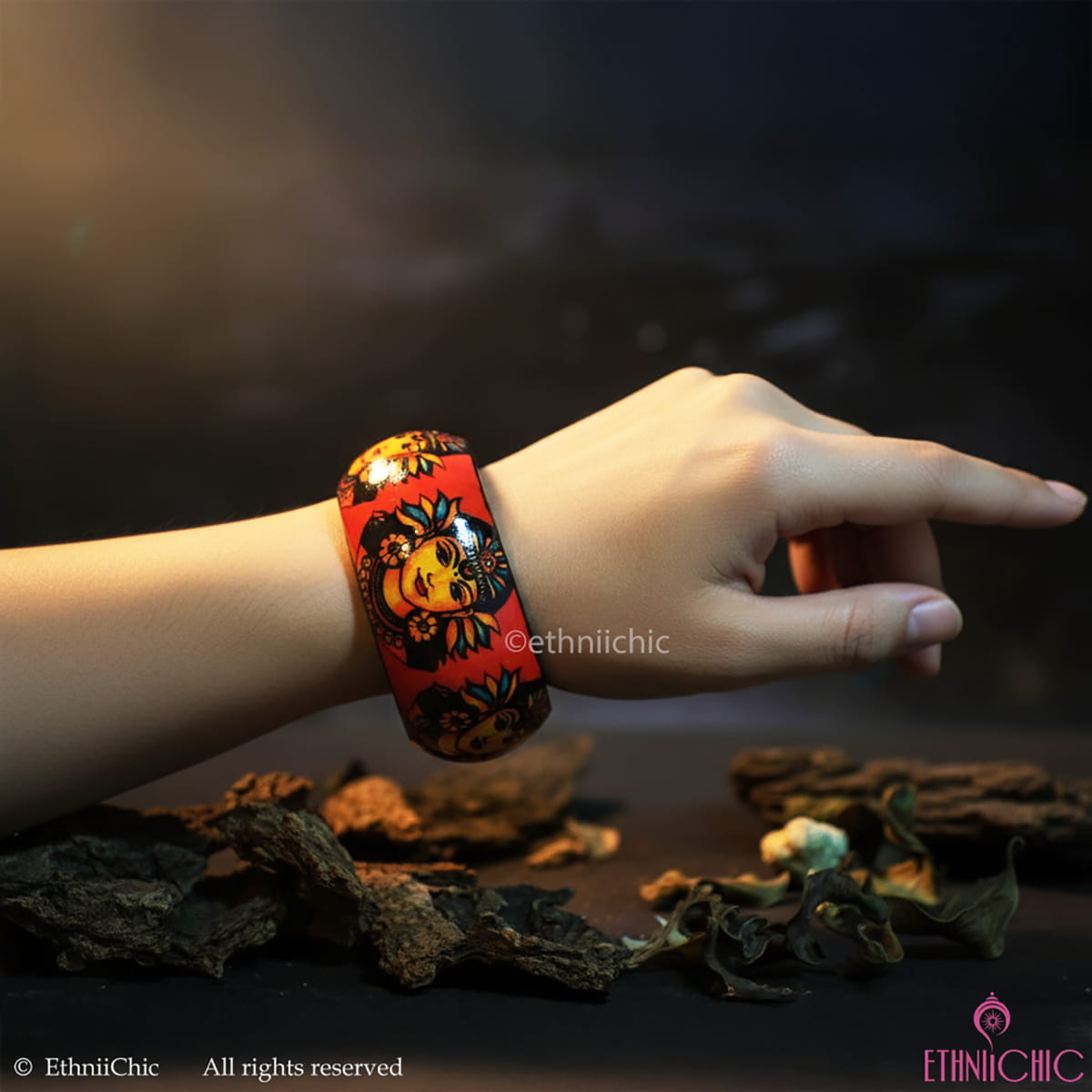
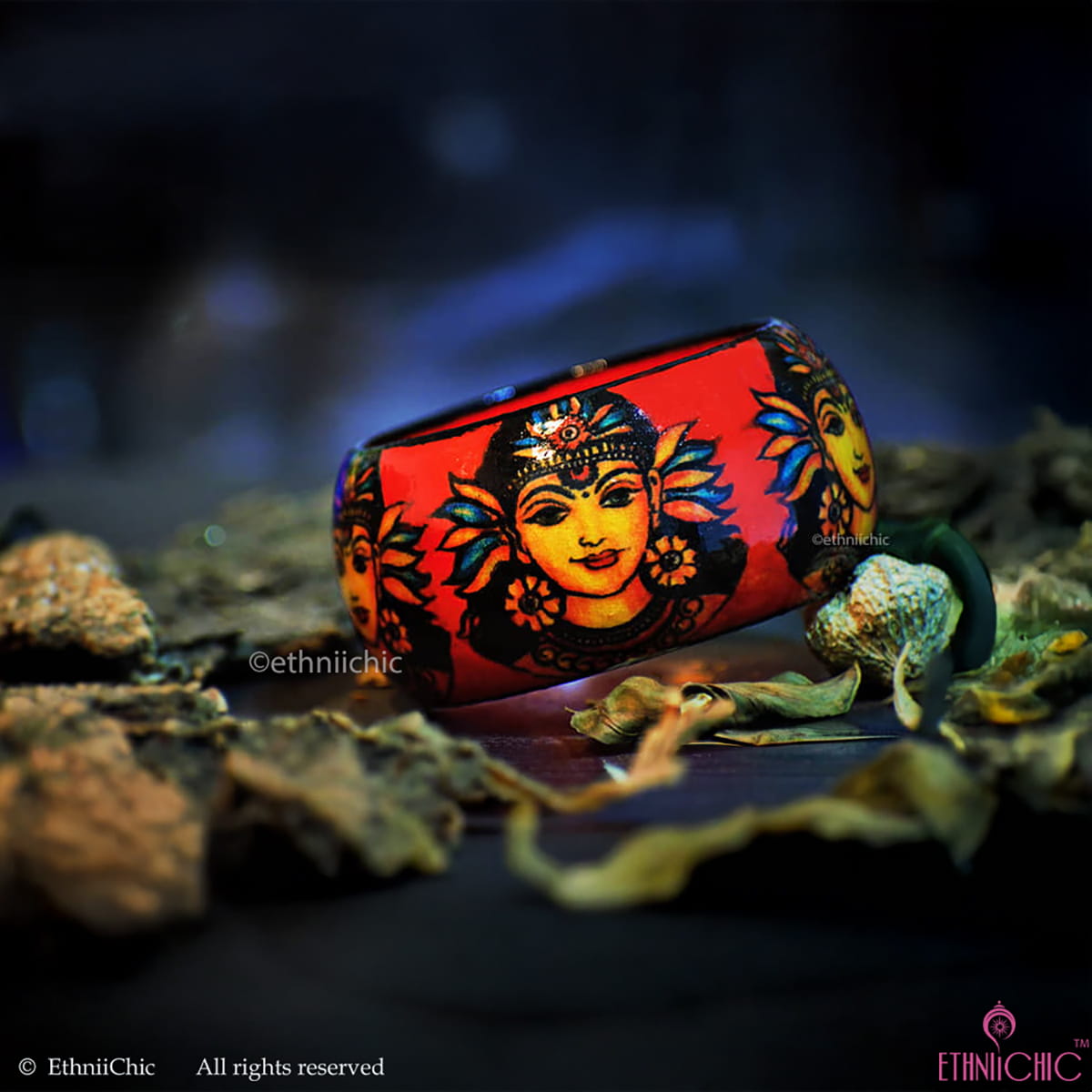
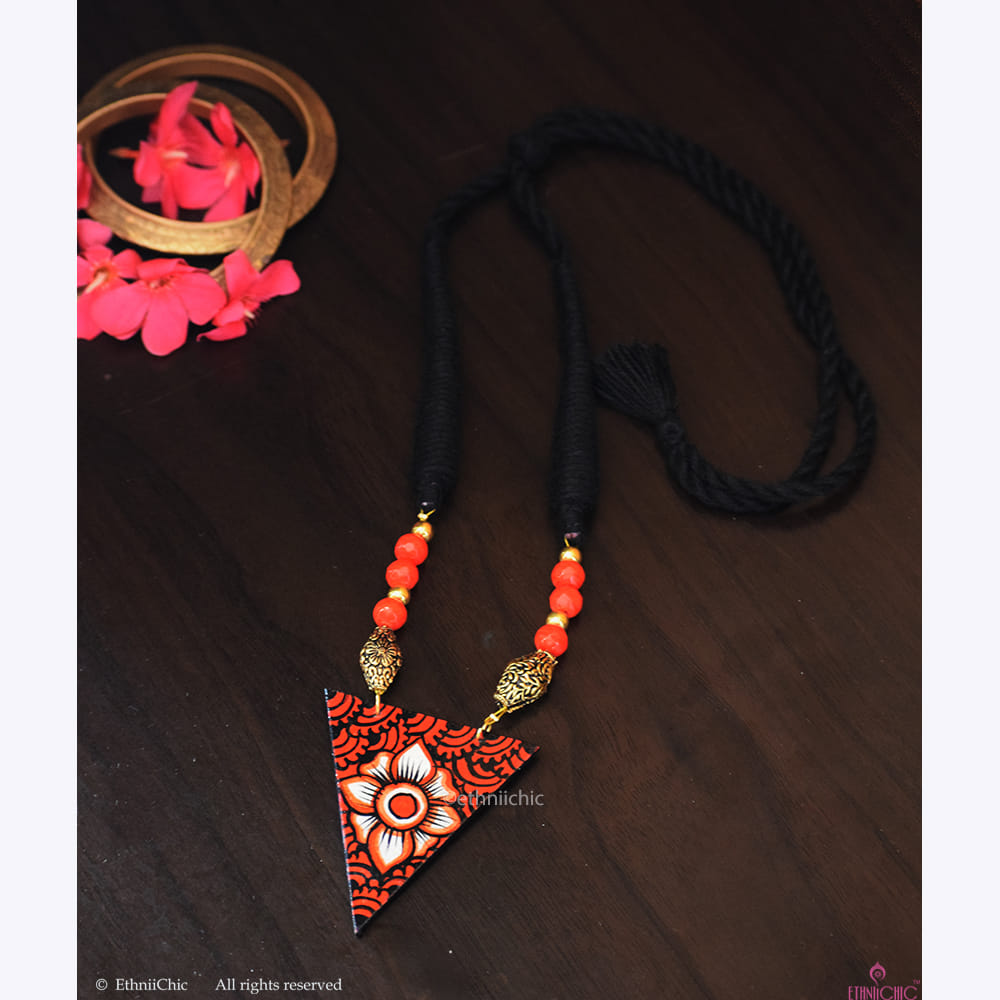
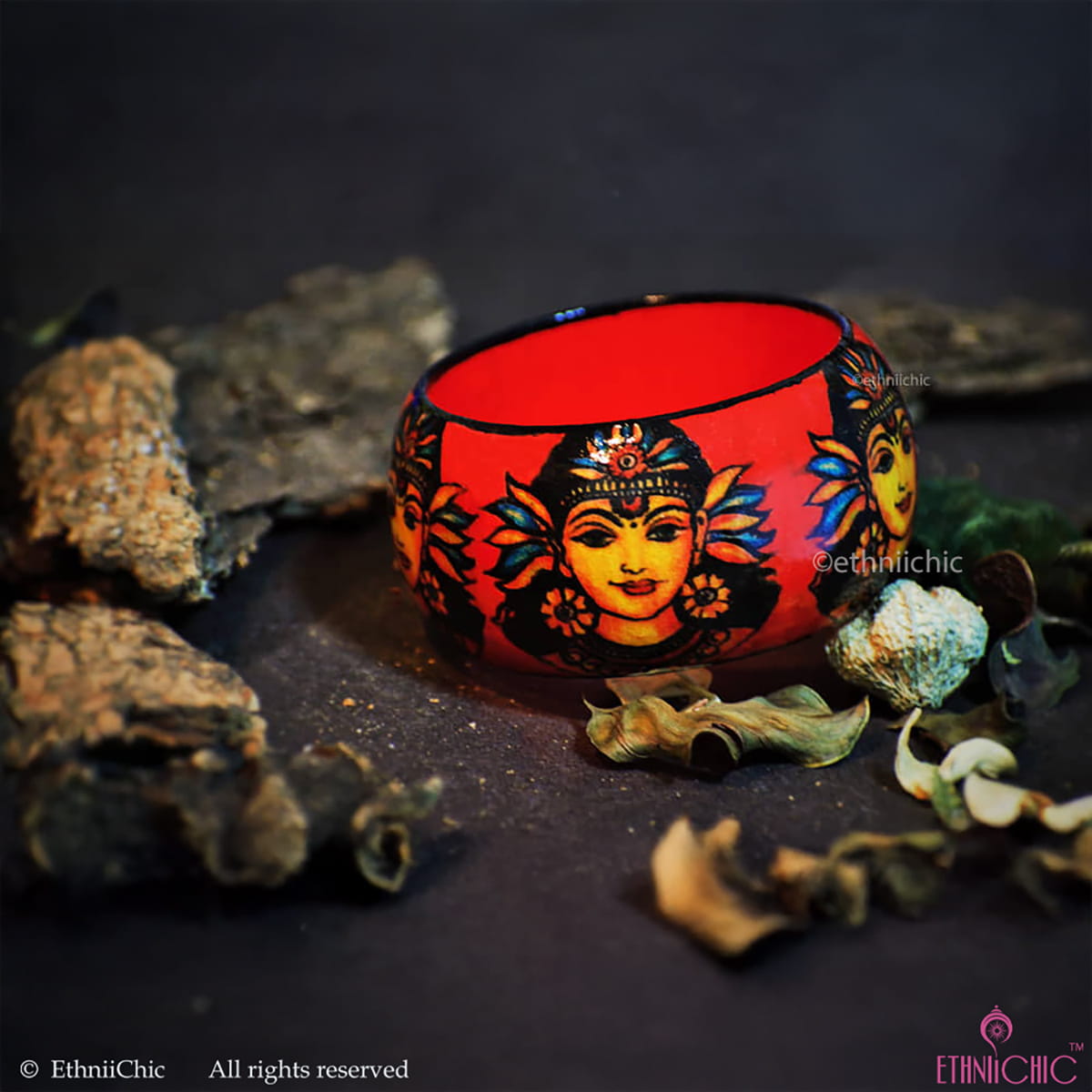
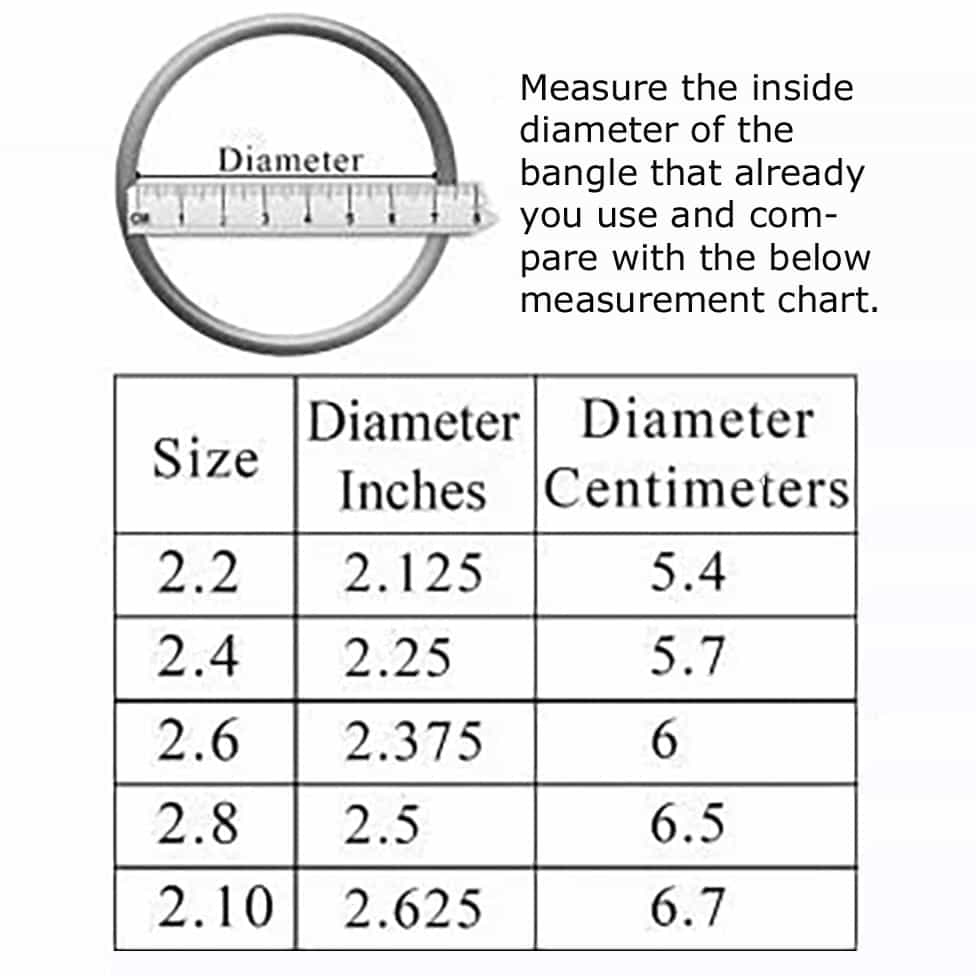
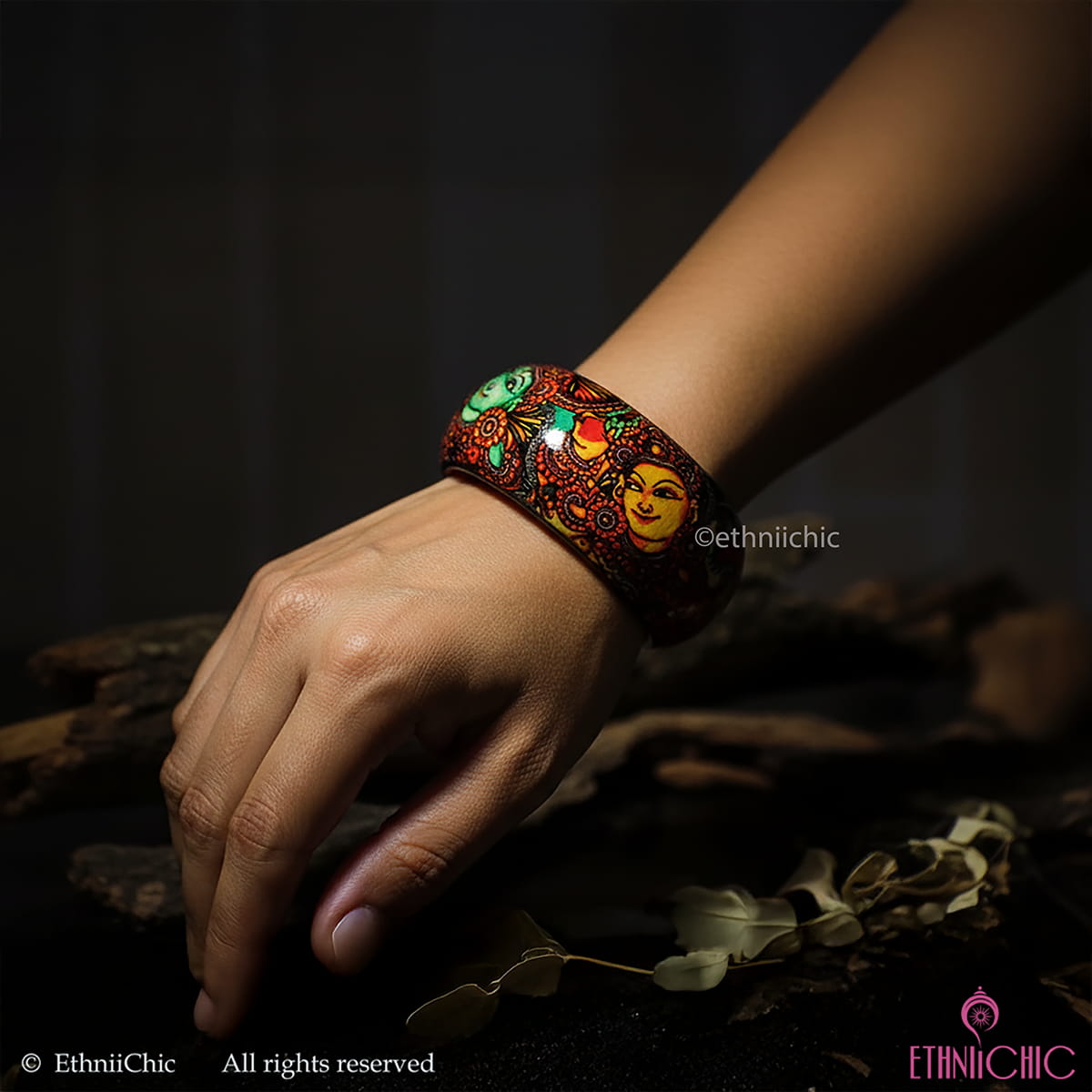
This collection's biggest strength is range of format. Wall frames and wall hangings carry the tradition closest to its original architectural scale, depicting deities and mythological scenes within a frame. Key holders and coasters bring the same iconography into daily use. The pendant and bangle range — teardrop, square, round, rectangular, and triangle pendants alongside hand-painted bangles — translates temple-scale figures and motifs into jewellery small enough to wear daily, without losing the fine detail the tradition is known for.
Shop Wall Frames → · Shop Necklaces → · Shop Bangles →

What Ties This Collection Together

Every piece here, regardless of format, follows the same five-colour discipline and the same commitment to depicting recognisable deity and mythological figures rather than abstract pattern work — which is what separates Kerala Mural from motif-based traditions like Kolam. It's a figurative, narrative art form first, applied across an unusually wide range of objects.

Choosing Where to Start

If you want the fullest expression of the tradition, a wall frame or wall hanging is the closest thing to a temple fresco at home scale. If you want to wear the craft, the pendant range is extensive enough to choose by deity, colour, or shape rather than settling for whatever's available. If you want it in daily use without wearing it, the key holders and coasters are the most functional entry points.

Kerala Mural Art as a Gift

The jewellery range in particular makes this one of EthniiChic's most flexible gifting collections — a pendant necklace is an accessible, personal gift regardless of the recipient's home décor, while a wall frame suits someone specifically decorating a space. Kerala Mural's recognisable deity imagery also makes it a natural choice for religious or festival gifting. Every collection ships internationally; write to contactus@ethniichic.com before ordering to confirm rates and delivery timelines for your country.

Frequently Asked Questions (FAQs)

1. What is Kerala Mural painting?
A temple and palace fresco tradition from Kerala, dating primarily from the 9th to 12th centuries CE, using a traditional five-colour palette (panchavarnam) and following classical principles of Indian painting theory.

2. What does "panchavarnam" mean?
Five colours — the traditional Kerala Mural palette of red, yellow, white, black, and green, each derived from natural sources and each carrying symbolic meaning tied to the type of figure being painted.

3. What is the Chitrasutra, and is it specific to Kerala?
The Chitrasutra is a section of the Vishnudharmottara Purana, one of the oldest surviving Sanskrit treatises on painting, dating to roughly the 5th or 6th century CE. It's a pan-Indian classical text, not exclusive to Kerala — Kerala Mural painting draws on the classical principles it describes, applied within Kerala's own temple tradition.
4. What colours are used, and what do they mean?
Five natural colours: red and yellow from laterite, white from lime, black from lamp soot, and green from indigo and garcinia. Divine figures are traditionally painted green, powerful characters in red-gold, and malevolent characters in white or black.

5. Where can genuine Kerala Mural painting be seen in temples today?
Notable examples survive at Ettumanoor, Vadakkumnatha, Guruvayoor, Sri Padmanabhaswamy Temple, and Mattancherry Palace.

6. What kinds of products are available in this collection?
Wall frames and wall hangings, key holders, coasters, and an extensive range of pendant necklaces and bangles in various shapes — Kerala Mural iconography applied across both wall décor and jewellery.

7. What's the price range across this collection?
From ₹450 for a hand-painted bangle to around ₹4,900 for a large wall hanging, with most pendants in the ₹985–₹2,100 range.

8. Do you ship Kerala Mural pieces internationally for NRI buyers?
Yes, across the full collection. Write to contactus@ethniichic.com before ordering to confirm shipping rates and delivery timelines for your country.

9. Can I order a custom or bulk Kerala Mural piece?
Yes. Custom motifs, deity choices, and bulk or corporate gifting orders can be arranged through Commission Artwork or Contact Us.