Wall frames where the frame is the art. Every piece in this collection is hand-painted, not printed — folk and classical motifs carried through onto the frame itself, built for gallery walls, considered gifting, and homes where the objects on the wall mean something specific. From single deity portraits to full multi-piece sets, this is where EthniiChic's largest and most detailed wall pieces live.
Jharoka and Prabhavali Frames — Deities and Saints, Individually Named
The largest group here is jharoka-style frames (named for the traditional Rajasthani balcony-window format) and prabhavali frames (an arched, architectural frame style traditionally used for South Indian temple deity portraits) — each built around one specific, named figure rather than a generic devotional theme: Sreenath Ji (a form of Krishna central to the Nathdwara Pichwai tradition), Annapoorneshwari, Vaishno Devi, Vadivudai Amman, Meenakshi, Saraswathi, Yellamma Devi, and revered figures including Kanchi Periyavar (the 68th Shankaracharya of Kanchi) and Meera (the Rajput poet-saint devoted to Krishna). These use the same rich, gold-toned hand-painted technique explained in full on the Faux Tanjore collection — a hand-painted recreation of Thanjavur's gold-leaf look, not real gold foil.
Shop Faux Tanjore → · Shop Devi/Goddess →
The Two Statement Sets — Dashavatharam and Ashtalakshmi
The collection's two largest pieces are multi-frame sets: the Dashavatharam Set of 10, depicting Vishnu's ten avatars from Matsya the fish through Kalki, the avatar yet to come; and the Ashtalakshmi Set of 8, depicting the eight forms of the goddess Lakshmi. Both are built to be hung together as a single wall arrangement rather than one frame at a time — the most significant single-purchase wall statement in EthniiChic's entire catalogue.
Shop Vishnu →
Historical Painting Styles, Not Just Devotional Subjects
A smaller group of frames references specific historical Indian painting movements rather than temple iconography: the Raja Ravi Varma-style "Lady with Sitar" frame draws on the work of Raja Ravi Varma (1848–1906), the pioneering Indian painter who blended European academic oil technique with Indian mythological and genre subjects; the Rajput Miniature frame of Meera references Rajasthan's royal-court miniature painting tradition; and the Mughal 2-in-1 Flora frame draws on Mughal floral art's naturalistic garden-and-flower painting, developed under emperors including Jahangir. These are named artistic traditions in their own right, distinct from the temple-devotional frames elsewhere on this page.
Shree Yantra — Sacred Geometry, Precisely Rendered
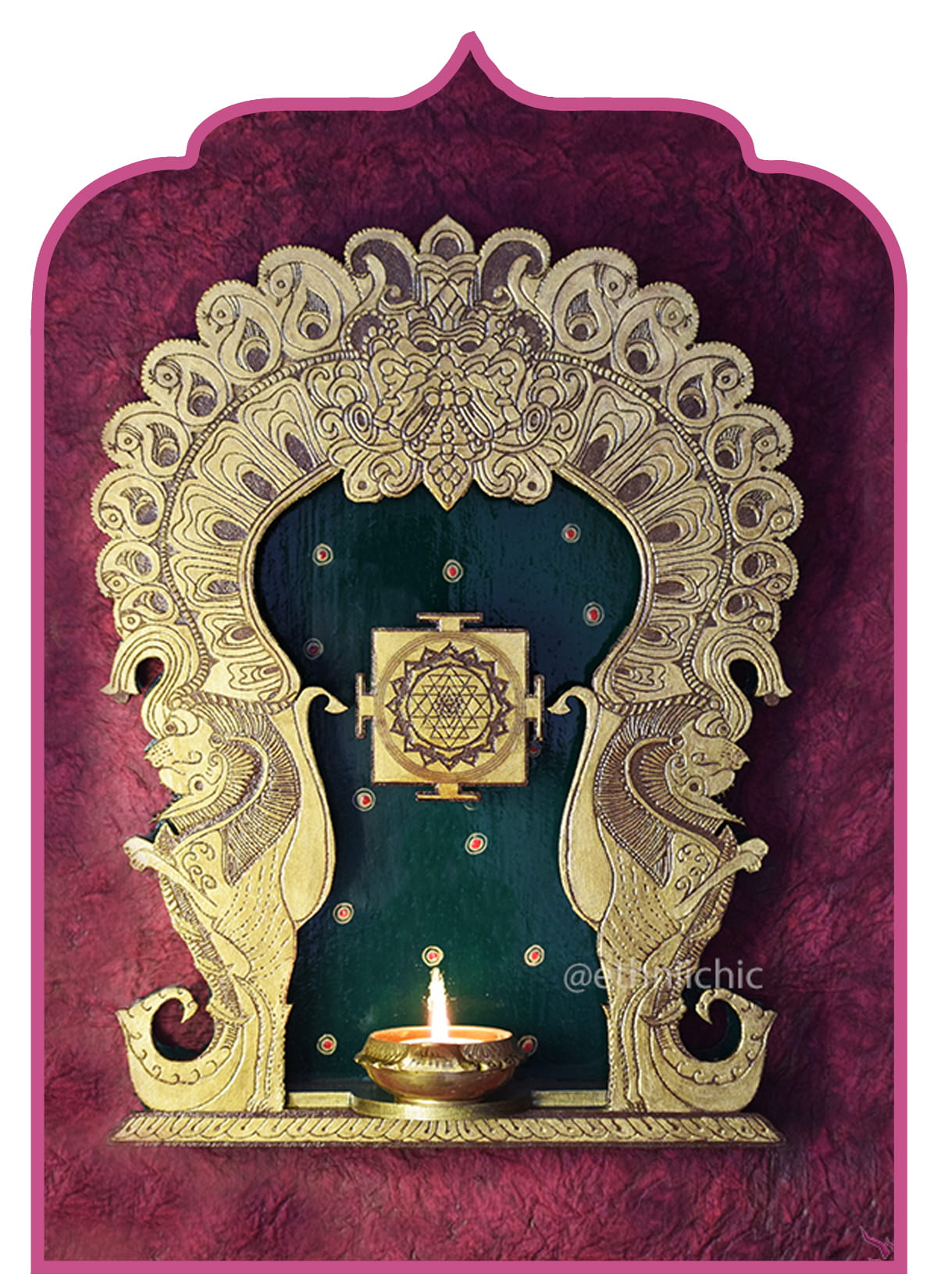
The Shree Yantra frame isn't a decorative abstraction — it's a specific, precise diagram used in Sri Vidya worship: nine interlocking triangles forming 43 smaller triangles around a central point, understood as the geometric form of the goddess Tripura Sundari. It's worth choosing deliberately rather than as a generic "geometric art" piece, since the design itself carries exact traditional meaning.
Choosing Where to Start
If you want one large, room-defining wall statement, the Dashavatharam or Ashtalakshmi set does more in a single purchase than any other piece in the catalogue. If your connection is to one specific deity or saint, start with the jharoka or prabhavali frame that names them directly. If you're drawn to art history as much as devotion, the Raja Ravi Varma, Rajput Miniature, or Mughal frames offer a genuinely different angle into the same wall-décor category.